Burg Lichteneck: A Medieval Castle in Rimbach, Germany
Visitor Information
Google Rating: 4.6
Popularity: Low
Country: Germany
Civilization: Medieval European
Site type: Military
Remains: Castle
History
Burg Lichteneck is a medieval castle located in the municipality of Rimbach, Germany. It was originally built by settlers of the Germanic civilization during the early 13th century. The first written record of the castle appears in 1301 under the name “castrum in Liehtenek,” suggesting its established presence by that time.
In its earliest documented phase, the castle probably served as the residence of a noble named Heinrich von Lichtenegg. By the mid-14th century, ownership had passed to the Lords of Lichteneck, indicating its continued significance among regional aristocracy. In 1341, the Sattelbogener family took control of the castle and maintained possession for nearly two centuries, until 1537. Around 1490, Duke Albrecht of Bavaria acquired Burg Lichteneck, marking a transition into ducal holdings. Subsequently, in the 16th century, the Baumgartner family became the castle’s owners.
The site endured turbulent times during the Hussite wars of the early 15th century, between approximately 1420 and 1430, when it likely suffered significant destruction. Further damage occurred in a fire sometime between 1527 and 1558. By the end of the 16th century, the castle had fallen into complete ruin, no longer serving as a residence or fortification.
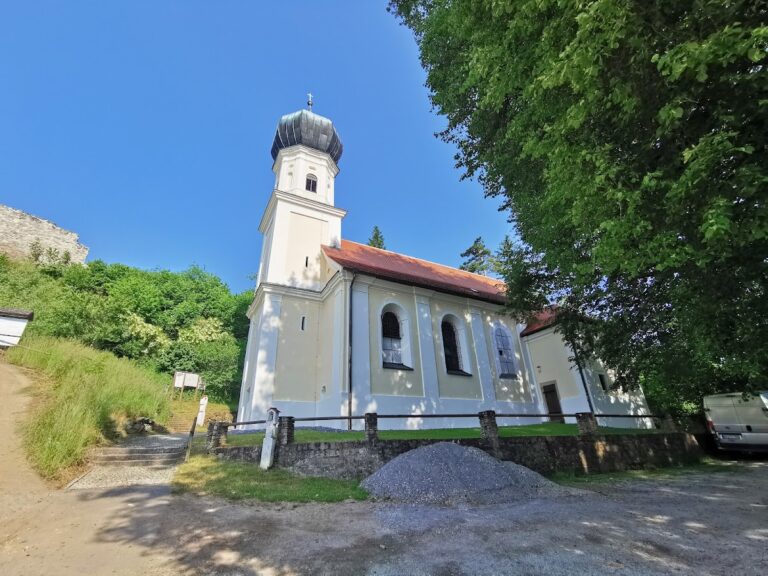
Originally, Burg Lichteneck functioned as the administrative center of a Hofmark, a type of local jurisdiction, that encompassed much of what is now the Rimbach municipal area. In 1719, the Pelkofen family established a new manor house, known locally as a “Schlössl,” along with a parish church at the foot of the ruined castle hill. The old castle itself remained abandoned until its ruins were restored in 1982. Today, the site is legally protected as a historic monument and an archaeological area under Bavarian heritage regulations.
Remains
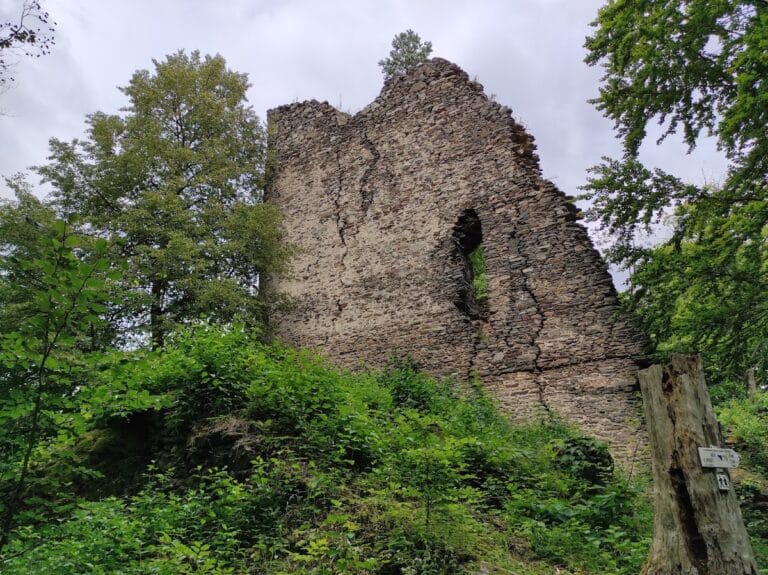
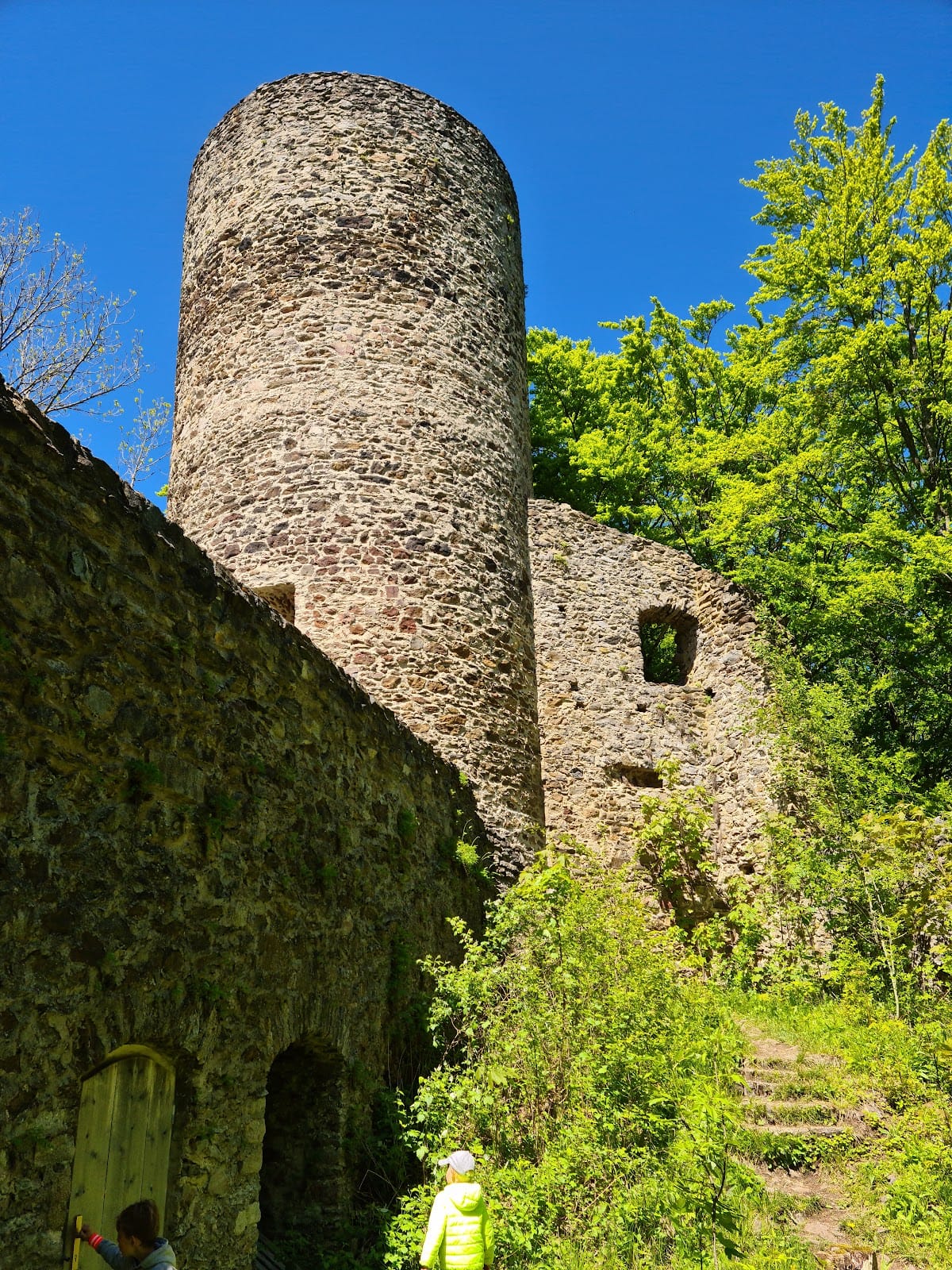
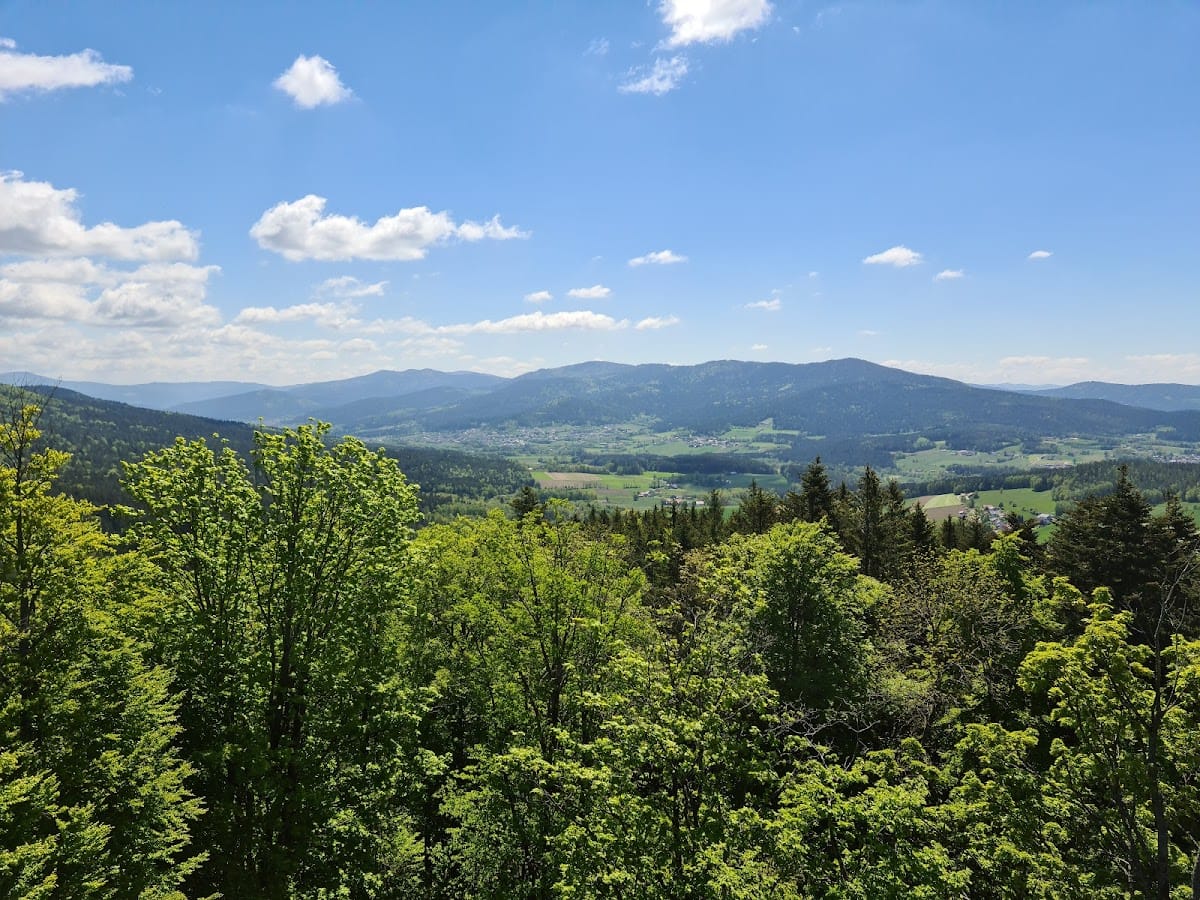
The ruins of Burg Lichteneck occupy the summit of the Schlossberg hill, situated about 700 meters above sea level. The castle complex is elongated in shape and features two outer baileys—fortified courtyard enclosures—leading toward the central core. This core is divided into upper and lower sections, collectively measuring approximately 50 by 57 meters. Such an arrangement suggests a layered defensive design typical of castles built in the medieval period.
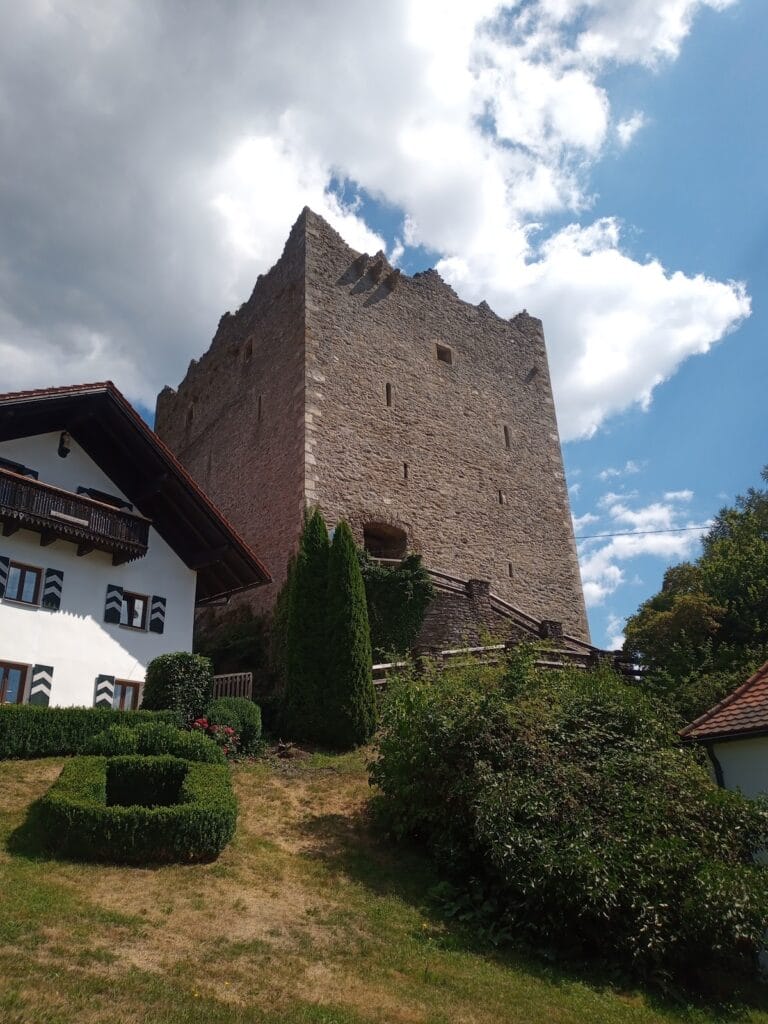
One of the most striking surviving elements is a large round bergfried, or main tower, which stands about 20 meters tall. This tower has a diameter of seven meters, with notably thick base walls between 2.1 and 2.2 meters, constructed to withstand attacks and provide a vantage point over the surrounding landscape. The bergfried’s robust masonry remains largely intact, serving as a visible reminder of the castle’s former strength.
Excavations conducted in 1990 revealed the remains of the castle chapel within the site boundaries, confirming the presence of a dedicated religious space for those residing at or visiting the fortress. While details about the chapel’s decorative features are not documented, its foundations provide critical evidence of the castle’s spiritual as well as military functions.
Presently, the visible ruins have been preserved to retain their historical character. The site’s archaeological value is recognized through official protection, and efforts have been made to document the structural remains carefully. This protection enables continued study and interpretation of Burg Lichteneck’s role in regional medieval history while safeguarding its material legacy for future generations.
Nearby sites