Burg Neurandsberg: A Medieval Hilltop Castle in Germany


Site at a Glance
- Rating
- 4.4
- Popularity
- Very Low
- Country
- Germany
- Primary era
- Medieval
- External website
- Open
- Eras represented
- Medieval, Early Modern
- Civilizations
- Holy Roman Empire
- Site type
- Military
- Remains
- Castle
On this page6 sections
History
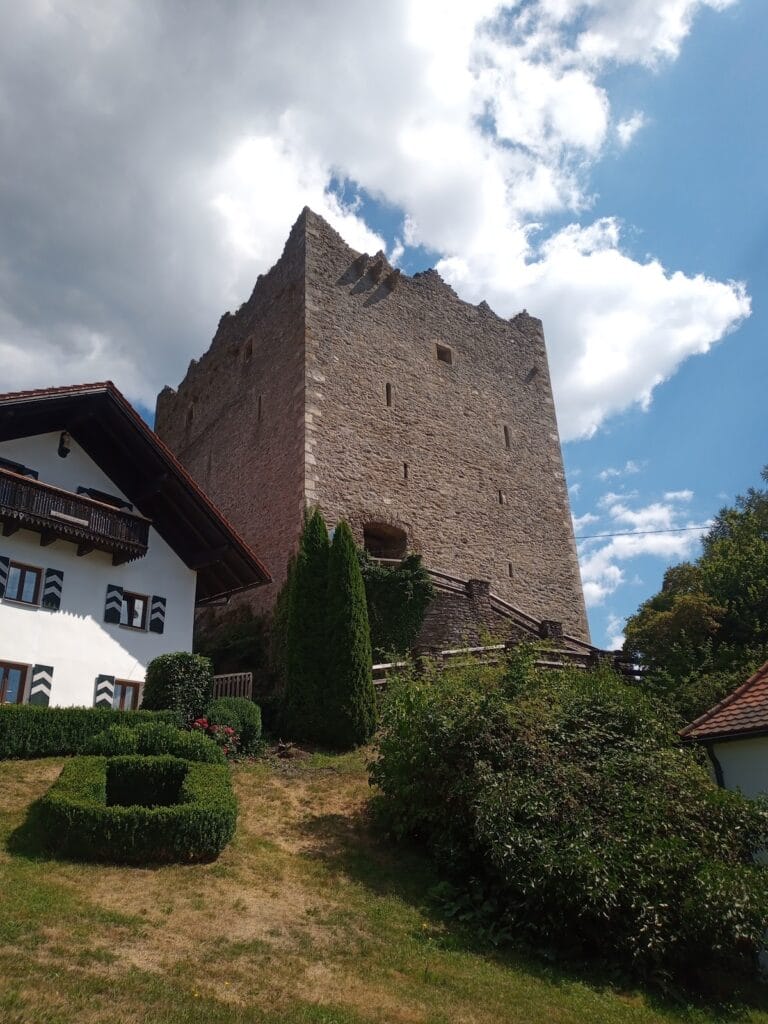
Burg Neurandsberg is a medieval hilltop castle in Germany, standing above Neurandsberg in the municipality of Rattenberg. Its origins reach back to the twelfth century, and its summit position gave the castle a commanding defensive setting.
The Lords of Rampsberg
The Lords of Rampsberg, also called the Ramsperger family, appear from the mid-twelfth century as ministeriales, service-dependent retainers who performed military, administrative, or court duties for a higher-ranking lord. They served the Counts of Bogen and the Prince-Bishopric of Passau, an ecclesiastical territory ruled by the bishop of Passau as a prince of the Holy Roman Empire.
Around 1330, Friedrich Ramsperger built Neurandsberg Castle slightly south of the family’s ancestral castle at Altrandsberg. The new stronghold thus formed part of the family’s established territorial presence while occupying its own hilltop site.
Seizure, Ownership, and Destruction
After 1436, Haimeran Heuraus captured the castle on behalf of Duke Albrecht III of Bavaria. Neurandsberg later passed through the hands of several families, including the Barons von Notthafft, who held it around 1550. The castle was also used as a prison during its later history.
Swedish troops commanded by Dragoon Colonel Georg Christoph von Taupadel demolished the castle in 1633 during the Thirty Years’ War, the European conflict fought from 1618 to 1648 amid religious, dynastic, and political struggles. The fortress was not rebuilt, although the church was reconstructed. By around 1800, the ruined castle had come under a Bavarian administrative office.
The approximately 1.8-hectare site and its remains are protected as both an architectural monument and an archaeological monument. The archaeological protection includes medieval and early-modern underground remains and finds, among them the former late-medieval castle chapel and the early-modern Catholic branch and pilgrimage church.
Remains
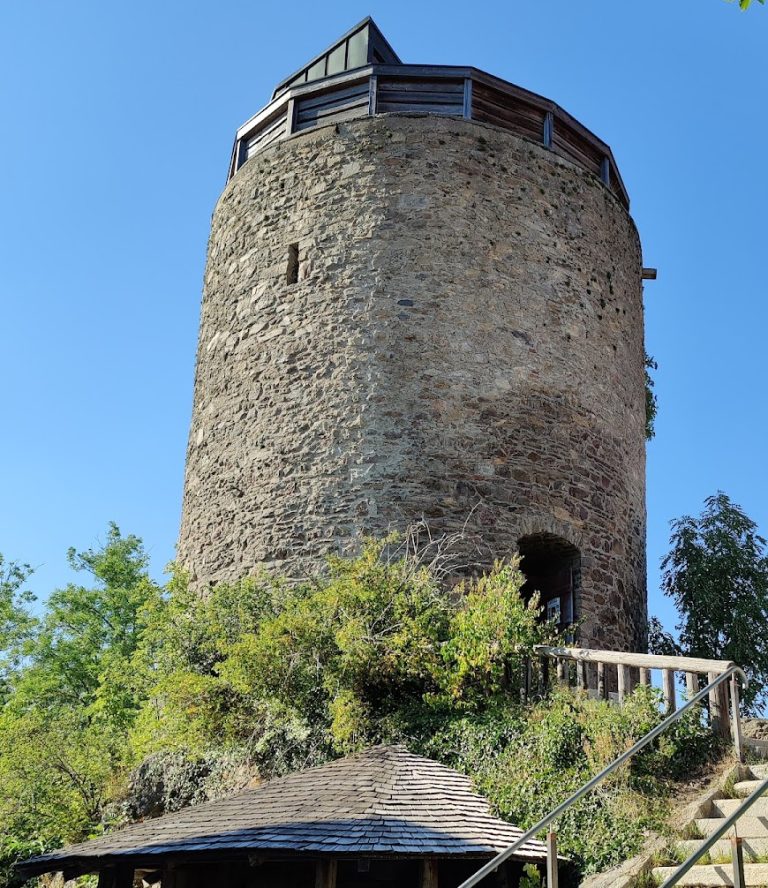
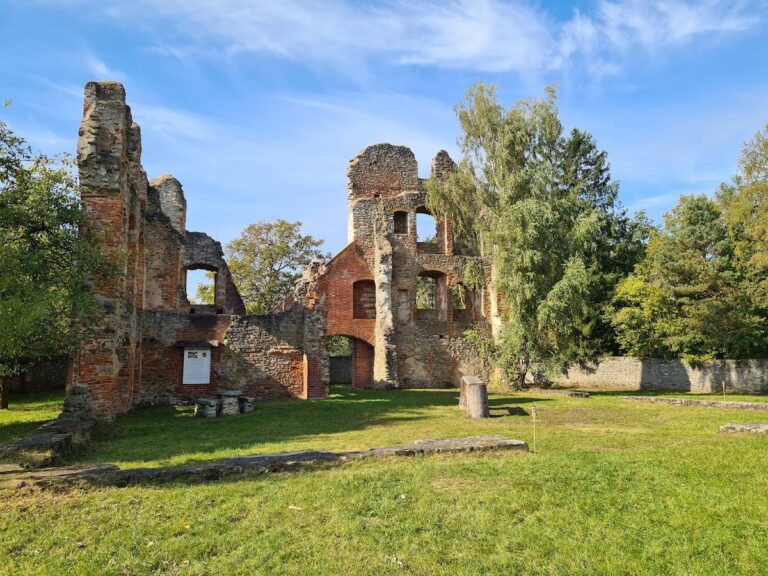
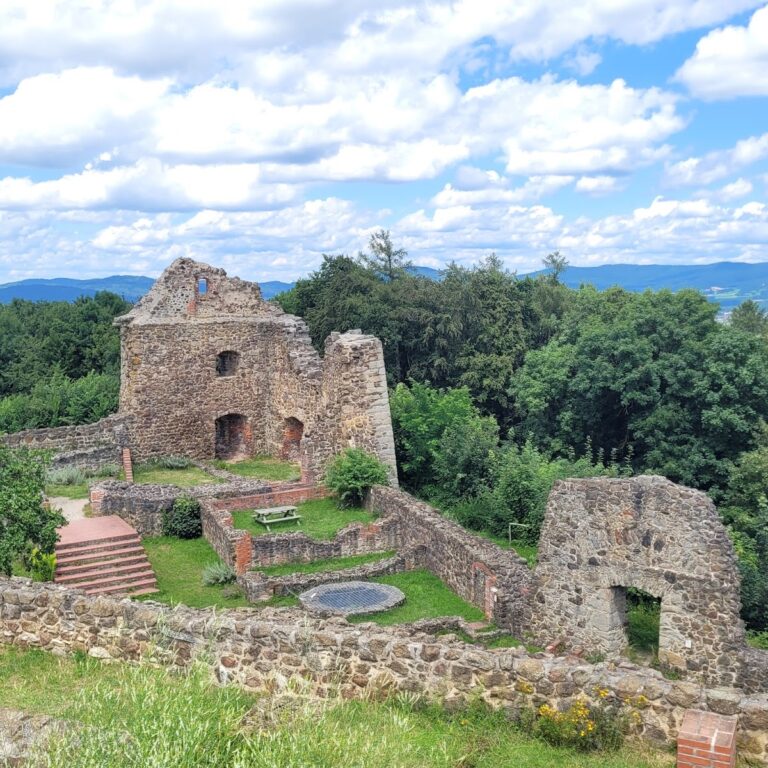
Burg Neurandsberg survives as a ruin at about 590 metres above sea level. The summit complex retains part of its inner enclosing wall, which once surrounded and defended the castle’s central area, as well as sections of an outer defensive wall with half-shell towers.
Castle Defenses
Approximately four metres of the inner castle wall remain standing. The surviving outer wall incorporates half-shell towers, whose curved forms projected from the enclosure and helped protect its perimeter. Together, these fragments preserve the relationship between the inner castle and its outer defensive enclosure.
Pilgrimage Church
Near the former castle chapel, the Church of the Nativity of Mary was built between 1698 and 1700 as a pilgrimage church associated with travel to a sacred place or image. It stands over the underground remains of the former castle chapel, which dates from around 1460. The church has late-Baroque furnishings and preserves a seated figure of the Virgin Mary with the Christ Child that previously stood in the chapel. Its oldest surviving votive tablet, an object offered in fulfillment or remembrance of a vow, dates from 1682.