Burg Hüls: A Medieval Water Castle in Krefeld, Germany
Visitor Information
Google Rating: 4.6
Popularity: Low
Country: Germany
Civilization: Medieval European
Site type: Military
Remains: Castle
History
Burg Hüls is a medieval water castle located in the municipality of Krefeld, Germany, originally constructed by local nobility under the authority of the Archbishop of Cologne. The site’s earliest known mention dates back to 1112, with its name deriving from the Low German word “Hulis,” referring to holly bushes, highlighting the area’s natural surroundings at that time.
The castle replaced an earlier fortification near today’s Freibad, which archaeological findings in 2011 identified as a refuge castle or defensive stronghold. Around 1455, Archbishop Dietrich II of Moers gave knight Friedrich von Hüls permission to build a new brick castle in the Bruch area east of the village of Hüls. This structure became the seat of the noble family known as the Lords of Hüls, who governed the region until the mid-16th century. The family line ended in 1565 when Katharina, the last heiress, died without heirs.
Throughout its history, Burg Hüls was involved in several historical events. In 1492, the castle was the site of a witch trial against a woman named Nesgen tho Range, reflecting the broader social tensions of the era. During the late 16th and early 17th centuries, Burg Hüls experienced destruction linked to regional conflicts. The Cologne War, also known as the Truchsessischer Krieg, brought battles near the castle in 1583, and the violence of the Thirty Years’ War in the 1640s further damaged the site after the Battle on the Hülser Heide in 1642.
The castle’s decline accelerated when its main residential building collapsed unexpectedly during Pentecost night in 1686. This event marked the end of Burg Hüls as a noble residence, and it remained in ruins thereafter. In the 19th century, following the dissolution of local noble privileges and the sale of many estates, the property was gifted to the children of Anno Laurenz Rosen, the last local bailiff. Later, in 1843, the ruins came under the ownership of the Catholic parish of St. Cyriakus.
In the mid-20th century, after Hüls had become an independent municipality, the local government purchased the castle ruins and surrounding land. From 1954 to 1958, archaeological excavations took place under the direction of Professor Albert Steeger, involving local schoolchildren, which helped to uncover important historical evidence about the site. By the end of the century, however, the ruins had suffered from neglect, weather damage, invasive plants, and vandalism.
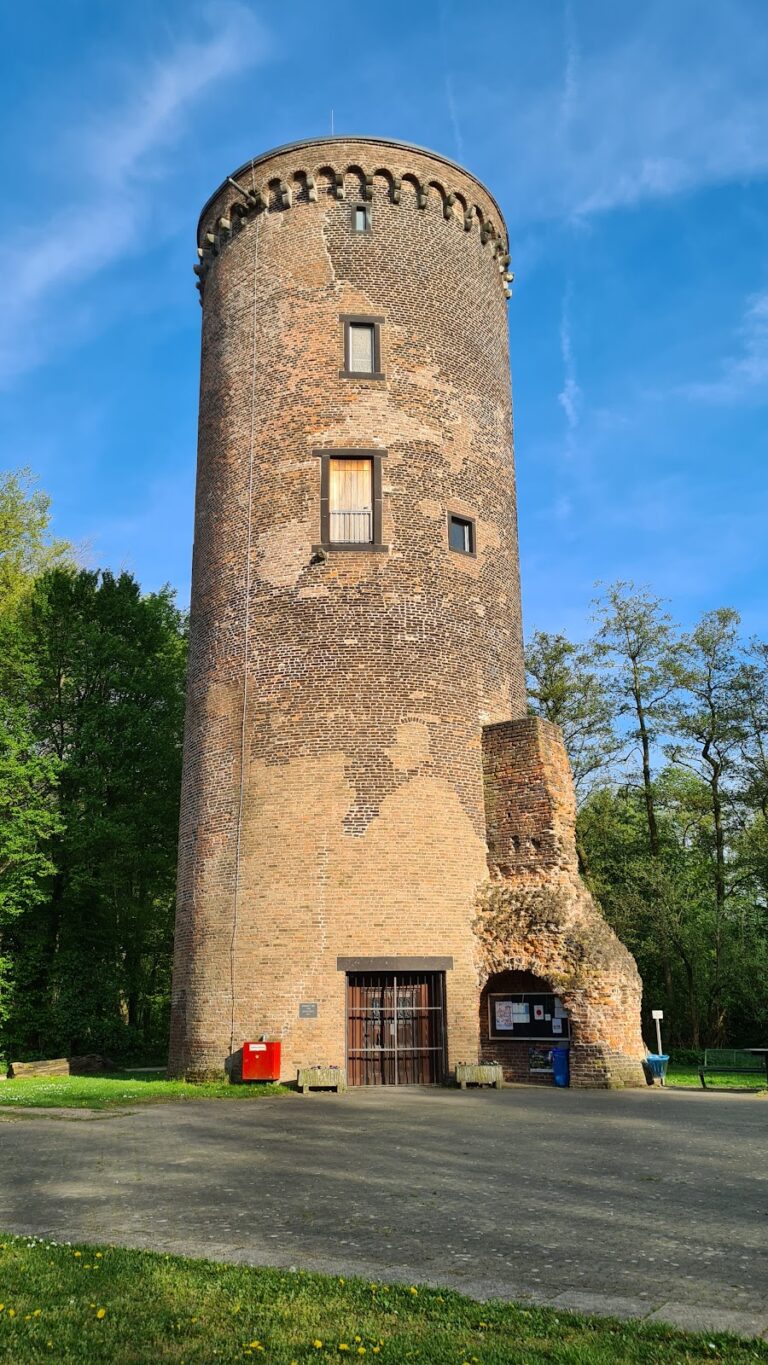
Starting in 1998, community groups and sports clubs led volunteer efforts to restore parts of the castle. They cleared overgrown vegetation, rebuilt sections of the manor house walls, and restored the tower and battlements. The tower was stabilized and outfitted with heavy wooden ceilings, repurposed as a wedding room, while the courtyard and battlements were reconstructed to serve as space for local events. The adjacent primary school began using the site for outdoor lessons. Archaeological work during these restorations revealed a medieval well and pottery fragments, confirming that the original moat extended up to the castle walls. By 2006, volunteers had contributed more than 16,000 hours to the site’s restoration, which earned the city of Krefeld a monument preservation award in 2005. Plans were made to restore the moat to hold water permanently, aiming to revive more of Burg Hüls’ original appearance.
Remains
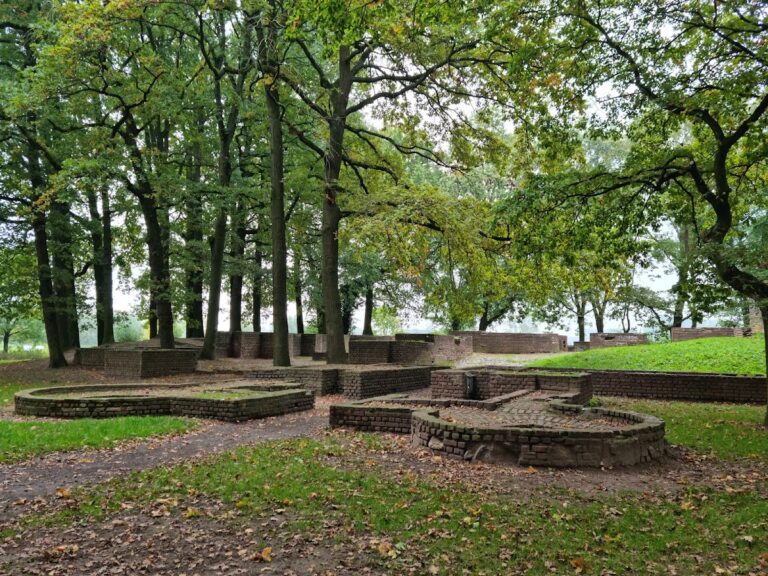
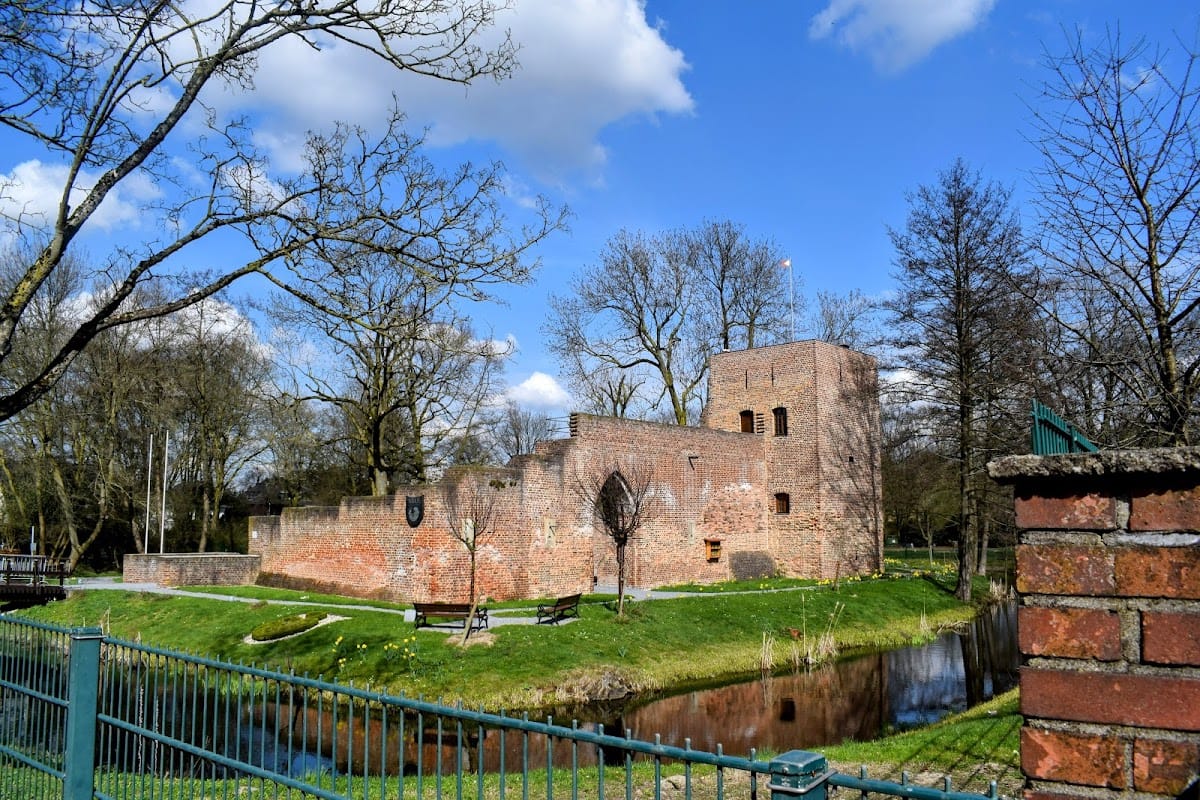
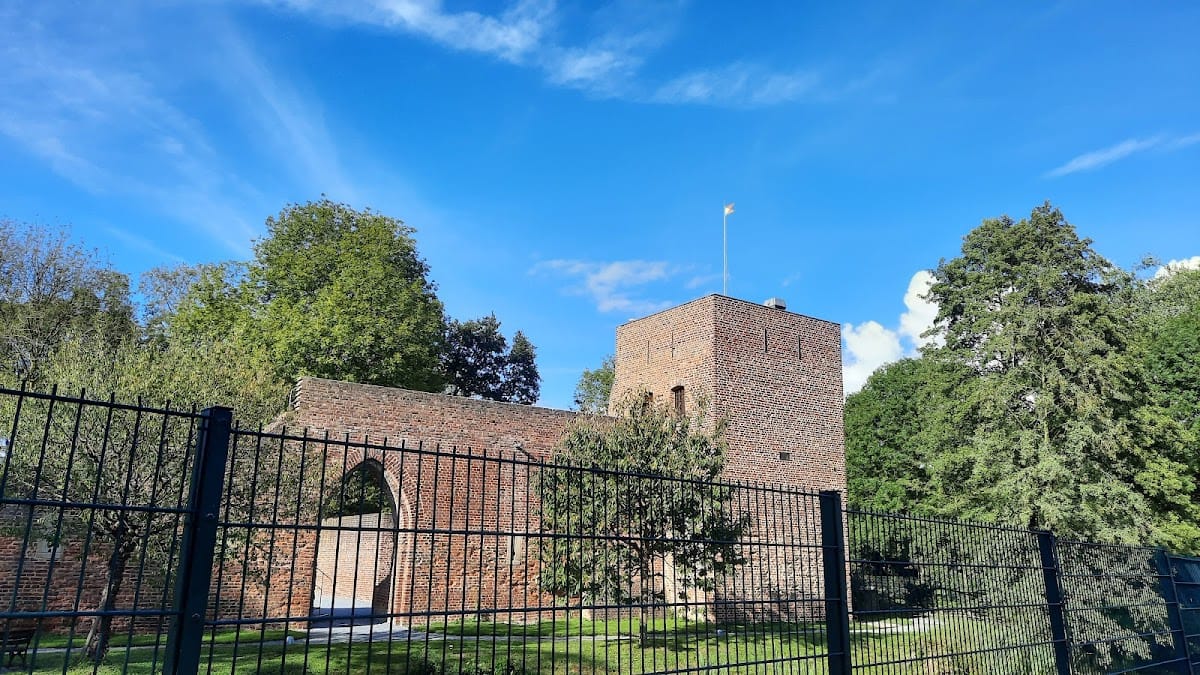
Burg Hüls is a moated water castle built primarily of brick, featuring a layout typical of medieval defensive residences. The complex originally included a manor house, a tower known as the burgturm, and fortified battlements or defensive walkways called a wehrgang. These structures were constructed to provide habitation, protection, and a vantage point over the surrounding landscape.
The tower, once largely collapsed and filled with rubble, underwent significant restoration in 2001–2002. It was cleared, drained of water and debris, and rebuilt with sturdy wooden ceilings that replaced lost floors. Today, the tower stands stabilized and serves a new role as a wedding venue. The surrounding battlements were also reconstructed, forming an elevated walkway where visitors can look out across the castle grounds, offering a glimpse into the castle’s defensive design.
The burghof, or courtyard, along with sections of the enclosing walls, have been carefully rebuilt to provide a functional open space. This area reflects the heart of the castle’s residential and administrative activities during its period of use. During the course of restoration and excavation, an ancient well was uncovered within the courtyard, providing a vital water source that once supported the castle’s inhabitants.
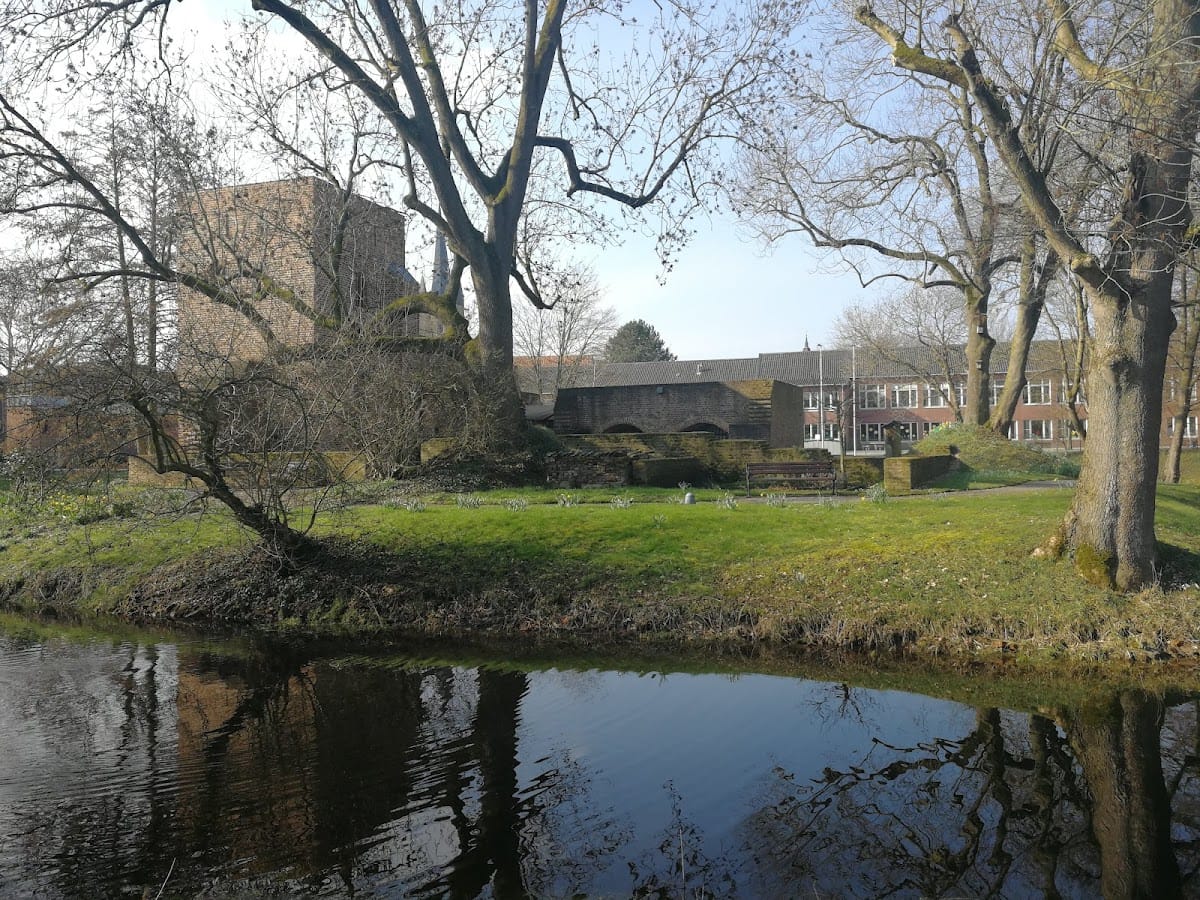
Archaeological findings also include shards of medieval pottery, attesting to the daily life and material culture of those who lived at Burg Hüls. Excavations confirmed that the moat, a water-filled defensive ditch, extended right up to the castle walls, surrounding the structure in a protective barrier of water. Efforts to restore the moat to a permanent water-filled state are underway, aiming to recreate this key defensive feature.
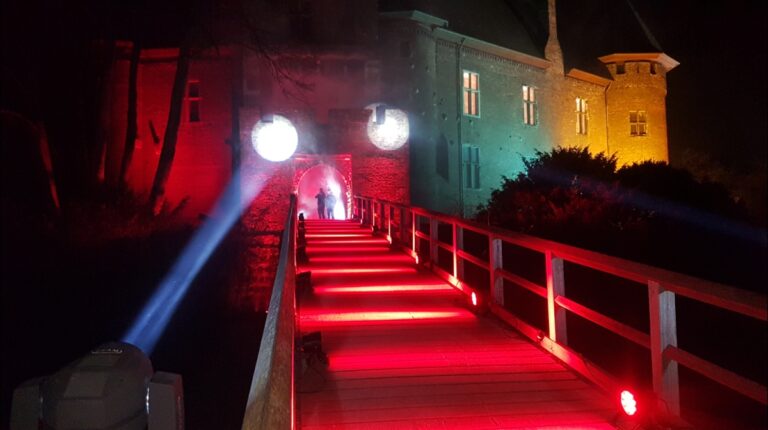
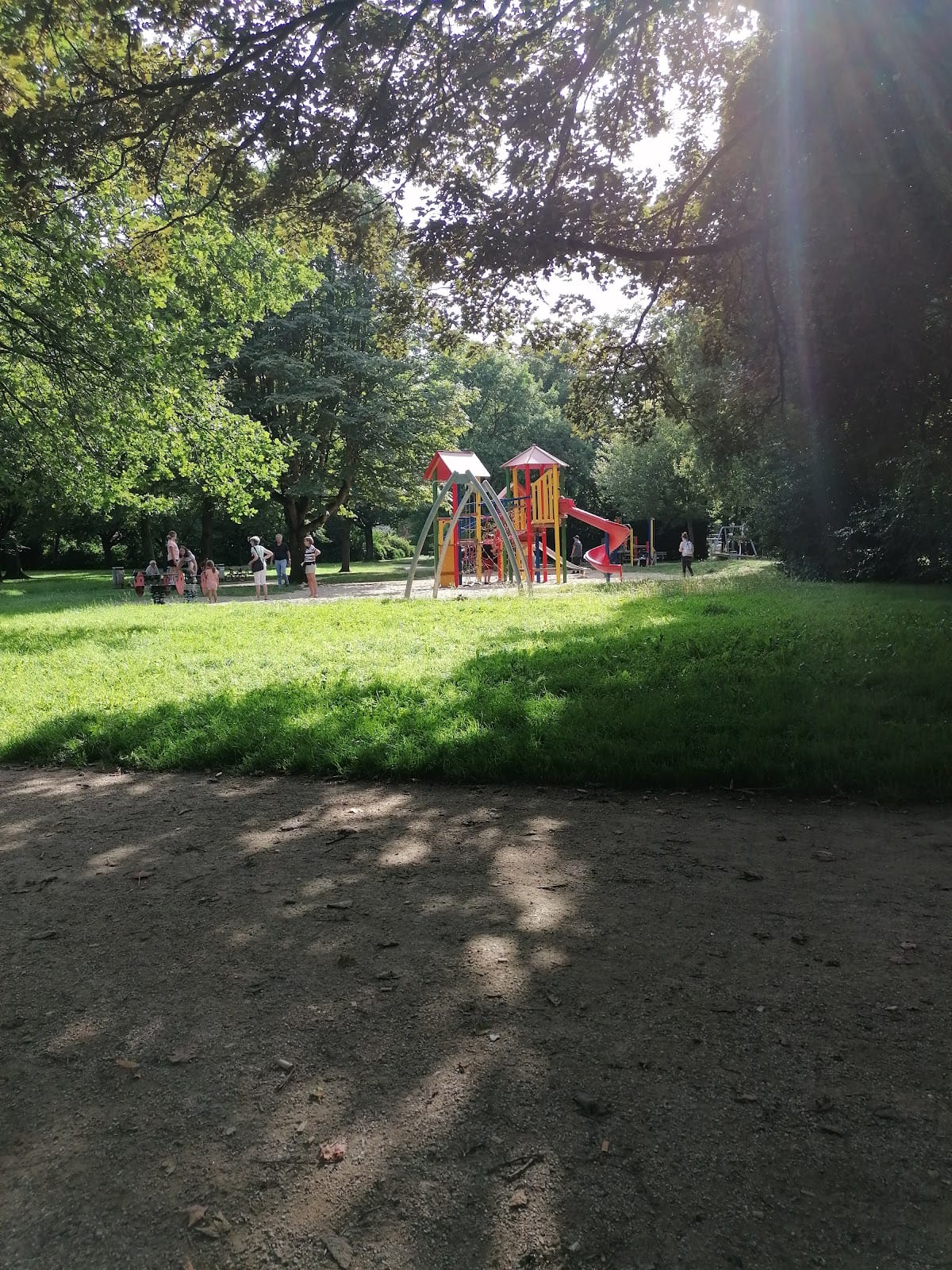
Today, the ruins are outlined and illuminated by ground-level lighting at night, highlighting their contours against the landscape. A surrounding walking path with benches encircles the site, enhancing accessibility and encouraging quiet reflection on the castle’s historic presence. Near the ruins, the castle park was established in the late 1950s on former garden land. This green space includes a playground and serves as a natural corridor linking the village center with the nearby Hülser Bruch nature area, integrating the site into the modern community while preserving its historical significance.
Nearby sites