Ballymoon Castle: A Medieval Anglo-Norman Fortress in County Carlow, Ireland
Visitor Information
Google Rating: 4.6
Popularity: Very Low
Official Website: www.megalithicireland.com
Country: Ireland
Civilization: Medieval European
Site type: Military
Remains: Castle
History
Ballymoon Castle is situated around two miles east of Bagenalstown in County Carlow, Ireland. It was constructed during the late medieval period by the Anglo-Norman settlers who held lands in the region.
The origins of Ballymoon Castle date back to the late 13th or early 14th century. It is thought that Roger Bigod, the 5th Earl of Norfolk, who was a prominent English nobleman with extensive holdings in Ireland, may have commissioned its construction. Following his death without heirs, ownership of the land passed to the Carew family, a prominent Anglo-Norman dynasty, who likely continued to develop or maintain the castle.
Little detailed information survives about the castle’s role through the centuries. Records do show that in the late 1800s Michael Sheill, a landowner from Wexford, owned the site and attempted to stimulate economic activity in the area by starting local enterprises on the castle’s adjacent lands. Beyond this, the castle’s historical narrative remains largely undocumented, with no specific accounts of military actions, administrative functions, or notable events tied to its walls.
Remains
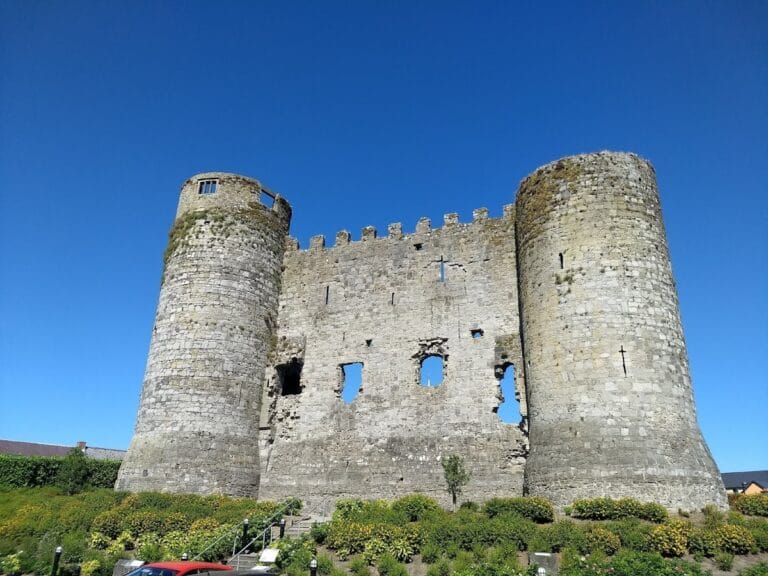
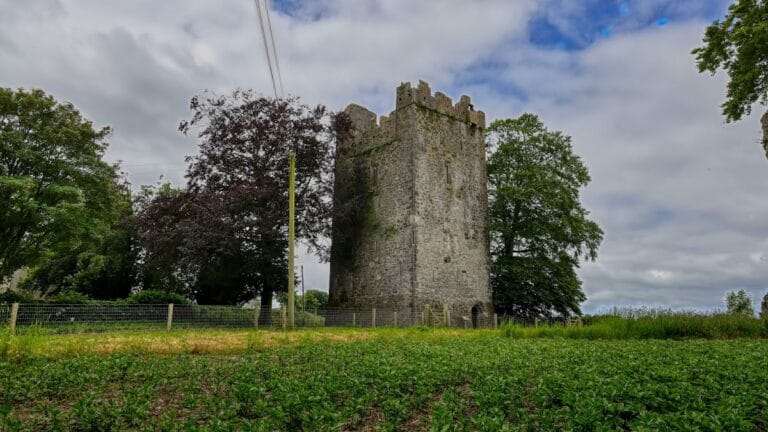
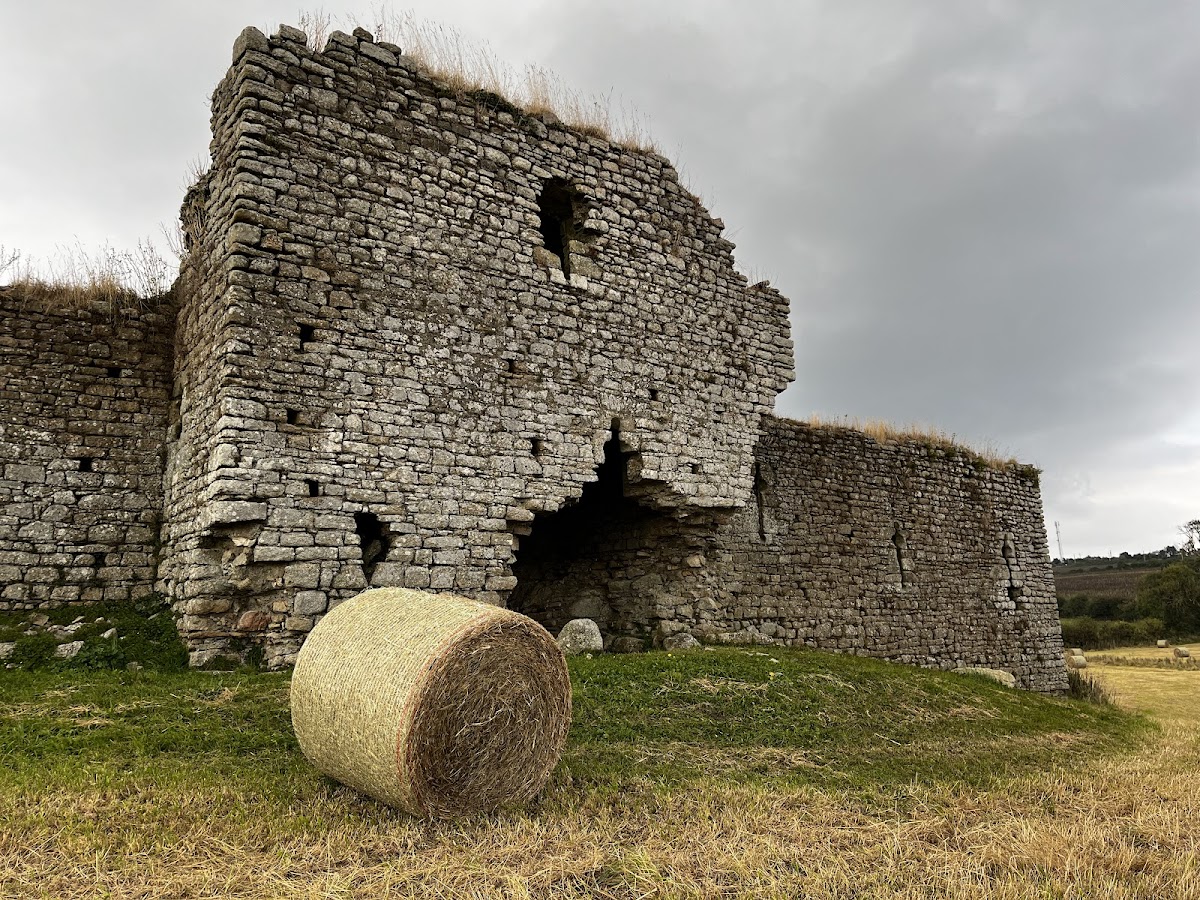
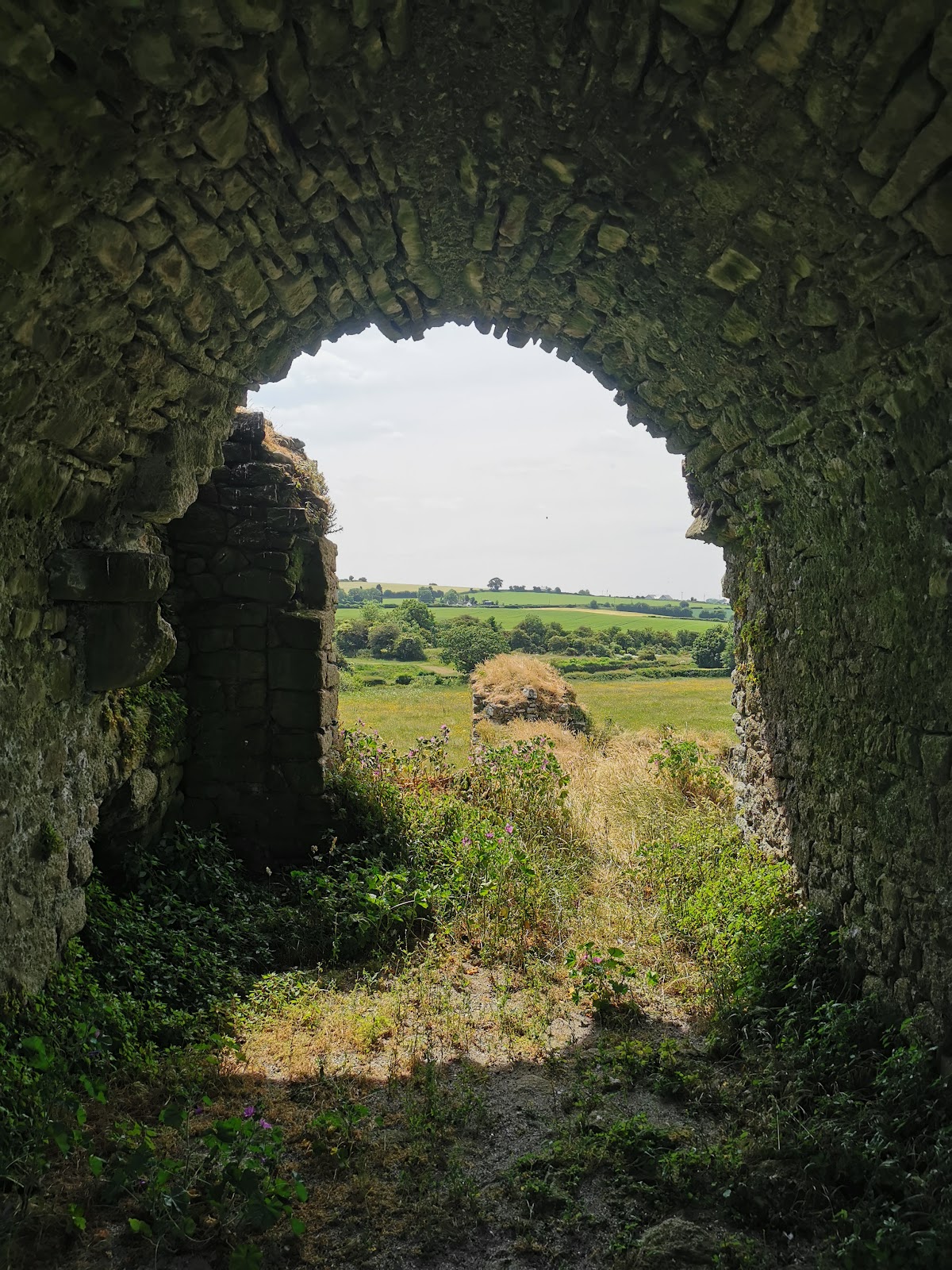
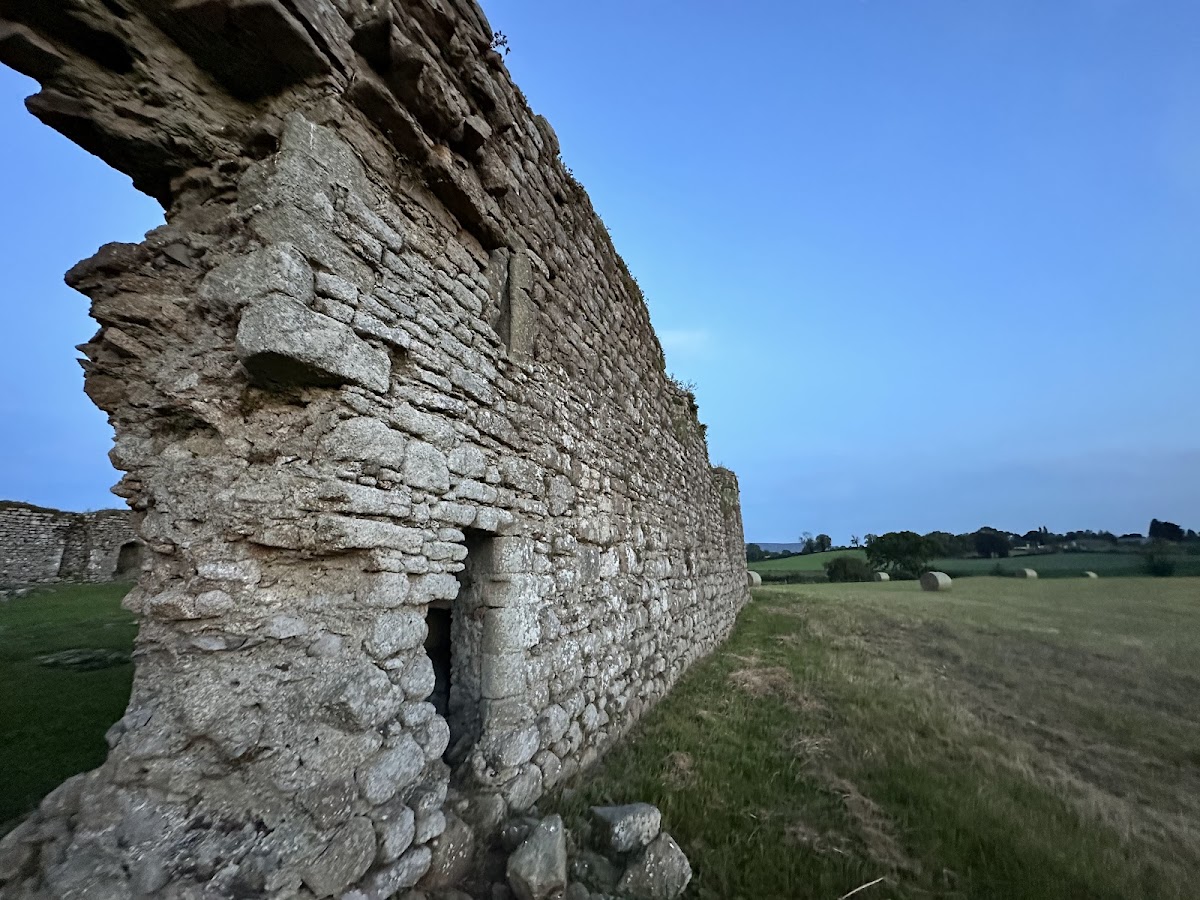
Ballymoon Castle’s remains reveal a substantial medieval fortress laid out as a square courtyard approximately 80 feet (24 meters) on each side. The perimeter is defined by robust granite walls standing about 20 feet (6.1 meters) tall, with bases nearly 8 feet (2.4 meters) thick, demonstrating significant defensive intent and substantial construction efforts.
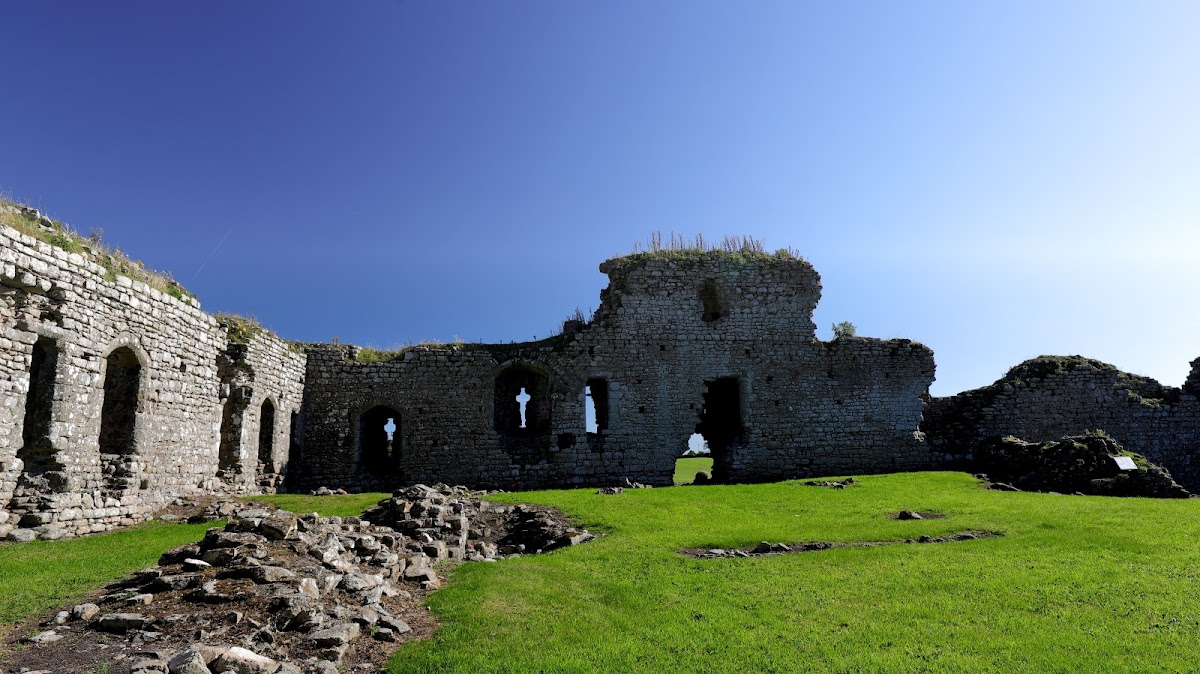
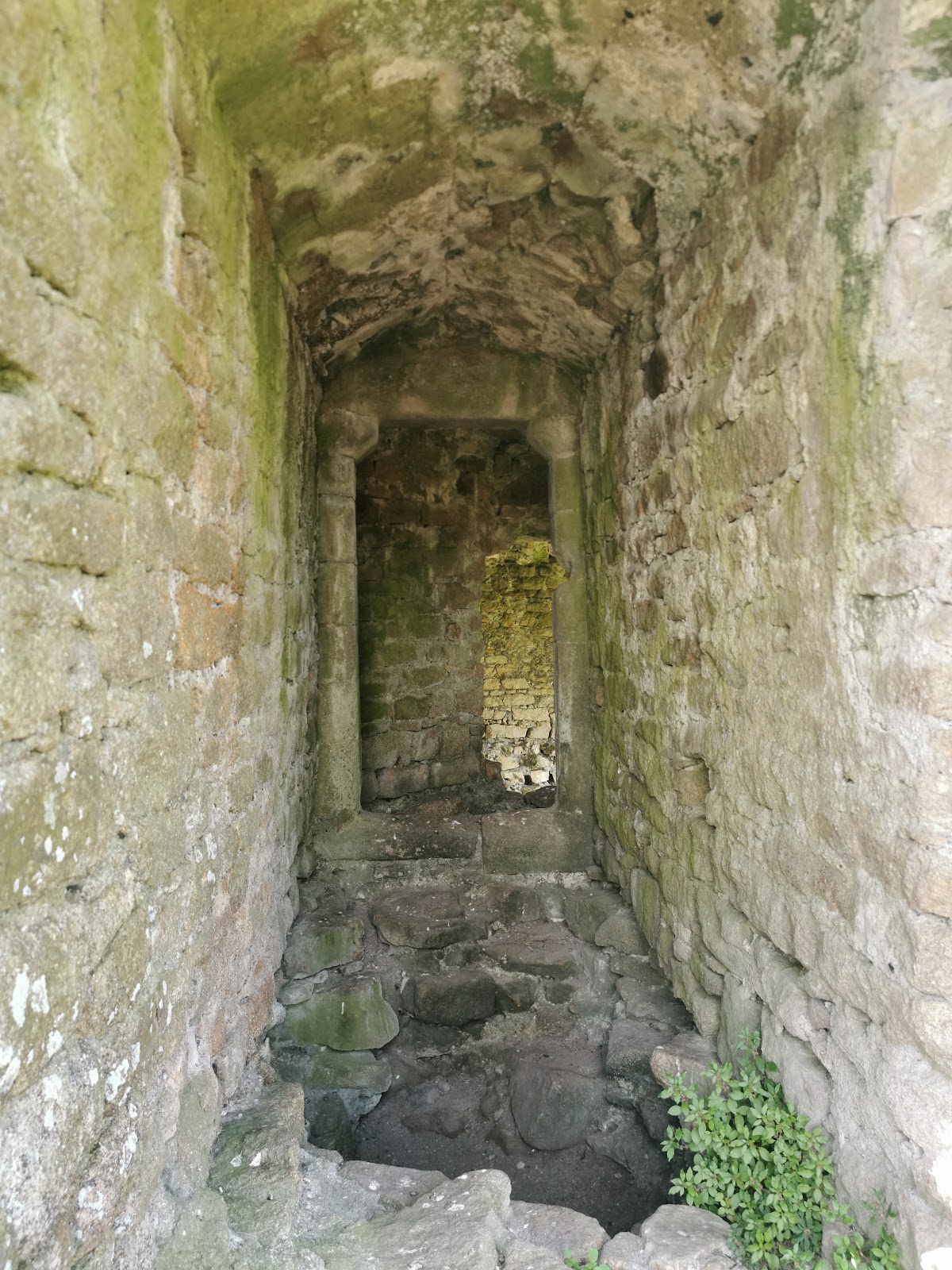
Within these walls lie the foundations of buildings that once enclosed the open courtyard. These outlines reveal where doorways and fireplaces were located, including an especially large double fireplace found on the northern side, which belonged to the castle’s principal hall, often referred to as the great hall. Against the interior faces of the walls, remnants of two-storey structures are still visible, although the majority of the upper stories and interior rooms have not survived. This scarcity of intact internal structures suggests the castle may have never been fully completed or was largely dismantled over time.
The western wall contains the main entrance, marked by an arched gateway with grooves cut into the stonework designed to hold a portcullis—a heavy, vertically sliding grille that could be lowered to block entry. Archaeological evidence also indicates the probable existence of outer defensive works such as a barbican, a fortified outpost guarding the gate.
Defensive features designed for archers and early gunpowder weapons are integrated into the walls. Narrow openings shaped as cross-like slits and arrow loops provided defenders with protected vantage points to shoot arrows or firearms while remaining shielded from attackers.
Access to the enclosure today is provided by a small wooden bridge that spans a surrounding ditch, allowing a direct approach at ground level to the castle’s outer walls and entrance. The combination of these structural elements reflects the castle’s function as a fortified residence designed with both defense and domestic occupation in mind.
Nearby sites