Frankish Historic Sites: Explore Merovingian and Carolingian Churches and Abbeys
Explore more than 100 historic sites connected with the Merovingian and Carolingian worlds, including palace chapels, churches, abbeys, baptisteries and crypts. The collection extends across several modern countries, particularly France, Germany and Italy. Its most substantial early architecture often survives within religious buildings enlarged or partly replaced in later centuries.
A Frankish foundation date does not mean that everything standing on the site is equally old. The examples below concentrate on identifiable early structures: an octagonal palace chapel, a monumental abbey entrance, a columned basilica and burial spaces beneath later churches. Together they show several forms of architecture surviving from the early medieval period.
Primary Function: All
Type: All
Civilization: All
Country: All
Popularity: All
Rating: All
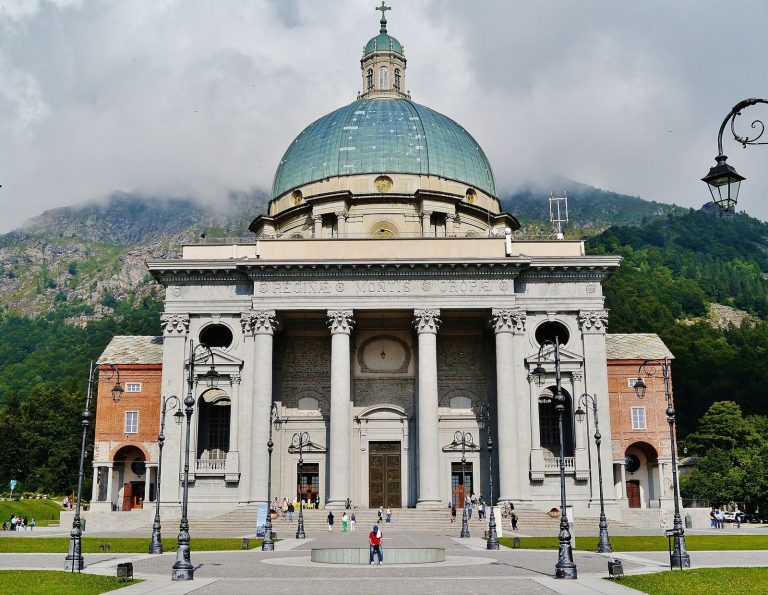
The Basilica Shrine of the Black Madonna at Oropa is a mountain pilgrimage complex whose history combines medieval churches, Baroque expansion, the…

The Basilica of Saint-Denis in France developed from a late Roman Christian burial site into the principal royal necropolis of the French monarchy…
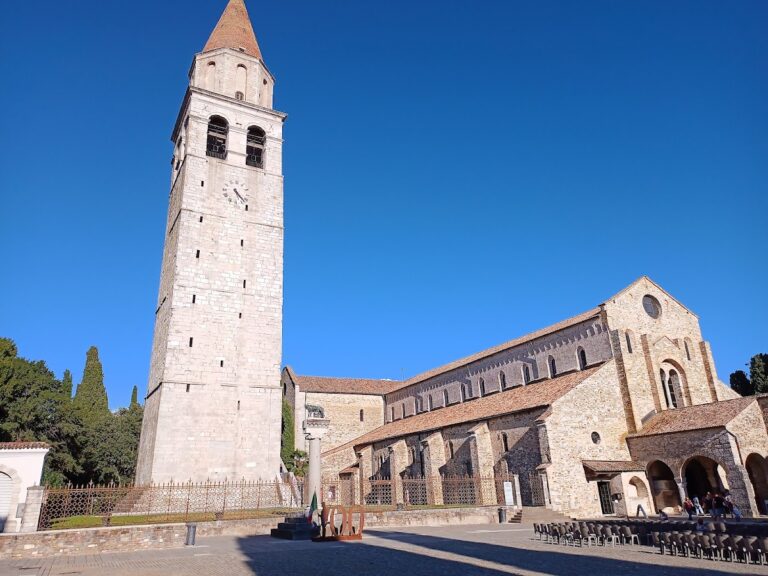
The Basilica of Aquileia grew from a fourth-century Christian complex into a Romanesque church and ecclesiastical center, preserving early mosaics…
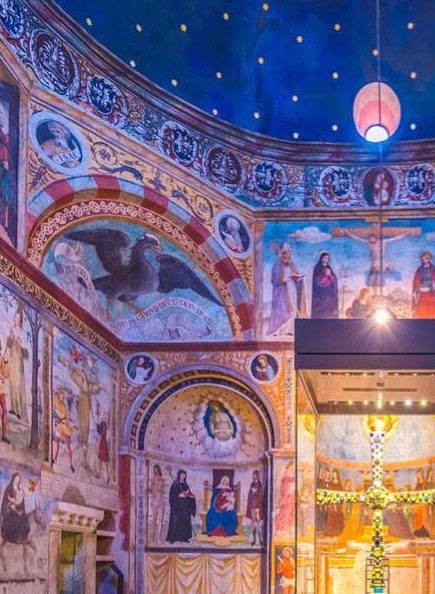
The Monastery of Santa Giulia in Brescia developed from the Lombard Monastery of San Salvatore, founded in 753. Its churches, cloisters, frescoes,…
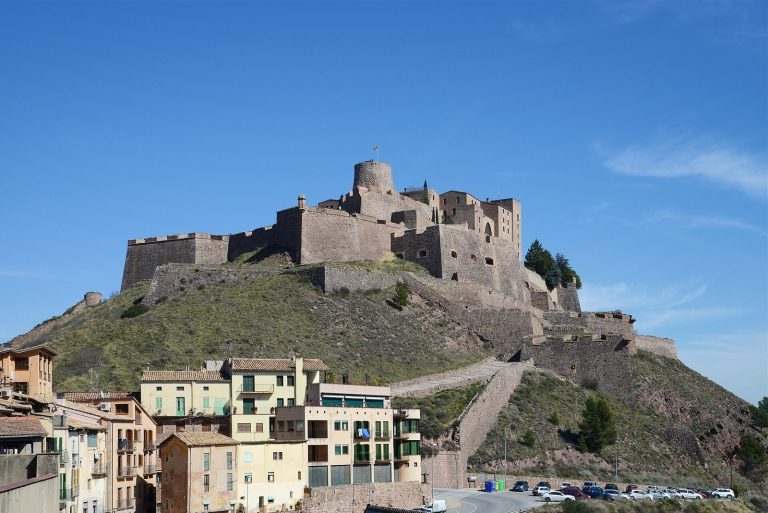
Castle of Cardona developed from a Carolingian frontier outpost into the seat of the Viscounts and Dukes of Cardona. Its later fortifications played…
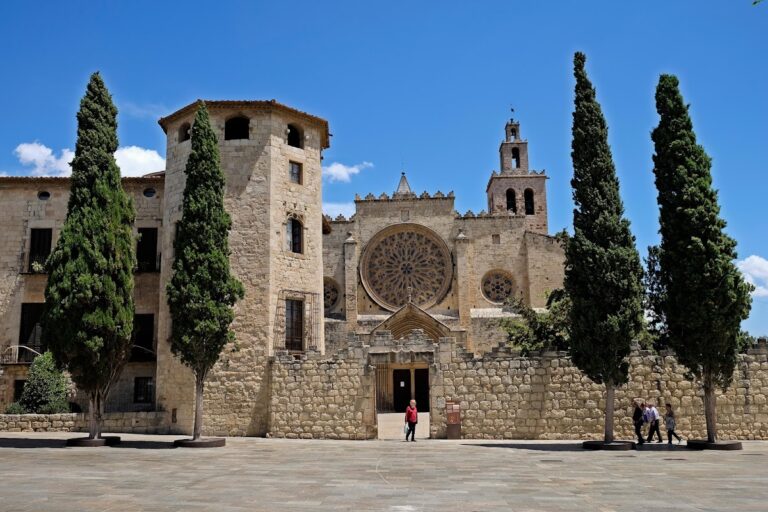
The Monastery of Sant Cugat was a major Benedictine abbey in the County of Barcelona, developing from Roman and early Christian foundations into a…
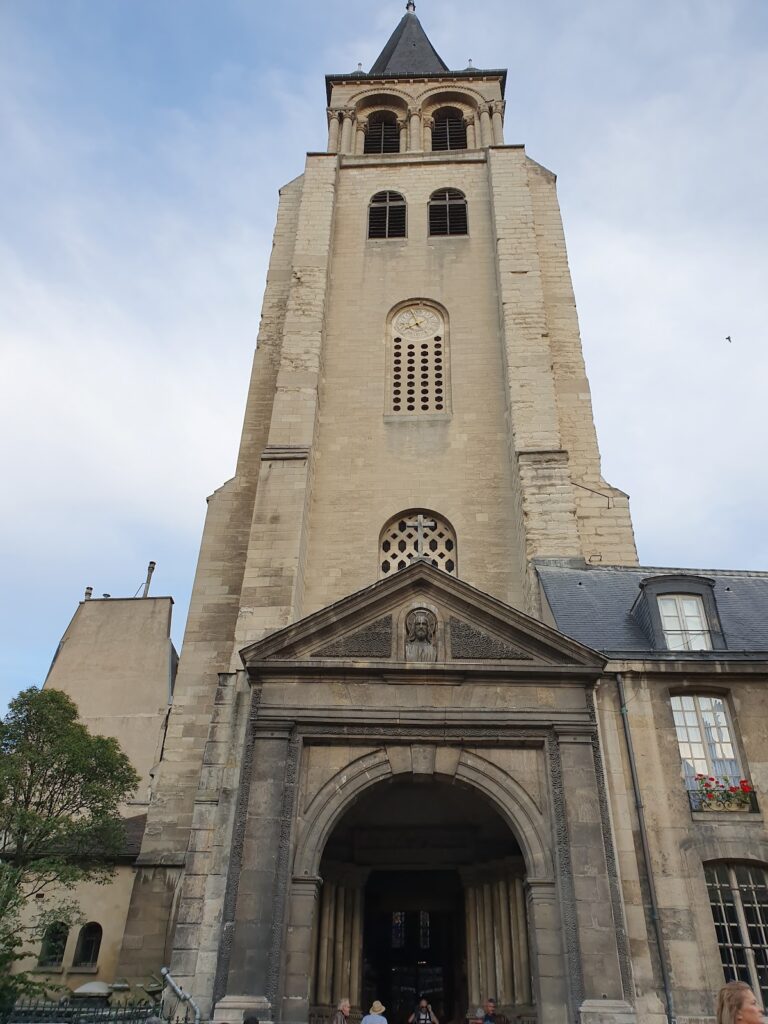
The Royal Abbey of Saint-Germain-des-Prés preserves a history extending from a sixth-century Merovingian foundation through medieval rebuilding,…
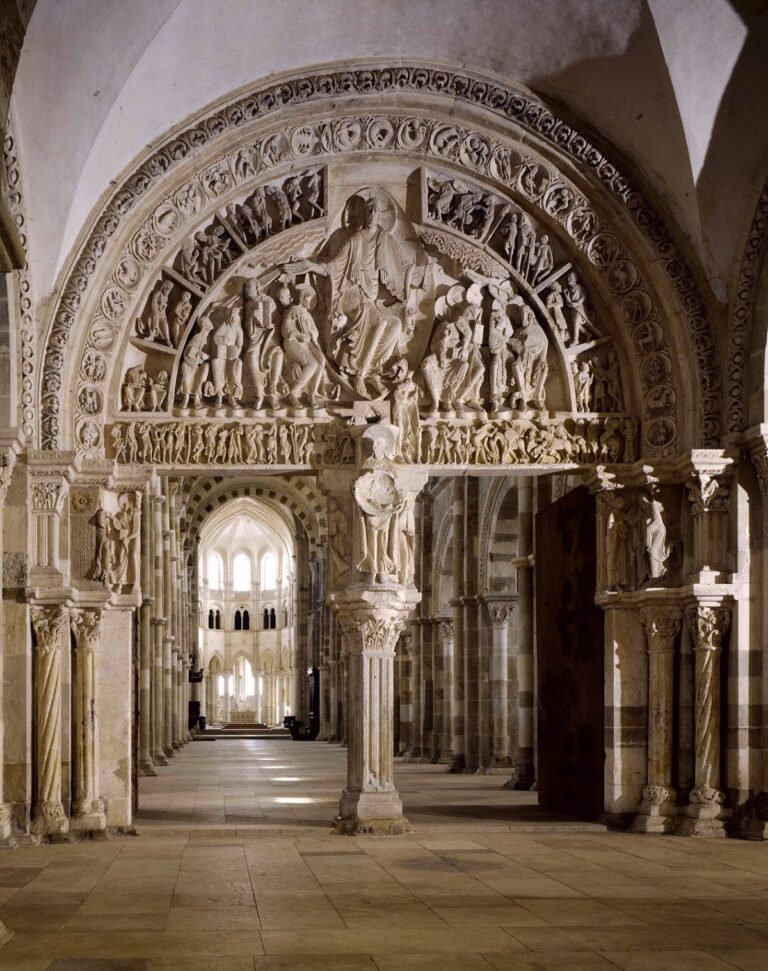
Vézelay Abbey, now the Basilica of Sainte-Marie-Madeleine, developed from a Benedictine monastery into a major medieval pilgrimage centre. Its…
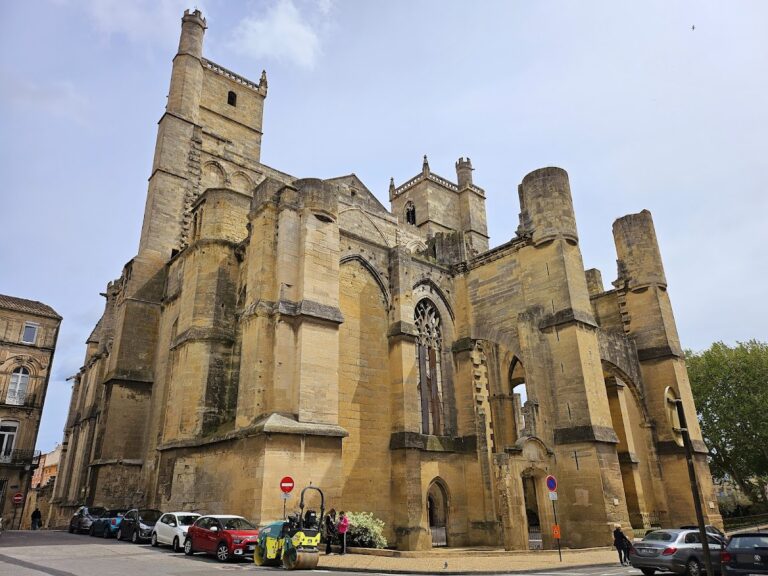
Narbonne Cathedral, dedicated to Saints Just and Pastor, preserves a long sequence of religious buildings and an ambitious Gothic choir begun in 1272…
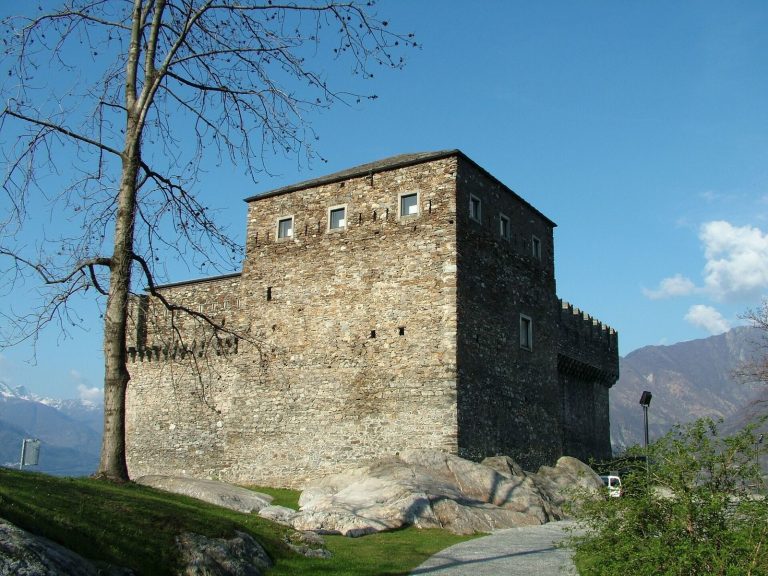
Castelgrande is a historic fortress in Bellinzona, Switzerland, whose position and successive fortifications controlled routes across the Alps from…
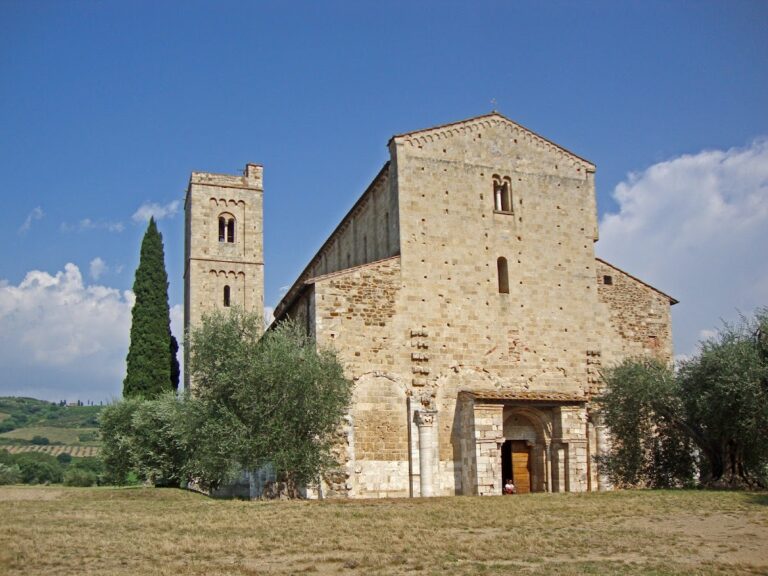
The Abbey of Sant'Antimo is a former Benedictine monastery in Tuscany, shaped by imperial patronage, territorial decline, ecclesiastical…
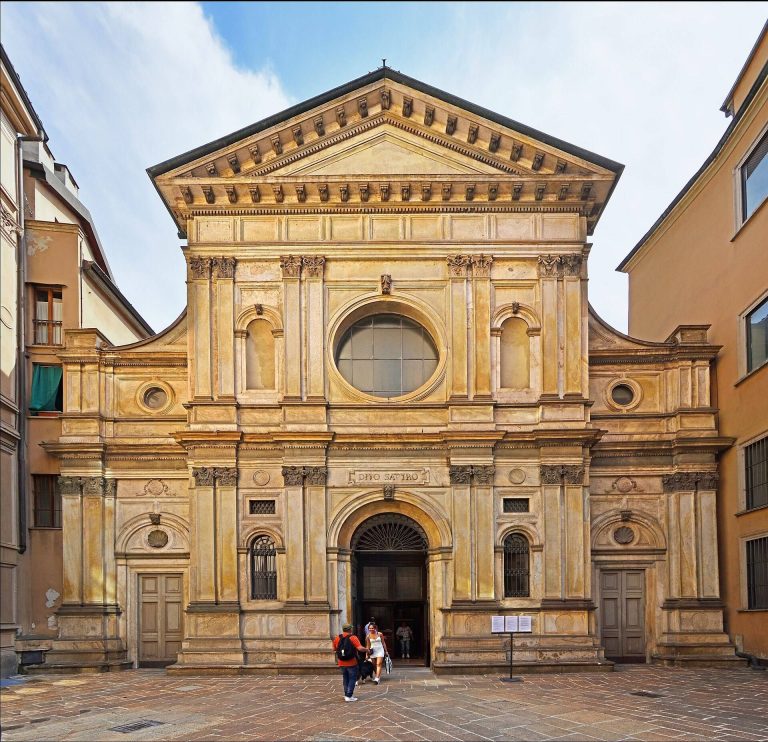
Santa Maria presso San Satiro is a Milanese church combining a ninth-century shrine, a Renaissance rebuilding associated with Donato Bramante, and an…
For details on how to use the maps, which sites are included, how popularity and ratings are determined, and how sites are classified, see the help page.
On this page6 sections
Palace chapels with central plans
Aachen Cathedral developed around Charlemagne’s Palatine Chapel. Its Carolingian core is an octagonal central room enclosed by a sixteen-sided outer circuit. Strong piers support the high central vault, while a lower ambulatory and an upper gallery surround the main space.
The concentric arrangement remains legible despite the cathedral’s later expansion. The Gothic choir, surrounding chapels and other additions belong to subsequent periods. Aachen’s early core survives as the organizing centre of a much larger church.
Monumental entrances to abbey churches
At Corvey Abbey, the principal early survivor is the westwork: the substantial entrance structure at the western end of the church. Built between 873 and 885, it formed part of a monastery established beside the Weser, close to an important river crossing.
Much of the surrounding abbey complex is Baroque, including the residential ranges. The westwork remains a substantial Carolingian structure within this later complex, preserving the monumental western entrance after replacement of much of the earlier church.
Burial crypts beneath later churches
Jouarre Abbey was founded in the Merovingian period. Its surviving crypt contains early funerary monuments associated with the founding community and its successors. A carved sarcophagus associated with Agilbert includes Christ in Majesty and a Last Judgment scene, giving the burial space an architectural and sculptural interest beyond the abbey’s foundation story.
The Abbey of Saint-Germain d’Auxerre preserves a substantial Carolingian crypt beneath its later buildings. Constructed on several levels to accommodate the slope, it includes a central burial chamber, a surrounding rectangular passage and an attached circular oratory. Painted surfaces further distinguish these enclosed spaces.
Both sites preserve early religious architecture below later complexes, but the surviving arrangements differ. Jouarre’s funerary monuments are central to its crypt, while Auxerre provides a more extensive sequence of connected chambers and circulation around a revered burial.
Baptisteries adapted from late antiquity
The Baptistère Saint-Jean in Poitiers has late antique origins and underwent substantial alteration in the sixth and seventh centuries. Its Merovingian decoration includes pilasters, cornices, gables, arches and brick rosettes arranged across the building’s surfaces.
Inside, an octagonal baptismal pool records the earlier practice of immersion. The pool was later filled and the building converted to church use. Subsequent rebuilding, wall paintings and restoration added further layers. The precise earliest plan remains debated, but the standing building provides concrete evidence of adaptation across late antique and Frankish phases.
Basilicas with surviving Carolingian interiors
Saint Justinus’ Church in Frankfurt-Höchst retains much of a three-aisled basilica built after 830. Two rows of round columns divide the nave from the aisles. Their carved capitals, the small round-arched clerestory windows and the flat ceiling preserve the character of the early interior.
This is a different survival from an isolated crypt or entrance structure: much of the main worship space remains identifiable. Later work, including the Gothic choir, enlarged and altered the church without removing the entire Carolingian body. It is therefore possible to follow both the early basilica and its subsequent extension within one standing building.
Explore the collection
Explore sites on the map or in the grid. Map icons reflect each site’s primary function, helping you identify different kinds of places at a glance. Narrow the results by country, primary function, site type or era, or filter by civilization within this collection, with additional filters for popularity and rating. Select a map marker to view the site’s details and open its article, or open the article from its grid entry.