Castles in Switzerland: Explore Round Towers, Moated Residences and Arcaded Palaces
Castles in Switzerland include medieval enclosures beside lakes and valley routes, later artillery works and residences designed around courtyards and gardens. The collection also covers palaces and manor houses. Their rooms and service buildings show functions beyond defence: trade, storage, government and household life occupied many of the same enclosed spaces.
Primary Function: All
Type: All
Civilization: All
Popularity: All
Rating: All
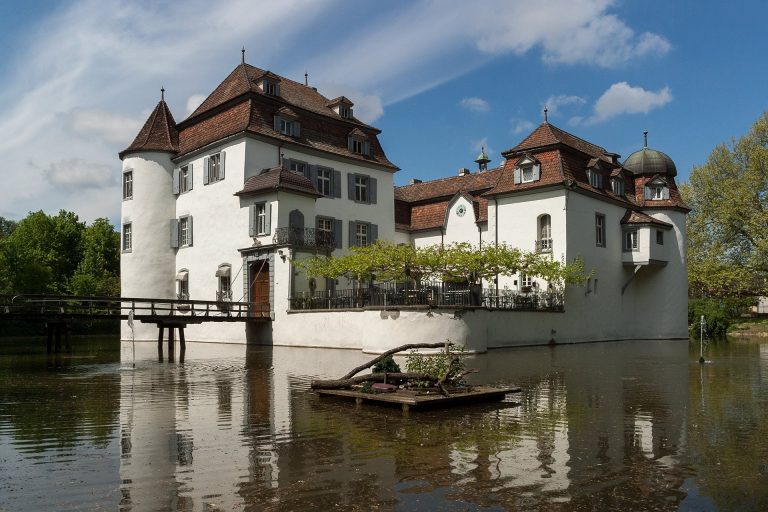
Bottmingen Castle is a medieval water castle south of Basel whose fortress plan, Baroque façades, and Rococo interiors reflect centuries of…
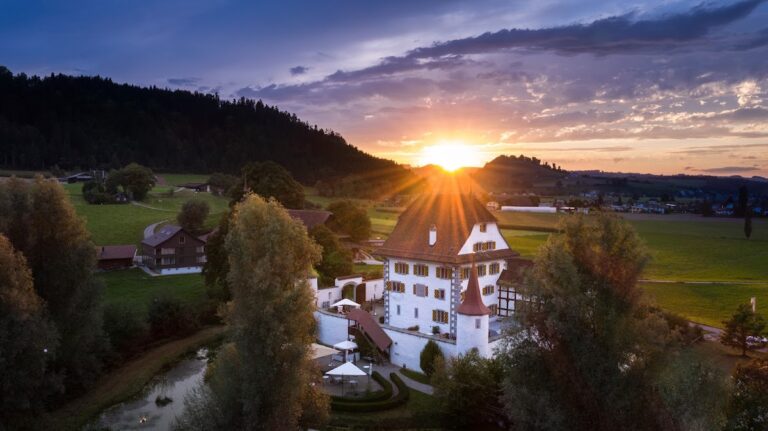
Wyher Castle near Ettiswil developed from a medieval fortified residence into a Renaissance castle complex and was restored after a major fire in…
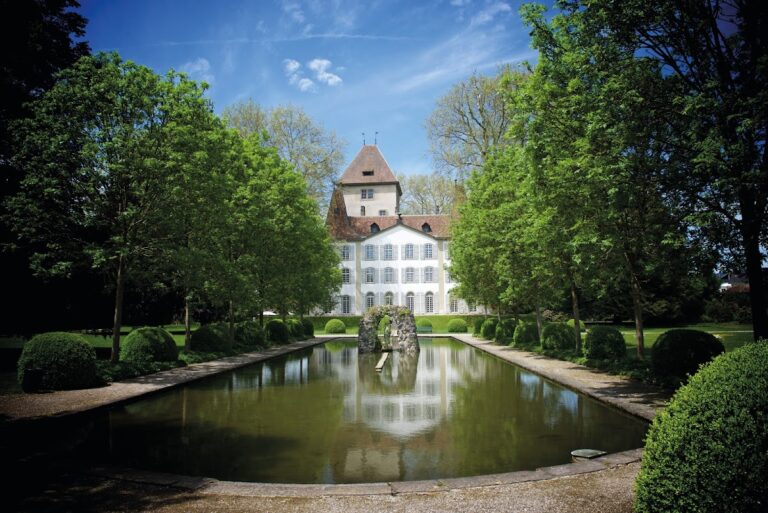
Jegenstorf Castle in Switzerland developed from a medieval lowland fortress into a baroque country estate. Its interiors, gardens, collections, and…
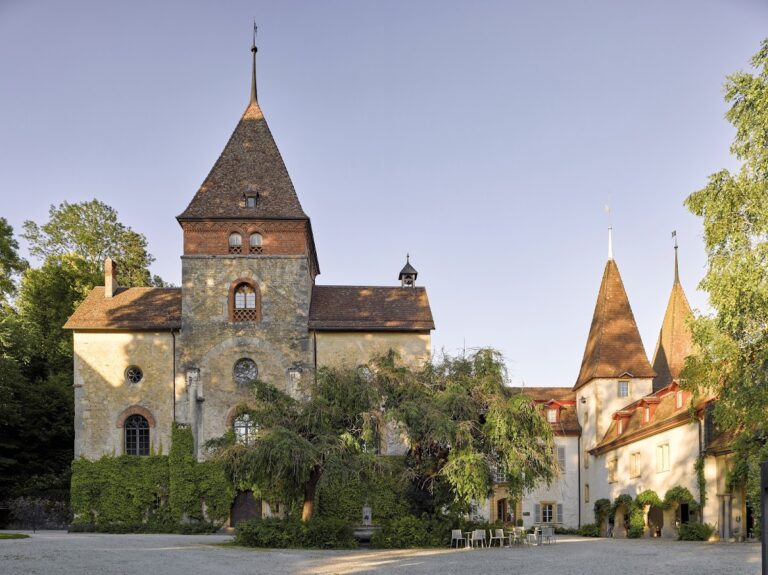
Münchenwiler Castle developed from a Cluniac priory founded around 1100 and was transformed into a Renaissance castle, a baroque residence, and later…
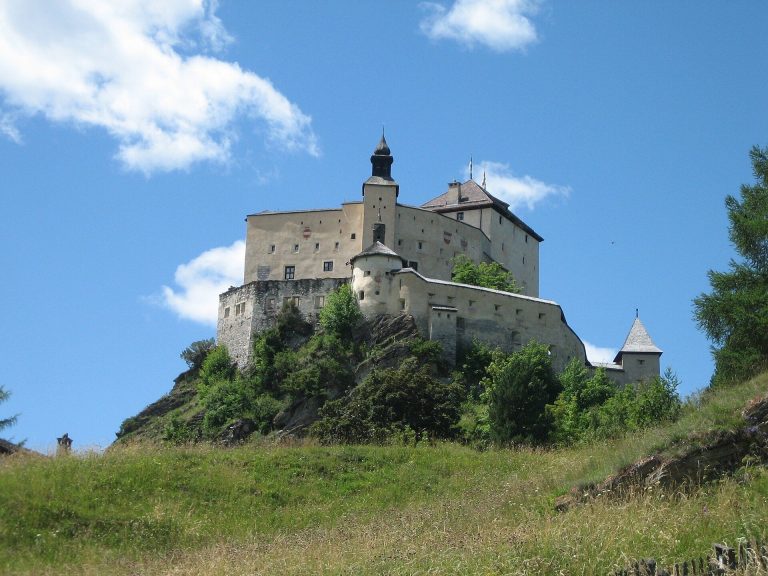
Tarasp Castle is a medieval hilltop fortress above the Inn valley in the Lower Engadine. Its history spans Tarasp lordship, Habsburg rule, major…
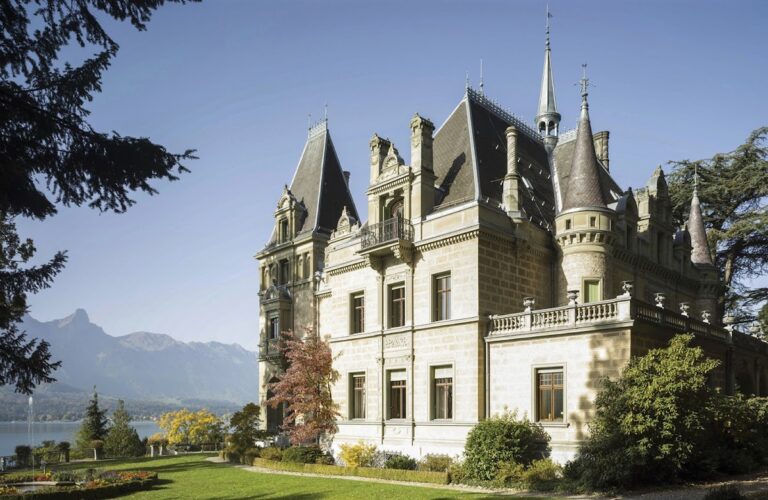
Hünegg Castle in Hilterfingen was built between 1861 and 1863 for Baron Albert Emil Otto von Parpart and later reshaped with Art Nouveau interiors.…
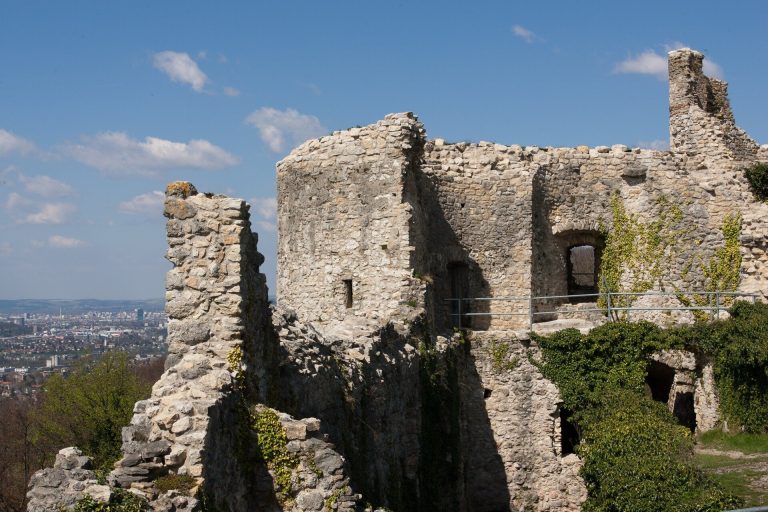
Dorneck Castle near Dornach developed from a medieval hilltop fortress into Solothurn’s northern administrative and military centre before its…

Schauenberg Castle on Schauenberg Hill preserves evidence of prehistoric defenses, a medieval aristocratic residence, its destruction in 1344, and a…
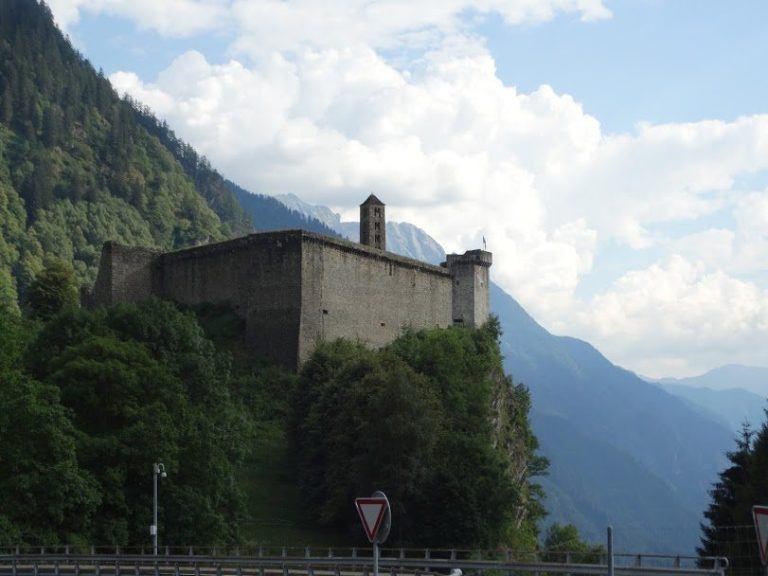
Mesocco Castle developed from an early medieval fortified church into the political center of the Mesolcina valley. Its ruins preserve medieval…
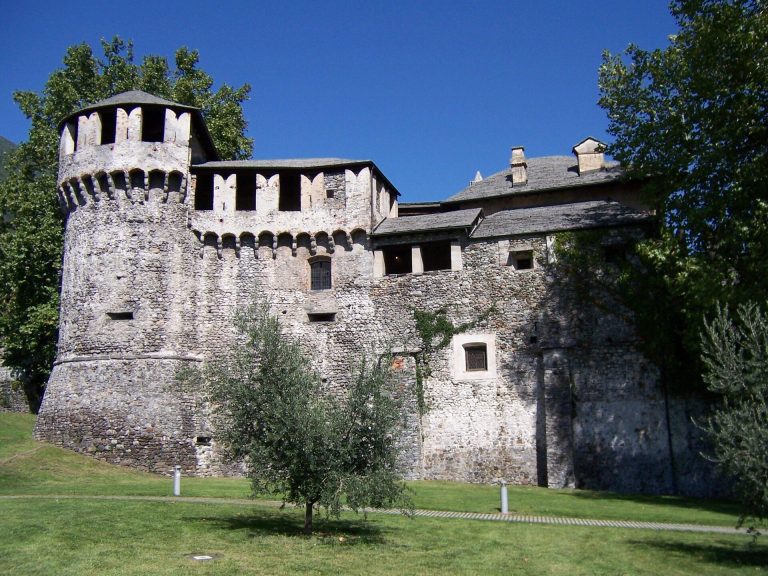
Visconteo Castle in Locarno developed from a medieval stronghold into a Visconti fortress, a Rusca residence, and the seat of Swiss governors. Its…
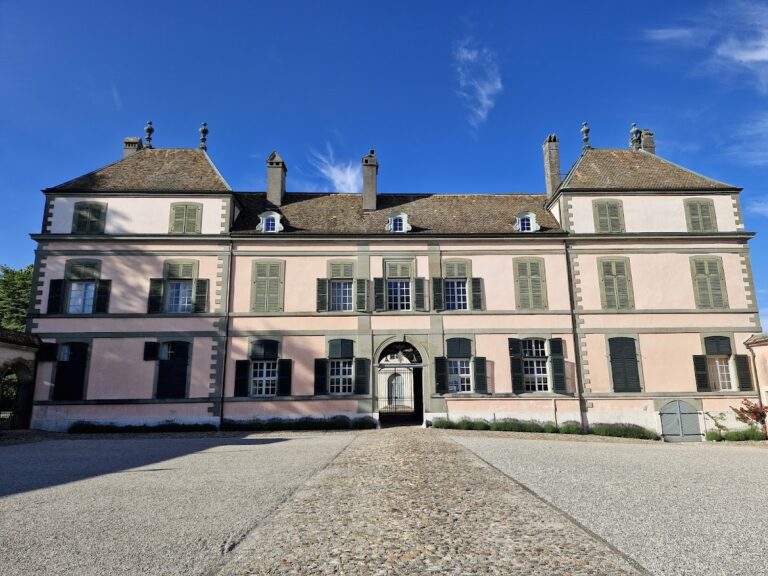
Coppet Castle developed from a medieval fortified house into a classical château and became the residence of Jacques Necker and Germaine de Staël,…
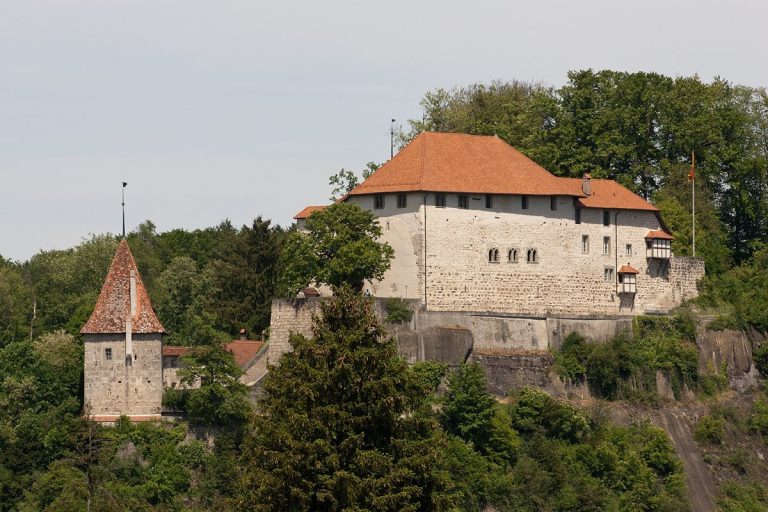
Laupen Castle in Switzerland developed from a medieval fortified site into a contested frontier stronghold and later the first territorial bailiwick…
For details on how to use the maps, which sites are included, how popularity and ratings are determined, and how sites are classified, see the help page.
On this page6 sections
Medieval enclosures at Aigle and Grandson
Aigle Castle stands among vineyards near routes through the Rhône valley. Its towers and curtain walls developed from a smaller medieval stronghold, with major alterations under Savoyard and later Bernese rule. A substantial southern tower belongs to the fifteenth-century enlargement, while a square tower replaced an earlier round one during Bernese rebuilding.
The adjoining tithe buildings connect the fortified residence with the collection and storage of agricultural produce. A barn was added west of the castle in 1587. Inside, former prison spaces retain inscriptions left by prisoners, adding evidence of another use of the enclosed rooms.
Grandson Castle occupies a rocky spur beside Lake Neuchâtel. Round towers punctuate its nearly square perimeter, and much of the wall circuit remains standing. The lake formerly reached the southeastern wall before its level was lowered in 1875. The earlier square keep has disappeared, so the large surrounding towers and walls provide the main surviving form of the castle rather than a central tower rising above them.
Munot: a circular artillery fort with a vaulted interior
Munot stands above Schaffhausen as a broad masonry cylinder surrounded by a dry moat. Built in the sixteenth century, it has an open gun platform above a large vaulted chamber. Nine pillars support the vault, and circular shafts admit daylight from above.
Small, domed defensive chambers in the moat provided firing positions close to ground level, covering areas difficult to reach from the main platform. A spiral stair connects levels within the complex. The arrangement gives Munot a markedly different interior from a castle of separate residential wings: a large, protected space sits beneath a continuous artillery terrace.
Bottmingen: Baroque rooms within a moated castle
Bottmingen Castle occupies a rectangular island within a pond. Bridges control the approaches, and the main entrance retains a mechanism for raising the final span. Its corner towers and enclosed plan preserve the form of a medieval water castle.
Eighteenth-century remodelling introduced French Baroque façades and interiors, followed by Rococo plasterwork in the Stone Hall. One corner tower was removed to create a garden terrace. Water and older defensive masonry therefore surround rooms and outdoor spaces adapted for a later country residence.
Stockalper Palace: arcades built for residence and trade
The Stockalper Palace in Brig combines an older house with a large seventeenth-century palace. Three towers with onion-shaped roofs rise beside a courtyard enclosed by tiers of arcades. A covered passage links the older and newer buildings.
Kaspar Stockalper commissioned the complex as a residence and centre for goods moving across the Simplon Pass. The court served as a marketplace, while galleries accommodated merchandise. Halls, a chapel and decorated residential rooms occupied other parts of the ensemble. Its imposing courtyard was therefore part of a trading enterprise as well as a household.
Delémont’s Prince-Bishops’ Castle: apartments above working floors
The Prince-Bishops’ Castle in Delémont is a Baroque residence with a formal courtyard, garden and large roof. Principal apartments occupied the first floor, including accommodation for the prince-bishop and a visiting prince. Corridors connected the rooms while separate service spaces supported the household.
A vaulted cellar stored wine, a mezzanine contained bread ovens, and the attic held grain reserves reached by hoists. These working levels explain the building as an administrative and residential centre, with agricultural storage incorporated beneath and above its more formal rooms.
Explore the collection
Explore sites on the map or in the grid. Map icons reflect each site’s primary function, helping you identify different kinds of places at a glance. Narrow this collection by primary function, by a site type within the castle and residence group, or by civilization and era. Additional filters cover popularity and rating. Select a map marker to view the site’s details and open its article, or open the article from its grid entry.