Dorneck Castle: A Medieval Fortress and Artillery Stronghold in Switzerland


Site at a Glance
- Rating
- 4.6
- Popularity
- Low
- Country
- Switzerland
- Primary era
- Early Modern
- External website
- Open
- Eras represented
- Medieval, Early Modern
- Civilizations
- Habsburg, Holy Roman Empire, Swiss
- Site type
- Military
- Remains
- Castle
On this page14 sections
History
Dorneck Castle is a medieval hilltop fortress near Dornach in Switzerland, with archaeological evidence placing its existence by about the mid-eleventh century. First mentioned in writing in the mid-fourteenth century, it developed through successive noble and territorial transfers before becoming an administrative and military centre of Solothurn.
Medieval Lords and Habsburg Rule
Dorneck was probably founded by the Free Lords of Pfeffingen. Through kinship ties, it passed to the Counts of Soyhières and around 1200 to the Counts of Thierstein. In 1360, the Thiersteins sold the fortress to Duke Rudolf IV of Habsburg, then immediately received it back as a fief. A fief was property granted by a superior lord to a vassal in return for service and allegiance. This arrangement allowed the Thiersteins to retain control while acknowledging Habsburg authority.
The fief was sold to Austria in 1384, although half of Dornach remained Thierstein property. Dorneck was associated with half of the village of Dornach and with Gempen. In the medieval feudal system, a fortress estate could be transferred together with villages, land, jurisdiction, taxes, and revenues.
After the Habsburg defeat at the Battle of Sempach, Austria’s financial difficulties led to Dorneck being pledged in 1394 to the Basel citizen Henmann von Efringen. Austria retained the right to occupy and use the fortress during wartime. The Efringen family acquired half of Dornach in 1462, but later pledged Dorneck to the nobleman Konrad von Hallwyl because of financial difficulties and internal disputes.
Solothurn’s Northern Stronghold
Solothurn purchased Dorneck in 1485 during its northward expansion and acquired full sovereignty in 1502. The town made the fortress the seat of a bailiwick, an administrative district governed by a bailiff with delegated judicial, fiscal, and governmental authority. The district covered Dornach, Bättwil, Büren, Gempen, Hochwald, Hofstetten-Flüh, Metzerlen-Mariastein, Nuglar-Sankt Pantaleon, Rodersdorf, Seewen, and Witterswil.
By 1485, the fortress was already in poor condition, and its associated rights may have been more valuable to a purchaser than the building itself. During the Swabian War of 1499, a conflict between the Swiss Confederacy and forces associated with the Habsburg Empire, imperial troops attacked Dorneck and threatened to storm it. Confederate forces arrived and defeated them at the Battle of Dornach.
Repairs and expansion began in 1499. Over the next three centuries, Solothurn transformed Dorneck into an artillery fortress, an unusual level of investment in a medieval castle. Around sixty Solothurn bailiffs successively resided there, while the fortress was intended to protect the Birs valley and Solothurn’s northern Jura possessions.
Dorneck was involved in military events during the Peasants’ War of 1525 and remained militarily relevant during the Thirty Years’ War, the seventeenth-century conflict that involved major European powers and religious as well as political struggles. Its strong garrison and good armament kept it from being attacked during that war.
Destruction and Conservation
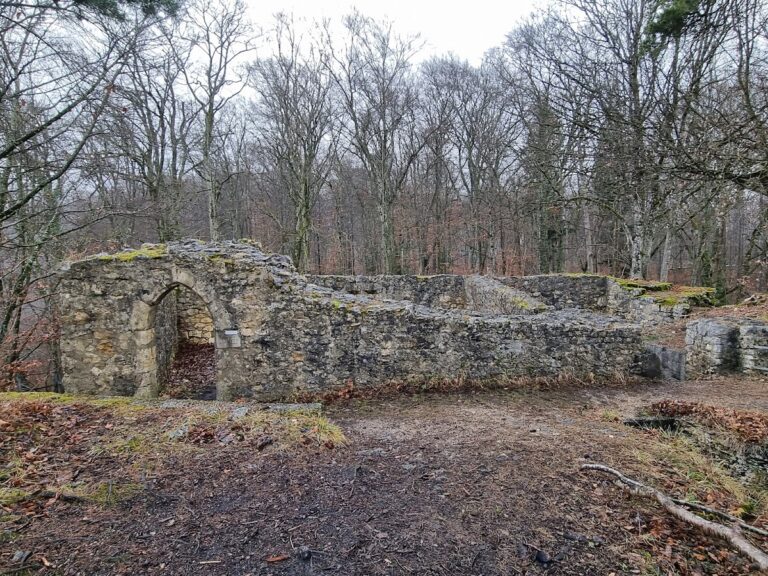
French troops heavily damaged and captured Dorneck during the invasion of 1798, effectively destroying the fortress. It was then declared national property and transferred to the municipality of Dornach. An attempt to sell it at auction failed, and the ruins were left abandoned. During the nineteenth century, they were used as a stone quarry.
In 1902, citizens of Dornach donated the remains to the canton of Solothurn, which cleared and conserved them between 1903 and 1906. A second campaign followed, and the ruins were classified as a historic monument in 1935. Planned reconstruction was delayed by a lack of funds and resumed only in the 1970s. Since 1970, Solothurn’s heritage authorities have been responsible for the complex, and the latest restoration was completed in 1999.
Dorneck also forms part of a nationally important military barrier whose defensive continuity extends from the medieval castle through the sixteenth- and seventeenth-century fortress to modern military positions. Construction of the modern barrier system began in autumn 1939 under Border Brigade 4, with barriers controlling access to the Gempen Plateau.
Remains
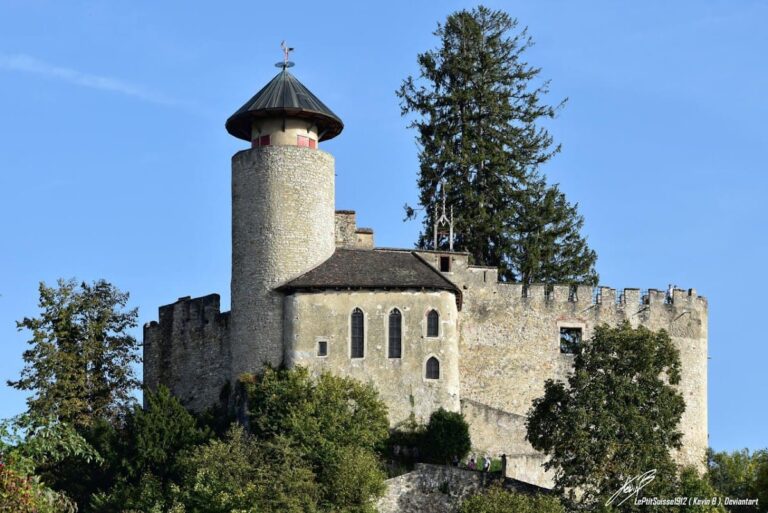
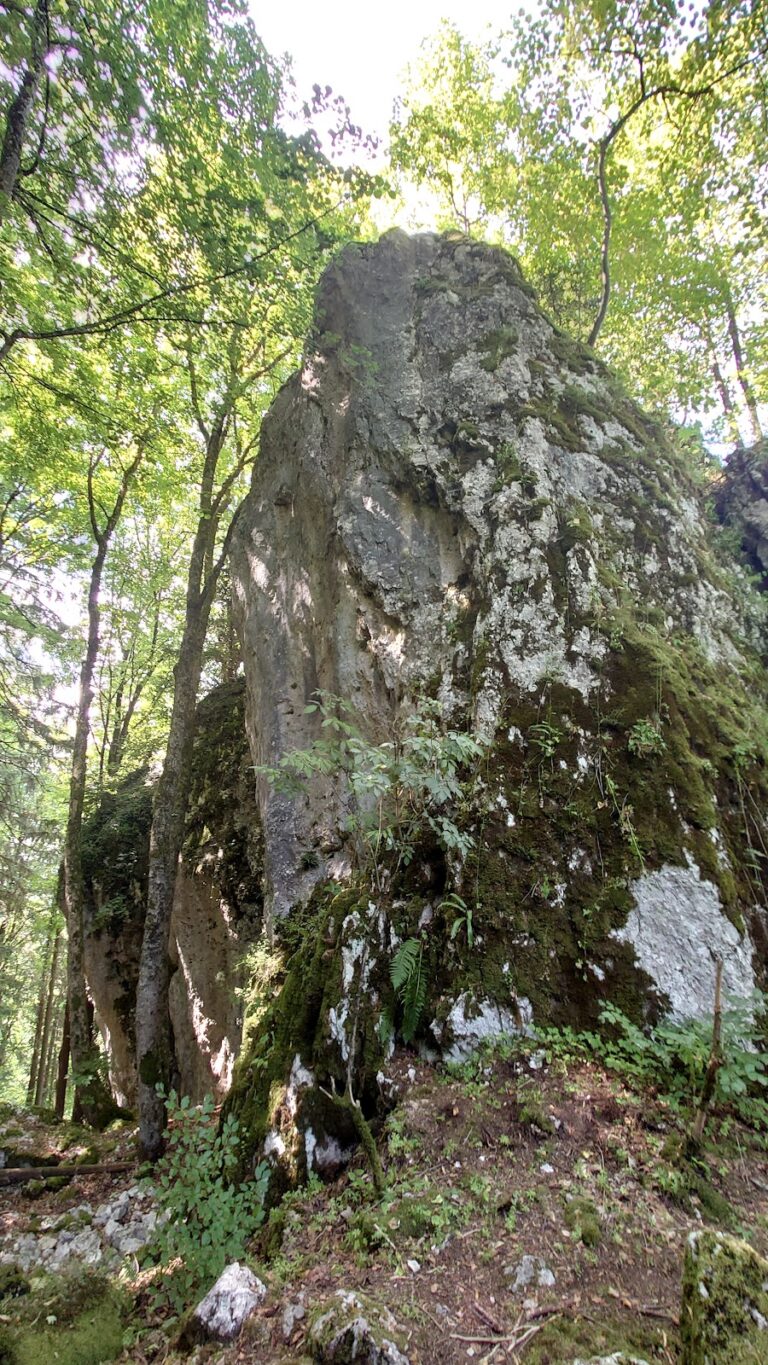
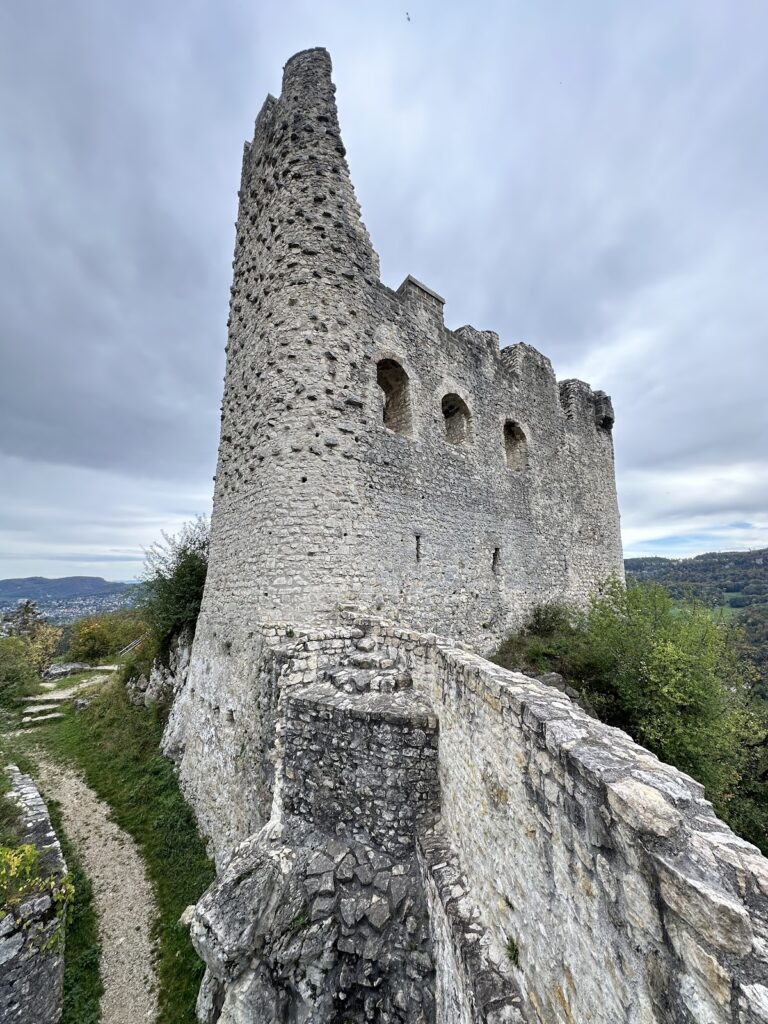
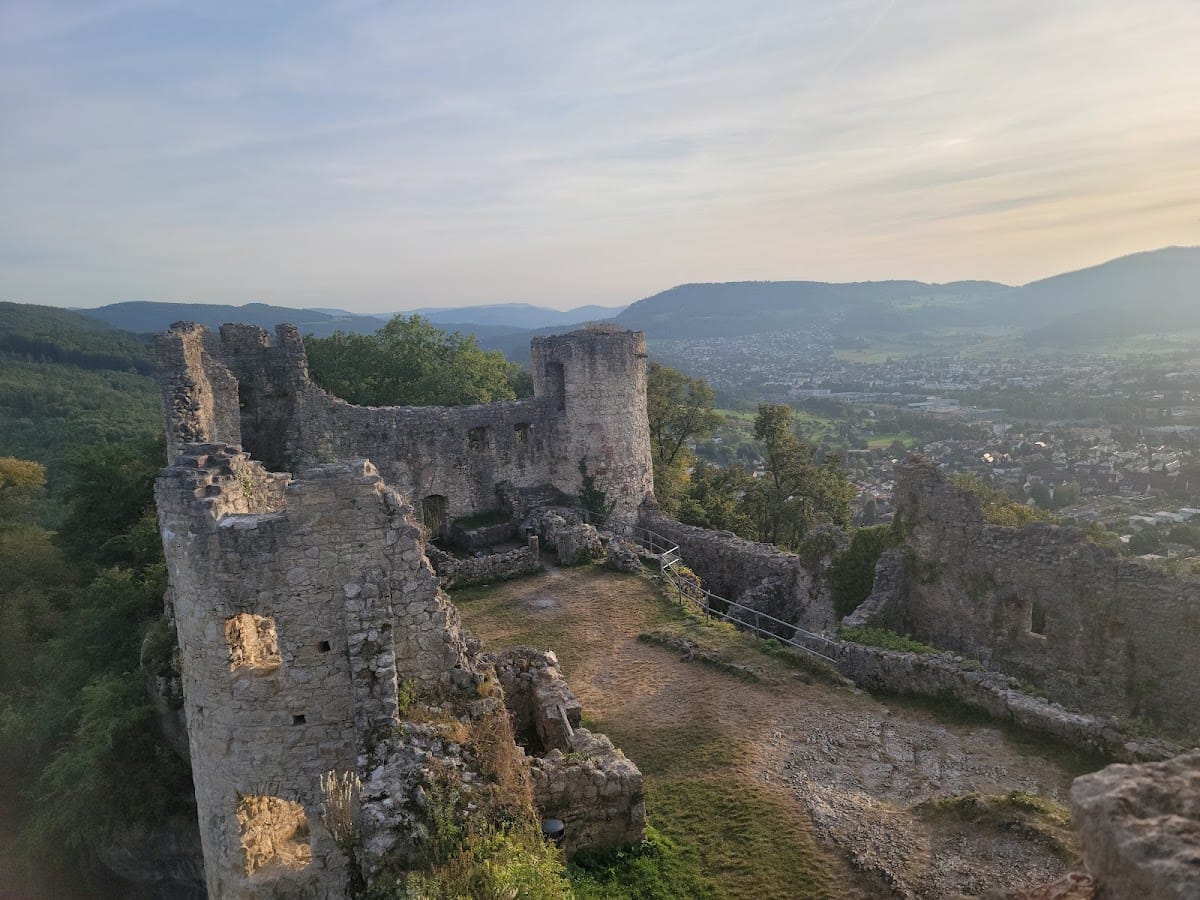
The ruins occupy a large rocky ridge about 490 metres above sea level, east of Dornach between the floor of the Birs valley and the slope of the Gempen Plateau. Steep slopes make access from the east, south, and west difficult. The historic entrance lies to the north, facing the castle courtyard. The fortress occupies an enclosure approximately 100 metres long and 40 to 50 metres wide, built principally of stone.
Outer Defenses and Courtyards
Outer Gate and Zwinger
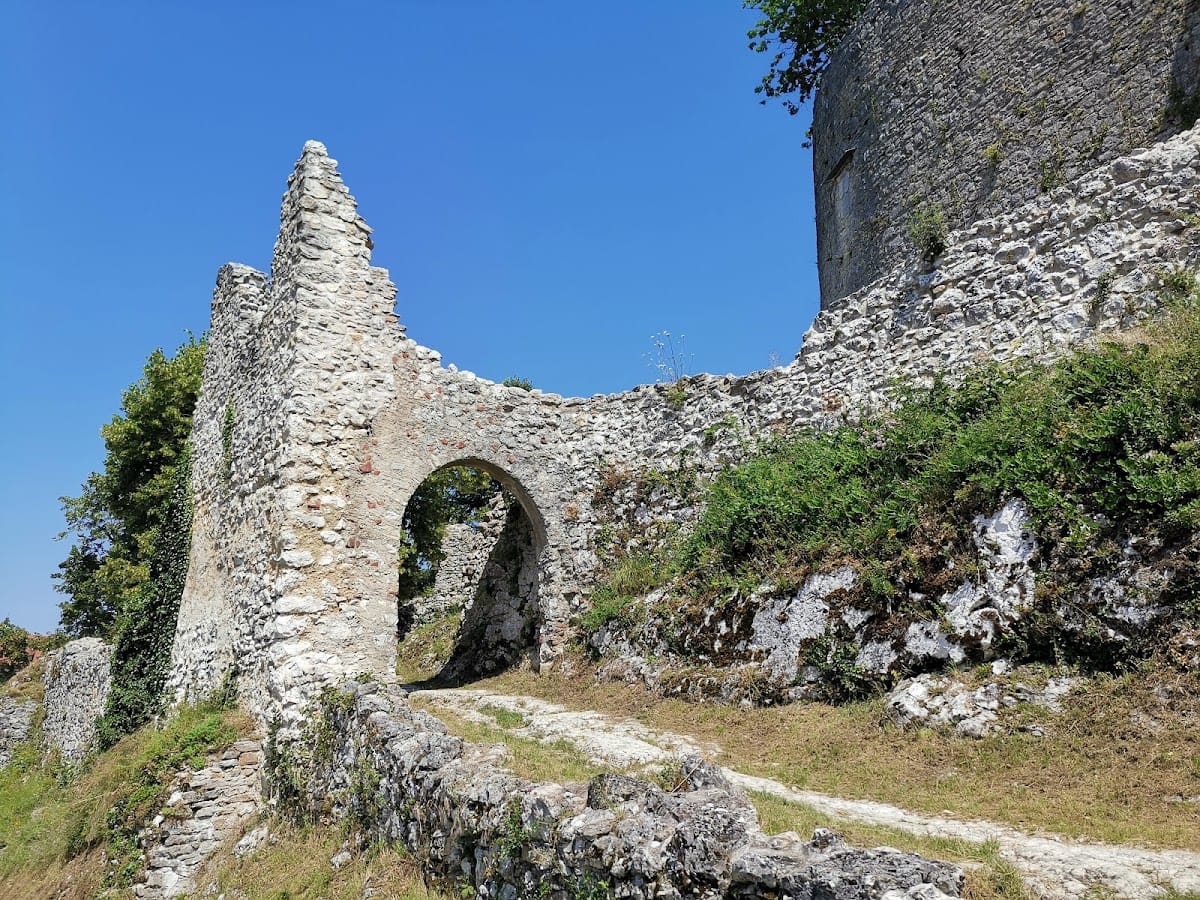
A levelled area north of the complex probably held economic or service buildings and may also have supplied stone for construction. Entry began at an outer gate, preceded by a rock-cut gate ditch and drawbridge. The gate led into a zwinger, a fortified passage between defensive barriers designed to expose attackers before they reached the main enclosure. From there, a second gate and gatehouse opened into the outer courtyard of the outer ward.
Inner Gate
A small bulwark was attached to the outer courtyard as part of the outer ward. The fortress core was reached through another inner gate, which is decorated with stone cannonballs recovered from the fortress rubble.
Medieval Core and Later Additions
Central Courtyard and Medieval Buildings
Residential buildings, a kitchen, a chapel, and several towers stood around a central courtyard. The surviving medieval remains include a thirteenth-century keep, palas, and tower. A palas was the principal residential hall of a medieval castle. The curtain wall and various additional buildings further indicate the former extent of the fortified enclosure.
Sixteenth-Century Powder Tower
A powder tower dated to 1543 belongs to the fortress’s later military development. Its survival, together with the curtain wall and other structures, reflects the transformation of the medieval complex for artillery warfare under Solothurn.
Artillery Works and Modern Barrier
Large Bastion
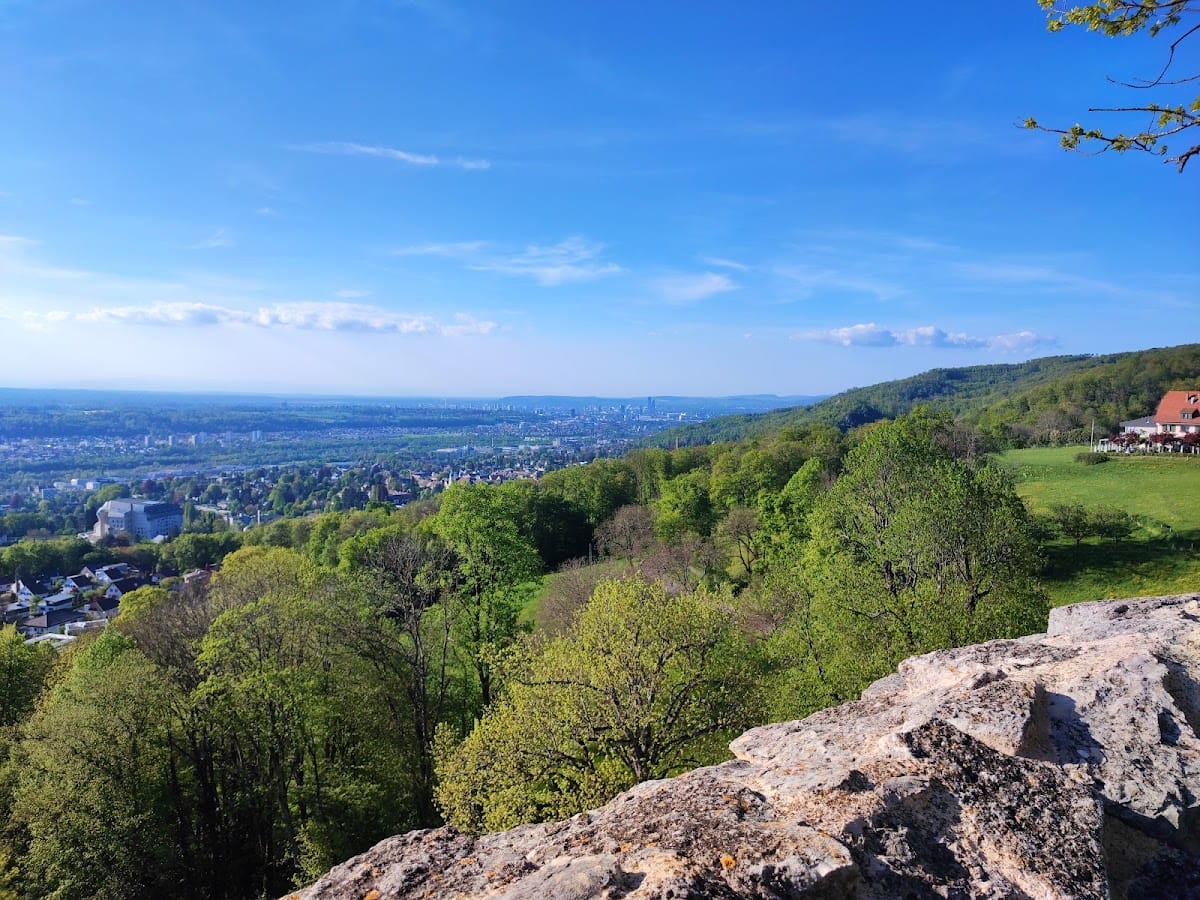
The large bastion dominates the complex from the highest rocky pinnacle. Built as a solid structure without rooms, it was designed for heavy artillery. It is now reached from the central courtyard by an iron staircase and provides a view over the surrounding region.
Modern Military Installations
The modern Dorneck military barrier includes infantry bunkers, weapons positions, observation installations, underground shelters or caverns, road barricades, a road-demolition installation, and anti-tank obstacles in the vicinity of the castle and the neighbouring barriers at Dornach, Dornachberg, and Birseck.