Grandson Castle: Medieval Fortress on Lake Neuchâtel

Site at a Glance
- Rating
- 4.4
- Popularity
- Medium
- Country
- Switzerland
- Primary era
- Medieval
- External website
- Open
- Eras represented
- Medieval
- Civilizations
- Unclassified
- Site type
- Military
- Remains
- Castle
On this page12 sections
History
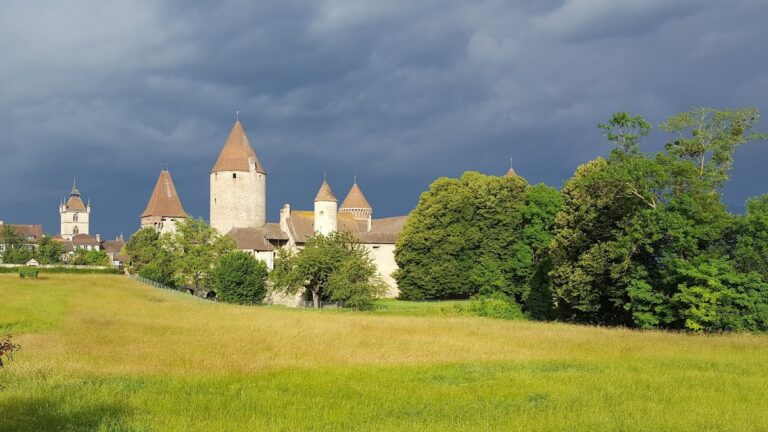
Grandson Castle is a medieval castle in Switzerland, in the municipality of Grandson on the southern shore of Lake Neuchâtel. Its earliest buildings are generally dated to the beginning of the eleventh century, or approximately 1050 to 1100, and its position allowed the Lords of Grandson to control the coastal road. The castle later became a stronghold shaped by noble expansion, regional conflict, the Burgundian Wars, and successive administrative regimes.
Origins and the Lords of Grandson
The earliest castle included a square keep. The Lords of Grandson first appear in written records in the second half of the eleventh century. As the family extended its authority, it repeatedly came into conflict with the nearby monastery of Romainmôtier, a medieval religious foundation in the Swiss Jura region.
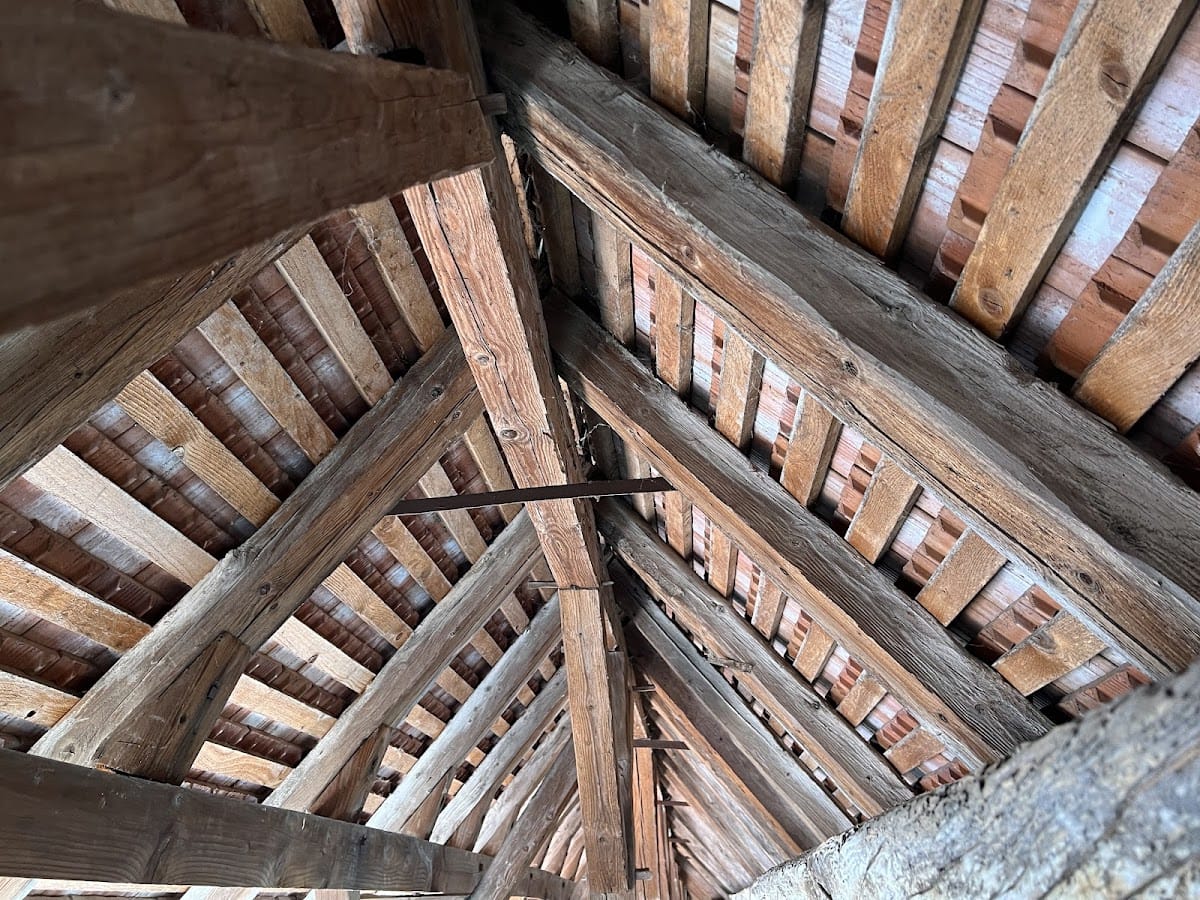
The main rebuilding campaign took place during the thirteenth and early fourteenth centuries. Three fortified towers were erected in the 1270s and 1280s during the rule of Otto I of Grandson, with the timber elements dated by dendrochronology, a method that identifies dates through the annual growth rings of wood.
Otto I was a military leader, diplomat, knight, and major regional lord with close connections to the English court. He accompanied Prince Edward of England on crusade in 1271, took part in the English conquest of Wales in 1283, and commanded the unsuccessful attack on Acre in 1291. In 1313, he defeated the rebellious city of Lausanne.
The Lords of Grandson were affiliated with the House of Savoy, a major dynasty whose territories and influence extended through parts of the western Alps and the Lake Geneva region. The family’s main line declined during the late fourteenth century. Otto III of Grandson, accused of causing the death of Amadeus VII, Count of Savoy, was killed by Gerhard of Estavayer in a judicial duel in 1397. After the family line failed, the Savoyards acquired Grandson and held it until 1420, when they ceded it to the Counts of Chalon-Arlay.
Fire, fortification, and the Burgundian Wars
A fire that began in the town in 1378 destroyed a large part of the castle. During the fifteenth century, the defenses were expanded with three further towers, built around 1450 to protect the town and castle from attacks across Lake Neuchâtel. Two of these towers stood beside the lake at the foot of the castle, while the Tower of Gex was built farther away in the town.
The Swiss Confederation seized the castle in 1475, and it subsequently came under Bernese control. In February 1476, Charles the Bold, Duke of Burgundy, besieged Grandson. Charles was the last Duke of Burgundy and one of the leading military rulers of fifteenth-century Europe. On 28 February, a garrison of more than 400 men surrendered because of food shortages. Charles ordered the prisoners to be hanged or drowned, sparing only two men who carried out the executions.
On 2 March 1476, the Swiss Confederation attacked Charles’s forces near Concise. The Burgundian army, although superior in artillery and cavalry, was defeated after becoming disorganized. Its retreat left the castle and a large quantity of booty to the Swiss. The battle formed part of the Burgundian Wars, the conflicts between the Swiss Confederation and Charles the Bold.
Administrative use and modern preservation
From 1476 to 1798, Fribourg and Bern alternated control of the castle every five years. Appointed bailiffs, administrative and judicial officials governing on behalf of a higher authority, used it as their seat. After 1798, the castle passed into private ownership.
Baron Gustave de Blonay acquired Grandson Castle in 1875, and ownership later passed to his son, Godefroy de Blonay. The castle subsequently became the property of the Foundation for Art, Culture and History. The lowering of Lake Neuchâtel in the same year left the castle farther from the shoreline and removed the natural protection that the lake had provided along its southeastern side.
Grandson Castle is a Swiss cultural property of national significance and houses a historical museum. Extensive conservation and restoration took place from 2012 to 2026 through the project “Château de Grandson 2026.” The work aimed to preserve the historic fabric, update infrastructure, and redesign the museum. The permanent exhibition, “Grandson, 1,000 Years of History,” presents the castle’s development from its beginnings through the present, including the Lords of Grandson, Savoyard and Bernese rule, the Burgundian Wars, later uses, restoration, and conservation.
Remains
Plan and setting
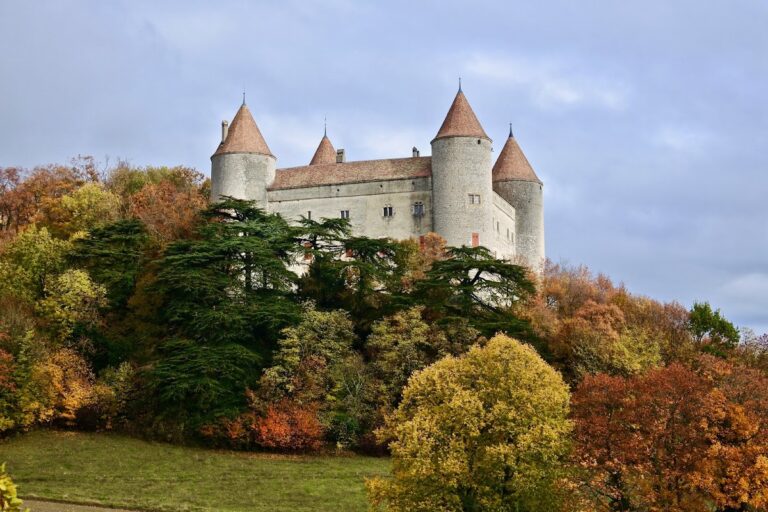
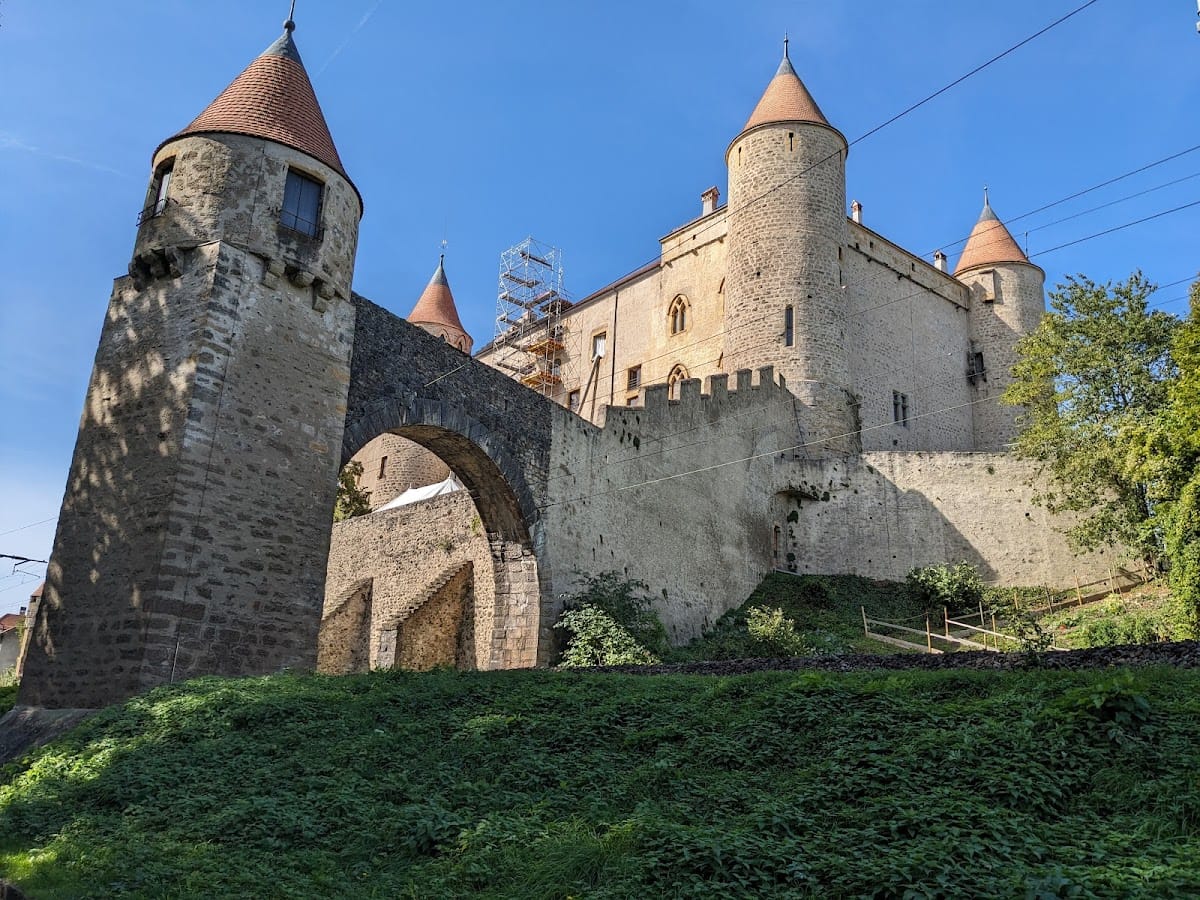
Grandson Castle stands on a rocky spur at an elevation of approximately 447 metres on the southern shore of Lake Neuchâtel. Its plan is nearly square, with four substantial round towers at the corners and an additional tower at the entrance. The ring walls and towers remain largely preserved, while the current structure has been renovated and its medieval fabric substantially conserved.
Early and medieval fortifications
Square keep
The first castle included a square keep, although the structure itself has disappeared. Traces survive in the northern wall facing the Jura. The keep was probably destroyed when the western part of the castle was constructed. A small tower attached to the western wall, which faced the town, has also been destroyed.
Thirteenth-century towers
Three fortified towers erected during the 1270s and 1280s form part of the castle’s preserved defensive system. Their construction belongs to the major rebuilding carried out under the Lords of Grandson, particularly during the rule of Otto I. Together with the ring walls, they express the expansion of the medieval fortress beyond its earliest keep.
Lake defenses and museum spaces
Fifteenth-century towers
Three additional towers built around 1450 strengthened the defenses of the town and castle against attacks from Lake Neuchâtel. Two stood at the foot of the castle beside the lake, while the Tower of Gex occupied a more distant position in the town. Before the lake level was lowered in 1875, the water reached the surrounding wall and bordered the southeastern side of the castle, forming a natural defensive element.
Exhibition rooms
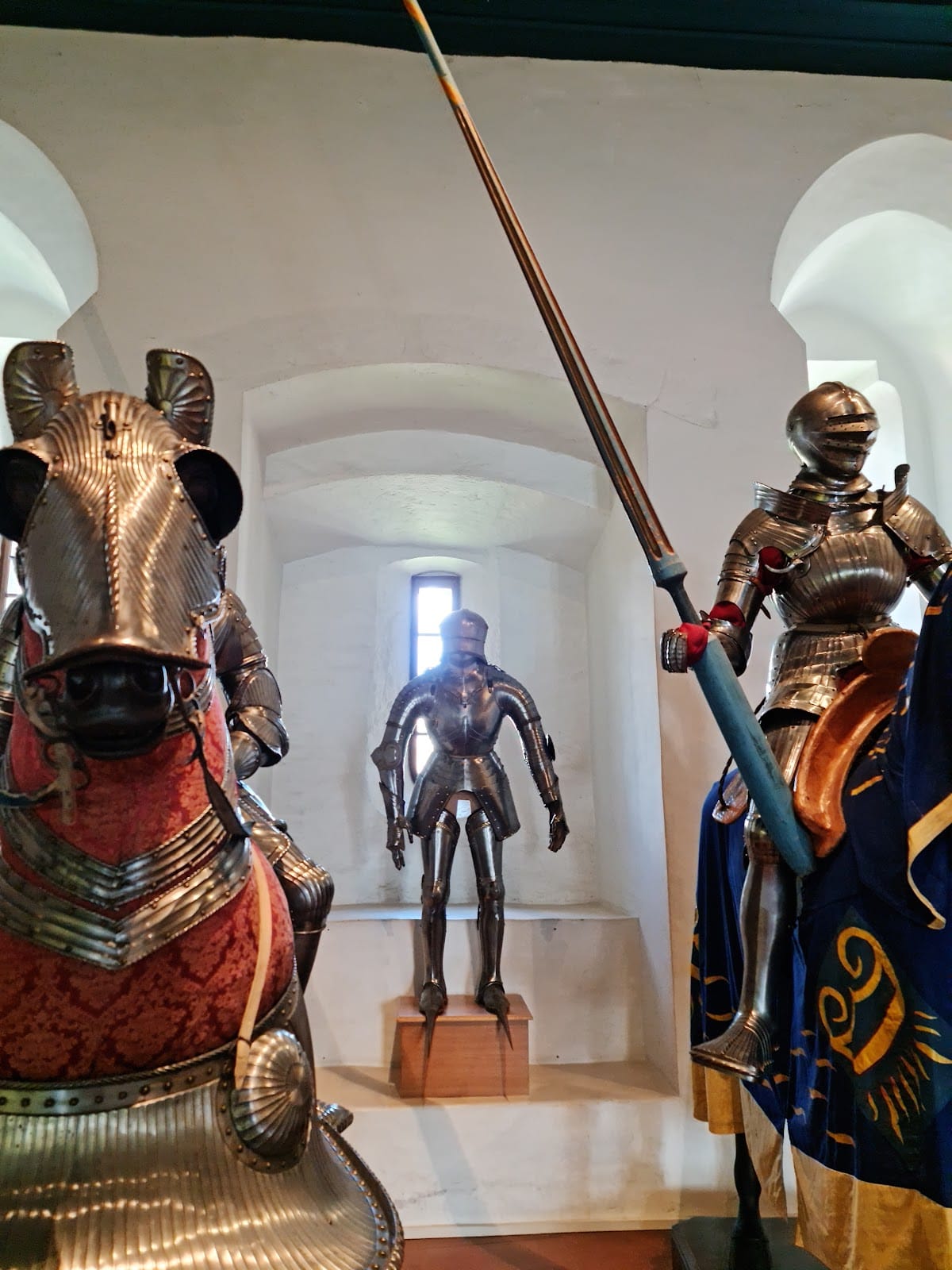
The museum occupies 15 rooms across four floors and approximately 1,000 square metres. Its permanent exhibition combines historical objects with audiovisual and interactive interpretation. A section devoted to the Battle of Grandson presents the conflict and the Burgundian booty, while the wider exhibition follows the castle’s history through its successive owners, uses, restoration, and conservation.