Castles in Luxembourg: Explore Stone Keeps, Courtyard Residences and Vaulted Rooms
Castles in Luxembourg include defended hilltop compounds, substantial keeps and residences enlarged with Renaissance and Baroque rooms. Their towers often belong to a longer sequence of domestic alterations. The examples below focus on standing buildings and readable castle layouts, while distinguishing reconstructed houses from older masonry and ruined parts of the same enclosure.
Primary Function: All
Type: All
Civilization: All
Popularity: All
Rating: All
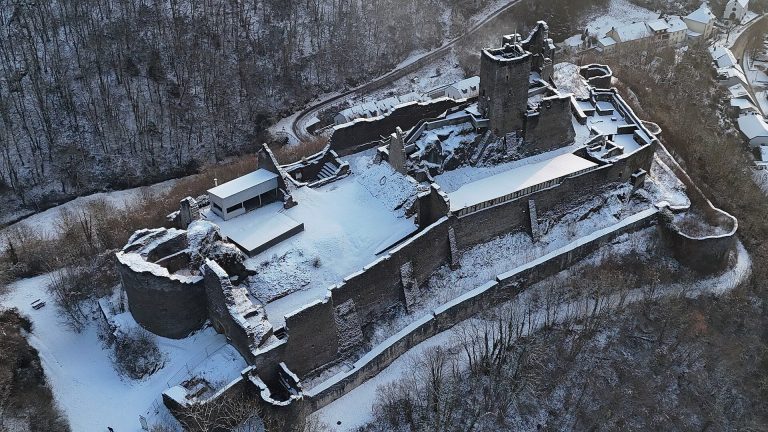
Brandenbourg Castle is a medieval fortress ruin in northern Luxembourg, built on a site with earlier Roman occupation and expanded into a major…
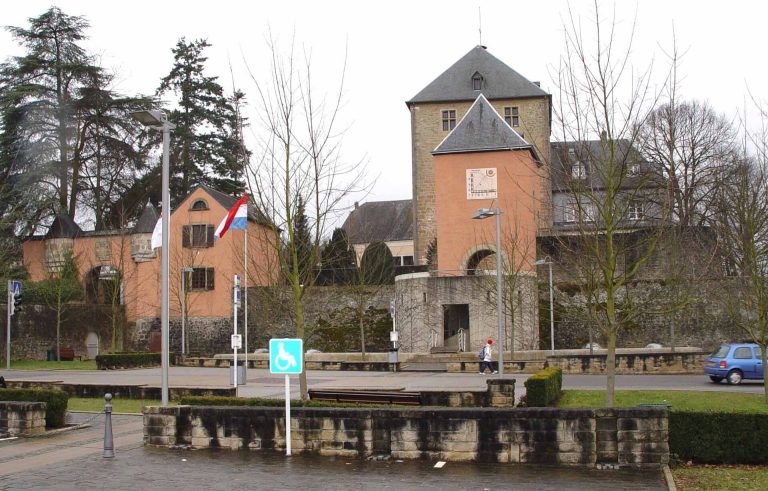
Mersch Castle is a thirteenth-century fortress in central Mersch, later transformed into a Renaissance residence and repeatedly rebuilt after wartime…

Hollenfels Castle developed from a medieval fortress into a noble residence, educational institution, and youth center. Its donjon, fortified…
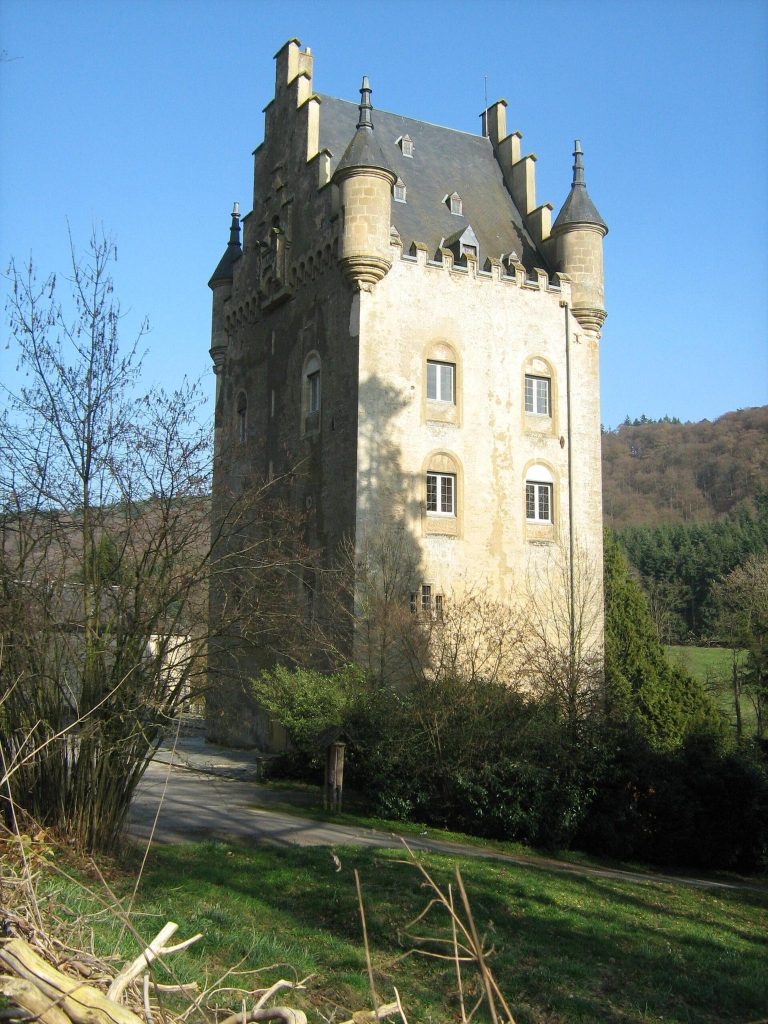
Schoenfels Castle, in the Mamer Valley, developed from a medieval fortified residence into a nineteenth-century Neo-Gothic landmark and forms part of…

Turelbaach Castle is a privately created castle complex on an artificial island in a wooded valley near Mertzig, developed from the 1960s and…
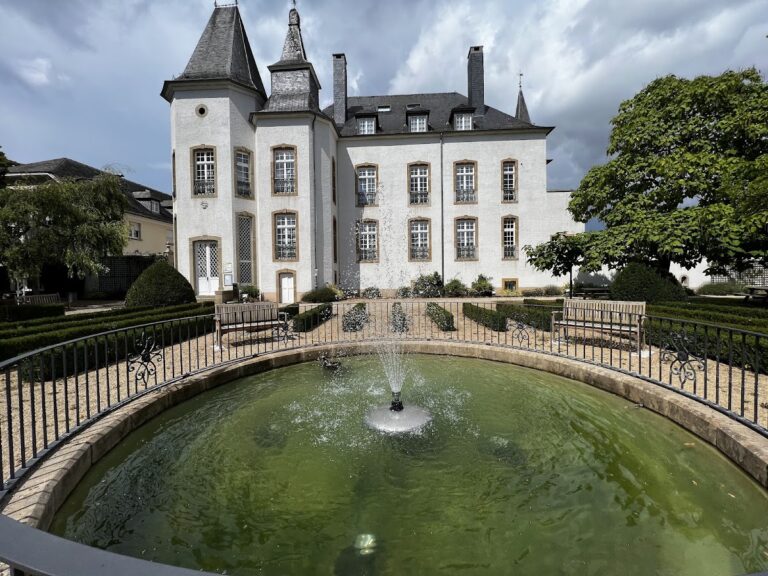
Munsbach Castle in Luxembourg began as a Baroque manor in 1775 and later served as a distillery, orphanage, and centre for European education. Its…
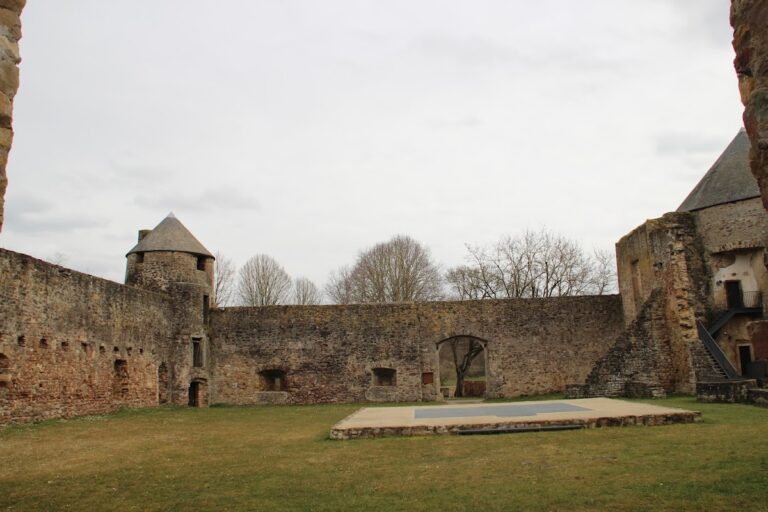
Pettingen Castle developed from a tenth-century fortress into a noble residence and baronial stronghold before being destroyed in 1684. Its…
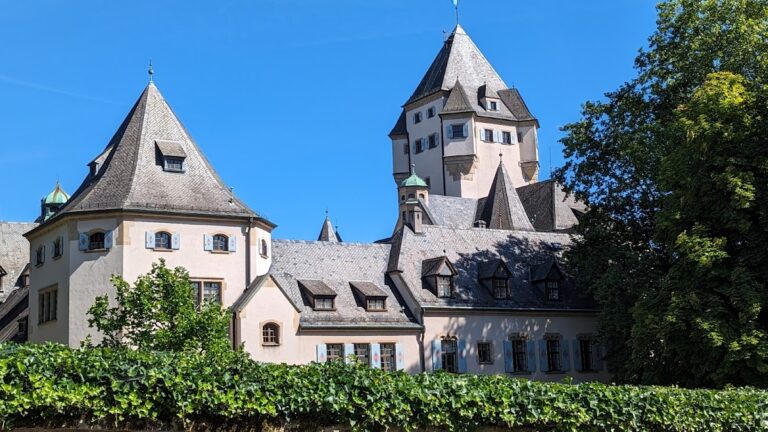
Berg Castle in Colmar-Berg has served as Luxembourg’s principal Grand Ducal residence since its construction between 1907 and 1911. Its history…
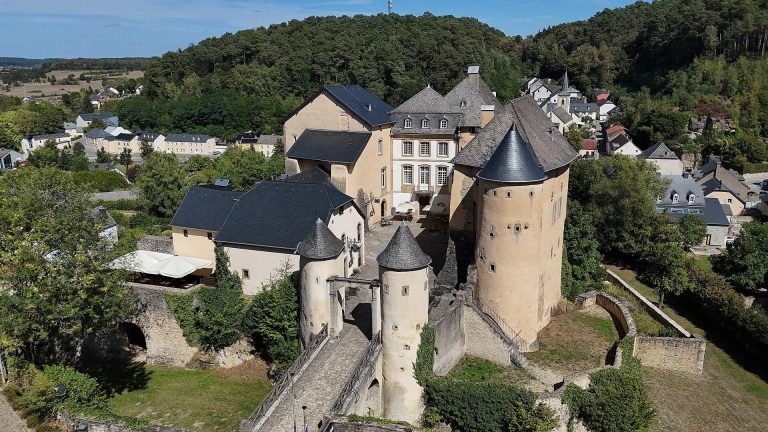
Bourglinster Castle developed from a medieval keep, chapel, and enclosing wall into a fortified lordly residence shaped by Renaissance and Baroque…
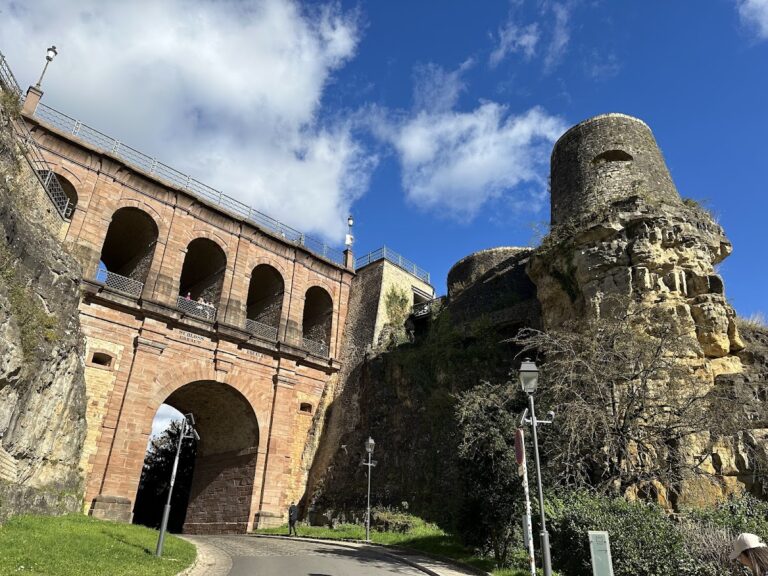
The Fortress of Luxembourg developed from a tenth-century castle into a major European stronghold before its dismantling after the 1867 Treaty of…
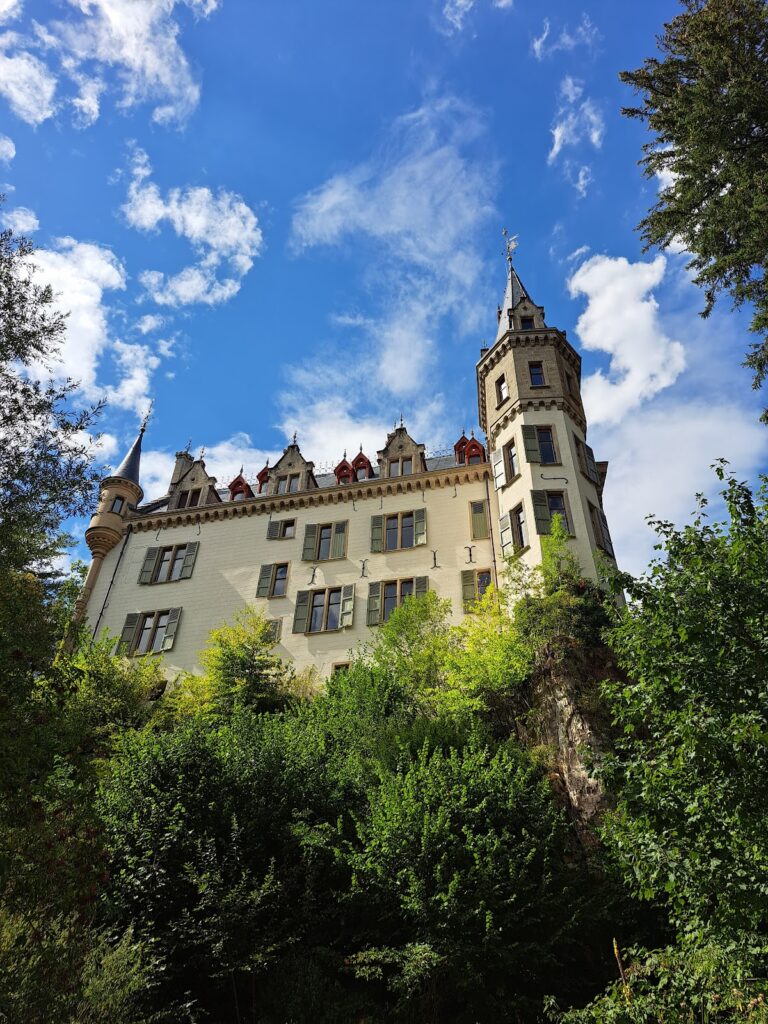
Meysembourg Castle developed from a medieval noble residence into a nineteenth-century Neo-Renaissance country estate, with surviving earlier…

Sanem Castle developed from a medieval fortified farmstead into a rebuilt residence with a moat, courtyard, park, and long association with the de…
For details on how to use the maps, which sites are included, how popularity and ratings are determined, and how sites are classified, see the help page.
On this page5 sections
Clervaux Castle: a rebuilt residence above the river
Clervaux Castle occupies a hill within a loop of the River Clerve. Its irregular inner courtyard is enclosed by ranges built and altered over several centuries. Older western towers, a substantial southern tower and later residential wings give the complex an uneven outline shaped by both its site and its successive owners.
The castle burned out during the fighting of December 1944 and was reconstructed after the war. Its present buildings therefore combine historic forms with extensive rebuilding. Outside the core, the gate building, stable and Witch Tower preserve parts of the former outer enclosure, much of which had already been demolished in the nineteenth century. These separate elements help distinguish the main residence from the larger working compound that once surrounded it.
Larochette: several households within one fortress
Larochette Castle occupies a rocky spur and once contained houses belonging to several families. The enclosure was therefore divided among residences, rather than organized solely around one lord’s hall. Their surviving walls and different states of preservation make that arrangement visible.
The Créhange House has been reconstructed as a complete multi-storey building. Its rooms include a ground-floor kitchen and well, with storage and accommodation connected by stairs. A heating arrangement carried flue gases beneath a room above the oven. This gives the house a concrete domestic focus alongside the surrounding defensive masonry. Other family houses remain ruined, so the reconstructed residence should not be taken as the surviving condition of the entire castle.
Useldange: a keep within the defensive enclosure
At Useldange Castle, the tall keep and a round tower stand within the remains of the enclosing walls. The keep rises well above the courtyard and forms the most prominent part of the surviving stronghold. A moat and bridge belonged to the approach, separating the defended core from the ground outside.
The former residential range has not survived as a complete medieval palace: a later municipal building occupies its site. The keep, tower and wall circuit provide the clearer evidence for the castle’s earlier form. Looking at their arrangement separates the defensive enclosure from the buildings inserted after its original residential use had ended.
Mersch and Bourglinster: vaulted chambers and later façades
Mersch Castle retains a compact arrangement with round corner towers. Inside, Gothic net vaulting and a ceremonial hall with a heraldic fireplace show how residence and display occupied the fortified building. Renaissance remodelling changed the rooms without removing the towered outline of the complex.
At Bourglinster Castle, a Gothic chapel, a Renaissance wing and a Baroque courtyard façade belong to successive alterations. The castle stands on a low rocky promontory, with older defensive elements incorporated into a more elaborate residence. Buildings associated with the outer compound included stables and barns, supporting the household beyond the principal rooms.
These two sites offer architectural details that are easily missed when a castle is described only through its defences: ceiling vaults, fireplaces, chapel spaces and formal façades. They also show why the collection includes residences whose later occupants placed increasing emphasis on comfort and ceremony.
Explore the collection
Explore sites on the map or in the grid. Map icons reflect each site’s primary function, helping you identify different kinds of places at a glance. Narrow this collection by primary function, by a site type within the castle and residence group, or by civilization and era. Additional filters cover popularity and rating. Select a map marker to view the site’s details and open its article, or open the article from its grid entry.