Mersch Castle: A Medieval Fortress and Renaissance Residence in Luxembourg
Site at a Glance
- Rating
- 4.1
- Popularity
- Low
- Country
- Luxembourg
- Primary era
- Medieval
- External website
- Open
- Eras represented
- Medieval, Early Modern
- Civilizations
- Duchy of Luxembourg, Holy Roman Empire
- Site type
- Military
- Remains
- Castle
On this page9 sections
History
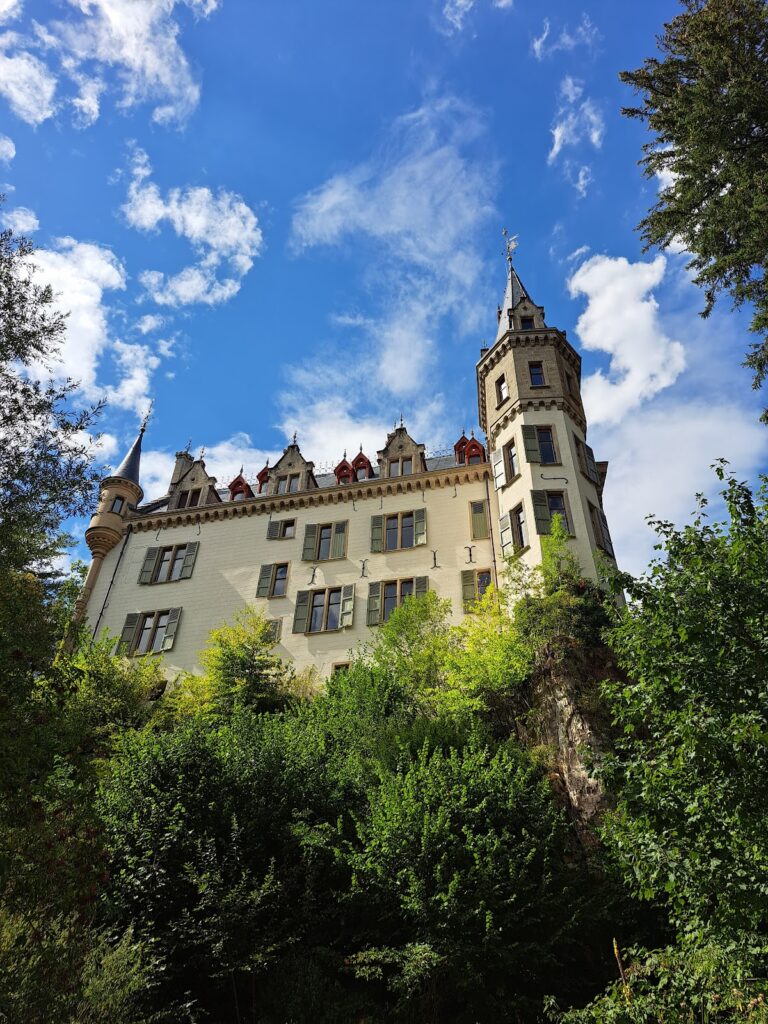
Mersch Castle is a thirteenth-century medieval castle in Mersch, Luxembourg, and one of the seven castles of the Valley of the Seven Castles in the Eisch valley. Its first recorded owner was Theodoric I, a knight serving Ermesinde of Luxembourg, a medieval countess who ruled in the early thirteenth century. A deed from 1232 mentions a turris, probably a keep, or principal fortified tower, which may have survived from an earlier castle built by Nithardus during the Carolingian period, the eighth- and ninth-century era of the Frankish dynasty founded by Charlemagne and his successors.
Medieval fortress
Theodoric probably developed the site as a moated fortress with a square keep, defensive walls, and an entrance gate. The fortress was captured and burned by Burgundian forces during the Swiss-Burgundian War, a fifteenth-century conflict between the Swiss Confederacy and the Duchy of Burgundy.
Renaissance transformation and wartime destruction
By 1574, plans showed a castle measuring 61 by 70 metres and enclosed by an 11-metre-wide moat. In the late sixteenth century, Paulus von der Veltz transformed the medieval stronghold into a Renaissance residence. The castle was burned and destroyed by the Dutch in 1603. Further devastation came during the Thirty Years’ War, the European conflict fought mainly in the Holy Roman Empire from 1618 to 1648, leaving the castle and village severely damaged in 1635.
Reconstruction and modern civic use
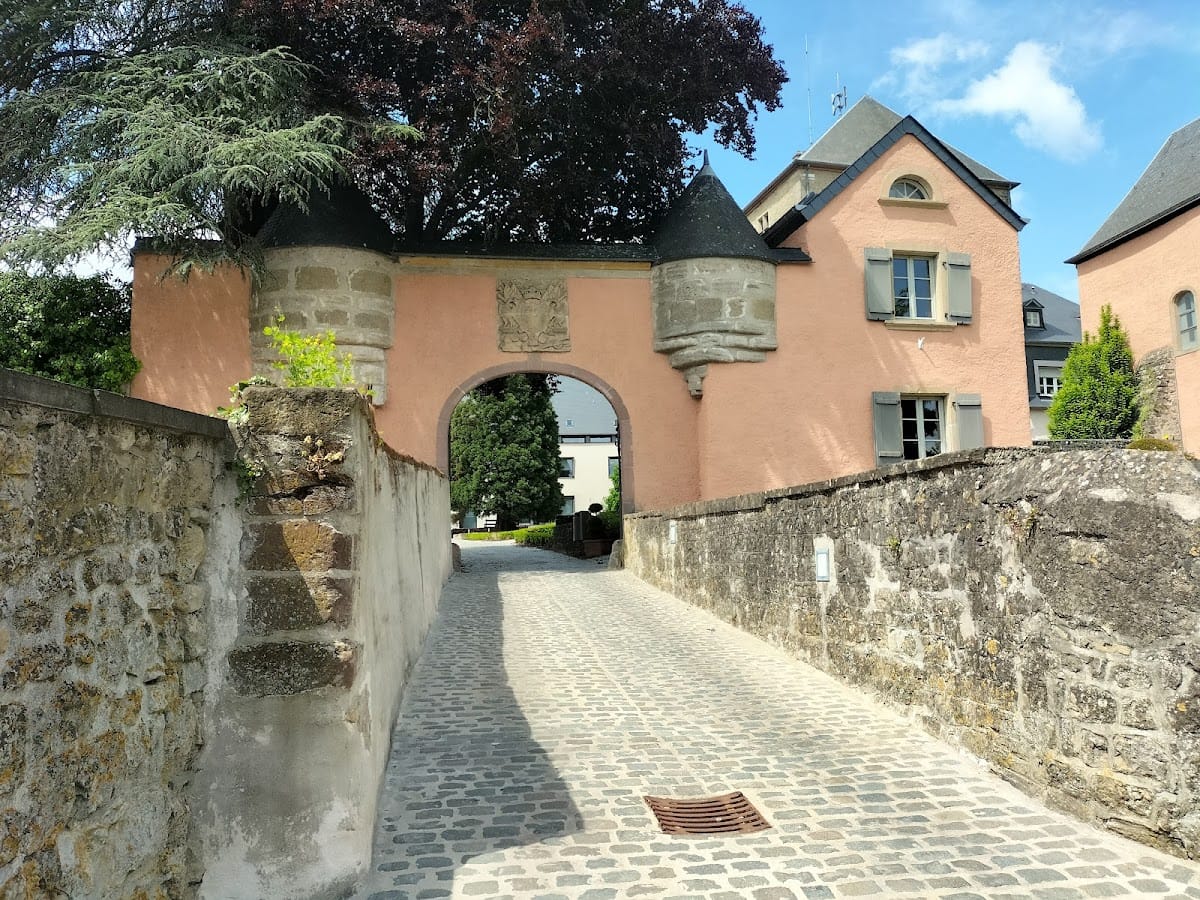
Count Johann-Friedrich von Elter began rebuilding the castle around 1700. He reconstructed the entrance gate and placed his coat of arms on it. The chapel was restored or re-erected and reconsecrated in 1717. The Sonnenberg-Reinach family sold the estate to the businessman Schwartz-Hallinger in 1898, and restoration work followed in 1930 under the then owner, M. Uhres.
A youth hostel opened in a new building beside the castle in 1938. The municipality of Mersch acquired the property in 1957 and sold it to the Luxembourg state in 1960. Through an exchange agreement, the municipality recovered the property in 1988. Extensive renovation completed in 1993 made the castle the seat of Mersch’s municipal administrative services. Mersch Castle was classified as a national monument on 17 March 1980 and again on 6 December 2023. It was also represented on a Luxembourg five-euro coin in 2011 in the “Castles of Luxembourg” series.
Remains
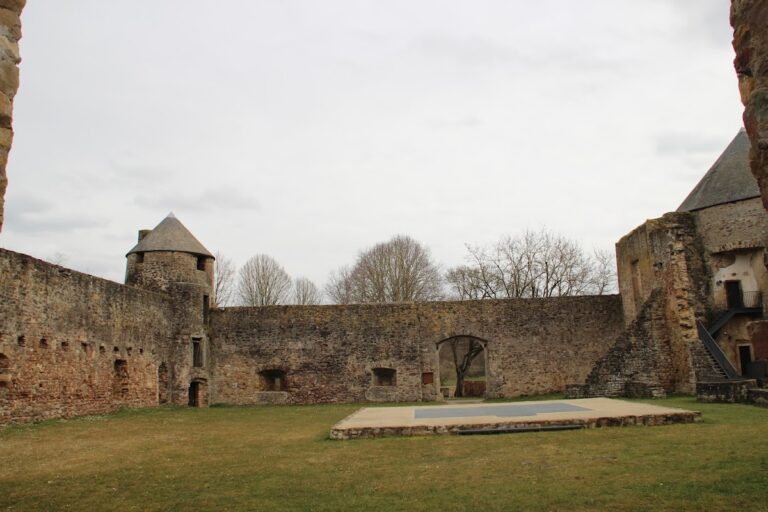
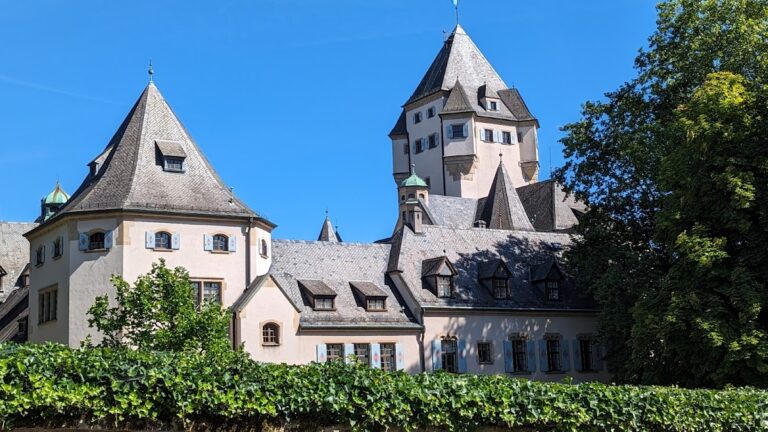
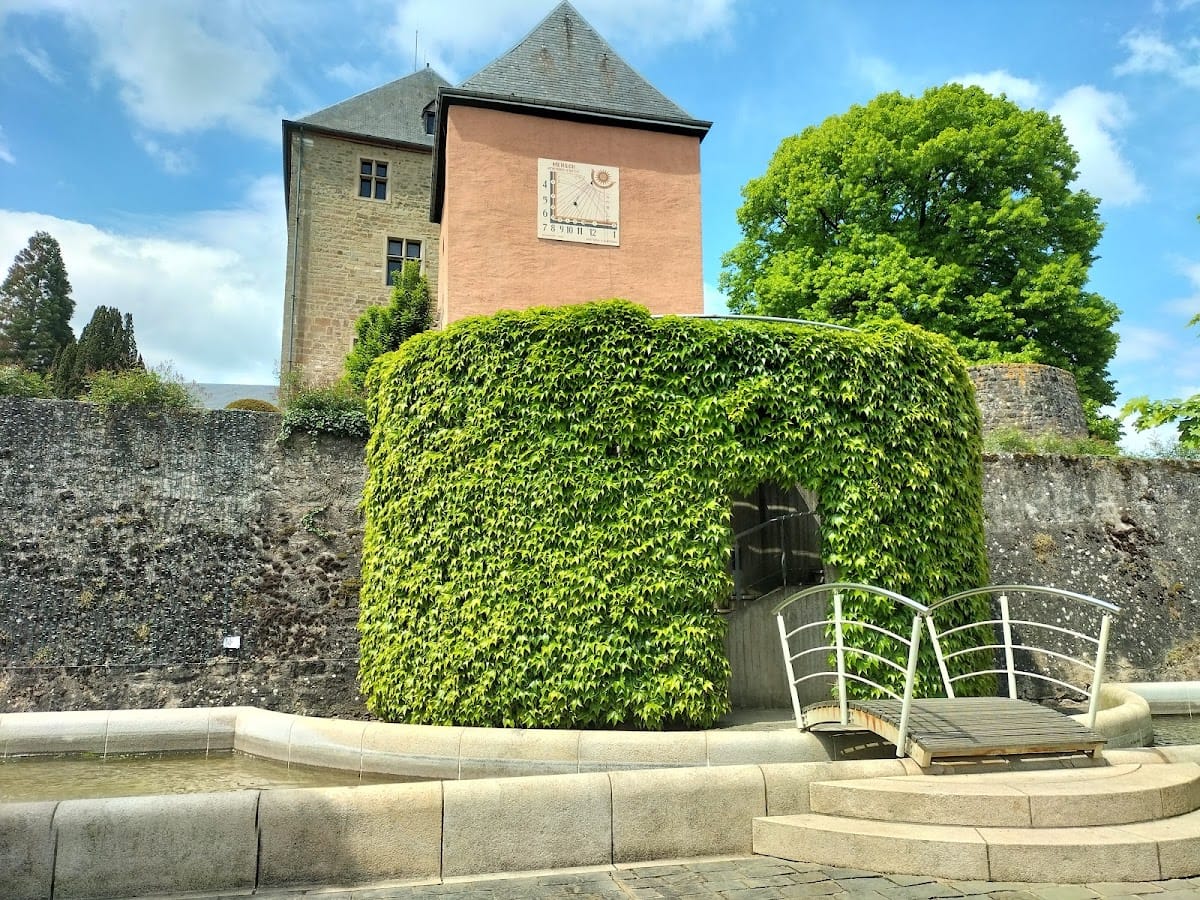
The surviving castle measures approximately 34 by 30 metres and is formed around four round towers, each about six metres in diameter. The original square keep, whose sides measured about 12 metres, was extended toward the northwest. The earlier fortress also included defensive walls and an entrance gate, while a protective wall was described as having seven towers. Plans from 1574 show surrounding walls approximately 1.35 metres thick and an 11-metre-wide moat, a defensive ditch enclosing the fortified site.
Fortress walls and entrance
The defensive enclosure preserves the castle’s medieval fortified character while incorporating later changes. The entrance gate rebuilt under Johann-Friedrich von Elter bears his coat of arms, linking the surviving gateway to the reconstruction begun around 1700.
Residential interiors
The castle chambers contain net vaults, masonry ceilings whose ribs form intersecting patterns associated with Gothic construction. Their interior decoration is in the late Gothic style, while the late-sixteenth-century rebuilding gave the exterior a Renaissance character. The keep had broad windows, and vaulted ceilings were added over chambers on the ground and first floors.
Knights’ Hall
On the second floor, the Knights’ Hall has a large fireplace and displays the coats of arms of 16 successive noble owners. The heraldic decoration preserves the memory of the families who held the castle over time.
Chapel
The chapel forms part of the rebuilt complex. Its altar bears the coat of arms of Charlotte von Elter, the castle’s heir, while the chapel’s reconsecration in 1717 reflects its renewed religious use after the reconstruction around 1700.
Nearby sites