Munsbach Castle: A Baroque Manor and Former Educational Estate


Site at a Glance
- Rating
- 4.3
- Popularity
- Low
- Country
- Luxembourg
- Primary era
- Early Modern
- Eras represented
- Early Modern, Modern
- Civilizations
- Habsburg
- Site type
- Domestic
- Remains
- Castle
On this page9 sections
History
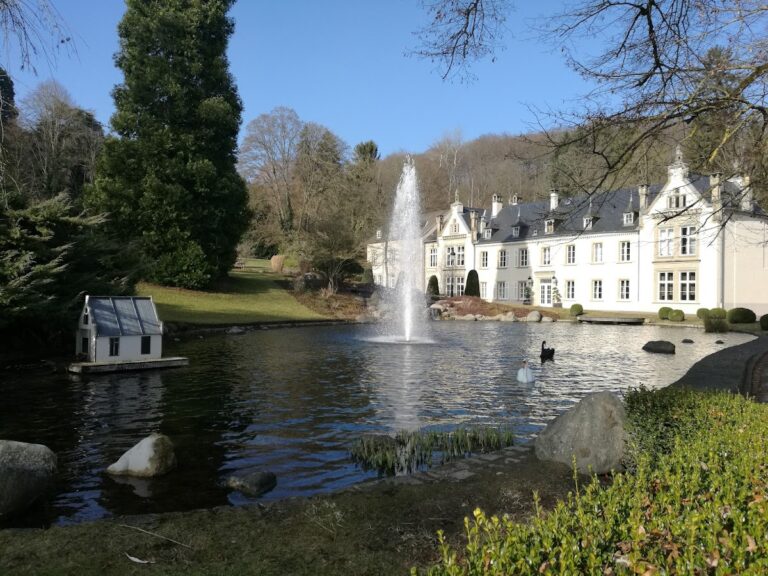
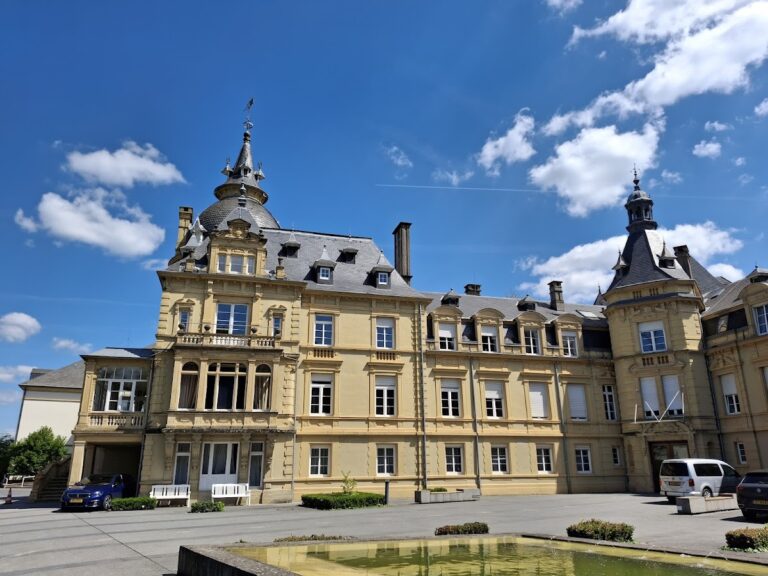
Munsbach Castle is a historic estate in Luxembourg, at the western edge of Munsbach east of Luxembourg City. Built in 1775 as a Baroque manor residence, it was transformed into a castle at the end of the nineteenth century through the addition of two towers and several separate buildings.
From manor to industrial estate
In 1927, the buildings were sold to the Zender-Angelsberg family. The family operated a distillery there and manufactured Bernardine liqueur, giving the estate an industrial use alongside its residential character.
Wartime and postwar use
In 1943, the castle was sold to Gauleiter Gustav Simon. A Gauleiter was a senior regional official of the Nazi Party in Nazi Germany and the territories it occupied. Simon converted the premises into an orphanage.
After the Second World War, the Luxembourg state continued to operate the orphanage until 1979. The estate then entered an institutional and educational phase. From 1983 to 2006, it was used by the Institute of Europe, while from 2002 the International University Institute of Luxembourg held courses there in business, European law, and public-sector management.
European education and present use
Munsbach Castle also hosted Campus Europae, a university network associated with the European University Foundation. Its work promoted European citizenship, multilingualism, student exchange, and academic cooperation.
The Centre for Social and Emotional Development now uses the castle as its administrative building. In 2021, it created Luxembourg’s first open-air mindfulness trail, inaugurated by Claude Meisch, then Minister of National Education, Children and Youth. Mindfulness is a contemplative practice focused on awareness of present experience, with modern therapeutic applications that often emphasize emotional regulation and well-being. The initiative addressed stress and emotional insecurity associated with the COVID-19 pandemic.
The castle park was added to the supplementary inventory of classified monuments on 8 September 2009. Its rose garden is maintained and improved by volunteers from the Luxembourg Rose Friends association in cooperation with the Schuttrange commune. The garden preserves Luxembourgish rose heritage from the beginning of the twentieth century, when Luxembourg was the world’s largest rose exporter.
Remains
Munsbach Castle stands west of Munsbach within a parked estate. The principal building retains its 1775 Baroque form, while the late-nineteenth-century enlargement introduced two towers and several separate ancillary buildings. The castle is in good condition, and the park contains a rose garden, notable trees, and an open-air mindfulness trail.
Castle buildings and park
Main building
The main building dates from 1775 and was constructed as a Baroque manor residence. Baroque architecture is an early-modern style known for elaborate forms, dynamic composition, and rich ornament. The later addition of two towers and separate supporting buildings changed the original manor into the castle complex that survives today.
Rose garden
The park’s rose garden contains more than 600 rose varieties and includes the Luxembourg Rose Heritage Conservatory, associated with the Luxembourg Rose Friends. Volunteers maintain and improve the collection with the Schuttrange commune. The garden hosts an annual Rose Fest in September.
Remarkable trees and mindfulness trail
Three trees in the park appear on the official register of remarkable trees maintained by Luxembourg’s Ministry of the Environment: a horse chestnut, a purple beech, and an oak. The open-air mindfulness trail uses focused awareness of present experience to encourage attention to emotional skills and well-being.
Nearby sites