Douglas Castle: A Historic Douglas Family Stronghold in Scotland
Site at a Glance
- Rating
- 4.4
- Popularity
- Low
- Country
- United Kingdom
- Primary era
- Early Modern
- External website
- Open
- Eras represented
- Early Modern
- Civilizations
- Kingdom of Scotland
- Site type
- Military
- Remains
- Castle
On this page12 sections
History
Douglas Castle is a medieval stronghold in Douglas, United Kingdom, associated with the Douglas family and later the Douglas-Home family. The first castle probably stood before 1290 and was built from wood, stone, or both. It remained a family seat from the medieval period until the twentieth century, although its buildings and role changed repeatedly.
The medieval stronghold
During the Wars of Scottish Independence, the conflict between Scotland and England over the Scottish crown and independence, English forces led by Lord Clifford captured and garrisoned the castle in 1307. Sir James Douglas, a leading companion of Robert the Bruce, retook it on Palm Sunday by attacking while the garrison attended chapel. The defenders were killed, their bodies thrown into a cellar, and the castle was burned. This episode later became known as “Douglas’ larder.”
The castle was rebuilt after the destruction of 1307. Sir James Douglas’s nephew, Sir William Douglas, became the first Earl of Douglas in 1357, while Sir Archibald Douglas, Sir James’s illegitimate son, became the third Earl in 1384. Douglas Castle was rebuilt as one of the family’s strongholds during the rise of their power.
The fall of the Black Douglases
In the fifteenth century, the Black Douglases, a branch of the powerful Douglas family, came into conflict with the Stewart monarchy. James II, the Stewart king of Scotland, defeated the rebellious ninth Earl of Douglas at the Battle of Arkinholm in 1455. Douglas Castle was then sacked, and the family’s lands and titles were forfeited.
The Red Douglases, the Earls of Angus, had supported James II during the conflict and subsequently acquired the Douglas lands in Lanarkshire. The castle was probably rebuilt soon afterward, though it was not their principal residence for much of this period. In June 1574, James Douglas, fourth Earl of Morton and Regent of Scotland, inspected the building and assessed the repairs needed to make it habitable again.
The eighteenth-century rebuilding
In 1703, Archibald Douglas, third Marquess of Douglas, became Duke of Douglas and made Douglas Castle his principal seat. The earlier castle was rebuilt as a tower house, a fortified residence centered on a substantial tower, with an enclosed courtyard and a corner tower.
A fire destroyed this castle in 1755, leaving the corner tower standing. From 1757, the Duke began building a large castellated mansion on the site. James, John, and Robert Adam designed the building, which was intended to be the largest castle in Scotland. The Duke died in 1761, when about half of the original design had been completed.
His estate then became the subject of the Douglas Cause, a bitter legal dispute between his nephew Archibald James Edward Douglas and the Duke of Hamilton. Douglas eventually prevailed and was ennobled as Baron Douglas in 1790. The estate later passed through his daughter and granddaughter to the Earls of Home.
Demolition and later memory
In the 1930s, Charles Douglas-Home, thirteenth Earl of Home, permitted coal mining in the park near the castle to help address severe local unemployment. Mining caused dangerous subsidence beneath the mansion, which was demolished in 1938 and not rebuilt. The site had been the family seat of Sir Alec Douglas-Home, later Prime Minister of the United Kingdom, before the mansion’s demolition.
The surviving remains became protected as a Category C listed building, a Scottish legal classification for a structure of local importance or a representative example of its type, on 12 January 1971. Sir Walter Scott, a nineteenth-century Scottish novelist and historian, drew on the site and its early history for his novel Castle Dangerous. Douglas Castle is still occasionally known by that alternative name.
Remains
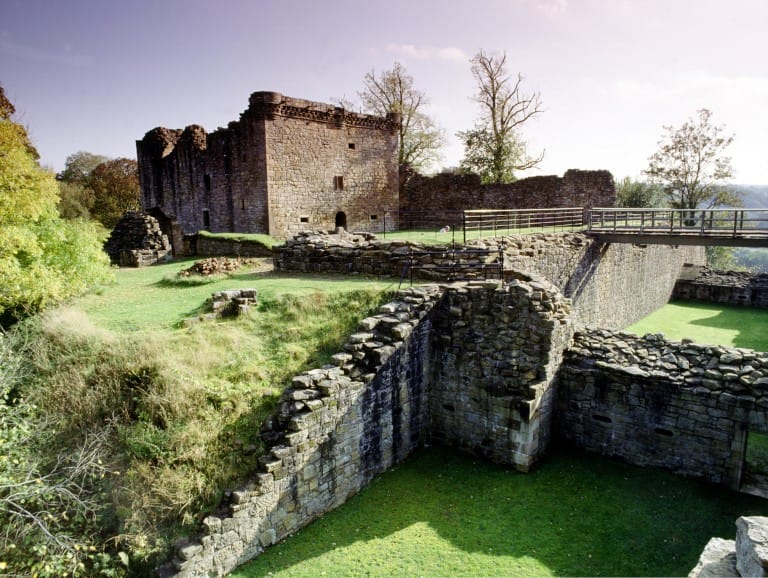
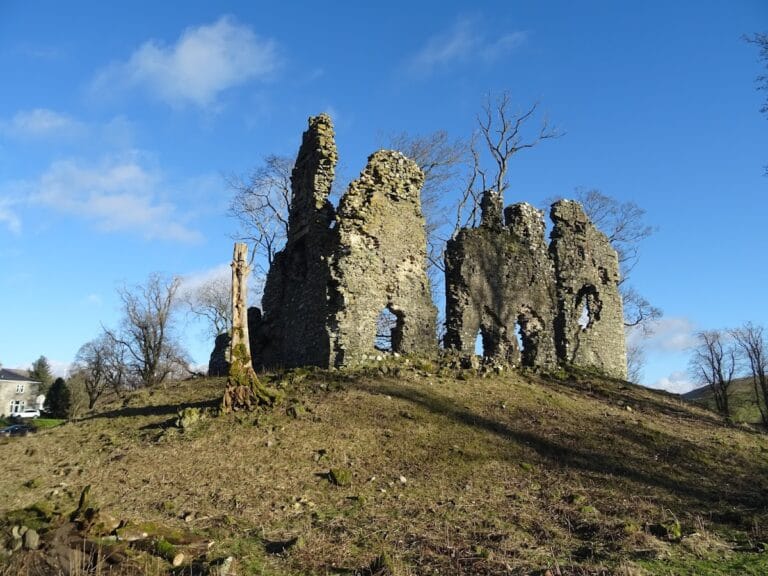
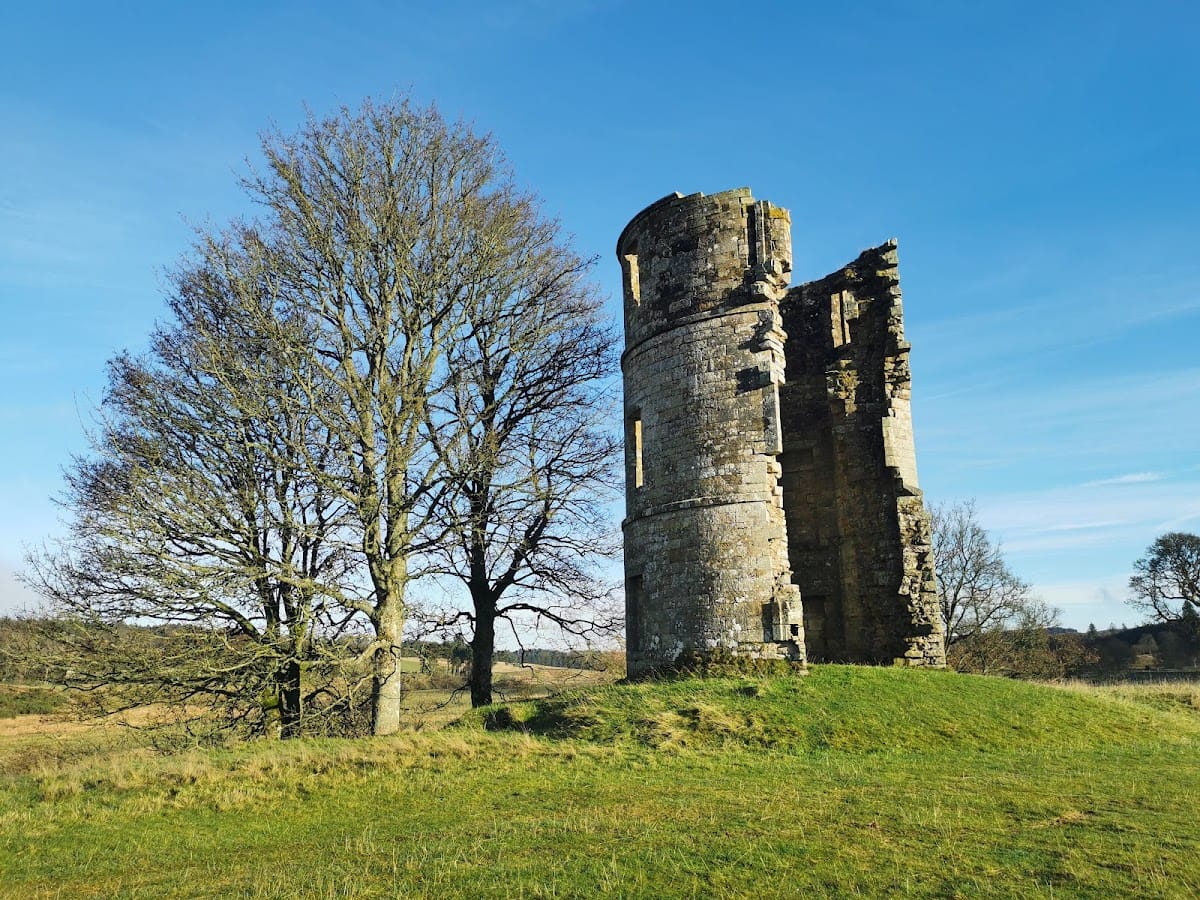
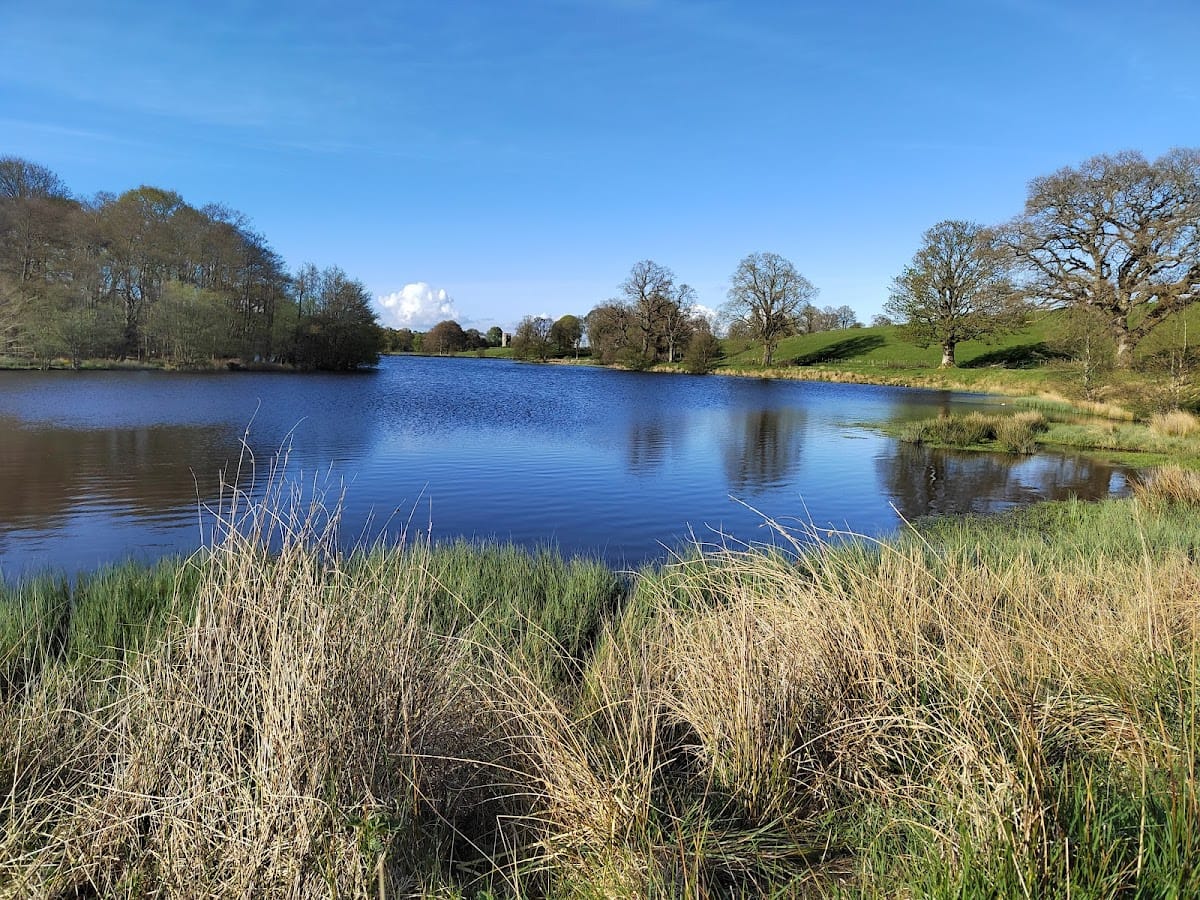
Douglas Castle stood about 1 kilometre north-east of the village of Douglas in South Lanarkshire, south-west Scotland. The castle occupied a prominent rise on the south side of the river in the Douglas Water valley. Its medieval buildings were repeatedly destroyed and rebuilt before the eighteenth-century mansion replaced them. The principal surviving fabric is a ruined corner tower from the late seventeenth-century castle, while the later mansion was planned as an extensive castellated building within the surrounding park.
Surviving castle fabric
Corner tower
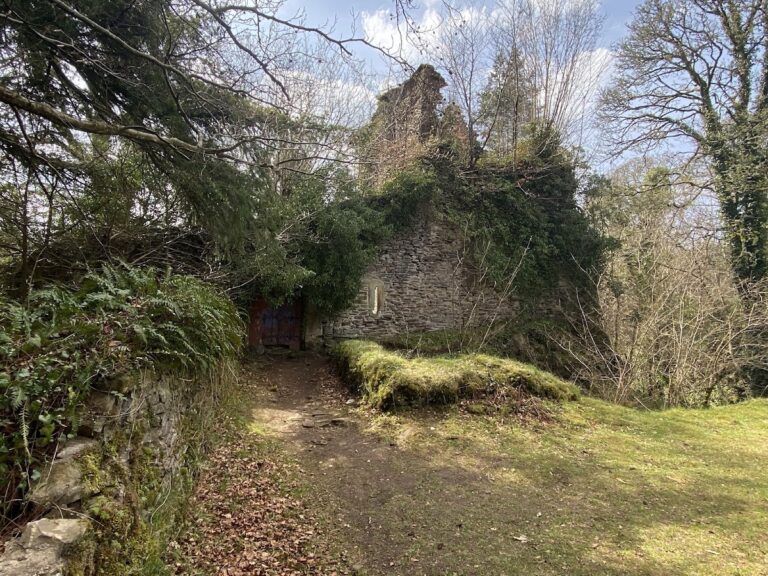
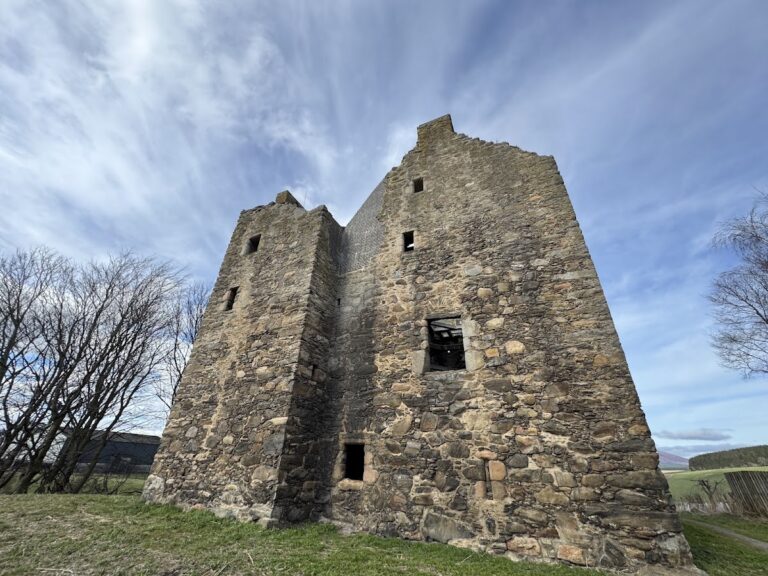
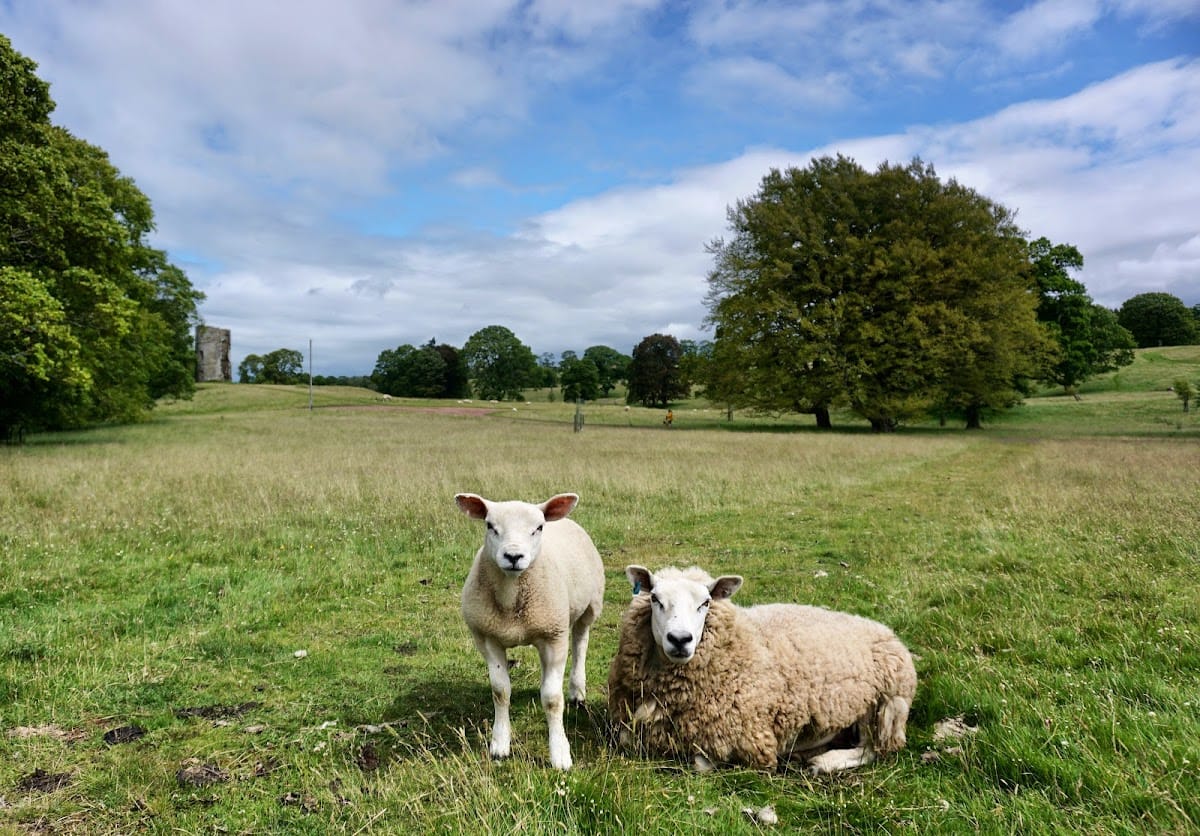
The surviving corner tower formed part of the tower-house complex rebuilt around the beginning of the eighteenth century. It originally stood at the corner of an enclosure estimated to have been about 40 metres across. The ruined structure is about 9 metres high and retains the remains of three storeys. When the later mansion was constructed, the tower was retained as a garden folly, a building or ruin kept mainly as an ornamental feature in a designed landscape.
Cellar block
A small cellar block lies below the tower. Its interior walls retain glazed tiles, providing a surviving detail of the castle complex beneath the ruined corner tower.
Later estate buildings
Adam mansion
The mansion begun in 1757 was planned as a five-storey castellated building. Its front elevation was to have round towers, while square towers were planned for the rear facade. The design also envisaged an extensive park extending across the valley of the Douglas Water. Construction remained incomplete when the Duke of Douglas died in 1761, and subsidence caused by later coal mining led to the mansion’s demolition in 1938.
Former castle lodge
A former castle lodge survives at the Cairn Lodge service area on the M74, forming another surviving element of the historic estate associated with Douglas Castle.