Sanquhar Castle: A Medieval Hill Castle in Scotland


Site at a Glance
- Rating
- 3.9
- Popularity
- Very Low
- Country
- United Kingdom
- Primary era
- Medieval
- External website
- Open
- Eras represented
- Medieval, Modern
- Civilizations
- British, Kingdom of Scotland
- Site type
- Military
- Remains
- Castle
On this page7 sections
History
Medieval origins and ownership
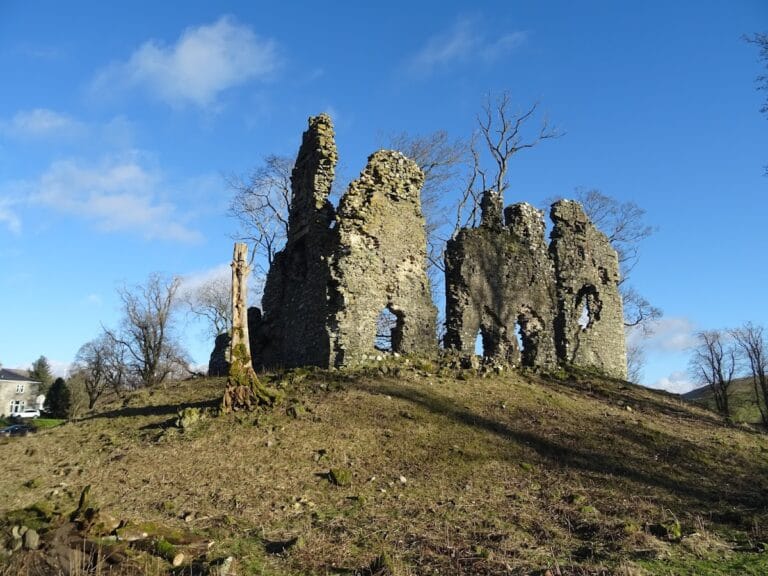
Sanquhar Castle is a ruined hill castle in Scotland, United Kingdom, built by the Ross family in the thirteenth century. The stronghold later passed to the Crichton family in the fourteenth century, beginning a long association between the castle and one of the region’s prominent families.
The royal visit and decline
In July 1617, James VI and I visited Sanquhar Castle while travelling to Glasgow. James was the Scottish king James VI and, after 1603, the first Stuart monarch to rule both Scotland and England. The Crichtons arranged an elaborate welcome for him, but the cost of the occasion left the family bankrupt.
During the mid-seventeenth century, the Crichtons sold the castle to Sir William Douglas, 1st Duke of Queensberry. He established Drumlanrig Castle near Thornhill, about ten miles south of Sanquhar, and Sanquhar Castle subsequently began a steady decline.
Nineteenth-century restoration
John Crichton-Stuart, 3rd Marquess of Bute, bought Sanquhar Castle in 1895 and began an effort to restore his ancestral home. The project was influenced by the restoration of Cardiff Castle and Castell Coch in Wales, and was carried out by Robert Weir Schultz. Work ended after the Marquess died in 1900. Sanquhar Castle is now a scheduled monument, a legally protected archaeological or historic site considered nationally important to preserve.
Remains
Setting and defensive boundaries
The ruins occupy a hill site on the southern approach to the former royal burgh of Sanquhar, a Scottish town that held a Crown charter and associated privileges. The castle lies northeast of Dumfries, overlooks the River Nith, and stands along the Southern Upland Way, a long-distance walking route across southern Scotland. The River Nith borders the site on the west, while a burn forms its northern boundary. A deep ditch completed the remaining defensive line.
Surviving fabric and restoration
Sanquhar Castle survives as a mixture of earlier stonework and unfinished restoration. The squarer, more structurally sound sections rebuilt after 1895 remain visibly distinct from the older masonry, allowing the incomplete character of the twentieth-century restoration to be read in the fabric of the ruined stronghold.