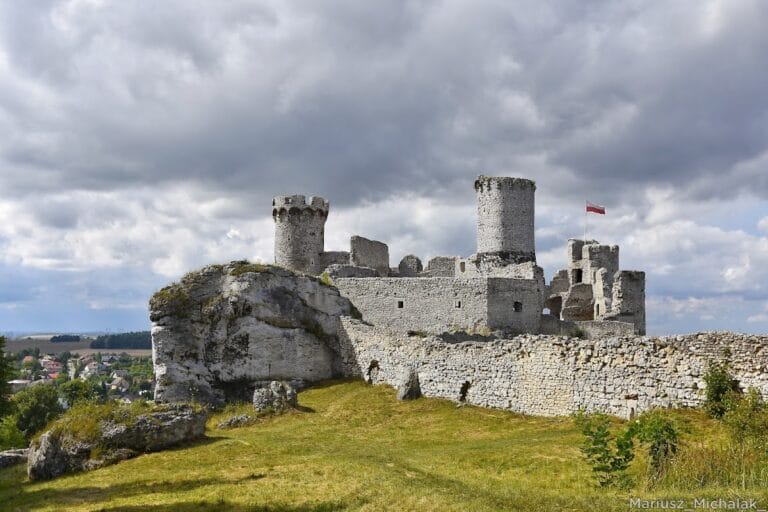
Bobolice Castle: A Royal Fortress of Poland’s Eagles’ Nests
Site at a Glance
- Rating
- 4.6
- Popularity
- High
- Country
- Poland
- Primary era
- Early Modern
- External website
- Open
- Eras represented
- Medieval, Early Modern
- Civilizations
- Kingdom of Poland, Polish–Lithuanian Commonwealth
- Site type
- Military
- Remains
- Castle
On this page15 sections
History
Bobolice Castle is a royal fortified castle in Bobolice, Poland, built by King Casimir III the Great in the mid-fourteenth century, probably in 1350–1352, as part of the Eagles’ Nests, a chain of castles on rocky uplands between Kraków and Częstochowa. The fortress protected the Polish Crown’s frontier and nearby lands from possible incursions from Silesia into Lesser Poland.
Royal foundation and feudal tenure
After Casimir III died without children, Bobolice passed to his nephew, Louis I of Hungary, who succeeded him as king of Poland. In 1370, Louis granted the castle under feudal law to Władysław, Duke of Opole. Władysław incorporated it into the Duchy of Wieluń, and in 1379 transferred it to Andrzej Schony de Barlabas, a nobleman of Hungarian origin also known as Andrzej the Hungarian. Andrzej later adopted the territorial designation “of Bobolice.”
Władysław Jagiełło recovered Bobolice for the Polish Crown around 1396 during his war with the Duke of Opole, following the seizure of Opole. Andrzej Schony survived the conflict and, after receiving the right in 1394 to administer his estates under German law, continued to hold the castle as a royal vassal. He died in 1413, ending the male line of the Schony de Barlabas family.
Inheritance and noble disputes
Andrzej’s daughter Anna received Bobolice and the surrounding estates as her dowry when she married Stanisław Szafraniec of Młodziejowice. After Stanisław died in 1408, Anna married Mściwój of Wierzchowiska. An agreement made in 1409, followed by a final division in 1426, assigned the castle in equal parts to Stanisław Szafraniec and Anna’s children from her second marriage.
The divided ownership produced violent disputes. In 1441, Andrzej of Wierzchowiska attacked the castle with about thirty nobles and one hundred assistants, taking grain and cattle belonging to his half-brother. The conflict ended in 1445, when Mściwój and Andrzej sold their half of Bobolice to Piotr Szafraniec of Pieskowa Skała for 700 grzywna and two horses valued at 100 grzywna each. A grzywna was a medieval Polish monetary and weight unit whose value varied over time.
The Treska and Rzeszowski owners
Piotr Szafraniec later pledged his estates, including Bobolice, to Florian of Knyszyn and then sold the castle to Andrzej Treska in 1447. Treska enlarged the residential section and farm buildings. Under his ownership, Bobolice served as an administrative centre for the surrounding Treska estates while retaining a military function. In 1456, its garrison was required to provide two foot soldiers for wartime service.
After Treska died in 1484, his sons Serafin and Jerzy pledged Bobolice to Andrzej Rzeszowski for 1,000 Hungarian florins. They later sold it to Rzeszowski’s sons for 600 Hungarian florins. In 1486, the Rzeszowski family sold the castle and its associated estates to Mikołaj Kreza of the Ostoja family for 1,600 Hungarian florins.
Renaissance residence and wartime occupation
Mikołaj Kreza the Elder died in 1506, and Bobolice passed to his son, also named Mikołaj, who was married to Anna Szafraniec. Around 1560, the Krezas altered the castle to make it more suitable as a family residence. These changes reduced its medieval character. After the family estate was divided in 1574, Bobolice went to Jan Kreza, who married Małgorzata of the Sanguszko family and planned further enlargement.
In December 1587, during the succession conflict for the Polish throne, forces led by Archduke Maximilian III of Habsburg occupied Bobolice. Maximilian was a Habsburg claimant who opposed Sigismund III Vasa, the rival elected king. The extent of the damage caused during the occupation is uncertain. The castle may have suffered serious harm, although another interpretation holds that its owners surrendered it and avoided major destruction. Polish forces commanded by Hetman Jan Zamoyski, a senior military commander, recaptured Bobolice in January 1588.
The Fogelweder rebuilding
Jan Kreza’s heavy debts led creditors to sell the seized estate and castle in 1588 to Stanisław Fogelweder, an archdeacon, meaning a senior church official responsible for supervising a cathedral district. The transaction was confirmed in 1589 by Count Stanisław Tarnowski and later by King Sigismund III Vasa. The Fogelweder family substantially rebuilt Bobolice and gave it the form that it retained until the early nineteenth century.
After Bogusław Fogelweder died in 1618, the castle apparently passed through his family and then to the Chodakowski family when his daughter Anna married Stanisław Chodakowski. In 1671, their daughter Konstancja Barbara sued her brothers for her share. A division in 1674 made the fortress the property of Bogusław Chodakowski. His heirs later leased the estate and castle to Jan Franciszek Rutkowski, whose use of the property for residential and agricultural purposes was noted in an inventory of 1700.
Debt, private ownership, and decline
By 1690, the estate was heavily burdened by debt. Although the castle was formally divided between Kazimierz Męciński and Jerzy Chodakowski, Kazimierz Józef Męciński eventually purchased the Chodakowski share. Bobolice then passed to Wojciech Męciński and later to Adam Męciński. After the family estates were divided in 1808, Count Jan Męciński became the sole owner of the lands around Żarki, including Bobolice.
Count Wojciech Męciński bought the Bobolice and Niegowa estates from his brother Jan in 1806 and sold Bobolice to Tomasz Teofil Jarzyński in 1838. After Tomasz’s death, the castle passed to his son Feliks Jarzyński, whose inheritance was confirmed in 1860. Antonina Gadomska bought the castle and Feliks’s other lands in 1864. Three years later, she leased the castle, adjoining plots, part of the farm, and a pond in perpetuity to local peasants Tomasz and Marianna Baryła.
The castle was in poor condition by 1700, and its later decline was intensified by nineteenth-century treasure hunters and the removal of stone for a road after the Second World War. A tradition that Swedish forces destroyed Bobolice in 1657 during the Swedish Deluge, the Swedish invasion and occupation of the Polish-Lithuanian Commonwealth, remains unconfirmed. The castle’s formal history therefore cannot securely connect that conflict with its later abandonment.
Recognition, reconstruction, and debate
Bobolice was inventoried in 1919 and 1922. In 1932, the Kielce Voivodeship Office recognized it as a historic monument and listed Ignacy Baryła, a descendant of the Baryła family, as its owner. The ruins entered Poland’s heritage register in 1961, with earlier and later register entries dated 1955 and 1978. The registration was not altered after the modern rebuilding.
Ownership was disputed in the 1990s, and the courts accepted documents supporting the claim of a later Baryła descendant. Jarosław and Dariusz Lasecki bought the ruins from Wacław Baryła in 1996 to secure the walls and prevent their complete collapse. A final notarial agreement with Wacław’s son Marek Baryła followed in 1999.
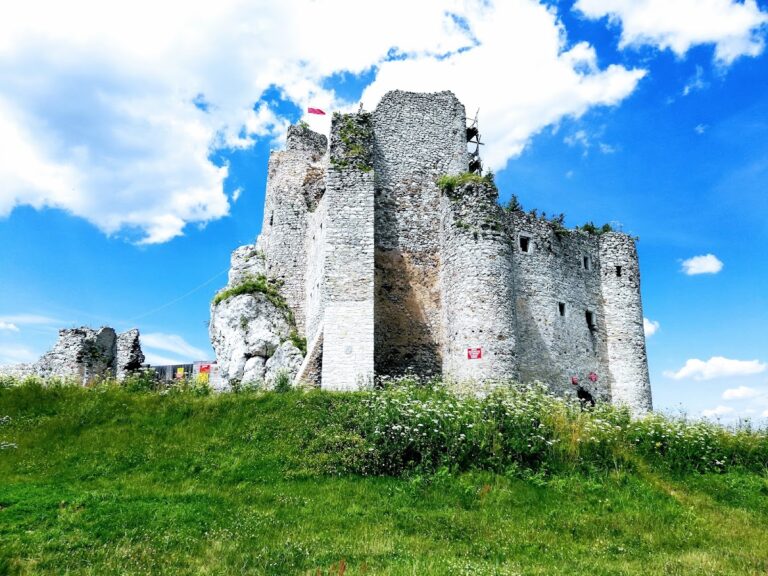
Reconstruction began in 2001 after consultation with Polish academic specialists and continued for ten years, ending with the official opening on 3 September 2011. Three years of archaeological research accompanied the work. The reconstruction drew on surviving wall outlines, archaeological evidence, written and visual material, and comparisons with similar buildings. Its aim was to recreate the early-modern appearance associated with the castle’s greatest development under the Fogelweder family.
The rebuilding remains controversial. Critics describe the result as a modern building on medieval ruins, combining a proposed early-modern layout with stylized medieval walls and towers. They argue that the earliest surviving views show an eighteenth-century ruin and cannot establish the castle’s original form. Supporters maintain that the reconstruction had academic backing and that conserving Bobolice as a permanent ruin was not the only valid approach. The work received the required approvals, including authorization from the regional monument conservator. Dariusz and Jarosław Lasecki currently own the castle.
Legends of Bobolice
A nineteenth-century discovery of valuables in a cellar encouraged further treasure hunting and legends of larger deposits in an alleged underground tunnel linking Bobolice with nearby Mirów Castle. One story tells of brothers named Bobol and Mir, owners of the two castles, who hid war spoils in the tunnel. According to the legend, jealousy followed after Bobol brought home a wife, leading to Mir’s death and the woman’s imprisonment within a wall. The ghost of the White Lady is also said to appear at Bobolice. These stories belong to local tradition rather than confirmed historical events.
Remains
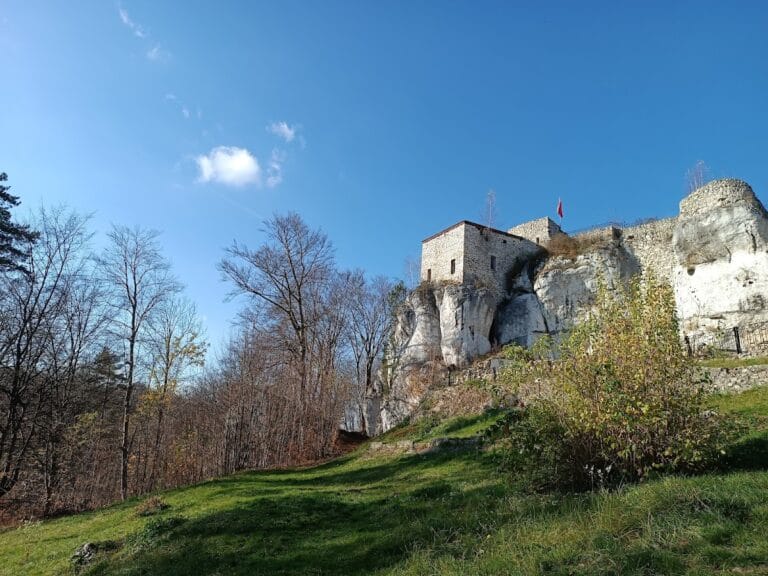
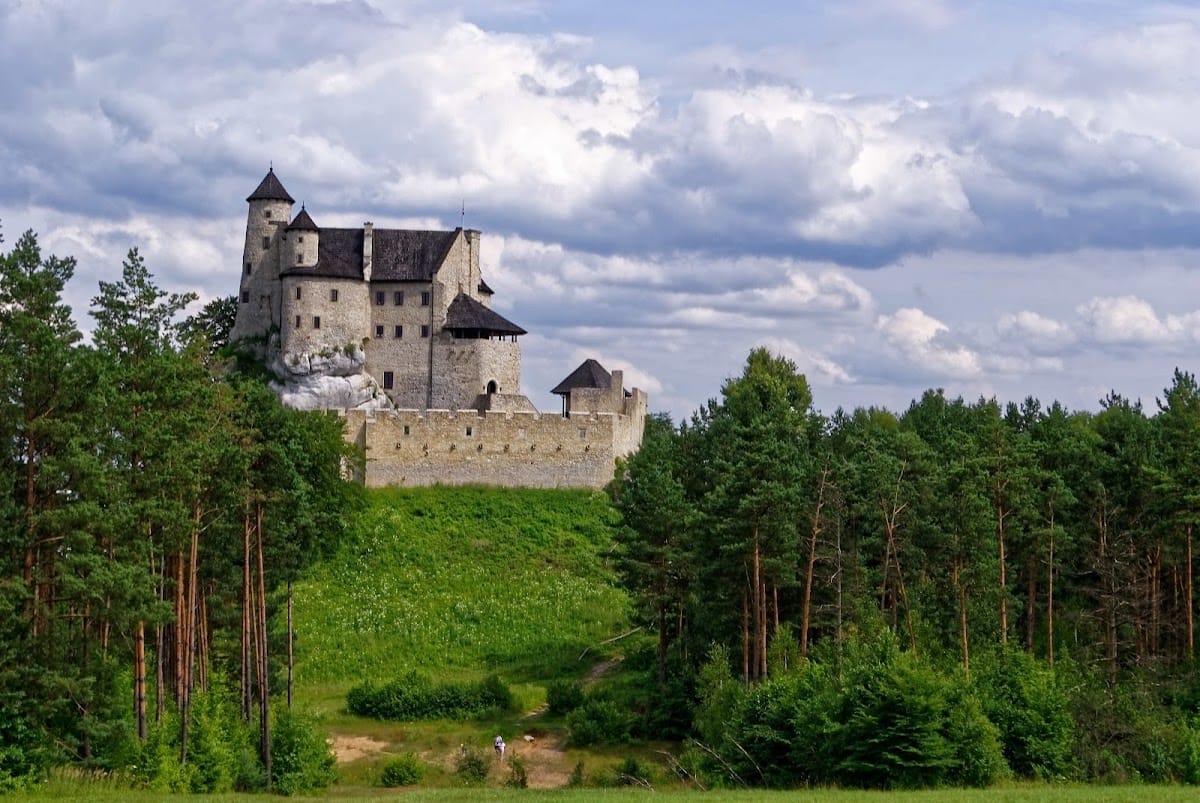
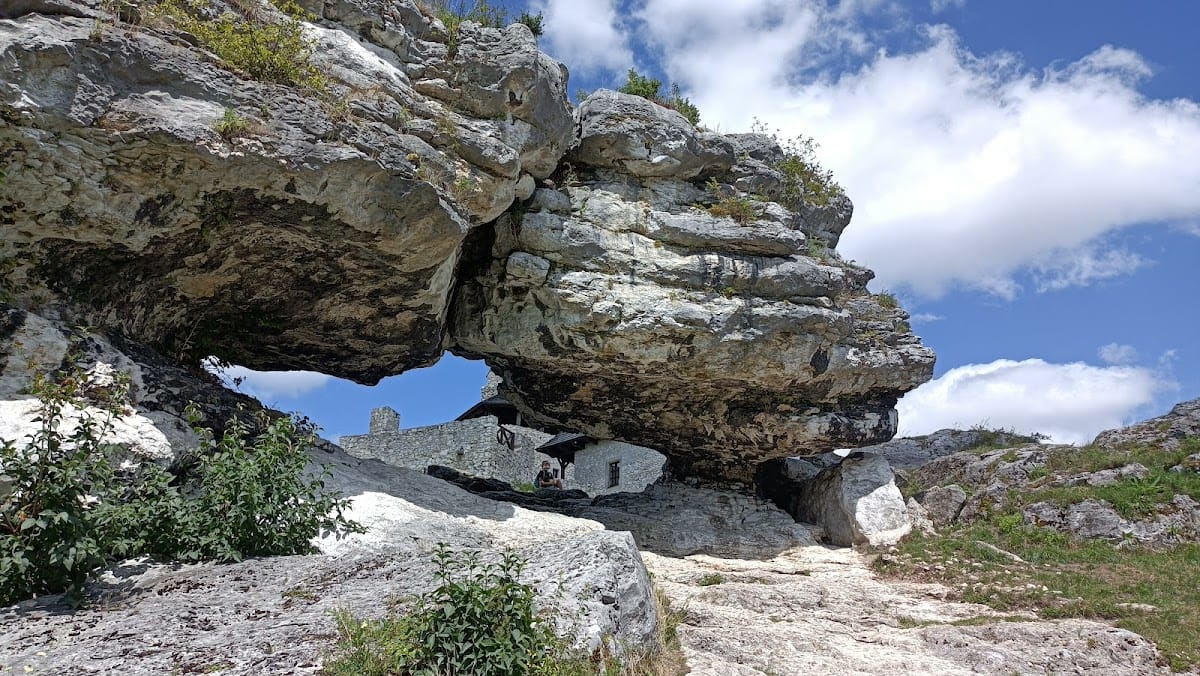
Bobolice Castle occupies the summit of a steep, rocky limestone hill on the Kraków–Częstochowa Upland, about 350–360 metres above sea level. Its medieval defenses adapted to the ridge and to irregular natural rock formations. The complex combines an upper castle, a lower castle or outer ward, a dry moat, residential buildings, defensive walls, and farm structures.
Medieval fortifications
The fourteenth-century castle had an irregular perimeter wall enclosing an elongated area. Two semicircular defensive towers formed part of the fortification, one at a corner and another in the northern wall. Within the enclosure stood a roofed stone building and transverse internal walls. The arrangement has been described as an organically formed donjon, or principal fortified tower or keep. The original castle probably also had its own chapel.
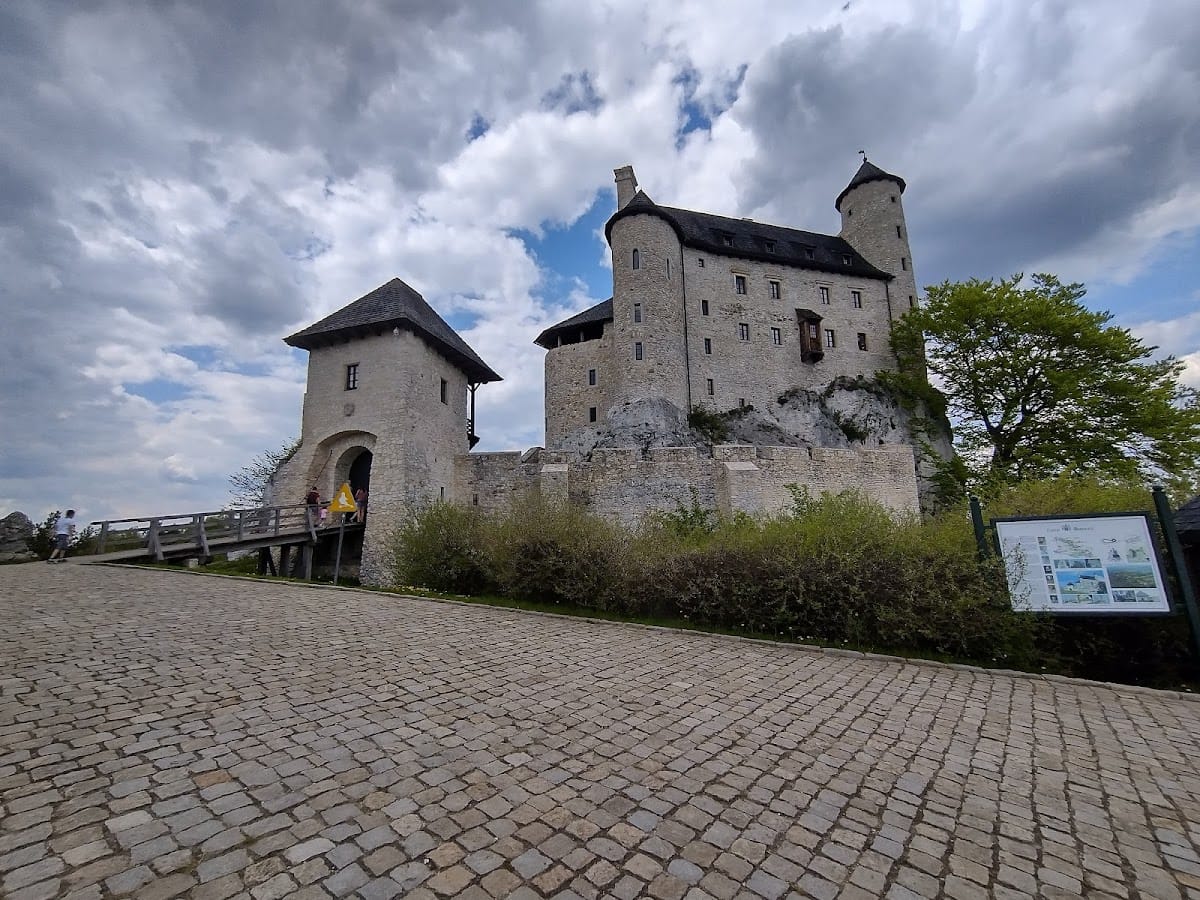
During the fifteenth century, the defenses were modernized, probably with circular half-towers or flanking works. A small lower castle adjoined the upper castle on its southern and western sides. It was entered from the east, and its perimeter wall incorporated the limestone outcrops. The complex was protected by a dry moat, a defensive ditch without standing water. A drawbridge and a multistory gate tower controlled access, while the outer courtyard contained both agricultural and more representative areas enclosed by walls and farm buildings.
Sixteenth-century alterations
Around 1560, the medieval keep was partly dismantled and incorporated into higher walls. The medieval lower-castle walls were raised to create an additional storey and new residential rooms. An eastern horseshoe-shaped bastion, a projecting defensive work designed to strengthen flanking fire, controlled the entrance to the outer courtyard. The main entrance retained its pointed medieval portal. These changes transformed Bobolice from a medieval fortress into a Renaissance family residence.
Seventeenth-century residence
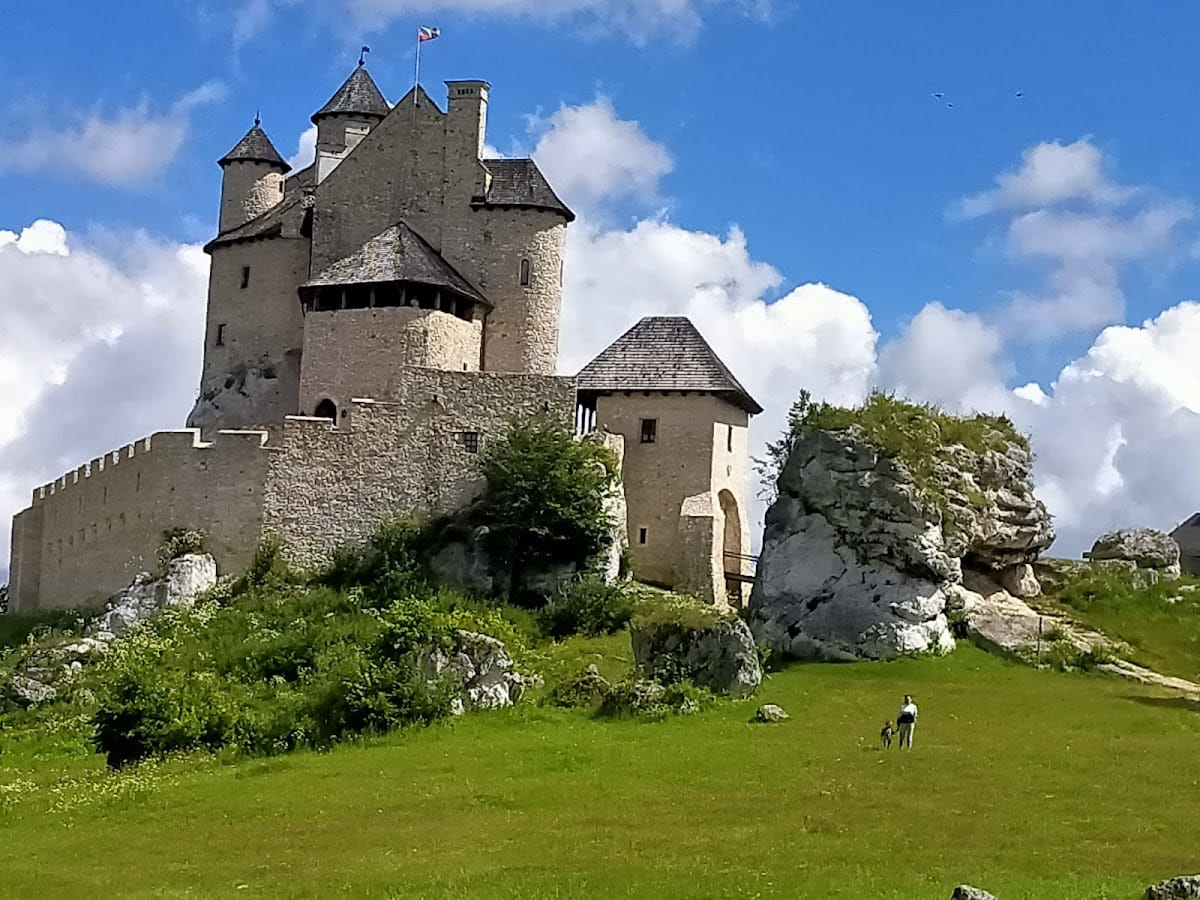
The Fogelweder rebuilding replaced the former keep, while partly reusing its masonry, with a principal tower above a main residential body. A substantial stone staircase led to the entrance, which received a more formal loggia, an open-sided gallery or balcony. A new entrance building joined the perimeter wall on an irregular quadrilateral plan and had two buttresses. Its first floor contained a guard room, while its structure housed the mechanism for raising the drawbridge over the dry moat.
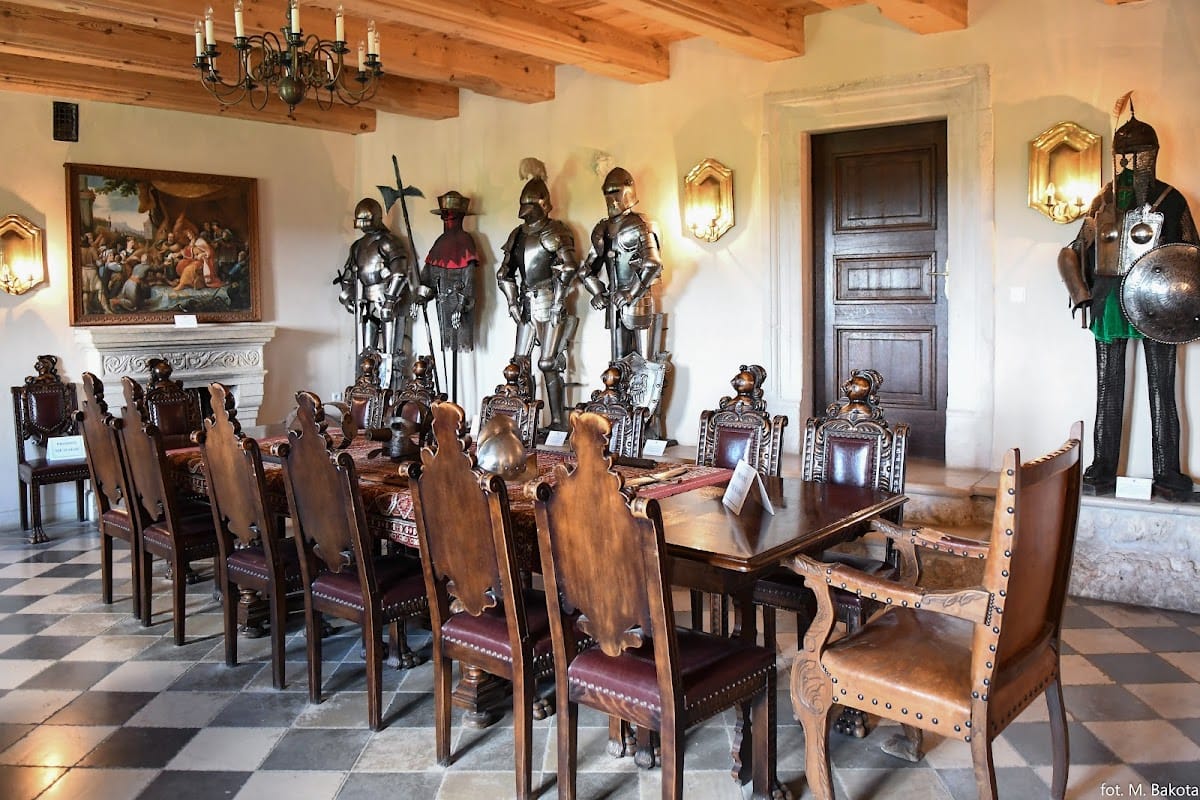
The guard room had three windows facing east, west, and south. Above the entrance, the loggia was covered by a dome and included a terrace on the upper storey. The apartments acquired a more representative character, and a freight lift connected the kitchen with the higher floors. A chapel was installed on the top floor of the horseshoe-shaped bastion.
Reconstructed castle
The present reconstruction consists principally of a two-storey residential building with a tower and adjoining defensive elements. Crenellated walls, meaning parapets with alternating raised sections and openings, enclose the complex. They are built of local white limestone, and the approach crosses a drawbridge over the dry moat. The roof is covered with shingles. The southern section was protected by a later roof rather than fully reconstructed, reflecting the evidence available for its former entrance loggia and upper rooms.
Builders used local limestone, washed river sand, slaked lime matured in pits for thirty years, and specially prepared mortar intended to resemble medieval materials and techniques. Experienced stonemasons and bricklayers carried out the work. Archaeological research, visual analysis, and surviving written evidence informed the choice of materials and construction methods.
Archaeological evidence
Excavations conducted during the reconstruction recovered pottery fragments, tiles, iron objects, glass vessels, and coins from different periods. Together, these finds represent several phases of the castle’s use. In June 2010, work at the foot of the castle exposed a natural rock gate known as the Lasecki Gate.