Zvíkov Castle: A Historic Royal Fortress in the Czech Republic
Visitor Information
Google Rating: 4.7
Popularity: Medium
Official Website: www.hrad-zvikov.cz
Country: Czechia
Civilization: Early Modern, Medieval European, Modern
Site type: Military
Remains: Castle
History
Zvíkov Castle is situated near the municipality of Zvíkovské Podhradí in the Czech Republic. Its origins trace back to the early 13th century when it was constructed by the Bohemian King Přemysl Otakar I. The site on which the castle stands shows evidence of earlier human settlement, with traces from the Bronze Age and possibly from the Late La Tène period, an Iron Age culture.
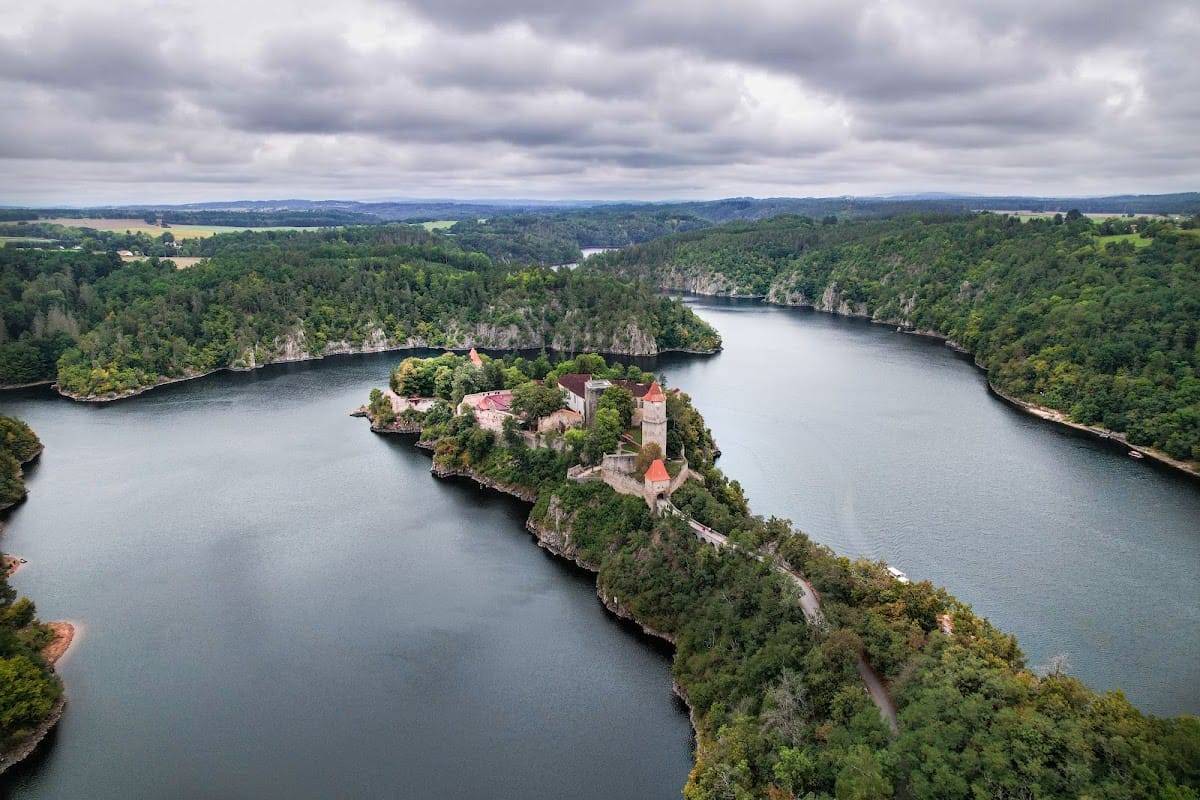
The castle initially served as a royal residence and fortress, strategically located on a rocky promontory overlooking the meeting point of the Vltava and Otava rivers. King Přemysl Otakar II, who reigned from 1253 to 1278, significantly expanded Zvíkov, transforming it into a representative early Gothic palace. His developments included the erection of the Chapel of St. Wenceslaus and a distinctive tall round tower known as the Glaska Tower, which emphasized its status as a royal stronghold.
Throughout the medieval period, the castle was administered by royal officials called burgraves, often two chosen simultaneously, underlining its importance. There were times when the castle was temporarily pledged to powerful noble families, including the Rožmberks, Švamberks, Eggenbergs, and Schwarzenbergs. Despite these periods, it sometimes returned to direct royal control, notably during the reign of King Charles IV, who included Zvíkov among castles protected as inalienable royal property by legislation known as Majestas Carolina.
Zvíkov played a notable defensive role during the Hussite Wars in the early 15th century. In 1429, it withstood a protracted four-month siege by the Hussite faction known as the Taborites. Afterwards, the castle’s fortifications were reinforced under Oldřich II of Rožmberk, who added bastions and deepened the moats to strengthen its defenses.
In the 16th century, the Švamberk family undertook Renaissance-style renovations of the castle. Under master builder Jan Antonín Vlach, the Glaska Tower was heightened by adding a fifth floor, and decorative improvements were made to the palace and gates, reflecting the changing architectural tastes of the period.
Following the Battle of White Mountain in 1620, which marked the defeat of Protestant forces in Bohemia, Zvíkov was among the last Protestant strongholds to surrender, holding out until 1622. Afterward, the castle was looted and entered a period of decline.
Later owners such as the Eggenbergs and Schwarzenbergs attempted repairs, with the most extensive restoration occurring in the late 19th and early 20th centuries under Prince Karl III Schwarzenberg. His work restored key elements including the palace arcades, the Glaska Tower, and the southern entrance gates.
The castle remained under the Schwarzenberg family’s ownership until 1948, when it became property of the state. In recognition of its historical and cultural value, Zvíkov Castle was declared a national cultural monument in 1978.
Remains
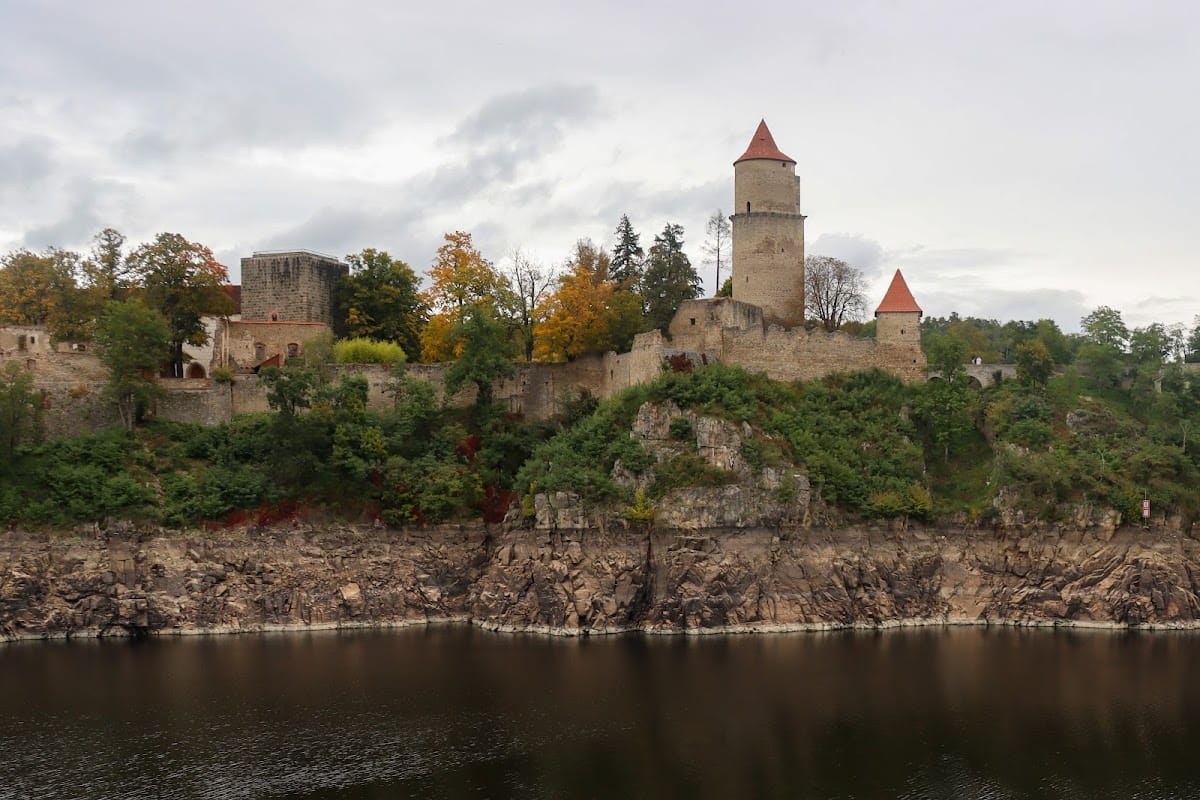
Zvíkov Castle crowns a high, elongated rocky outcrop, naturally fortified by steep cliffs and the confluence of two rivers. The narrow neck connecting it to the mainland is cut by a moat, which today is artificial and crossed by a stone bridge built in 1777. This bridge replaced an earlier wooden drawbridge and is notable for having four small arches alongside one larger one. A Baroque chapel with a statue of St. John of Nepomuk stands on the right side of the bridge’s parapet, adding a religious and artistic element to the entrance approach.
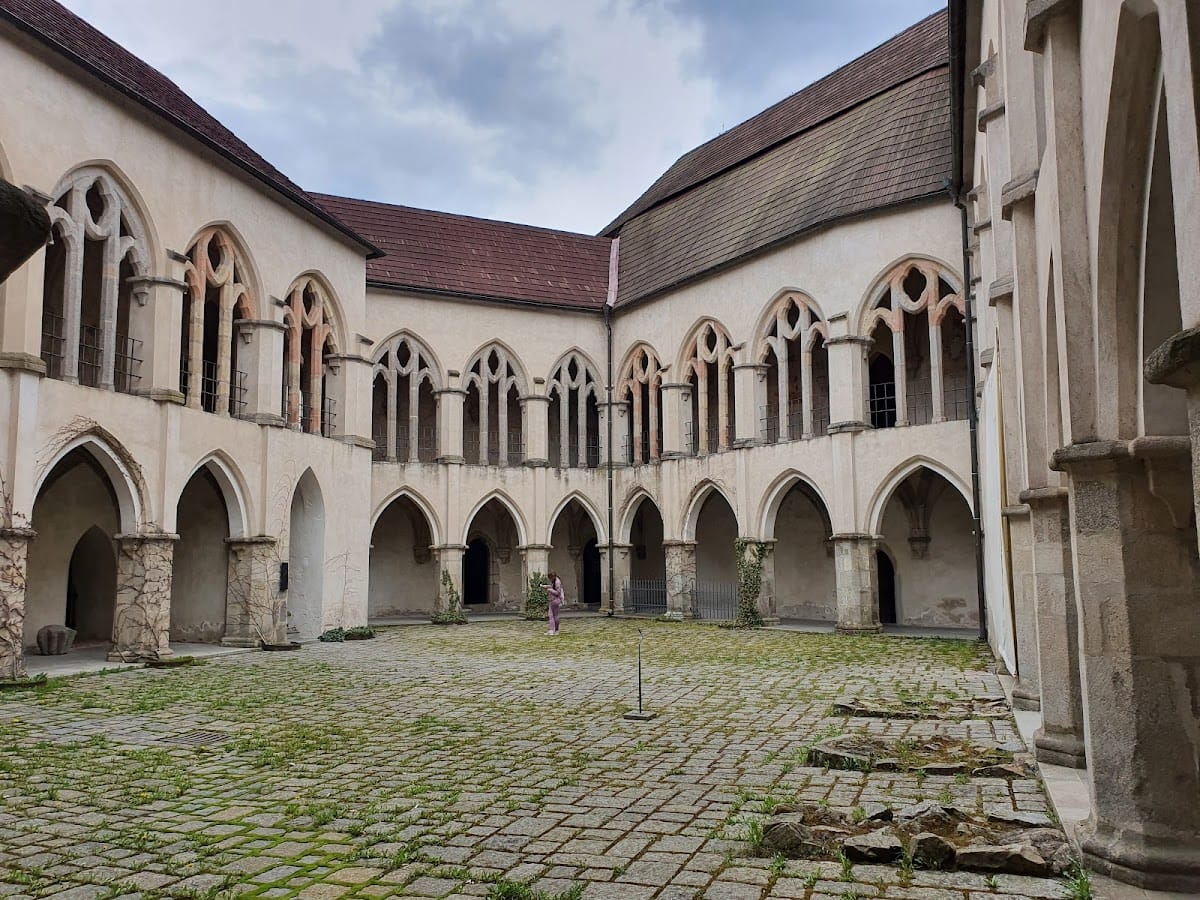
At the heart of the castle lies its Gothic core, featuring a palace with a rare 13th-century internal arcade gallery. This gallery has been preserved and restored to its original appearance, showcasing the medieval architectural design. Adjacent to the palace is the Hlízová (also called Glizova or Markomanka) Tower, a square-shaped donjon built around 1230. This tower is the oldest surviving structure on site. It stands 20 meters tall and has sides measuring 12 meters in width, with walls up to 3.5 meters thick made from roughly hewn blue sieinite stone blocks, a durable local material.
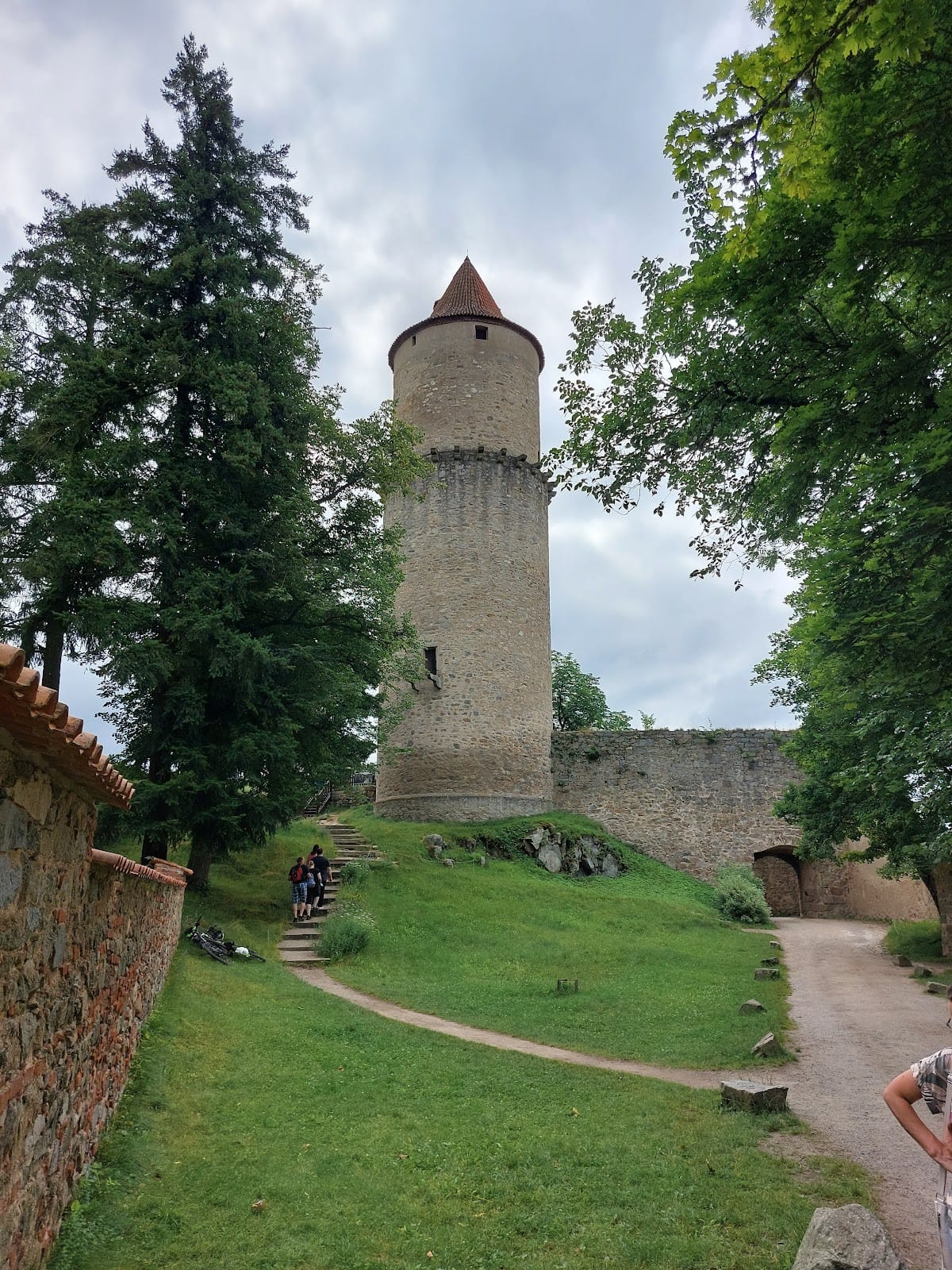
Dominating the skyline is the Glaska Tower, a cylindrical defensive tower rising five stories to a height of 32 meters. It rests on a one-meter-high base (plinth) and thicker walls at its foundation measuring 2.8 meters. The tower’s south-facing wall is uniquely wedge-shaped, designed to deflect attacks from projectiles. You can observe Gothic stone corbels protruding between the fourth and fifth floors, supporting the conical roof above. The original entrance is located on the second floor, reached by a carved portal with ornamental consoles, beyond which a stone staircase ascends through the interior. The uppermost floor bears carved coats of arms belonging to the Švamberk and Rožmberk noble families, marking their role in the castle’s history.
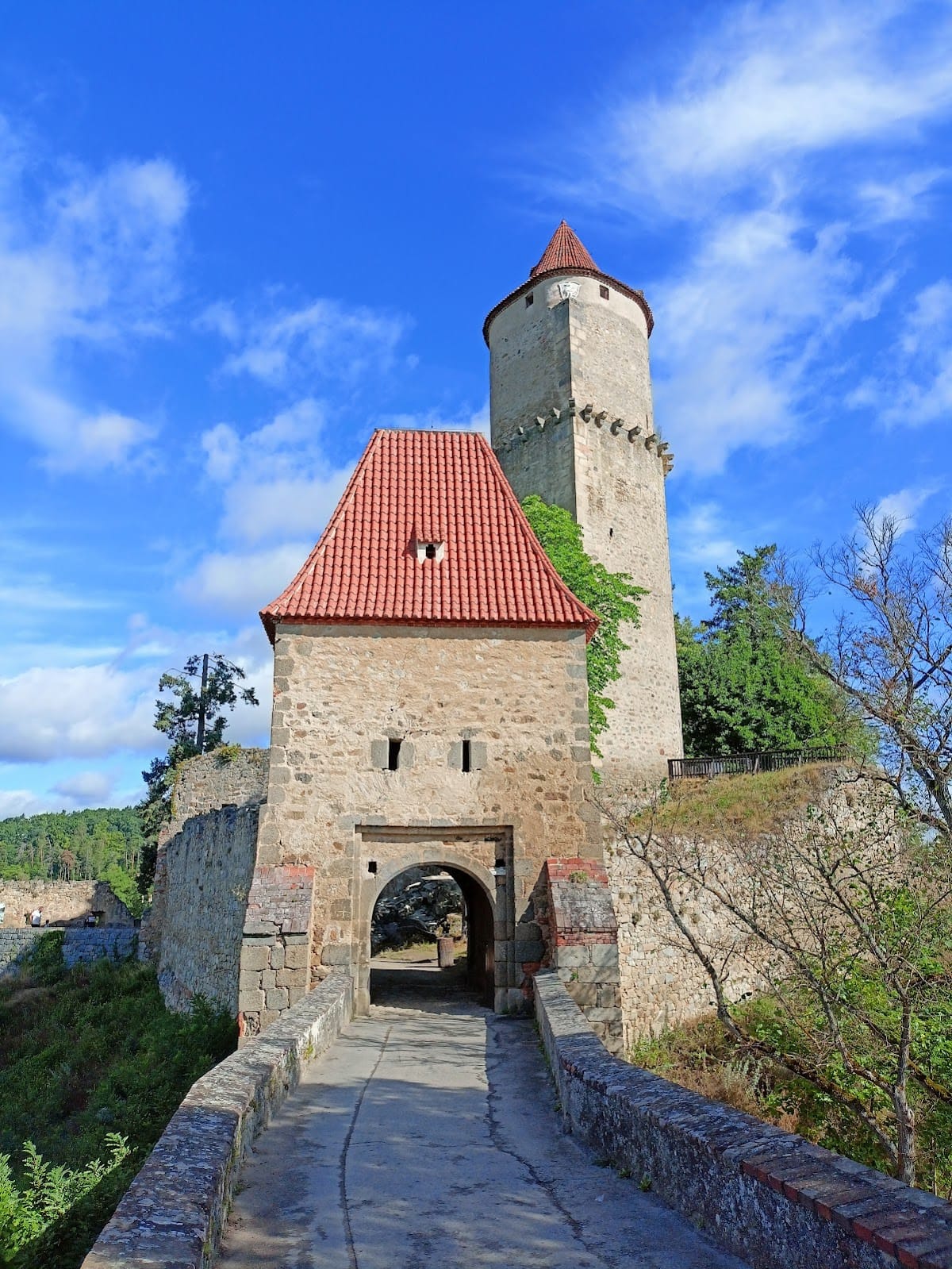
The southern gate complex, called the Písecké (or Pisec) Gate, has origins in the 13th century but was remodeled in 1567 during Renaissance renovations. It includes a square tower constructed using rubble stone, housing a semicircular arch 2.54 meters wide and 2.96 meters high. The outer frame is a rectangular stone surround with two holes designed for lifting blocking stones to secure the gateway. Above the gate are two small embrasure windows, which are narrow openings for shooting. On the southwestern side, a battlemented defensive wall extends from the gate, featuring a shooting gallery where defenders could protect the entrance.
At the northern edge of the castle stands the Red (Červená) Tower, a bastion measuring roughly 8.5 meters across and rising about 20 meters tall. It is built from rubble stone with very thick walls, approximately two meters in thickness. This tower once had three entrances on different levels, now partially sealed. The lowest floor served as a prison; historical records note that prisoners were sometimes starved there. The upper floors preserve partial cross vaulting, a type of arched ceiling used in medieval architecture.
The Chapel of St. Wenceslaus is attached to the southern part of the royal palace near the Hlízová Tower. It retains much of its original early Gothic style from the late 13th century. Inside, the chapel contains richly decorated elements including inscriptions in German carved on floor slabs praising the king. The seating area, or sedilia, likely reserved for honored guests, remains intact. Wall paintings dating from the late 15th century depict scenes from the New Testament and portraits of apostles. A fragment of a carved altarpiece from the early 1500s, attributed to an anonymous artist known as the Master of the Zvíkov Lamentation, is also preserved within.
The palace area consists of multiple wings with vaulted halls. Some rooms show ribbed vaulting resting on octagonal pillars, typical of Gothic construction. Among the most striking interiors is the late Gothic “wedding room,” whose walls, covering around 250 square meters, feature green-hued murals portraying secular figures such as electors and dancers.
During the 15th century, defensive upgrades included deepening the castle’s moats and creating six inward-facing square bastions with narrow slit openings for shooting, located along the northern curtain wall. The northern gate, known as the Iron Gate, was moved close to the Red Tower as part of these improvements.
In the 19th and early 20th centuries, restoration efforts repaired several key elements of the castle. These repairs can be distinguished by the slightly pinkish color of newer masonry contrasting with the original 13th-century stonework. Notably, wall paintings inside the palace were restored by prominent Czech artists such as Petr Maixner and Bohumír Roubalík, helping to preserve the castle’s rich decorative heritage.
Archaeological investigations and ongoing conservation measures have helped maintain the site, though specific excavation details have not been recorded in this summary.
Nearby sites