Volfštejn Castle: A Medieval Fortress in the Czech Republic
Visitor Information
Google Rating: 4.4
Popularity: Low
Country: Czechia
Civilization: Medieval European
Site type: Military
Remains: Castle
History
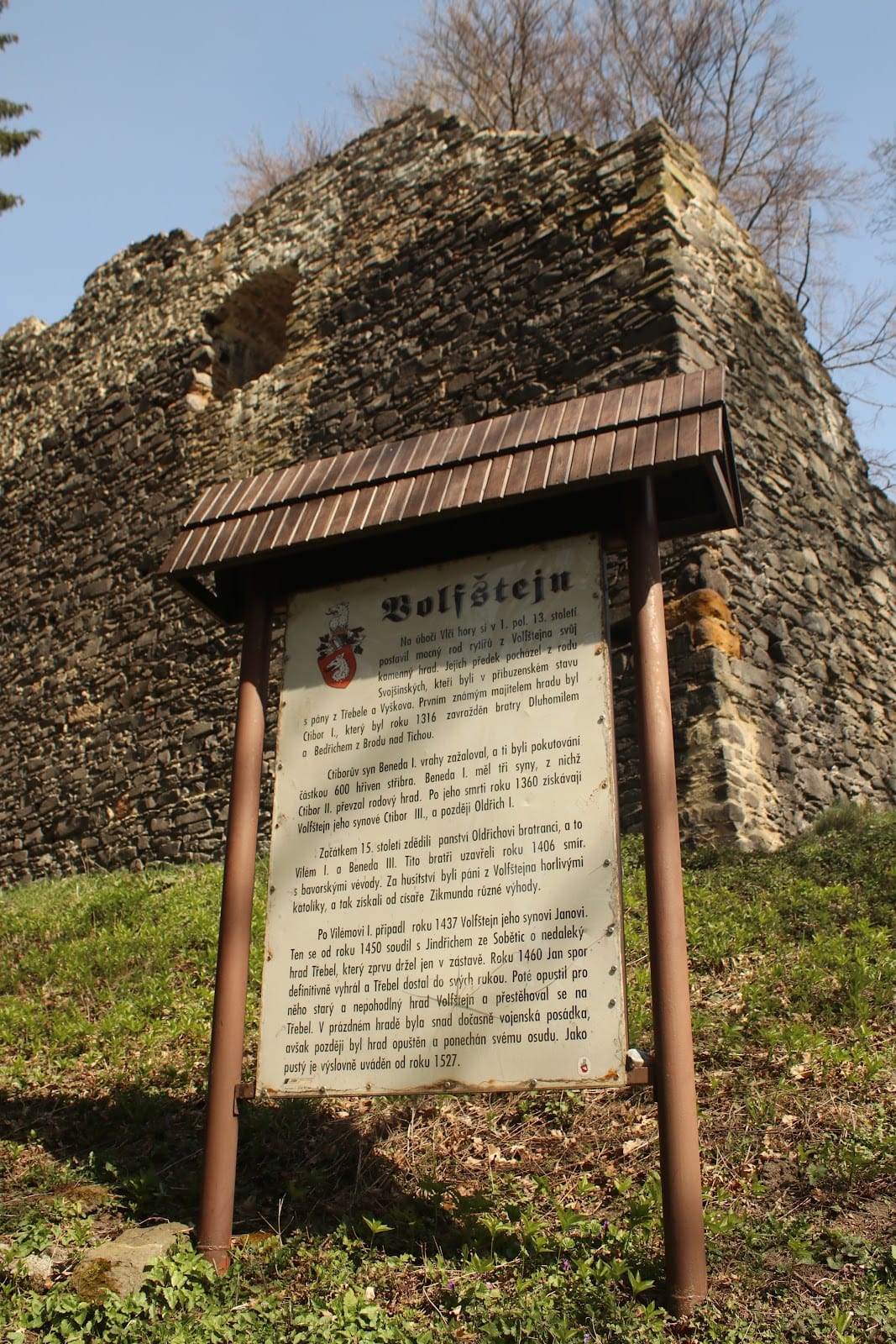
Volfštejn castle stands in the municipality of Černošín-Stříbro, Czech Republic, and was constructed by medieval European nobility during the early 13th century. It served as a fortified residence and administrative center for the local ruling family known as the lords of Volfštejn.
The castle’s origins trace back to the first half of the 1200s, supported by scientific analysis dating timber used in the structure to around 1260–1262. The earliest surviving written reference appears in 1316 when Benda of Volfštejn brought a legal case regarding the murder of his father, Ctibor of Volfštejn. This establishes both the family’s presence and their active role in regional affairs during the early 14th century. The lords of Volfštejn maintained close ties with the noble houses of Svojšín and Třebel, sharing heraldic symbols that included transverse stripes and a wolf’s head or a full wolf as the crest, reflecting their identity and alliances.
Ownership of the castle remained within the family through the 14th and 15th centuries, passing among members such as Beneda, Ctibor, Protiva, Oldřich, Vilém, and Jan. Throughout this period, the family enacted several noteworthy activities, including patronage of the nearby Černošín church, reflecting their religious commitments. Political involvement is also recorded, notably peace agreements with Bavarian dukes that underline the castle’s position in regional diplomacy.
During the turbulent Hussite Wars of the early 15th century, Vilém of Volfštejn aligned with the Catholic side, and Emperor Sigismund rewarded him with imperial pledges of estates. This demonstrates the family’s engagement in broader imperial politics of Bohemia and their loyalty to the emperor. By 1460, Jan of Volfštejn had acquired the neighboring Třebel castle, uniting the two estates and moving the family seat there. This shift led to the decline of Volfštejn castle’s importance.
Around 1470, Volfštejn was likely destroyed amid conflicts involving the Zelená Hora faction and King George of Poděbrady, indicating its entanglement in mid-15th century power struggles. By 1527, written sources describe the castle as deserted, though one record vaguely notes a meeting of the Banbach brothers at the location, hinting at occasional use. Since 1964, the site has been legally protected as a cultural monument, preserving its historical legacy.
Remains
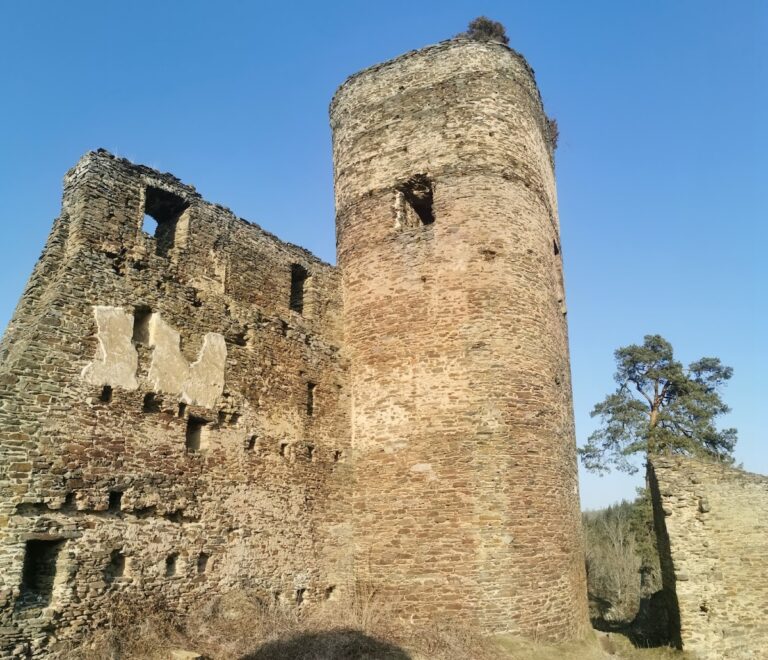
The ruins of Volfštejn castle reveal a well-preserved example of a bergfrit-type fortress, a style characterized by a central stone tower used primarily for defense and refuge. The castle’s ground plan is nearly oval, reflecting medieval design principles intended to follow the natural topography and ensure strong defensive potential. Because the castle underwent few major alterations during its existence, its remaining structures offer insights into early 13th-century castle construction.
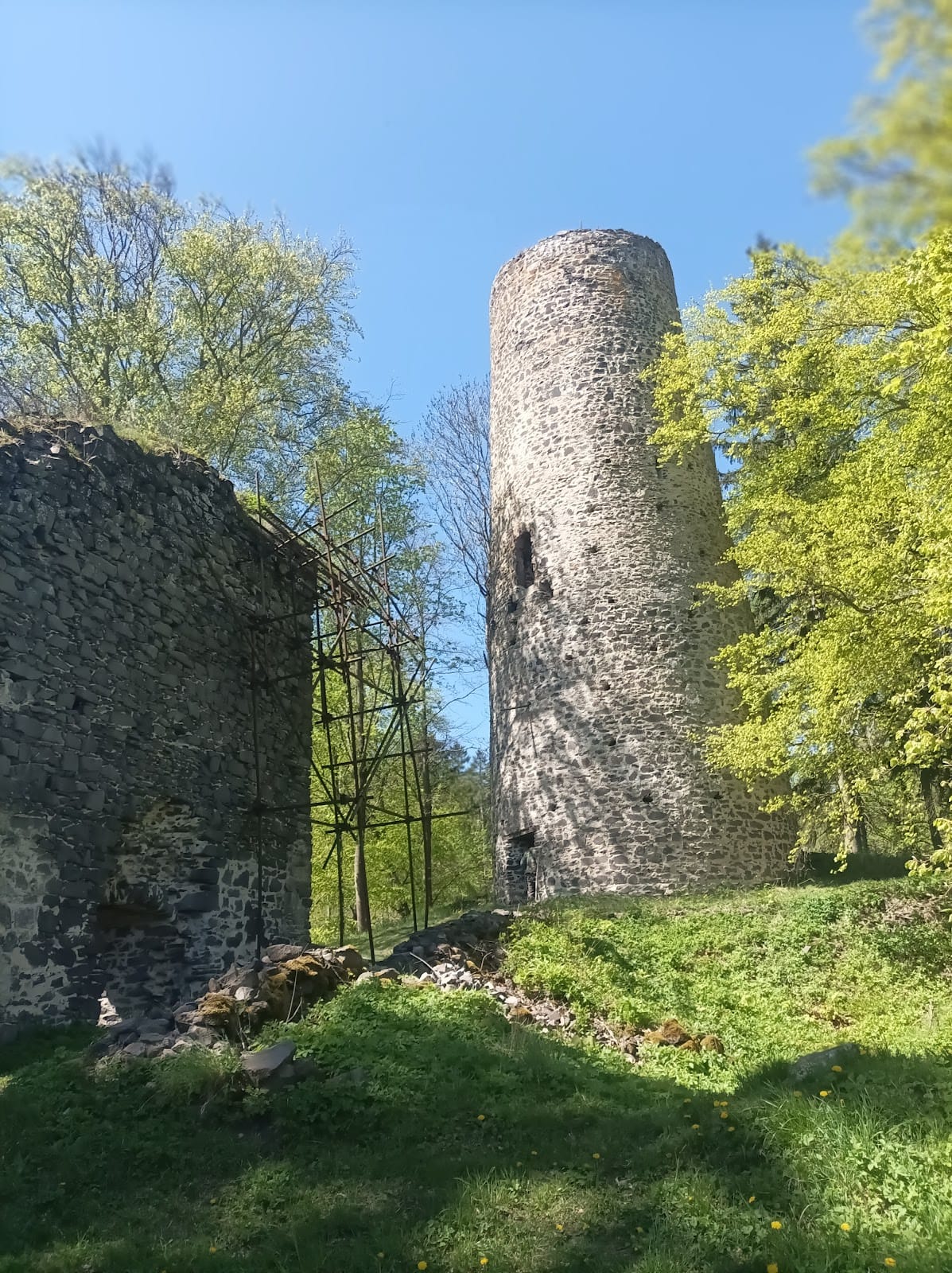
The most prominent feature is the round bergfrit tower, built from solid masonry. Inside, the tower’s interior is notable for having a flat ceiling rather than the vaulted ceilings common in later periods. One of the tower’s floors contains a fireplace, indicating areas intended for habitation and warmth, rather than purely military use. The tower stands as the oldest part of the castle, with dendrochronological research confirming the construction timeline in the 1260s.
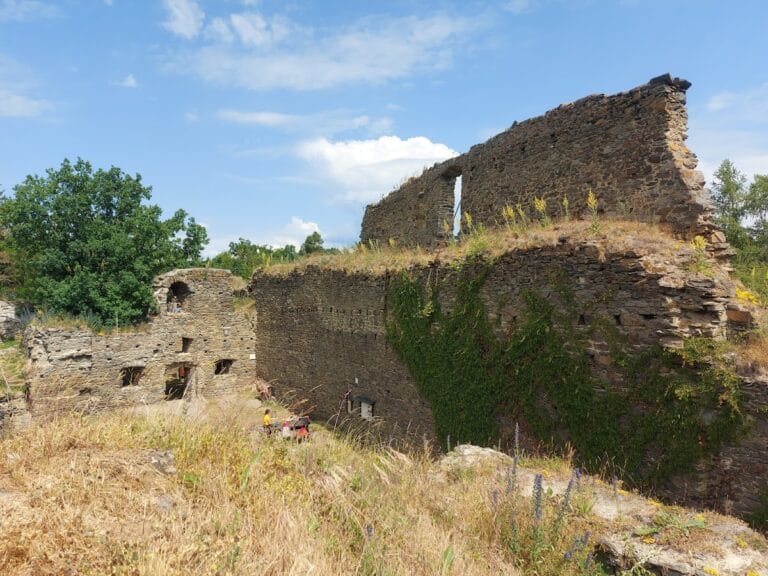
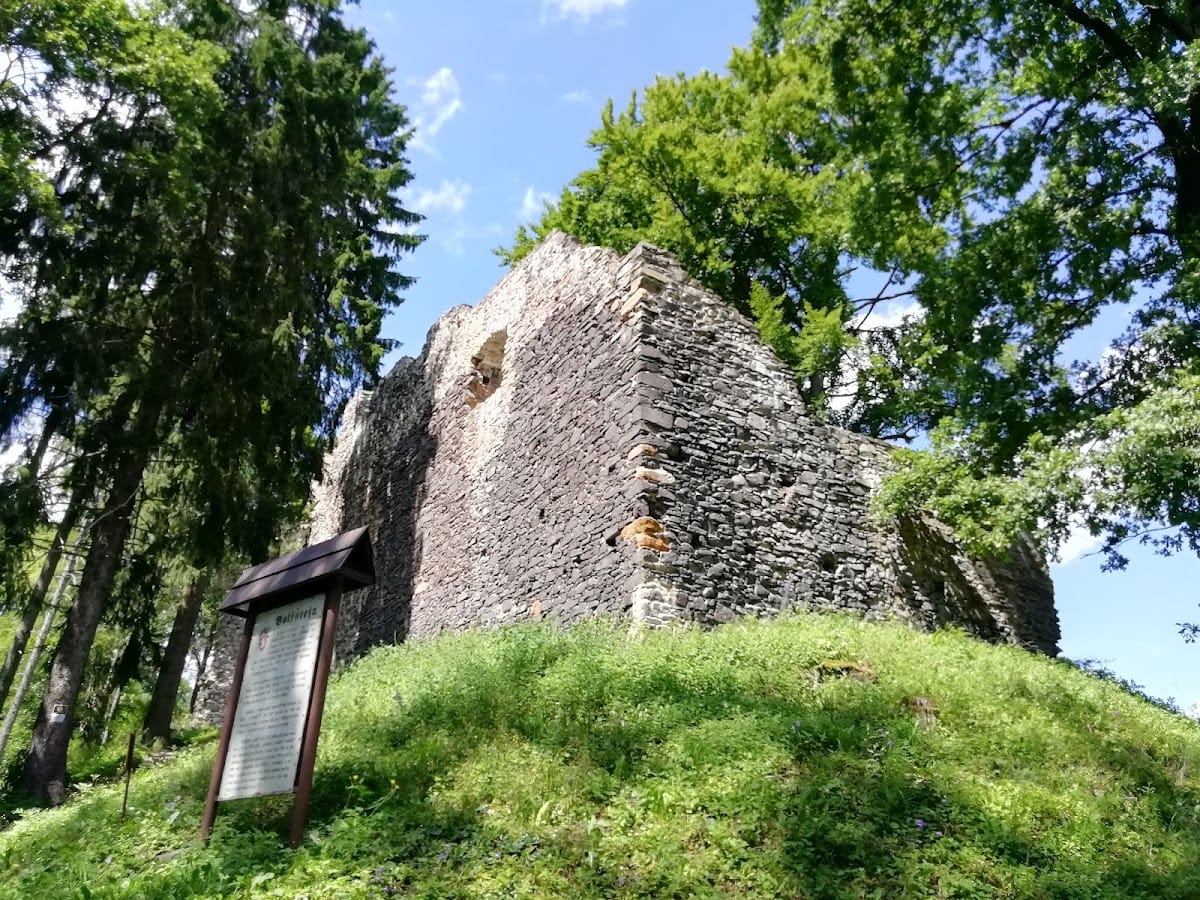
Opposite the bergfrit is a larger building identified as the palace, which rises to two stories in its current ruined state. This structure incorporates architectural fragments reused from earlier or different phases of construction, suggesting the castle evolved over time with practical adaptation of materials. Adjacent to the eastern curtain wall, just below the bergfrit, remnants of a two-room building survive in part. On the opposite side of the site stands a smaller tower-like structure featuring a square footprint, possibly serving a defensive or auxiliary function.
Together, these elements demonstrate the castle’s layered development, showcasing a combination of early fortification design with later modifications. Today, the ruins remain in situ and fragmentary, providing tangible evidence of the site’s medieval origins and offering valuable information about the living and defensive arrangements within the castle walls.
Nearby sites