Castello di Sarmato: A Medieval Fortified Complex in Italy
Site at a Glance
- Rating
- 4.4
- Popularity
- Low
- Country
- Italy
- Primary era
- Medieval
- External website
- Open
- Eras represented
- Medieval
- Civilizations
- Lombard
- Site type
- Military
- Remains
- Castle
On this page9 sections
History
Castello di Sarmato is a large medieval fortified complex in Sarmato, Italy, erected around the year 1000. Its foundation is sometimes attributed to the ancient Sarmatians, nomadic peoples of the Eurasian steppes, while its role as a Lombard stronghold is regarded as certain. Positioned in the lower Tidone valley near the Tidone stream and the Po, it stood close to the meeting point of the Via Emilia from Pavia and the Via Francigena, the major medieval pilgrimage route leading toward Rome. Together with Castel San Giovanni and Borgonovo Val Tidone, it formed a strategic outpost defending the Guelph territories around Piacenza against the Ghibelline forces of Pavia. Guelphs generally supported the papacy, while Ghibellines generally supported imperial authority, although local alliances could vary.
Medieval Stronghold
The first securely dated event associated with the fortress took place in 1216, when Milanese and Piacentine militias gathered there before capturing Ghibelline fortifications in the heights near Rovescala. In 1270, the fortress was defended by the Pallastrelli family when it was attacked and seriously damaged by the forces of Ubertino Landi, lord of Bardi and count.
The present castle developed through later expansion of a keep built in the thirteenth century over the foundations of an earlier Lombard tower. Its position connected it to the defense of the Piacenza area, including against Lombard incursions. The complex continued to function within the political struggles of medieval northern Italy, where fortified settlements were closely tied to noble authority and shifting territorial alliances.
Visconti and Scotti Douglas Rule
In 1376, Galeazzo II Visconti, lord of Milan, granted the castle to Bartolomeo Seccamelica, who had recently purchased it from the Pallastrelli family. Through Seccamelica’s only surviving daughter, the property passed to the Scotti family and briefly to the Arcelli family, counts of the Tidone valley.
In 1441, Filippo Maria Visconti, duke of Milan, granted Castello di Sarmato as a fief, together with the title of count, to Alberto III Scotti Douglas. The Scotti Douglas family retained the castle and fief until the abolition of feudalism. During a later conflict involving Milan and Piacenza’s alliance with Venice, Alberto Scotti entrusted the property in 1447 to his relative Luigi dal Verme, count of Bobbio and Voghera and lord of several territories in the Tidone valley. Dal Verme sided with Milan, opposing Alberto, who defended Piacenza’s Venetian alignment.
After the war, Alberto Scotti appealed to Francesco Sforza, duke of Milan, for the return of the castle and fief. Sforza had already promised the territory to Dal Verme, so the Sforzas delayed its restoration until the death of Count Taddeo dal Verme in 1493. Alberto Scotti then regained control. His son Bartolomeo succeeded him, and after Bartolomeo’s death in 1498, the castle passed to Bartolomeo’s son Nicolò.
Later Ownership and Heritage
The Scotti family remained connected with Castello di Sarmato until 1819, when the death of its last male descendant transferred the property to the heirs, the counts Zanardi Landi di Veano. The castle remains the residence of the Zanardi Landi counts, who began a gradual program of recovery and enhancement. The site is designated Italian national heritage.
The Via Francigena and Saint Roch
Sarmato and its castle were historically linked to the Via Francigena. At the entrance to the settlement, the Casino served as a hospital for pilgrims travelling along the route, at the junction with the road leading to the Po and its port at Veratto. This crossing offered an alternative to the Ford of Sigeric at nearby Calendasco.
A local tradition connects the castle with Saint Roch, a Christian saint associated with caring for plague victims and with protection against plague. According to the tradition, Roch was returning from Rome and assisting plague victims in Piacenza when he took refuge in a hut or cave in the nearby woods. A small dog supposedly carried bread from the castle kitchens to him each day. After following the dog, Gottardo Pallastrelli, lord of the castle, found and assisted the saint. Tradition further holds that Gottardo later abandoned his possessions to become a pilgrim.
Saint Roch is the patron saint of Sarmato, whose feast is celebrated on 16 August. The tradition and the places associated with it helped spread Sarmato’s connection with the saint’s religious stories and artistic representation among pilgrims and throughout the Christian world.
Remains
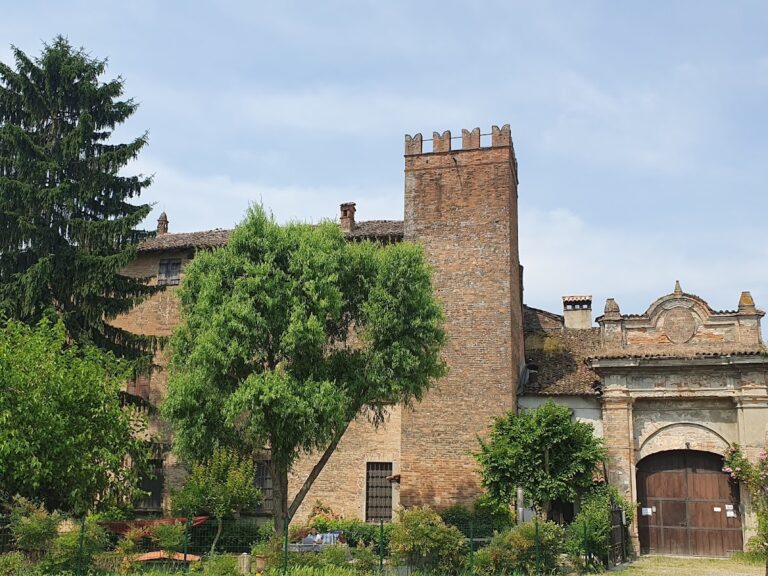
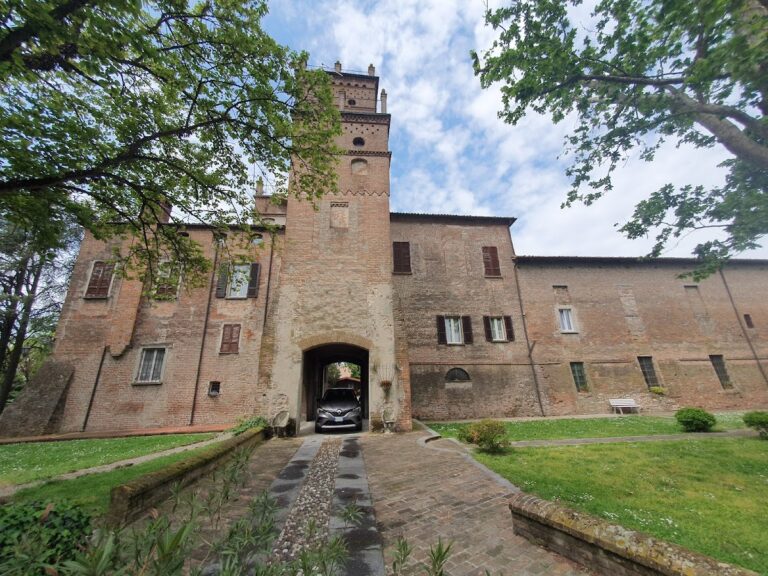
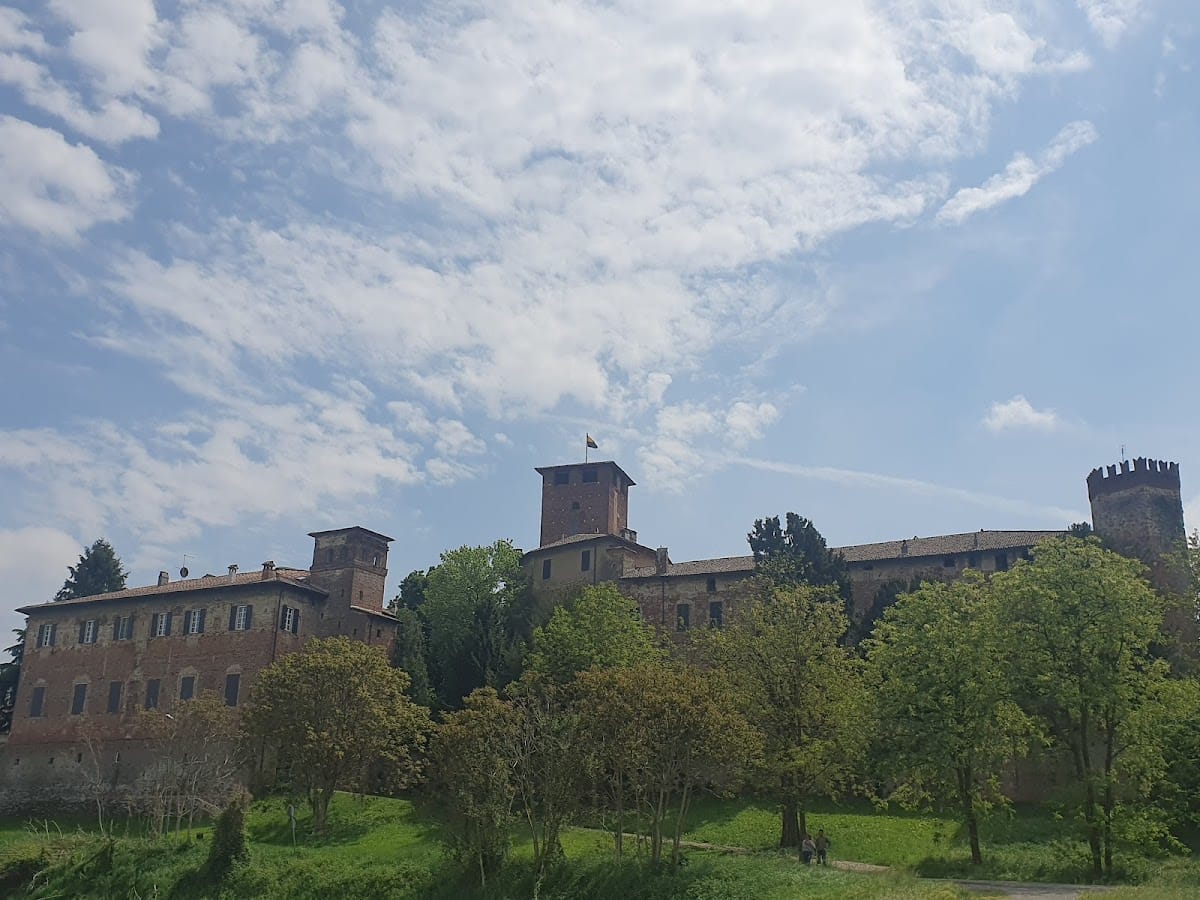
The complex is built entirely of brick and enclosed by clearly visible walls, with a rectangular settlement contained within them. A moat formerly surrounded the walls. Two perpendicular streets divide the interior, alongside houses, the Oratory of San Carlo Borromeo, the castle, and the Rocchetta. The settlement is entered through three fortified access points, creating a compact defensive layout that combines residential, military, and religious buildings.
Entrances and Defensive Works
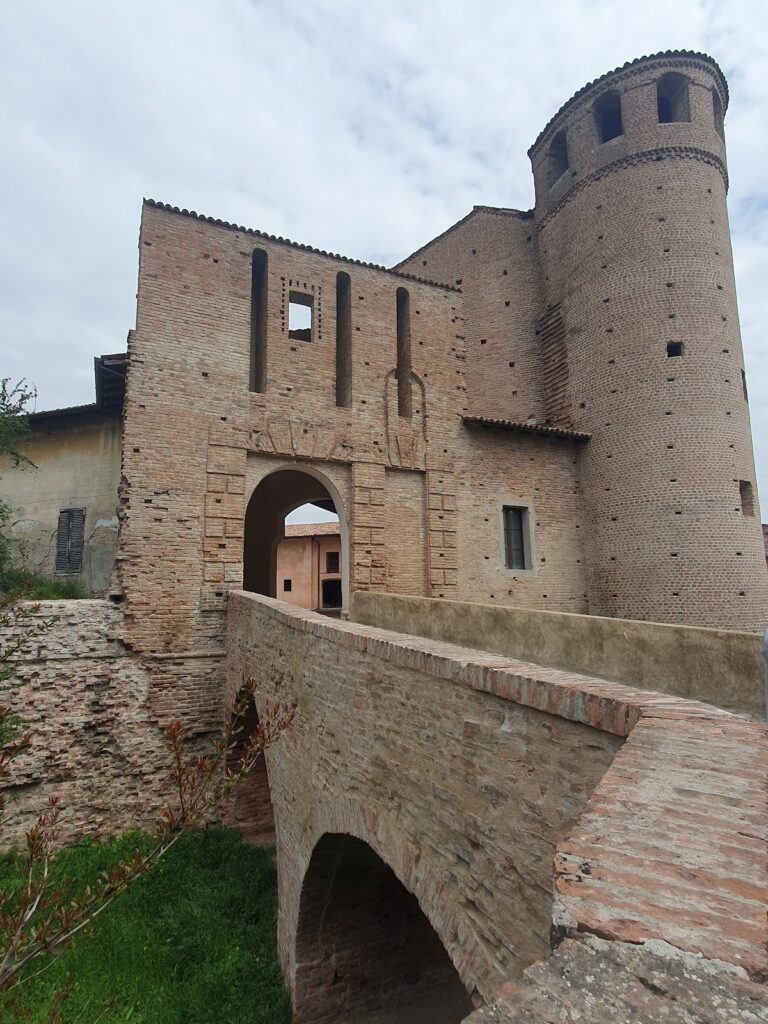
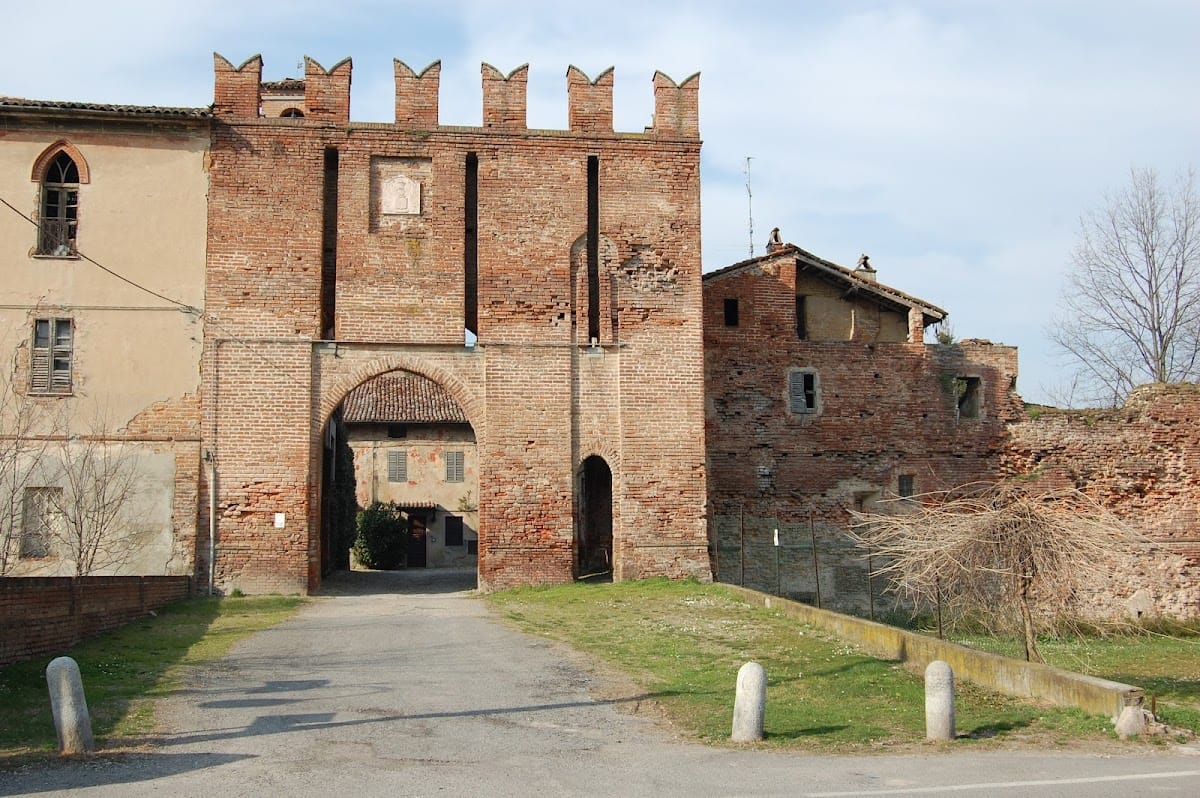
The principal entrance is on the south side, where a crenellated ravelin, a projecting defensive work protecting an entrance, contains two arches. One provided a pedestrian passage, while the other has a pointed arch for wheeled vehicles. Both passages were equipped with drawbridges. The eastern fortified entrance now houses the town hall. On the west side, the structure known as the Rocchetta formerly accommodated the military garrison and was reached by a drawbridge whose hinges remain clearly visible.
Castle and Towers
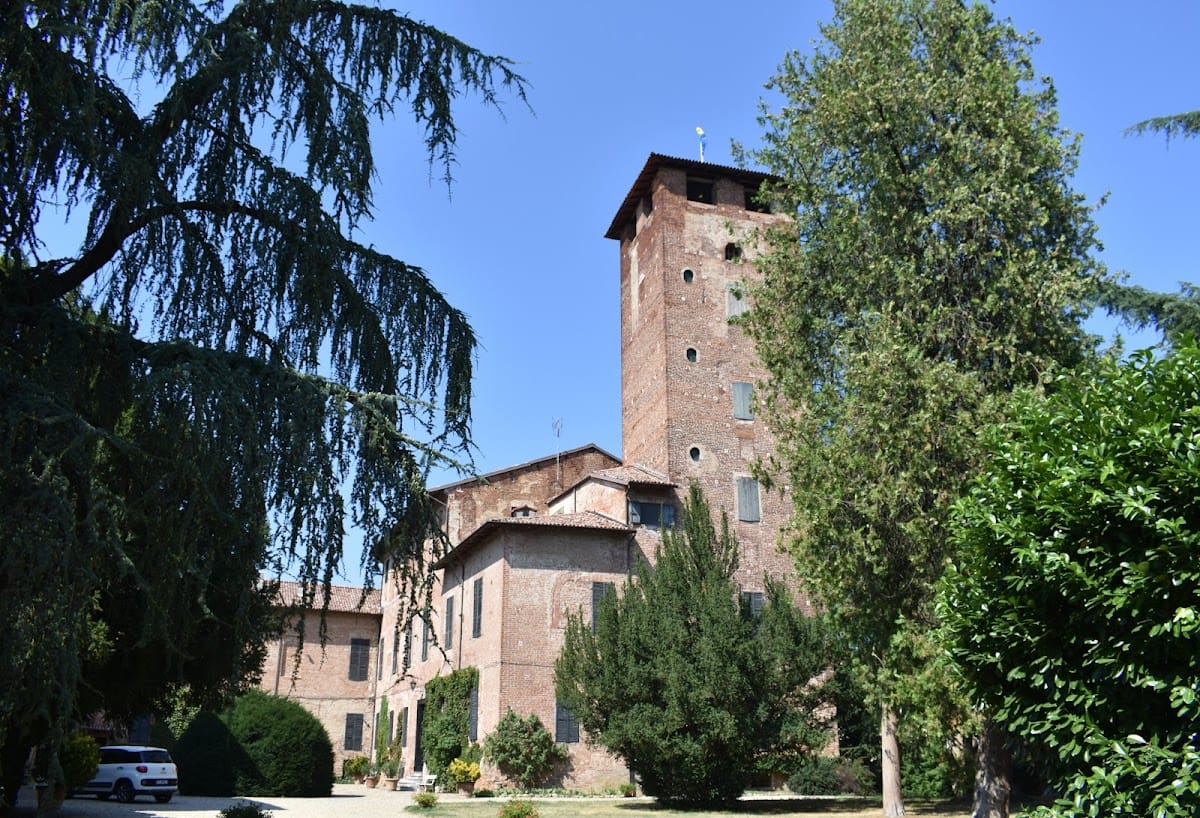
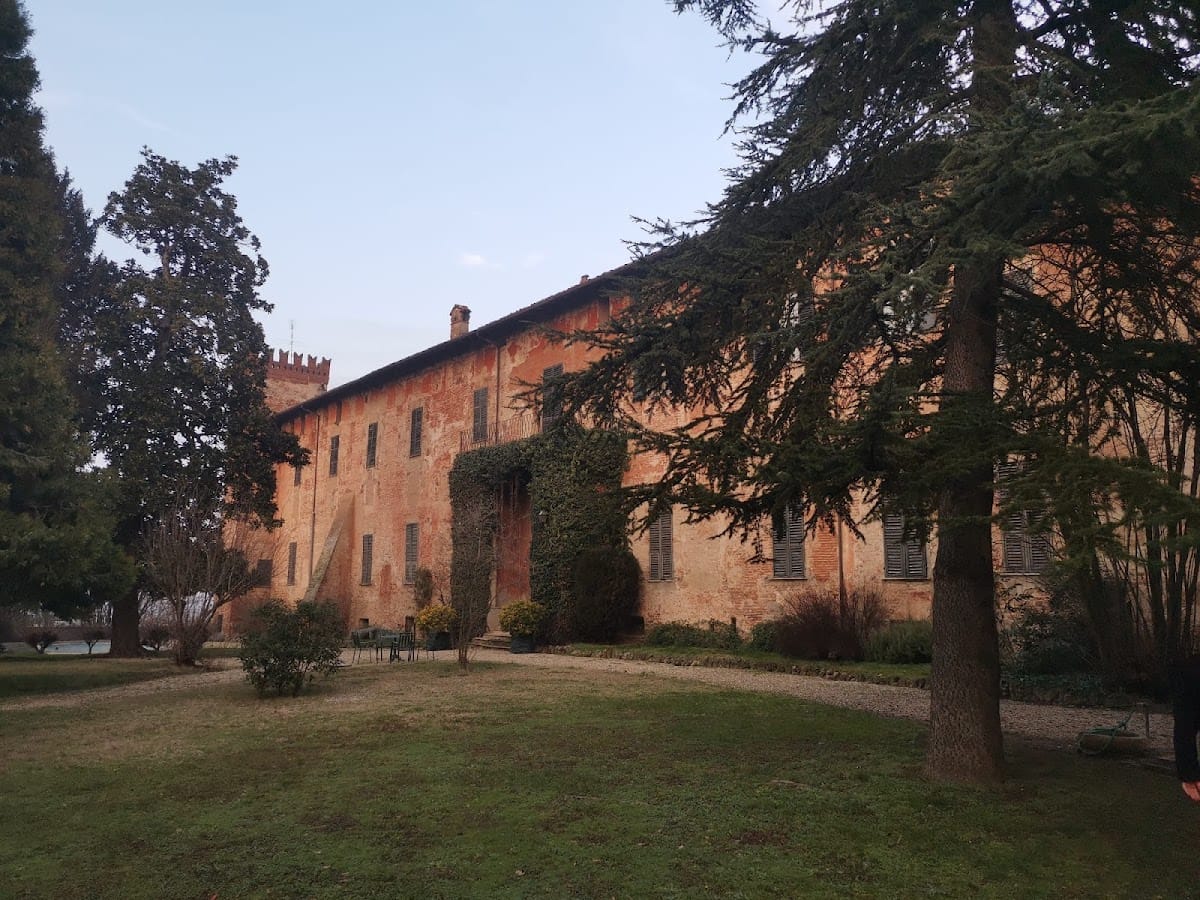
The castle faces north toward the ancient bed of the Po and has a U-shaped plan. Its thirteenth-century keep was built over the foundations of an earlier Lombard tower. The Scotti Douglas counts and, later, the Zanardi Landi counts enlarged the structure and converted it into an aristocratic residence. An Italian-style garden lies within the castle walls. The main building is flanked by a signal tower with an irregular pentagonal plan, a form described as unique in the defensive architecture of the former Duchy of Parma and Piacenza.
Religious and Pilgrimage Features
The Oratory of San Carlo Borromeo stands within the settlement and is one of the few surviving examples in the Piacenza area of a devotion specifically associated with the Ambrosian tradition, the liturgical and devotional tradition linked to Milan and Saint Ambrose. At the settlement entrance, the Casino preserves the memory of the pilgrim hospital connected with the Via Francigena and the crossing at Veratto.
Several places around Sarmato are associated with the tradition of Saint Roch. They include a fountain said to have emerged from bare rock through the saint’s invocation of God, a seventeenth-century oratory dedicated to him, and a cave connected with his conversations with God. These places remain associated with devotion and worship.