Rocca di San Salvatore Telesino: A Medieval Fortress in Italy
Visitor Information
Google Rating: 2.5
Popularity: Very Low
Official Website: www.prolocosansalvatoretelesino.it
Country: Italy
Civilization: Medieval European
Site type: Military
Remains: Castle
History
The Rocca di San Salvatore Telesino is a medieval fortress situated in the town of San Salvatore Telesino, Italy. It was erected in the 13th century by the counts of Sanframondo, a noble family who controlled the surrounding territory. Positioned atop a hill, the fortress was designed to oversee the Telesina Valley, offering strategic advantage for surveillance and defense over their feudal lands.
Throughout the Middle Ages, a community known as Massa Superiore arose around the fortress, distinguishing itself from the nearby Massa Inferiore, which corresponds to present-day Massa di Faicchio. This settlement flourished under the protection and influence of the fortress, forming part of the region’s feudal structure.
A significant chapter in the fortress’s history began after the 1349 earthquake devastated the nearby ancient Roman city of Telesia. The seismic event not only destroyed the urban center but also released sulfurous fumes into the area, making it uninhabitable for some time. It was during this period that the diocesan bishops took refuge within the fortress, which then earned the name “Rocca De Episcopio,” meaning “Bishops’ Fortress.” While residing there, the bishops constructed within the walls a palace later known as the Castelluccio.
Inside the fortress, religious life was centered around the parish church of Sant’Andrea. By the late 16th century, although partly in ruins, the church retained its main altar embellished with three wooden sculptures and included four side altars, indicating a sustained ecclesiastical presence during that era.
Eventually, the bishops moved their residence to Cerreto Sannita, and the surrounding fiefdom passed into the hands of the Carafa family, who lived primarily in Naples and showed little direct involvement with the fortress or village. Following this transition, both the fortress and the adjacent settlement were abandoned. This abandonment led to the foundation of the current town of San Salvatore Telesino, marking the end of the fortress’s medieval role in the region.
Remains
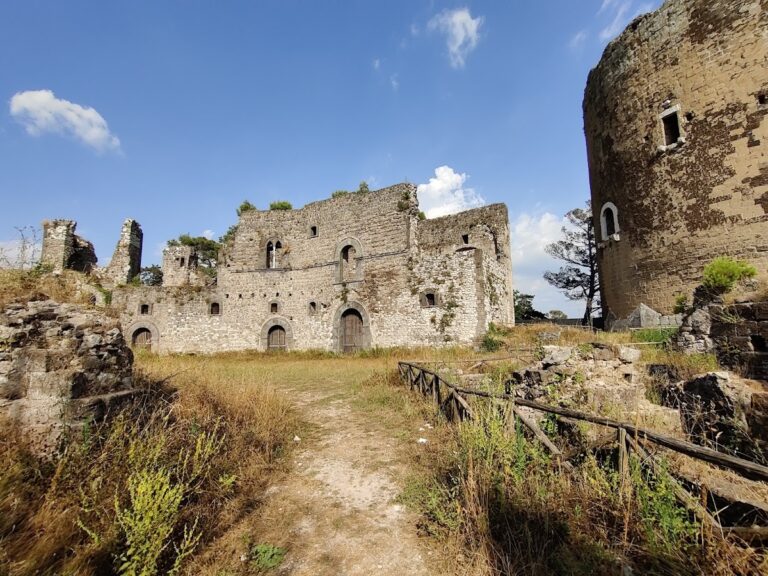
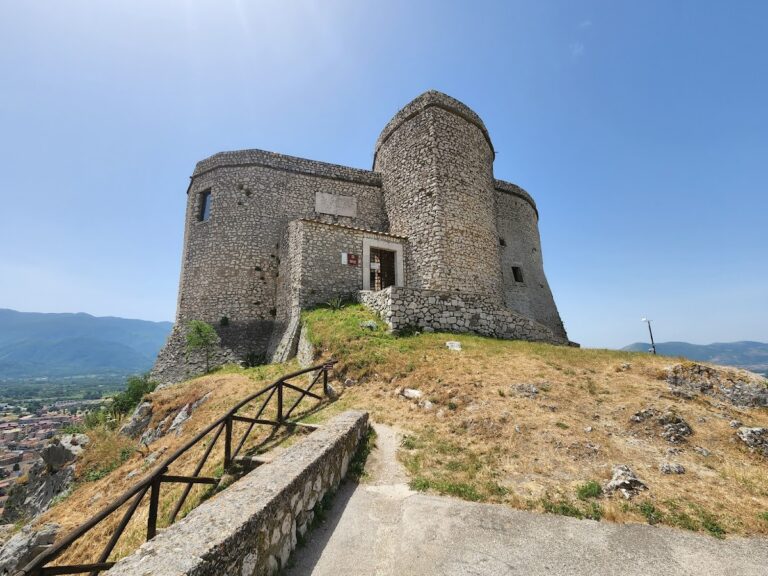
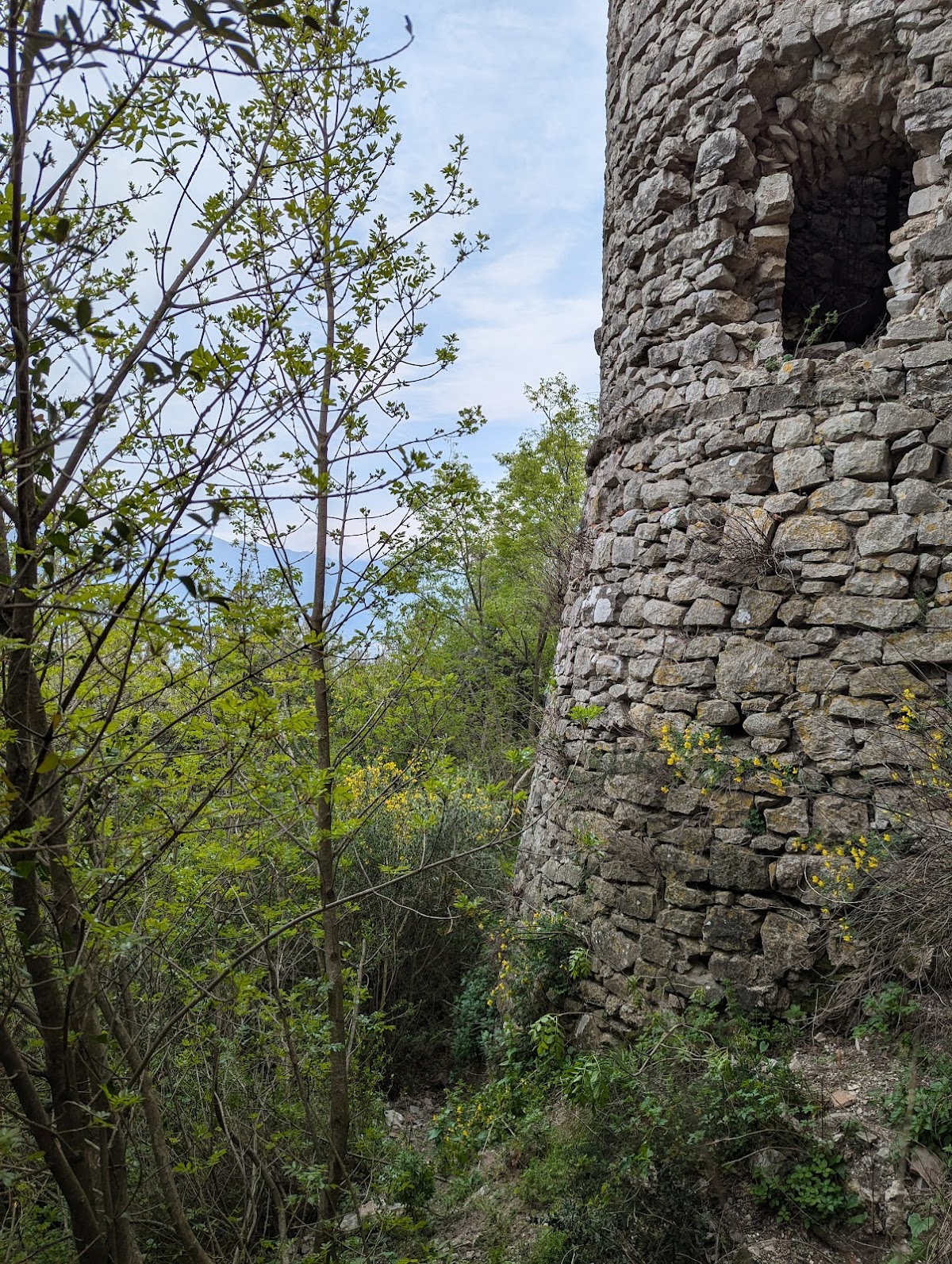
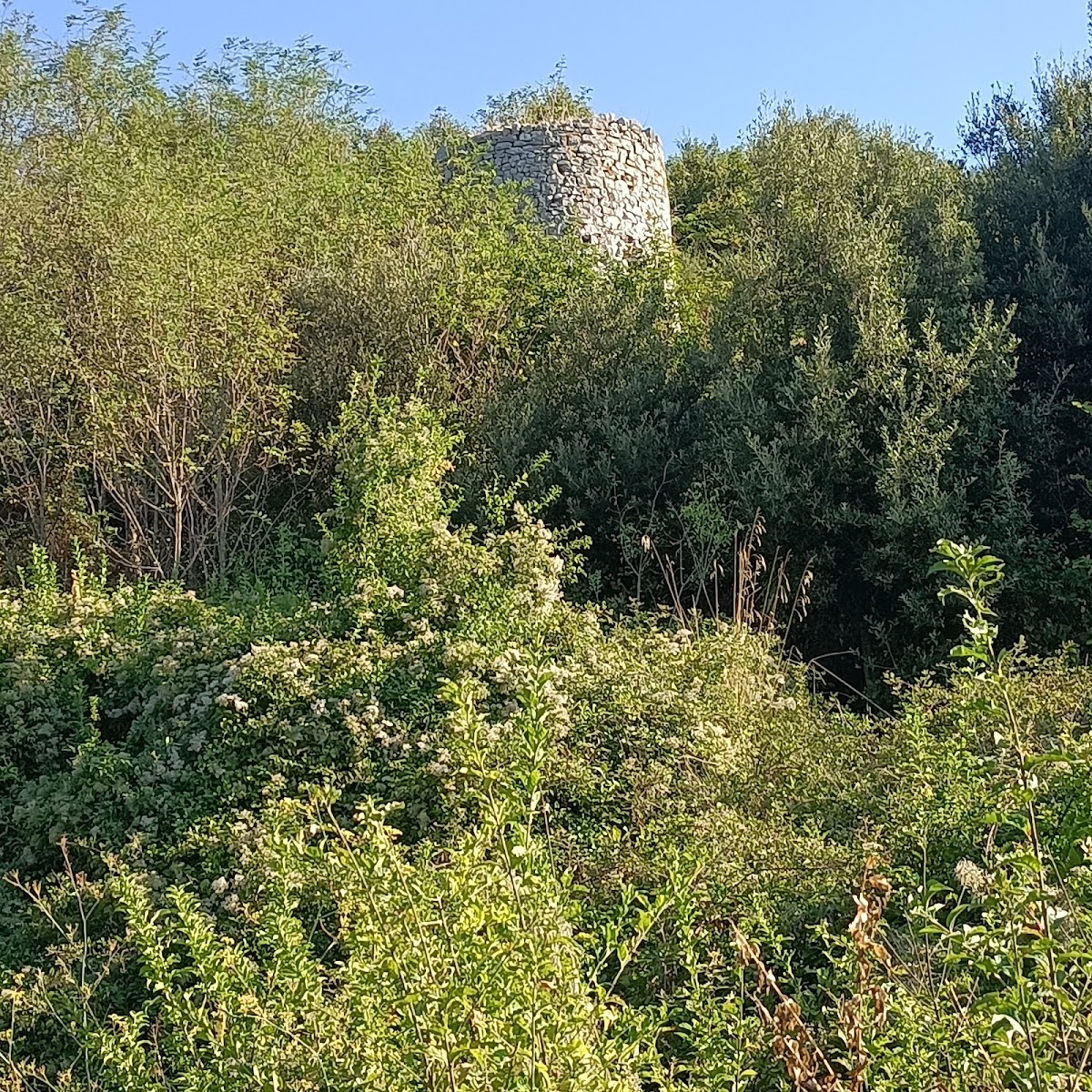
The surviving ruins of Rocca di San Salvatore Telesino reveal a fortress built with a rectangular layout, fortified by four cylindrical towers, one placed at each corner. While now truncated, the bases and remnants of these towers remain visible from afar, testifying to the strong defensive design favored in the 13th century. Such a plan suggests a deliberate effort to ensure comprehensive protection and allow for observation in all directions across the valley.
Historically, an underground tunnel connected these towers, indicating a sophisticated internal passage system that facilitated movement and communication within the fortress during times of siege or unrest. Up until recent years, this tunnel was accessible, underscoring the complexity of the fortress’s design and defensive capabilities.
Within the fortress’s protective walls stood the parish church of Sant’Andrea, which by the late 1500s was partially in decay but still housed a principal altar adorned with wooden sculptures, alongside four auxiliary altars. This arrangement reflects the blend of military and religious functions coexisting within the fortress complex. Additionally, the Castelluccio, a palace constructed during the bishops’ residency, remains part of the site’s historical record, although detailed descriptions of its condition or architectural features are limited.
Today, the entire structure is in a state of neglect and ruin, bearing the marks of centuries of abandonment following its strategic and administrative decline. Despite this, the remaining towers and the layout continue to convey the fortress’s importance as a medieval stronghold and episcopal refuge in this part of Italy.
Nearby sites