Rabsztyn Castle: A Historic Medieval Stronghold in Poland
Visitor Information
Google Rating: 4.6
Popularity: Medium
Official Website: zamekrabsztyn.pl
Country: Poland
Civilization: Early Modern, Medieval European
Site type: Military
Remains: Castle
History
Rabsztyn Castle stands in the village of Rabsztyn, Poland, and was constructed by the medieval Polish civilization as part of a chain of defensive strongholds known as the “Eagle’s Nests.” These castles were strategically built atop high limestone rocks to guard the realm’s borders.
The earliest fortifications on Rabsztyn Hill were wooden and date back to the late 13th century, established on the natural limestone outcrop that dominates the surroundings. Evidence suggests that the stone castle, including a residential building and a tower, was likely erected during the 14th century under King Casimir the Great. However, some scholars believe the stone structures might predate this period. The first documented mention of the castle appears in 1396, referencing its chaplain and castellan, indicating the site’s active role in religious and administrative affairs by that time.
Throughout its history, the castle served multiple purposes, primarily as a border guard post securing the frontier against Bohemia. It also protected a vital trade route connecting Kraków and Wrocław and functioned as the seat for starosts, who were royal officials managing local territories. Ownership initially rested with the Melsztyński family, bearing the Leliwa coat of arms, from the late 14th century until the mid-15th century. The castle then passed by marriage to the Tęczyński family, who later took the name Rabsztyński. By the early 16th century, the Boner family acquired the starosty, holding it for four generations.
In 1412, Rabsztyn’s tower and well underwent reconstruction, reflecting ongoing investment in the castle’s fortifications. The mid-15th century brought turmoil when Spytek III Melsztyński died in battle in 1439, after which the crown confiscated the property. Late in the 16th century, between 1587 and 1588, the castle withstood a siege led by Gabriel Hołubek, a Cossack commander aligned with Habsburg forces, a notable military episode in the castle’s history.
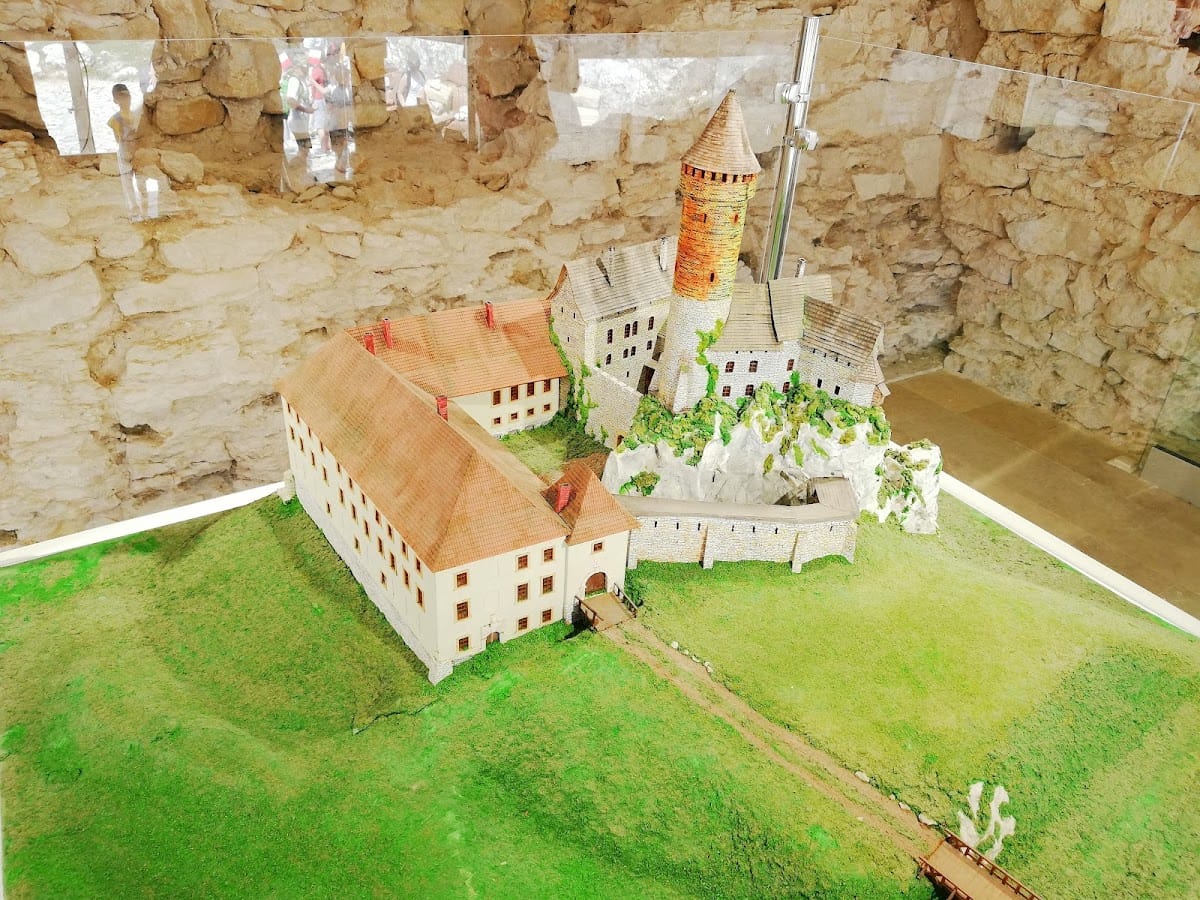
Significant expansion occurred during the late 16th and early 17th centuries under Mikołaj Wolski and possibly Zygmunt Gonzaga Myszkowski. This phase introduced Renaissance architectural elements, including a sizeable two-winged palace with roughly 40 rooms built on the site’s lower section, marking a shift from purely defensive functions toward residential grandeur.
In 1657, during the Swedish Deluge, retreating Swedish troops deliberately set fire to the castle, causing major damage noted in a 1660 inspection. Although reconstruction efforts began, they remained incomplete, with parts of the castle used until the early 18th century. Subsequent abandonment followed, favoring the construction of a nearby manor house. The 19th century saw further destruction when treasure hunters blew up the last surviving tower and lower walls. Since the 20th century, the ruins have undergone partial reconstruction and have hosted cultural events, preserving Rabsztyn’s historical legacy.
The castle’s name probably comes from the German “Rabenstein” or “Rabestein,” meaning “raven’s rock” or “crag.” This origin may relate either to the presence of ravens around the site or the identity of its early founder, with possibilities including Bishop Jan Muskata, King Wenceslaus II, or the noble Toporczyk family from Morawica.
Remains
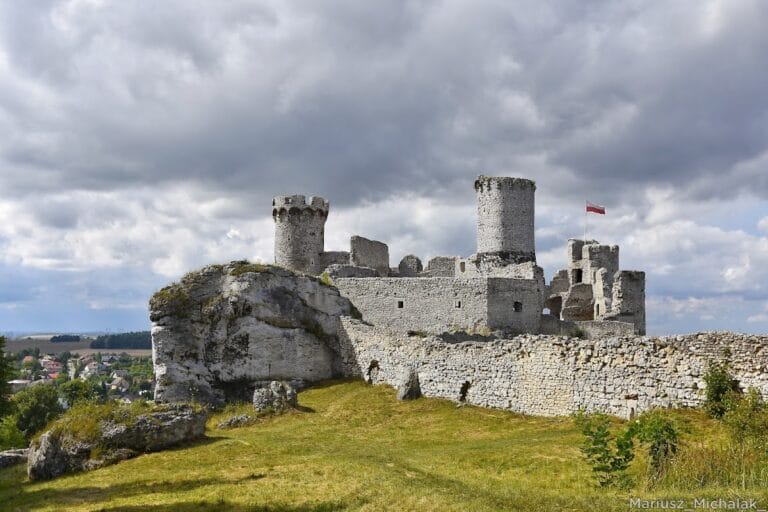
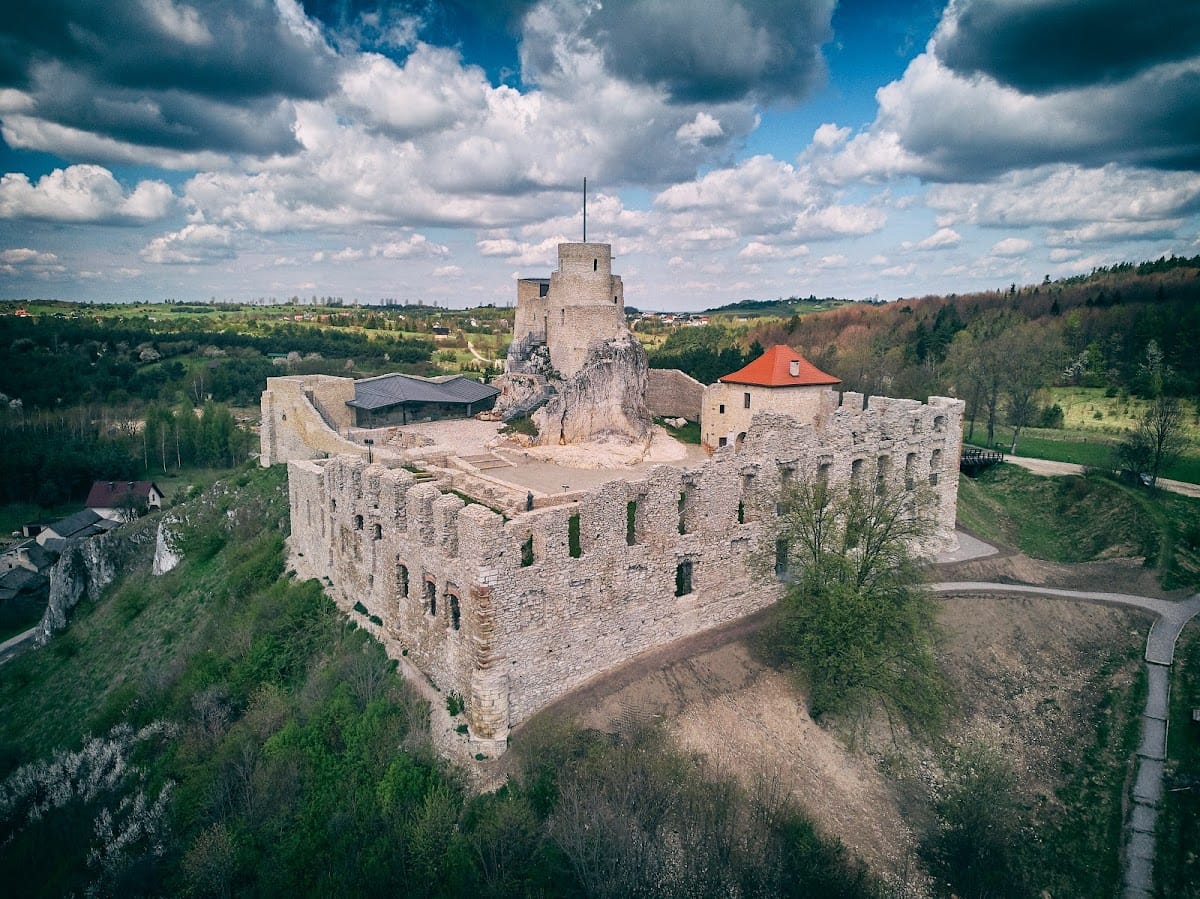
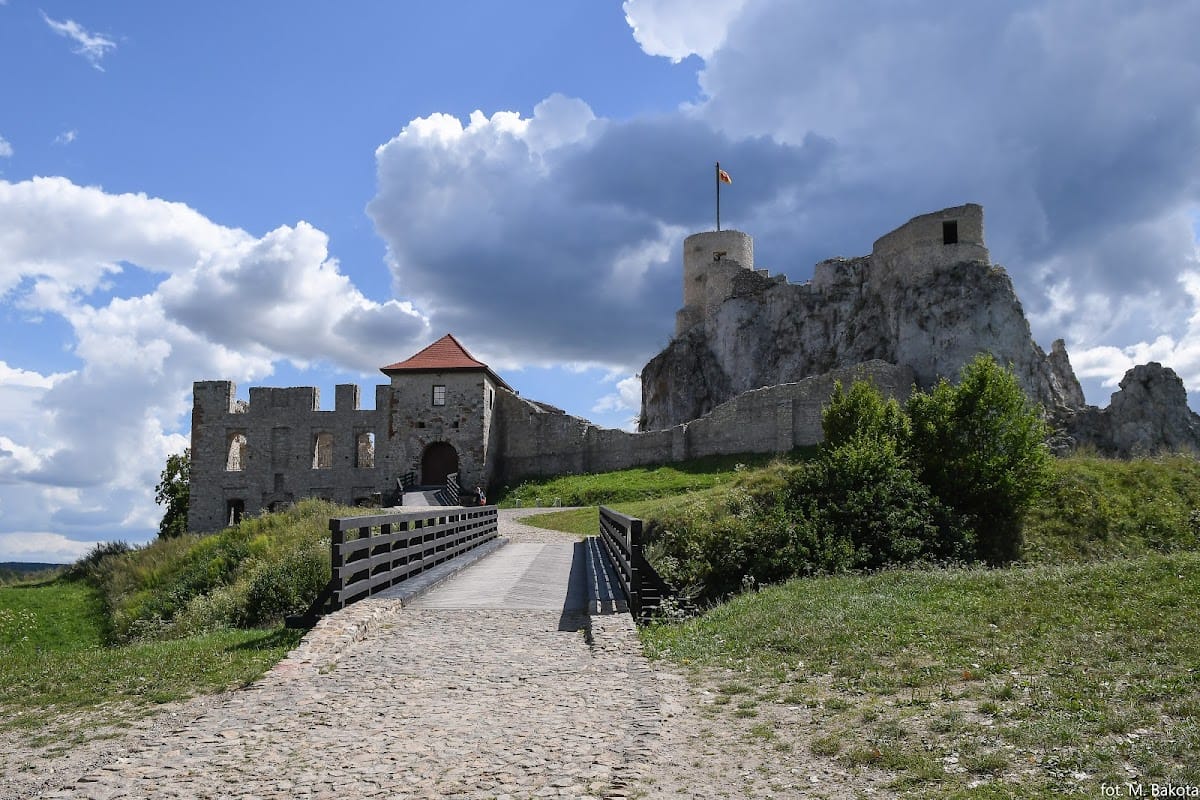
Rabsztyn Castle occupies a rocky hill and consists of three main sections: the upper, middle, and lower castles, which together form a complex reflecting both Gothic and later Renaissance construction styles. The earliest structures were built of stone, while Renaissance additions made extensive use of brick, especially for upper tower sections.
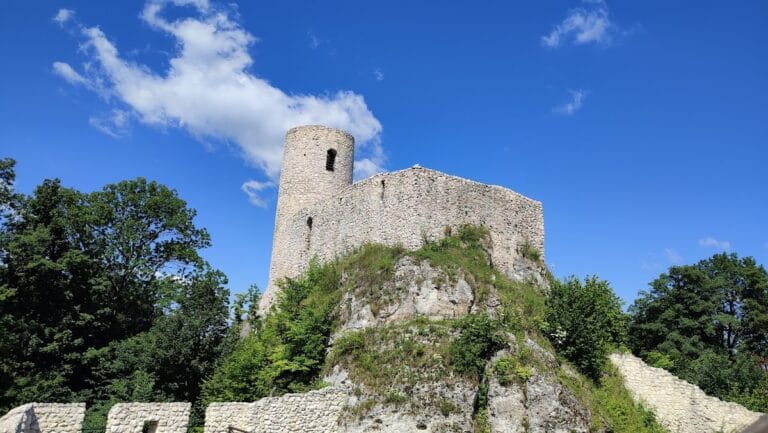
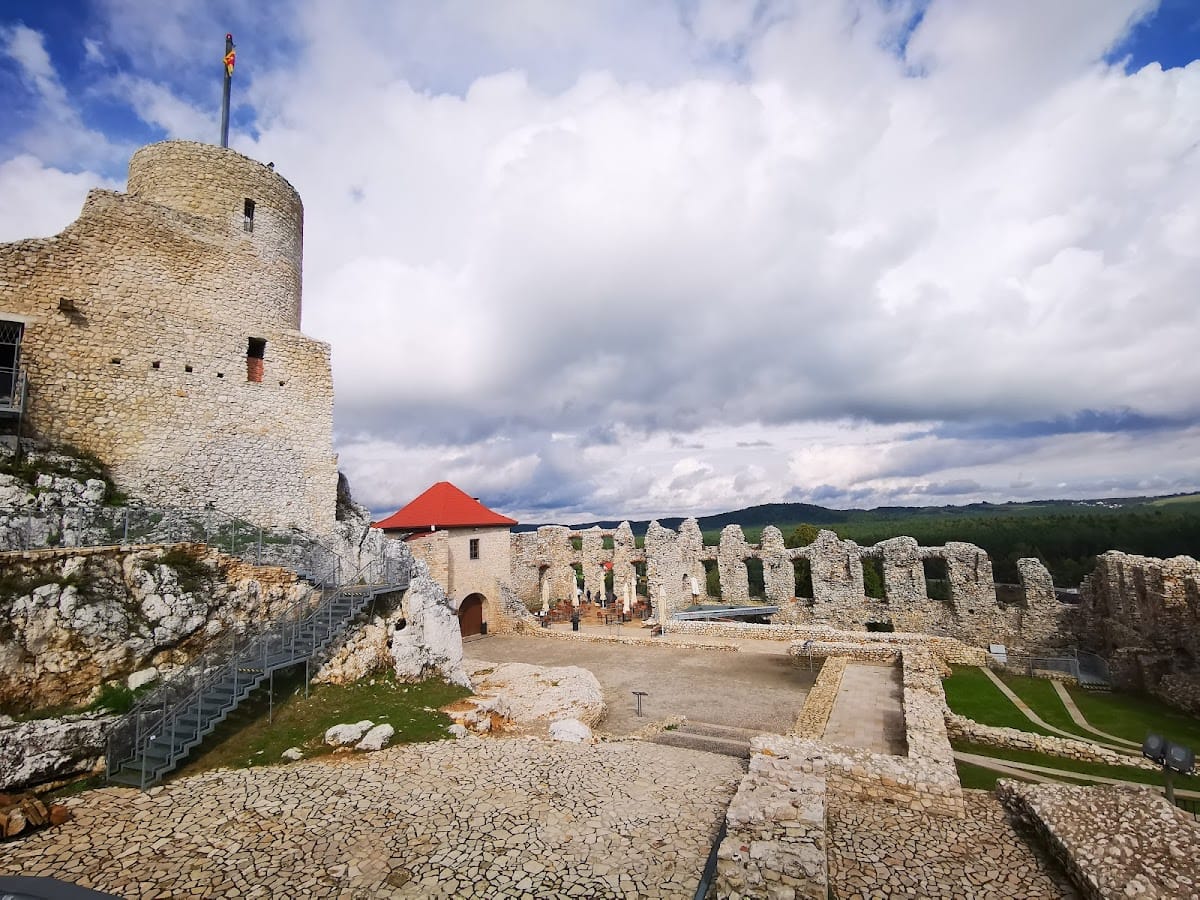
The upper castle features a residential building known as the “kamienica” and a prominent tower. The tower’s base is rectangular, while its upper part, rebuilt in the mid-15th century, is topped with an octagonal brick section. This tower underwent significant heightening during that period, a feature that enhanced defense and visibility. Today, the upper castle ruins include these restored elements, illustrating the castle’s medieval roots.
The middle castle contains two buildings used for residence and daily tasks, complemented by a corner guard tower protecting the area. A gate leads into a courtyard, which historically housed a deep well. Notably, this well was once so deep that it extended down to the level of the village below the hill, serving as a vital water source during sieges. Remnants of the gate and courtyard have been partially reconstructed, offering insight into the castle’s inner layout.
The lower castle originally comprised a gate tower accessed by a bridge that was once a drawbridge, curtain walls closing off the space, and a small fortified structure called a kasztel. Around the turn of the 16th and 17th centuries, a substantial Renaissance palace was erected here, replacing much of the earlier fortifications. This palace was a large two-winged, three-story building containing nearly forty rooms, reflecting a transition to a more comfortable and stately residence. Though the palace was damaged over time, archaeological traces outline its original footprint and grandeur.
Defensive features at the castle included a dry moat on the northern side, approached by a bridge, and artillery earthworks that once overlooked this moat area. These earthworks testify to the adaptation of the site for gunpowder weaponry in later periods.
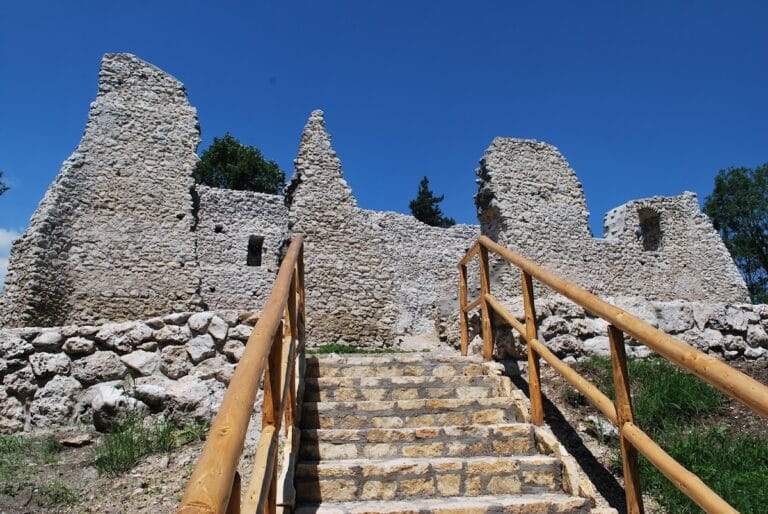
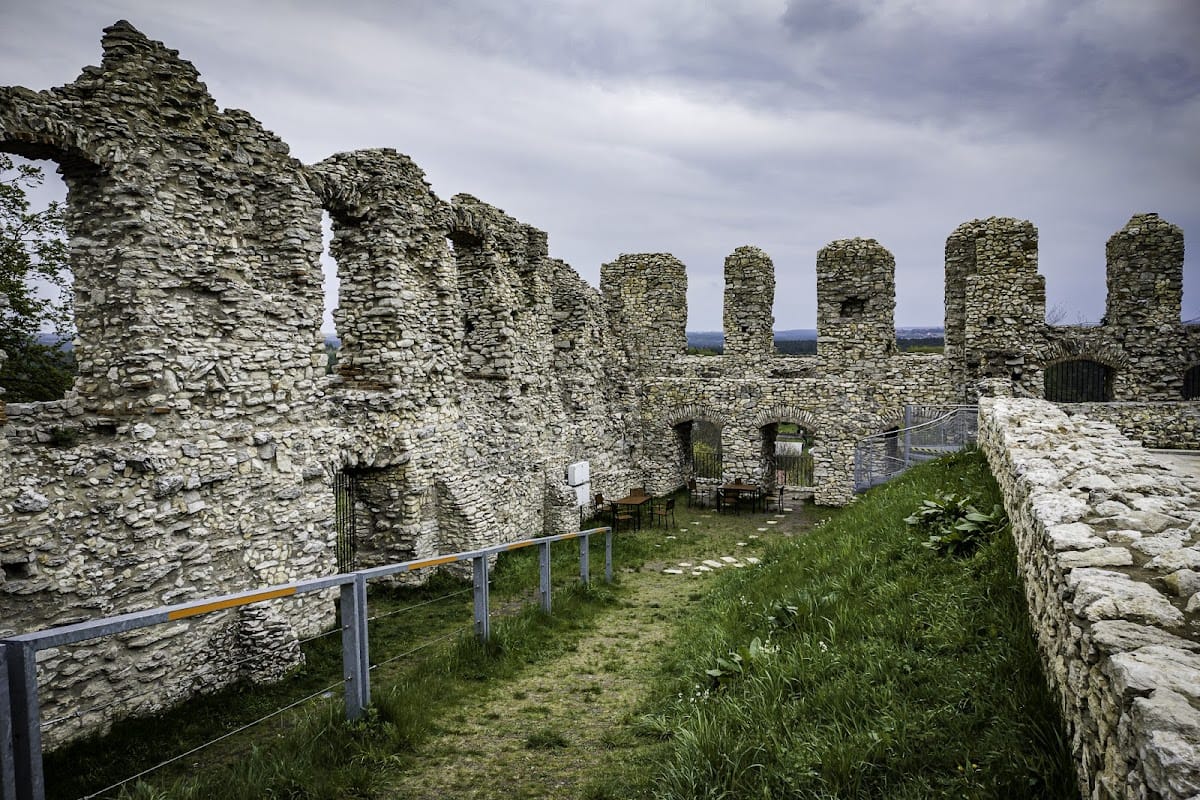
The castle’s overall preservation is partial due to centuries of warfare, neglect, and treasure hunting that destroyed the last tower and lower walls in the 19th century. Nonetheless, modern efforts have restored key parts of the gate, bridge, courtyard, and upper castle ruins, allowing the layout and historical phases to be appreciated. Archaeological excavations have confirmed the sequence from early wooden fortifications to stone construction and Renaissance expansions, firmly grounding the understanding of Rabsztyn Castle’s development across centuries.
Nearby sites