Pajštún Castle: A Medieval Fortress in Slovakia
Visitor Information
Google Rating: 4.7
Popularity: Medium
Country: Slovakia
Civilization: Early Modern, Medieval European
Site type: Military
Remains: Castle
History
Pajštún Castle is a medieval fortress located near Borinka, within the municipality of Stupava in Slovakia. It was constructed during the era of the Kingdom of Hungary, with origins traced back to the late 13th century when Rugerius of Tallesbrunn is commonly credited with initiating its building.
From its earliest days, Pajštún Castle played a significant role in defending the northwest border of the Kingdom of Hungary. In 1314, Otto from Telesprun is the first known owner documented in historical records. Later, before 1390, King Sigismund of Luxemburg granted the castle as a hereditary possession to the noble Szentgyörgyi family, marking a period in which the fortress became tied to prominent Hungarian aristocracy.
Following the extinction of the Szentgyörgyi lineage in 1543, the castle changed hands to Gáspár Serédy, and shortly thereafter, around 1550, came under the ownership of Eck Salm. The Pálffy family acquired the property in 1592 and maintained control for nearly three centuries until 1867. Under the stewardship of Pál Pálffy between 1640 and 1645, the castle underwent extensive reconstruction led by the Italian engineer Filiberto Luchese. This transformation fortified the structure to better resist the growing Ottoman threat confronting the Kingdom of Hungary during that time.
In the mid-1700s, a lightning strike caused a devastating fire that heavily damaged the castle. While repairs were minimal and focused on maintaining habitability, the fortress continued to be used, at least in part, through the early 19th century. However, during the Napoleonic Wars in June 1809, French forces deliberately blew up the castle to prevent its strategic use by enemy troops. Following this event, the last noble owners, the Károlyi family, held ownership until 1945, when they abandoned the ruins and associated lands.
Remains
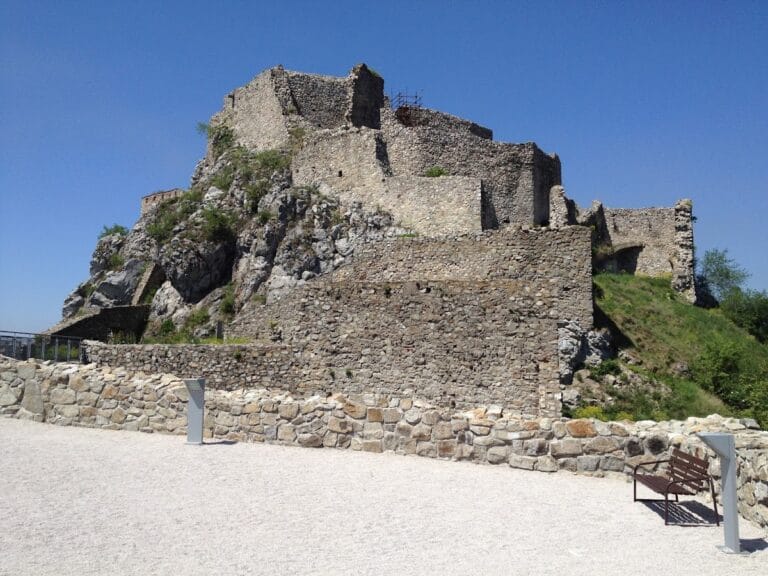
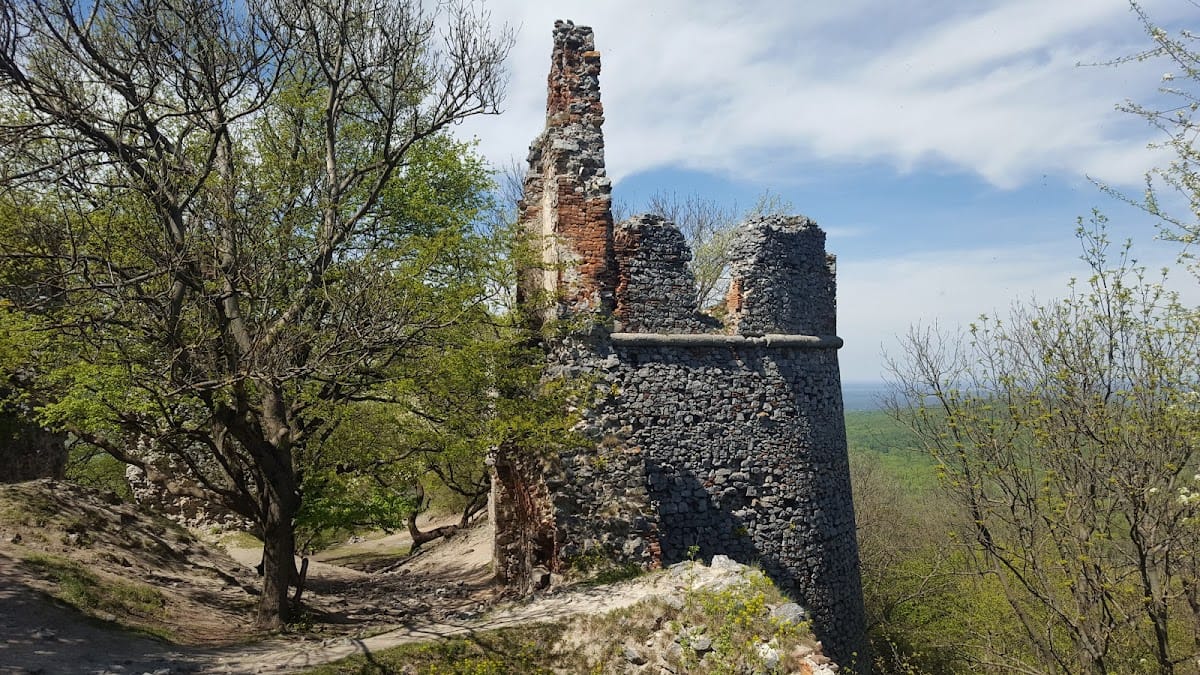
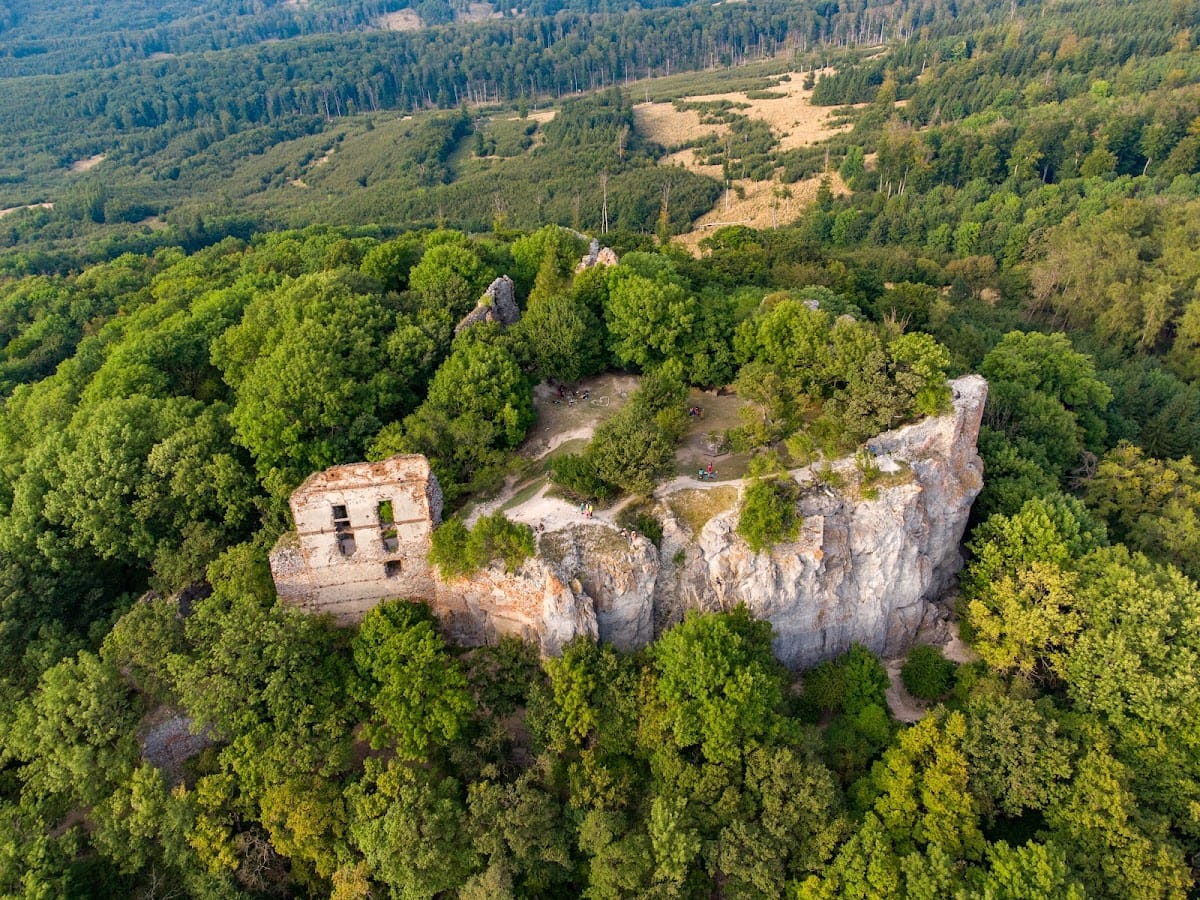
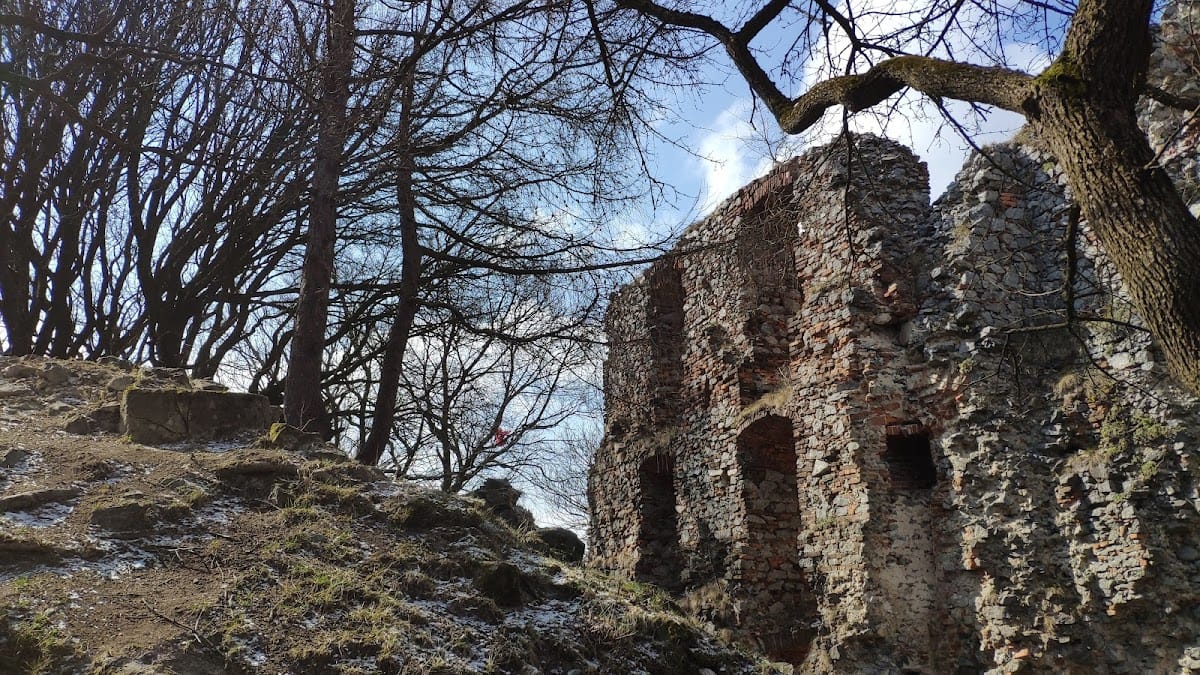
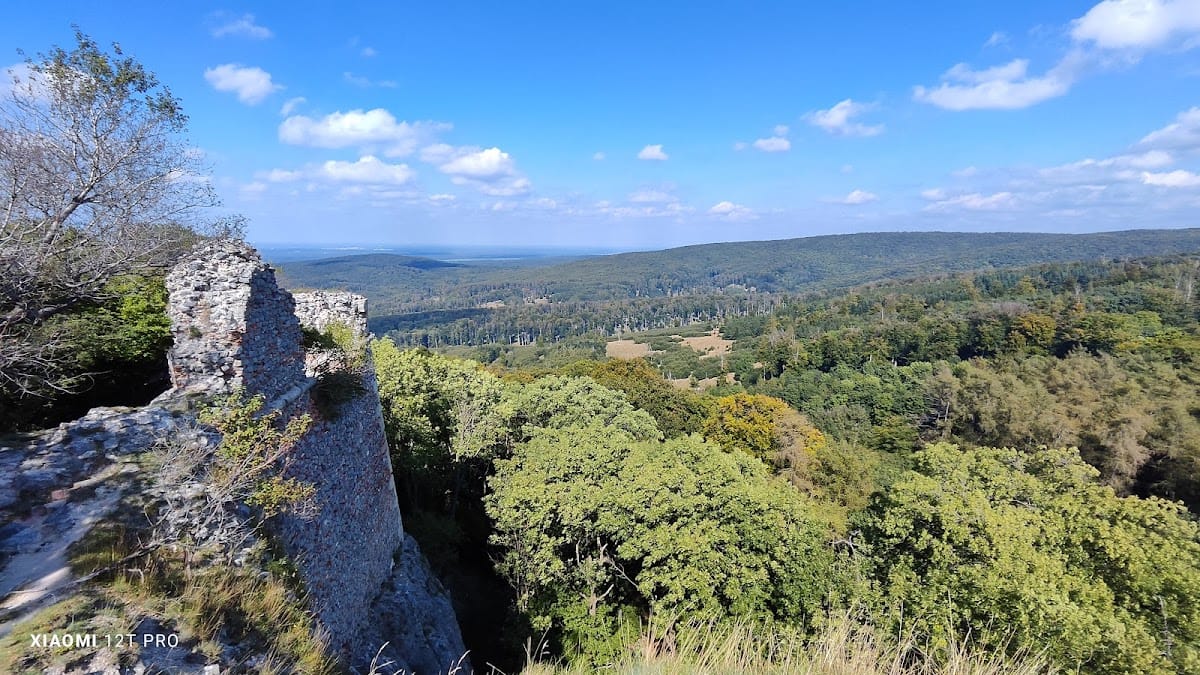
The remnants of Pajštún Castle occupy a rocky plateau at an elevation of 486 meters, offering a clear example of medieval fortification adapted over centuries. The layout preserves fragments of walls, chiefly on the eastern cliff edge of the upper platform, where a semi-circular cannon bastion still stands, dating from Renaissance-era improvements in the 16th century designed to accommodate artillery defense.
Adjacent to this bastion, a fortified corner marks the location of the original castle gate area. Behind this gate, historians believe the main palace once stood, its cellar integrated directly into the natural rock base—an architectural choice that combined natural and man-made defenses. On the western side of the plateau, a section enclosed by palace structures included a forecastle—a fortified outer courtyard—guarded by several bastions and specialized artillery emplacements, including a tapered cannon bastion designed for angled cannon fire.
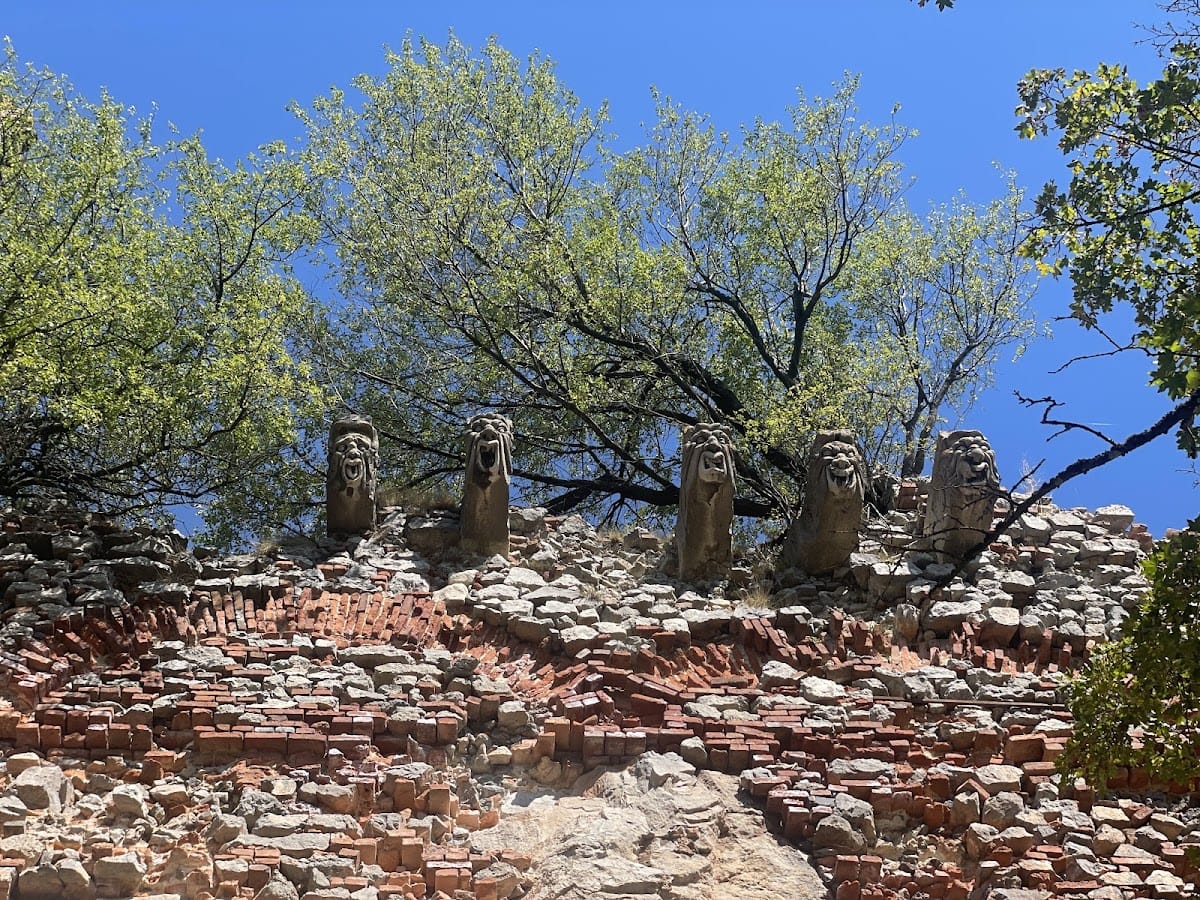
Entry to the forecastle was gained through a two-story building featuring an arched gateway. This entrance is notable for its decorative elements: three oriel windows project outward, resting on supporting brackets called consoles, and the facade is adorned with early Baroque-style masks known as mascarons, which lend an artistic touch dating from renovations in the early 17th century.
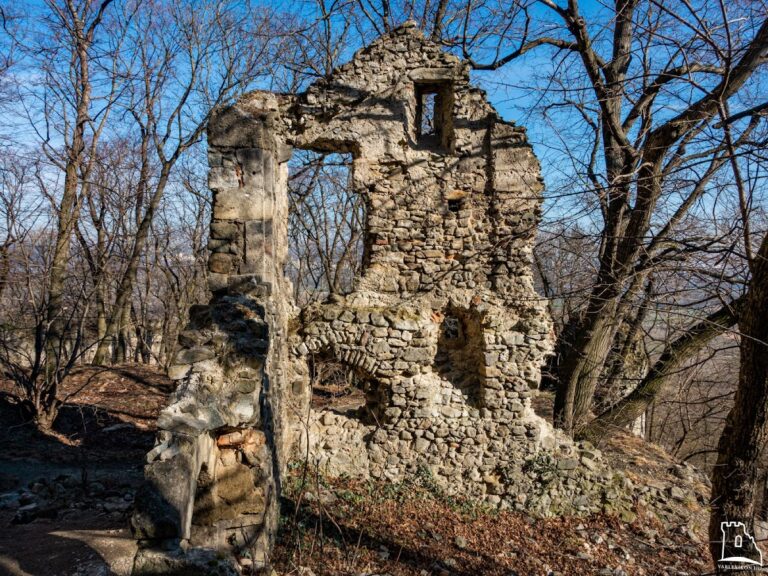
Within the upper platform lies an underground cistern, vaulted and lined with brick, constructed during the 17th-century rebuilding phase. This cistern would have provided essential water storage for inhabitants during sieges. On the southern side of the site, only scattered wall fragments remain from a palace once perched atop the rock, revealing limited traces of the castle’s former extent.
The fortress featured a massive circular defensive tower called a rondel, built around 1550 to support heavy artillery. This structure was further reinforced during the Pálffy family’s 17th-century enhancements, demonstrating the castle’s ongoing military importance. Throughout the complex, surviving architectural elements such as window openings, entrances, vault remnants, and ornamental features embedded in the rock remain visible, including the late Renaissance mascarons from 1619 displayed above the entrance gallery, reflecting the blend of practical and decorative ambitions of the castle’s builders.
Nearby sites