Plavecký hrad: A Medieval Frontier Castle in Slovakia
Site at a Glance
- Rating
- 4.7
- Popularity
- Medium
- Country
- Slovakia
- Primary era
- Medieval
- External website
- Open
- Eras represented
- Medieval, Early Modern
- Civilizations
- Habsburg, Hungarian
- Site type
- Military
- Remains
- Castle
On this page13 sections
History
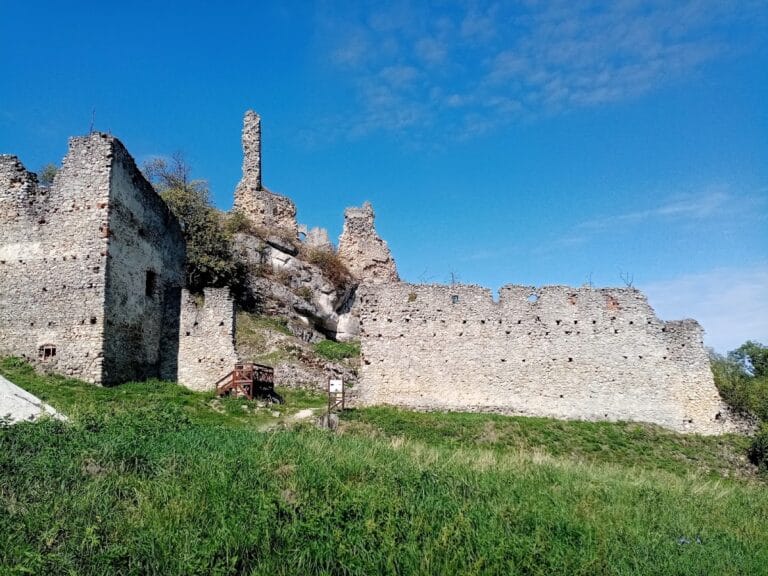
Plavecký hrad is a ruined medieval hill castle in Slovakia, built in the Kingdom of Hungary probably between 1256 and 1273 during the post-Mongol expansion of stone fortifications. Originally known as Detrekov kameň, after its probable builder Detrich, it guarded the frontier with the Kingdom of Bohemia before becoming an economic, administrative, and military centre.
Foundation and frontier defence
The castle was probably established on the initiative of King Béla IV, who ruled Hungary from 1235 to 1270 and encouraged stone fortification after the Mongol invasion of 1241 to 1242. Detrich, son of Kunto, the reeve of Bratislava, and a count of Zvolen and Spiš, received the Kuchyňa estate from the king. The fortress was already standing in 1273, when Hungarian forces fought the army of Ottokar II of Bohemia beneath the castle. Ottokar was a powerful thirteenth-century Bohemian king whose territorial conflicts with Hungary brought warfare to the region.
In its first phase, Plavecký hrad served chiefly as a border-guarding fortress. It controlled the frontier area, watched the road along the castle hill, and communicated by signals with Branč, Ostrý Kameň, and Korlátka through an advanced lookout post. At the end of the thirteenth century, Matthew III Csák seized the castle during a period when powerful Hungarian oligarchs controlled extensive territories and fortresses.
Noble ownership and Renaissance transformation
King Sigismund of Luxembourg granted the castle to the Polish nobleman Stibor of Stiboricz in 1398. After Stibor II, the last male member of the Stiboricz family, died in 1434, the estate returned to the Hungarian Crown. It later passed to the counts of St. George and Pösing, followed in the sixteenth century by the Seredy and Salm families.
The Fugger family owned Plavecký hrad from 1553 to 1575. This wealthy German merchant and banking family held wide commercial and mining interests in Central Europe. During their ownership, a major bastion was constructed to protect the approach to the hill. Melichar Balassa then acquired control after settling the Fuggers’ debt to the Salm family, and the Balassas further strengthened the fortress.
The castle also became a centre of Protestant printing under Balassa ownership. From 1579 to 1584, one of the earliest printing presses in Slovakia operated there. Peter Bornemisa, a Protestant writer and church official, printed calendars, Bibles, a hymnbook, and other works at Plavecký hrad.
The Pálffy period and abandonment
The Melichar branch of the Balassa family ended in 1621 with the death of Peter Balassa. His widow, Magdaléna Pálffy, and her brother Pál Pálffy first took the estate in pledge and received it as a royal donation in 1634. The Pálffy family, a Hungarian noble house active in the kingdom’s military and political affairs, owned the castle continuously from 1641 until the twentieth century.
During the seventeenth-century estate rebellions, the castle retained a strategic role rather than serving as the family’s main residence. Pál Pálffy established a Renaissance manor in Plavecké Podhradie, which assumed the residential function while the hilltop fortress continued to serve military purposes. The seat of the estate had already moved to Malacky by the middle of the seventeenth century.
Plavecký hrad was involved in fighting during the Thököly anti-Habsburg rebellion in 1683 and in further conflicts at the beginning of the eighteenth century. In 1706, Imperial troops, forces loyal to the Habsburg monarchy, captured it from rebels led by Francis II Rákóczi. Rákóczi led the major Hungarian anti-Habsburg uprising of 1703 to 1711. The capture damaged the castle, and the Pálffys later abandoned it. It was never rebuilt and has remained a ruin since 1706. Conservation work is currently being carried out.
Remains
Hilltop fortress
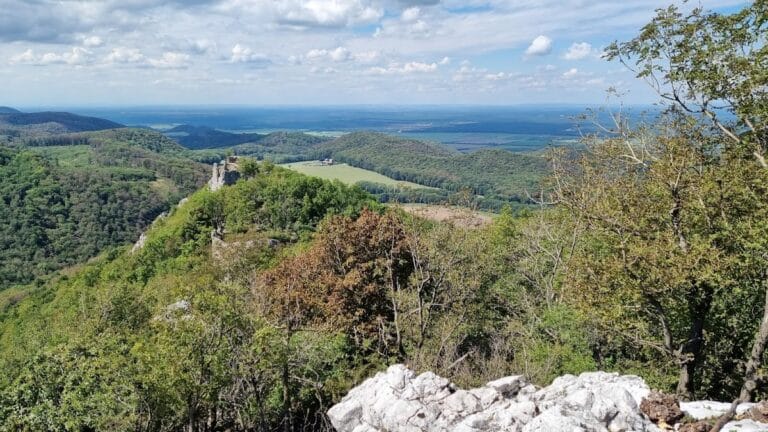
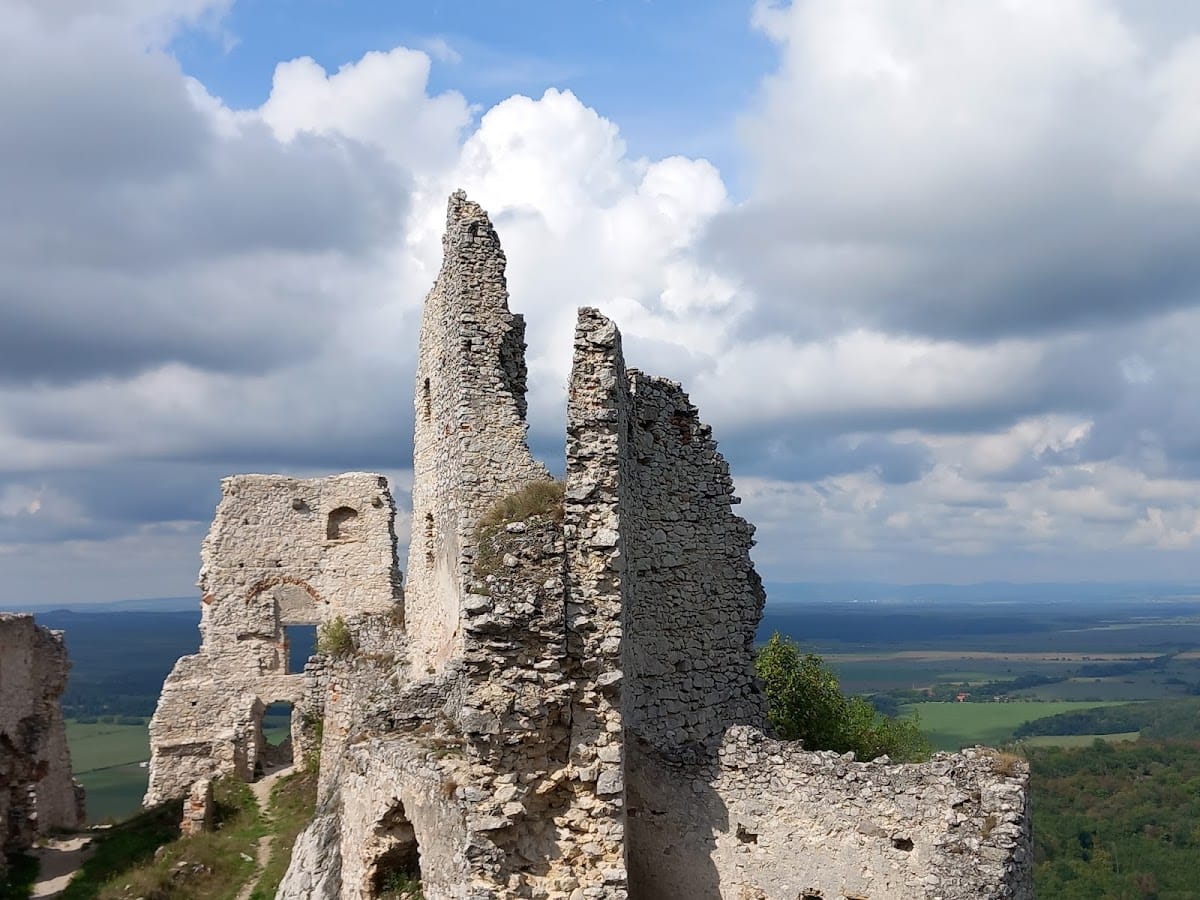
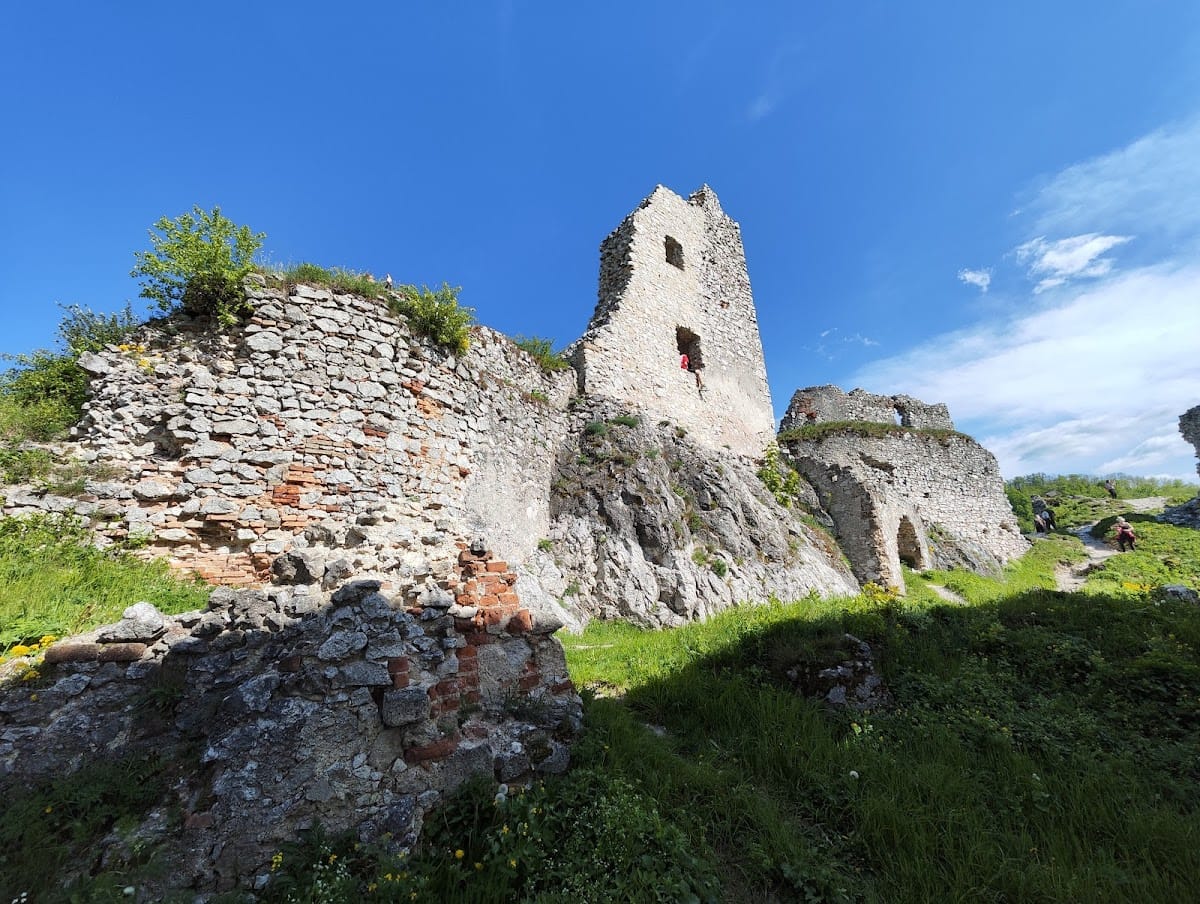
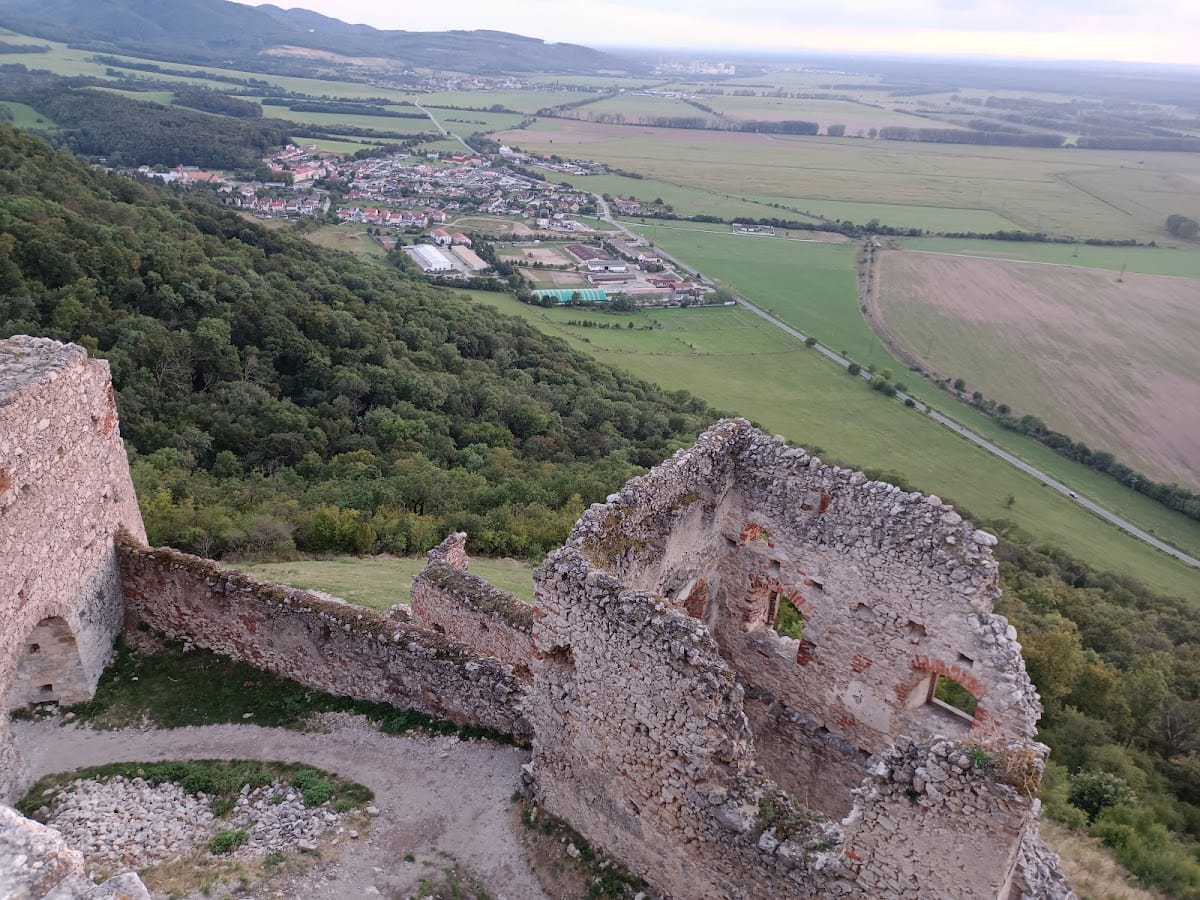
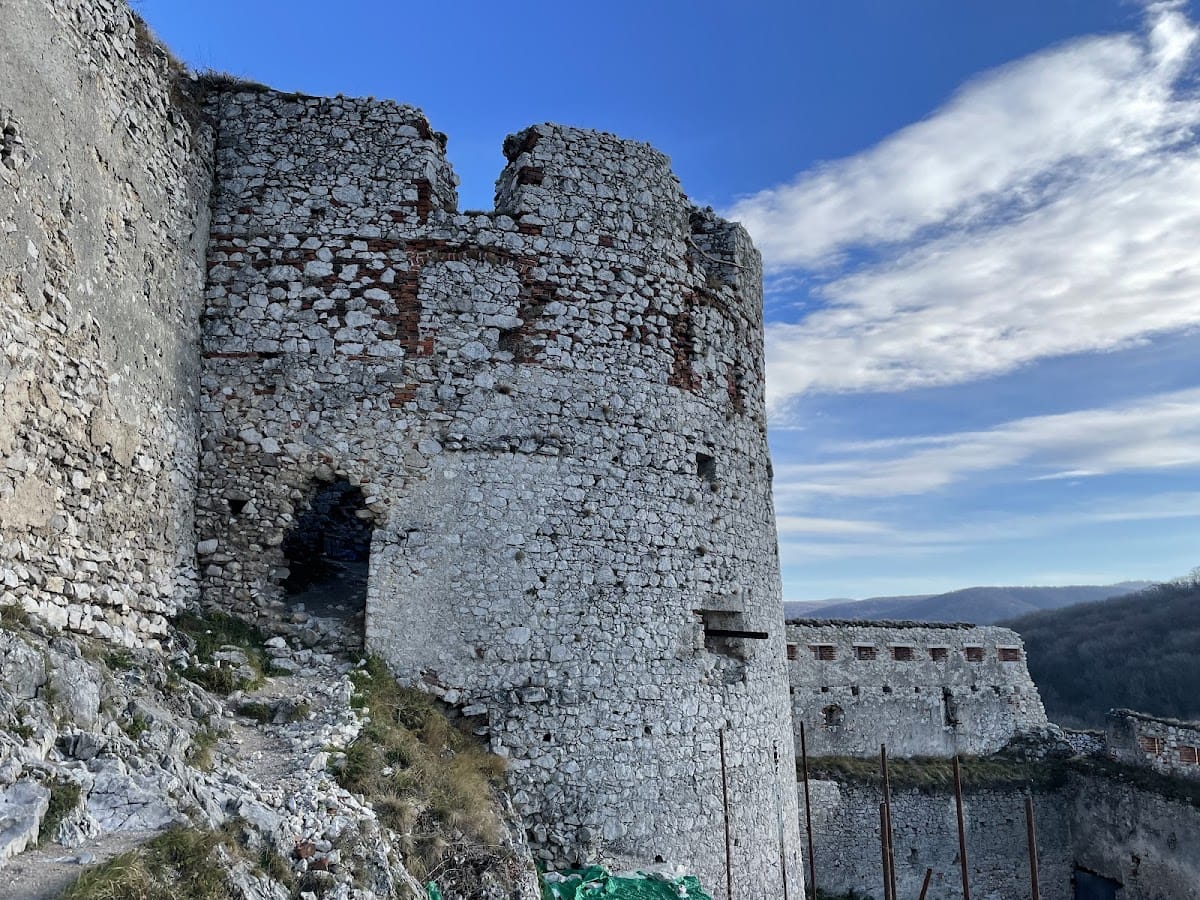
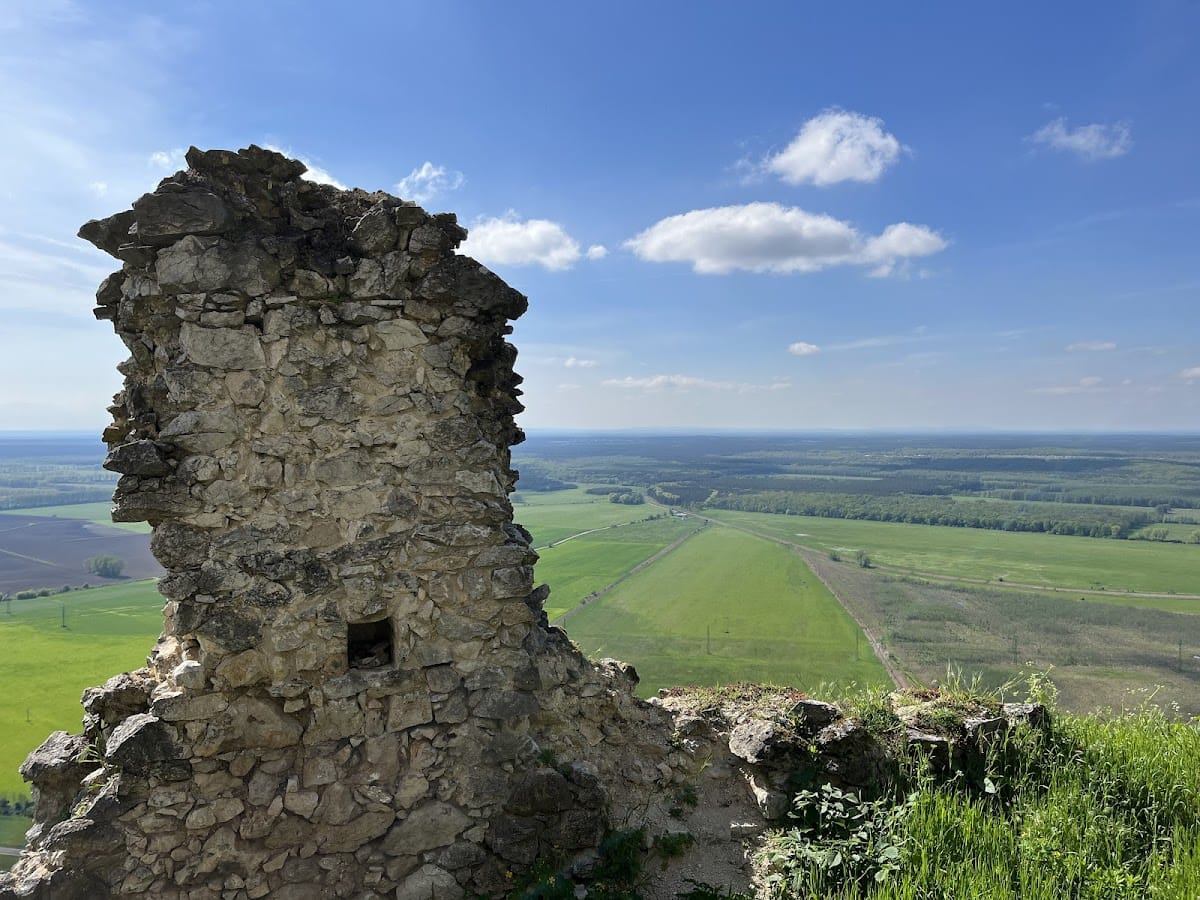
Plavecký hrad occupies Pohanská hill at approximately 400 metres above sea level, on the western foothills of the Little Carpathians above Plavecké Podhradie. Built from limestone, the medieval castle was arranged as a hilltop defensive complex controlling the frontier, the road along the hillside, and signal communication with neighbouring castles. Its surviving fabric reflects repeated rebuilding, from the original medieval fortress through a major Gothic transformation into a more representative residence.
Renaissance fortifications
In the second half of the sixteenth century, the castle was reconstructed as a Renaissance fortress, a fortified complex adapted to early artillery warfare with thicker defences, bastions, and lower courts. Lower courtyards were added, and the fortifications were repeatedly maintained and strengthened during the seventeenth century. New artillery bastions formed part of these improvements, while surviving architectural elements include Renaissance construction associated with the Balassa period.
Fugger bastion
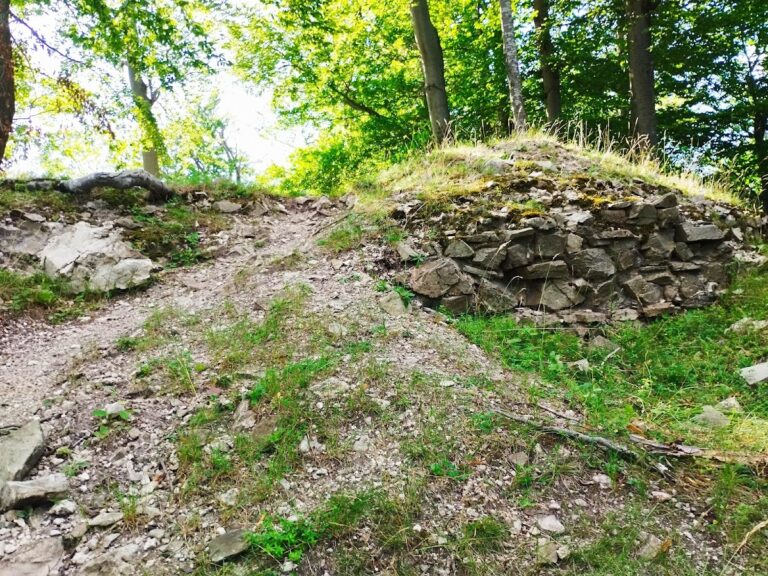
A substantial bastion built during the Fugger period protected access to the hill. A bastion is a projecting fortification designed to provide defensive fire along the faces of adjoining walls. The castle survives in a ruined condition after the damage of 1706 and its subsequent abandonment.
Features around Pohanská hill
Pohanská hillfort
Pohanská hill also contains the Pohanská hillfort, forming part of the wider archaeological setting around the medieval castle.
Plavecká Cave
The entrance to Plavecká Cave lies on the northern flank of Pohanská hill.
Monastery remains
At the southern foot of the hill are the remains of the perimeter walls of an abandoned monastery.
Renaissance manor
A Renaissance manor associated with Plavecký hrad stands in Plavecké Podhradie. It took over the residential function from the castle while the hilltop complex continued to serve as a fortress.