Castle of Ateca: A Nineteenth-Century Riflemen’s Fort in Spain


Site at a Glance
- Rating
- 4.6
- Popularity
- Low
- Country
- Spain
- Primary era
- Modern
- External website
- Open
- Eras represented
- Modern
- Civilizations
- Spanish
- Site type
- Military
- Remains
- Fort
On this page7 sections
History
Castle of Ateca is a fortification in Ateca, Spain, whose origins are uncertain and whose documentary history reaches back to the tenth century. The surviving structure is chiefly a nineteenth-century riflemen’s fort, adapted during the First Carlist War, a Spanish civil war caused by a dispute over the succession to the throne. Ateca had been founded in 250 BC and occupied a strategic route between the Ebro Valley and the Meseta through the Jalón and Henares valleys, encouraging successive defensive phases.
Early and Medieval Fortification
The castle may incorporate earlier Celtiberian, Roman, Visigothic, Muslim, and medieval phases. In the tenth century it belonged to the Banu-Timlat, a Muslim ruling lineage or group associated with Islamic Iberia. El Cid, the Castilian military leader Rodrigo Díaz de Vivar, conquered it in 1081 during his march into exile. Alfonso I of Aragon, known as Alfonso the Battler, incorporated Ateca permanently into the Kingdom of Aragon in 1120, after the Battle of Cutanda.
War and Reinforcement
The castle became an important position during the War of the Two Peters, the fourteenth-century conflict between Peter I of Castile and Peter IV of Aragon. Its defenses were strengthened in 1357, but Castilian troops under Peter I captured the castle in 1362 after a two-day assault and massacred its garrison.
During the fifteenth-century conflicts between Castile and Aragon, John II of Castile unsuccessfully tried to take the castle in 1427. In 1448, after destroying Torrijo de la Cañada, Horcajo, Monubles, and Villalengua, he chose not to attack Ateca because its defenses included bombards previously used by the forces of Calatayud in 1427.
Carlist War Reform
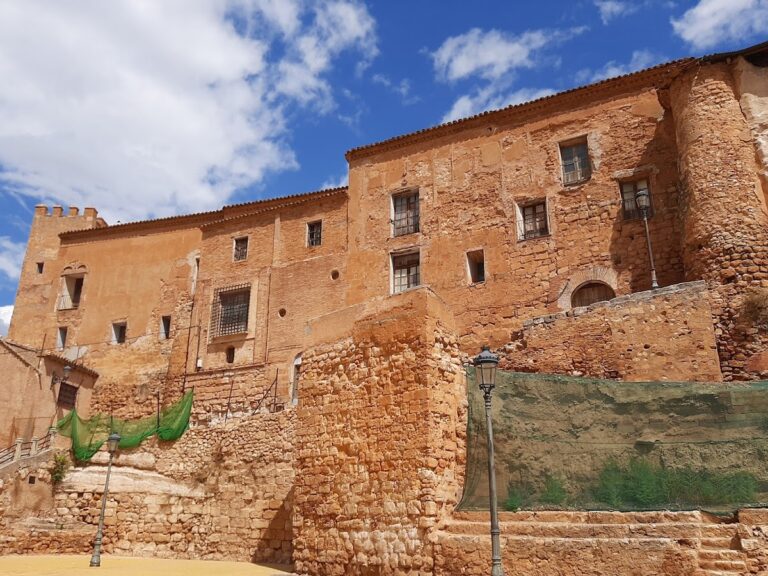
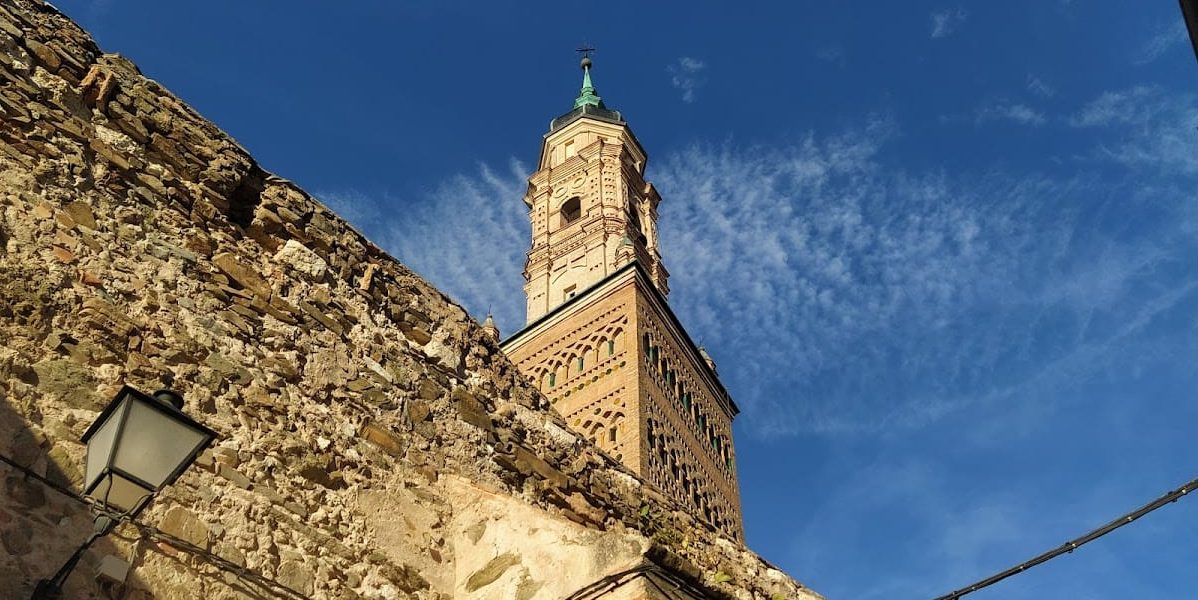
Pedro de Ybarreta began the final reform of the castle in 1837, reshaping it for the military requirements of the First Carlist War. The present fort therefore represents a nineteenth-century adaptation built over earlier fortifications. Together with the fortified Church of Santa María and Ateca’s town wall, including its gates and towers, it formed part of the town’s defensive system. The wall remained standing until the end of the nineteenth century.
A restoration intervention in 2005 reduced the visibility of the castle’s crenellations. Castle of Ateca is protected under Spain’s generic heritage designation for castles, established by the decree of 22 April 1949 and Law 16/1985 concerning the protection of Spanish historical heritage.
Remains
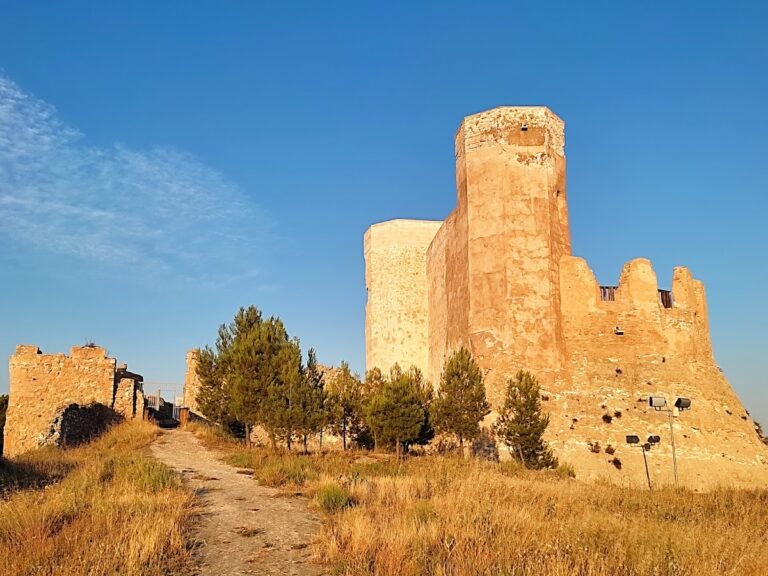
The castle occupies the highest part of Ateca’s old town and covers an extensive, irregular area. Its walls merge with those of present-day houses, while surviving sections also appear inside domestic premises and along public streets. The medieval castle occupied an area more than ten times larger than the nineteenth-century riflemen’s fort, which stands at the southern end of the castle esplanade.
The Nineteenth-Century Fort
The principal construction uses dressed rubble masonry founded directly on natural rock. Some wall sections were raised with tapial, a rammed-earth technique in which compacted earth forms the wall. The surviving fort includes a tower-gate with a guardhouse constructed in 1838. Its small entrance is framed by an alfiz, a rectangular element surrounding an arch or doorway, and was designed to accommodate a drawbridge.
Defensive Features
Two projecting overhangs defended the entrance. They resemble machicolations, defensive structures with openings through which objects could be dropped onto attackers, and their floor openings protected the approach to the gate. The fort was also completed with crenellations, which appear clearly in older images but are now almost imperceptible. The site is identified as including the Clock Tower of Ateca.
Nearby sites