Martiartu Tower: A Medieval Basque Stronghold in Erandio, Spain
Visitor Information
Google Rating: 4.3
Popularity: Low
Official Website: www.uribe.eu
Country: Spain
Civilization: Early Modern, Medieval European
Site type: Military
Remains: Tower
History
Martiartu Tower stands in the municipality of Erandio, Spain, and was originally constructed by the medieval Basque nobility during the late 14th century. Its foundation was commissioned by Martin Ortiz de Martiartu, a descendant of Diego Perez de Martiartu Zaharra, who had familial ties through marriage to the prominent Gomez de Butron family. Over time, the Martiartu lineage allied with the Zamudio family, consolidating control over the surrounding Udondo valley from this stronghold.
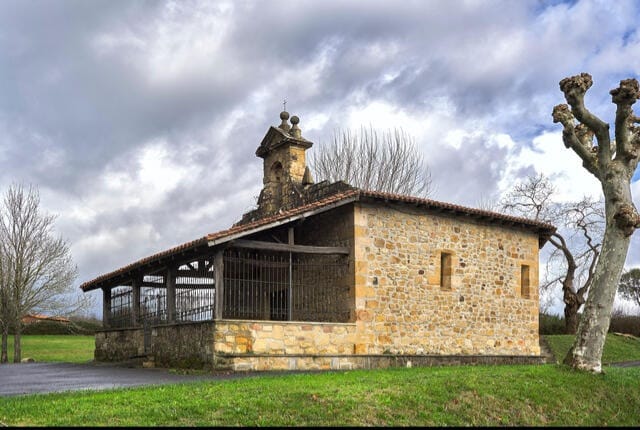
The tower was built as both a defensive fortification and a residence. Its strategic position on the southern slope of Mount Umbe offered commanding views over the Udondo valley. The tower formed a part of a larger complex that included the nearby San Antonio chapel, an ancient ironworking facility, and lands owned by the Martiartu family, collectively reflecting their influence and economic strength during the medieval era.
In 1472, the tower suffered significant damage when it was set ablaze by adversaries of the Martiartu family. Following this attack, rebuilding efforts took place at the dawn of the 16th century. During the reconstruction, portions of the original medieval walls and structure were maintained within the renewed tower, preserving its Gothic character. Early in the 16th century, the remaining Gothic section of the tower was enclosed by new walls, with sandstone masonry used for the rest of its perimeter.
The Martiartu family also commemorated their lineage through a funerary monument dedicated to Martin Ortiz de Martiartu and his wife, situated outside the Church of Santa Maria in Erandio. In the modern era, ownership of Martiartu Tower transferred to the Bilbao city council, despite its location on Erandio land. Most recently in March 2023, the municipality of Erandio announced intentions to repurpose the restored tower for economic use.
Remains
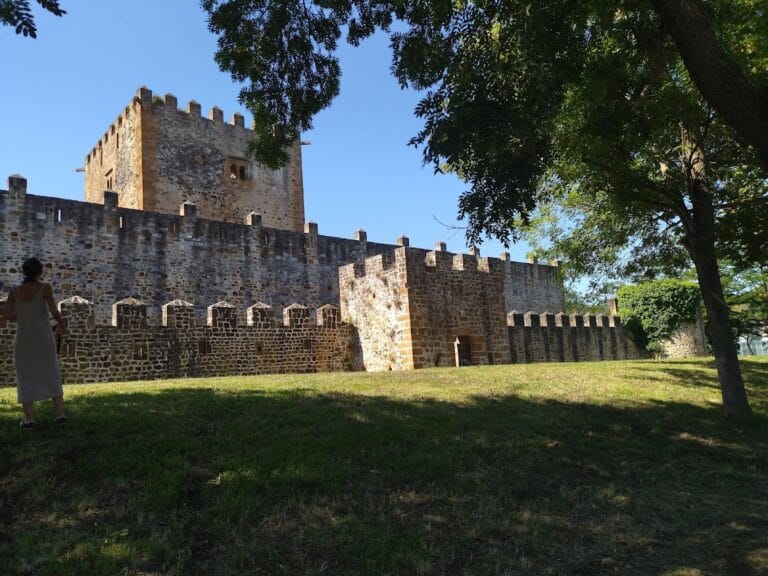
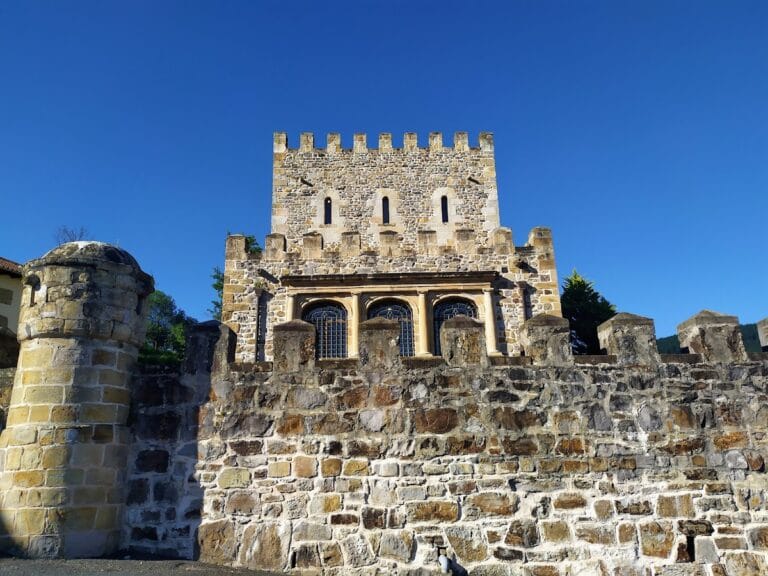
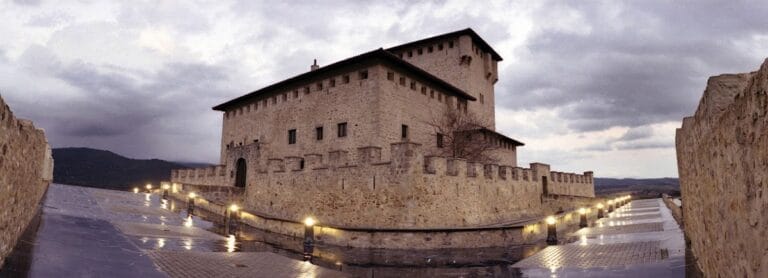
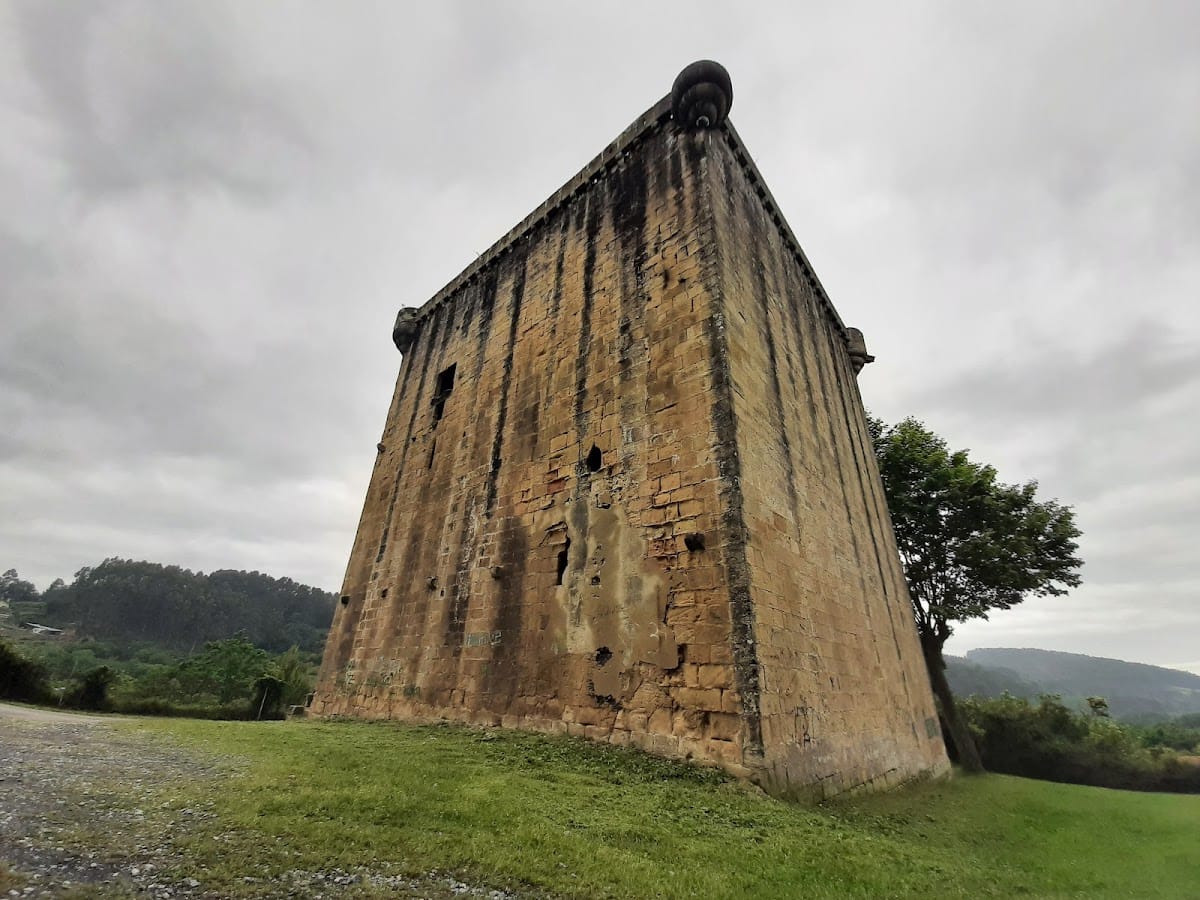
Martiartu Tower is a substantial square sandstone structure measuring roughly 18 meters tall and 14 meters wide, with walls reaching 2.4 meters in thickness at the base. This thickness tapers as the walls rise, and the tower rests on a stepped foundation designed to adjust to the inclined terrain on its south and west sides. The building’s ashlar sandstone blocks demonstrate skilled masonry work typical of its medieval reconstruction phases.
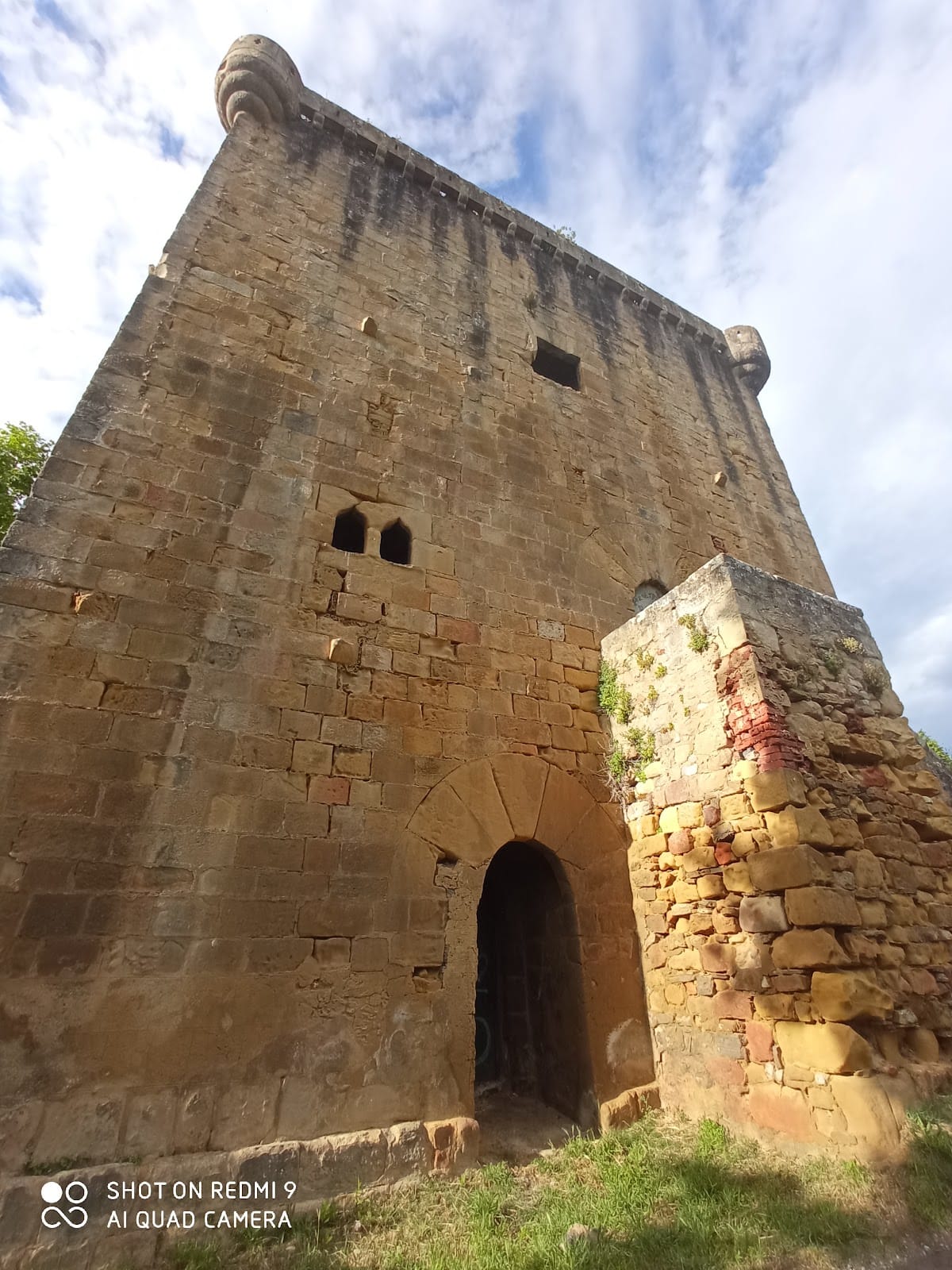
Originally equipped with four turrets, the tower now preserves three, including a notable northwest turret. This turret features a corbel— a supporting stone projecting from the wall— carved with an animal figure, adding a decorative touch. Entry to the tower was through a pointed ogival arch doorway located on a raised platform, a style typical of Gothic architecture; a secondary matching ogival arch opening exists on the rear facade at ground level.
The outer walls display a variety of openings serving defensive and residential functions. On the south side, there is a double Gothic window, a large window, three small slits, and battlements running along the top edge. The east side also has battlements, alongside two arrow slits and two windows, one bearing Gothic styling. Contrasting these facades, the north wall remains completely flat, while the west side contains a fortified keep along with an arrow slit and a small window.
Inside, the tower is hollow, retaining evidence of its medieval origins through remaining floor levels that would have divided the interior into three stories. On the upper floors, rows of corbels and brackets are visible, which once supported floor joists. The battlement parapet crowning the tower includes two rows of corbels that hold up a balustrade pierced with openings shaped to mimic crenellations. Cylindrical turrets occupy the tower’s upper corners, sitting on semicircular corbel shelves that diminish in size as they project outward.
The tower’s design is generally closed and solid, with defensive features such as arrow slits and paired conopial-arched windows—pointed arches shaped like lobed or ogee arches—and simple lintelled windows on the top floor providing limited light and vantage points. Notably, the lower entrance archway has been sealed with brick and cement, reflecting later modifications.
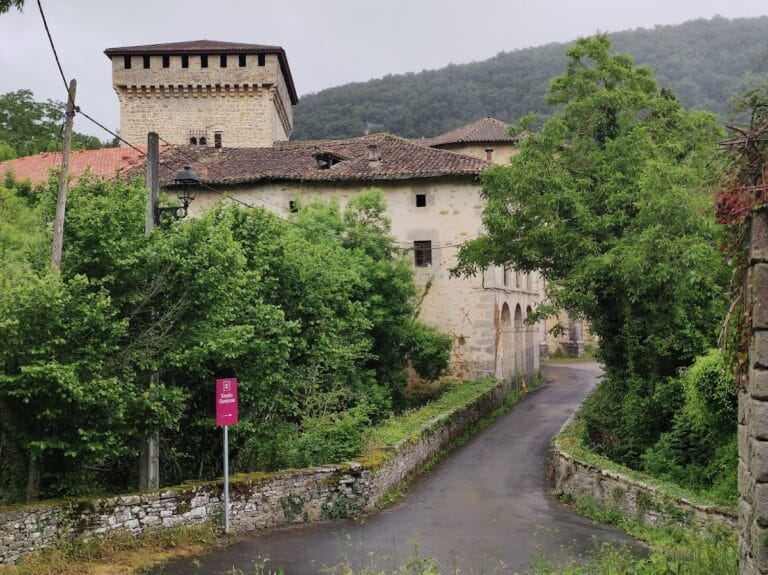
Nearby, the tower forms part of a small historic complex that includes the San Antonio chapel and several traditional farmhouses known as Bolue, Martusarri, Gallorta, and Etxebarri, highlighting the tower’s historical relationship with its surrounding environment.
Nearby sites