Castillo de Sarracín: A Medieval Fortress in León, Spain
Site at a Glance
- Rating
- 4.1
- Popularity
- Low
- Country
- Spain
- Primary era
- Medieval
- External website
- Open
- Eras represented
- Medieval
- Civilizations
- Crown of Castile, Kingdom of Asturias, Kingdom of León
- Site type
- Military
- Remains
- Castle
On this page6 sections
History
Castillo de Sarracín is a fortress in Vega de Valcarce, León, Spain, whose present construction is generally dated to the fourteenth century and stands over a tenth-century fortification. Its chronology remains uncertain. One theory places an earlier construction in the reign of Ordoño I, a ninth-century king of Asturias, probably around 850, and attributes it to his son, Count Gatón, a nobleman associated with El Bierzo and Astorga. According to this tradition, Gatón named the castle after his son Sarracino Gatónez, Lord of Sarracín and Count of El Bierzo and Astorga. Another theory assigns the construction directly to Sarracino and places it between 852 and 885.
Early destruction and reconstruction
The first castle was apparently destroyed in 714 by Musa, a governor of the Umayyad Caliphate, the Islamic state whose western territories included much of the Iberian Peninsula during the early Muslim conquest. Reconstruction apparently began in the late ninth century after the Christian reconquest, the centuries-long expansion of Christian rule over territories governed by Muslim powers in medieval Iberia. The Marquisate of Villafranca, a noble territorial lordship governed by a marquis, is identified with this rebuilding.
The fortress apparently resisted numerous sieges and became associated with several legends, including the legend of the five stakes. These traditions form part of the castle’s later historical associations, while its precise early building history remains debated.
Protection and conservation
Castillo de Sarracín was declared an Asset of Cultural Interest, Spain’s legal designation for protected cultural heritage, on 22 April 1949. It is listed as an associated component of the UNESCO-inscribed Routes of Santiago de Compostela: French Way and Routes of Northern Spain. The castle appeared on the Red List of Endangered Heritage, which identifies heritage places considered at risk, from 2007 to 2014.
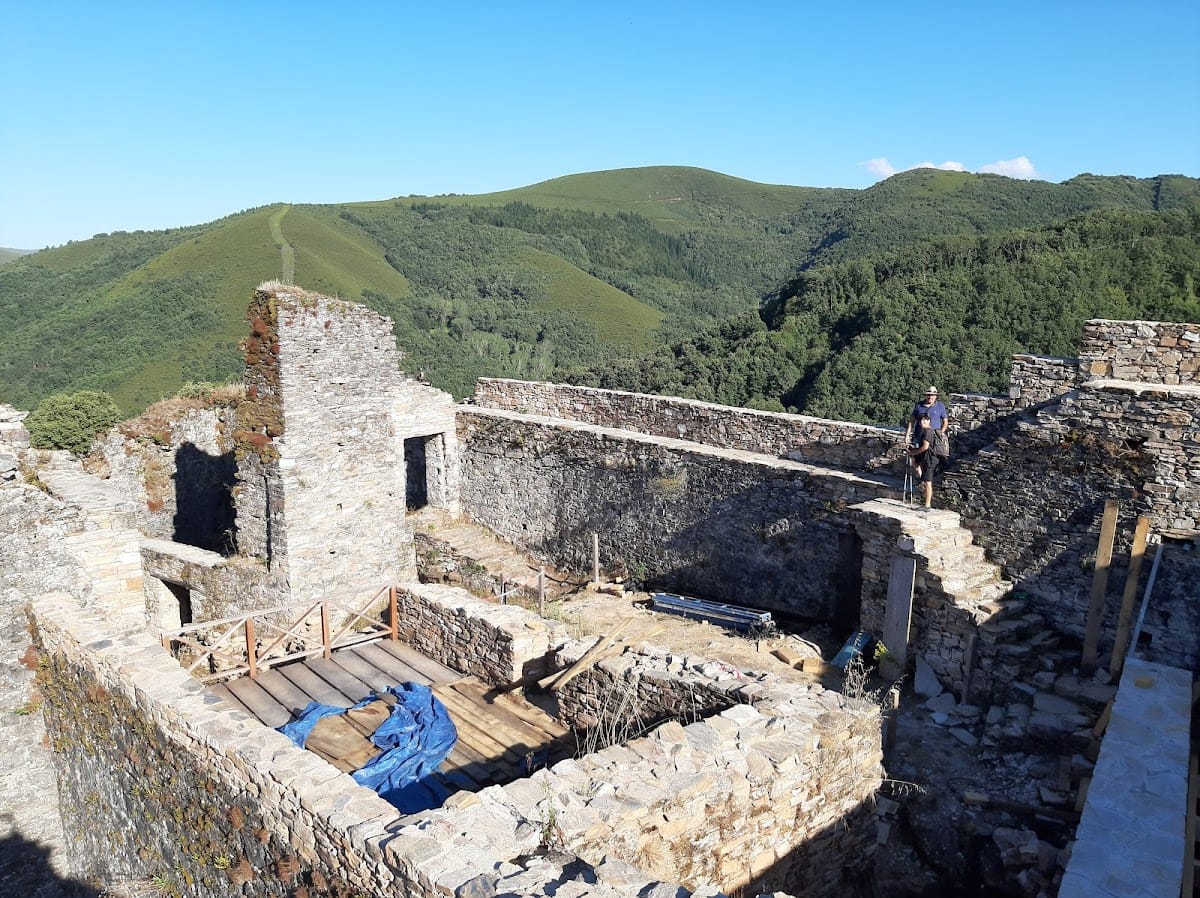
Emergency works in May 2014 stabilized walls at risk of collapse and cleared debris from the inner enclosure, recovering its original levels. Restoration has also been undertaken by the Junta of Castile and León, although the castle remains a progressively deteriorating ruin.
Remains
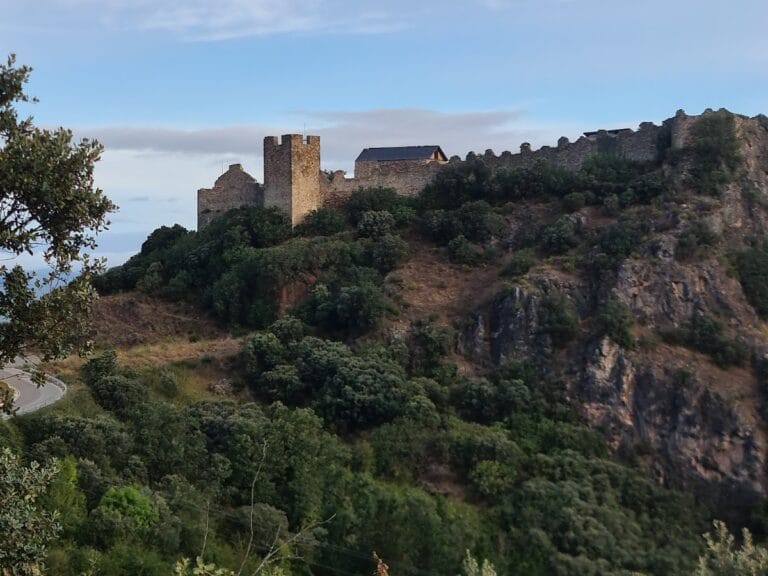
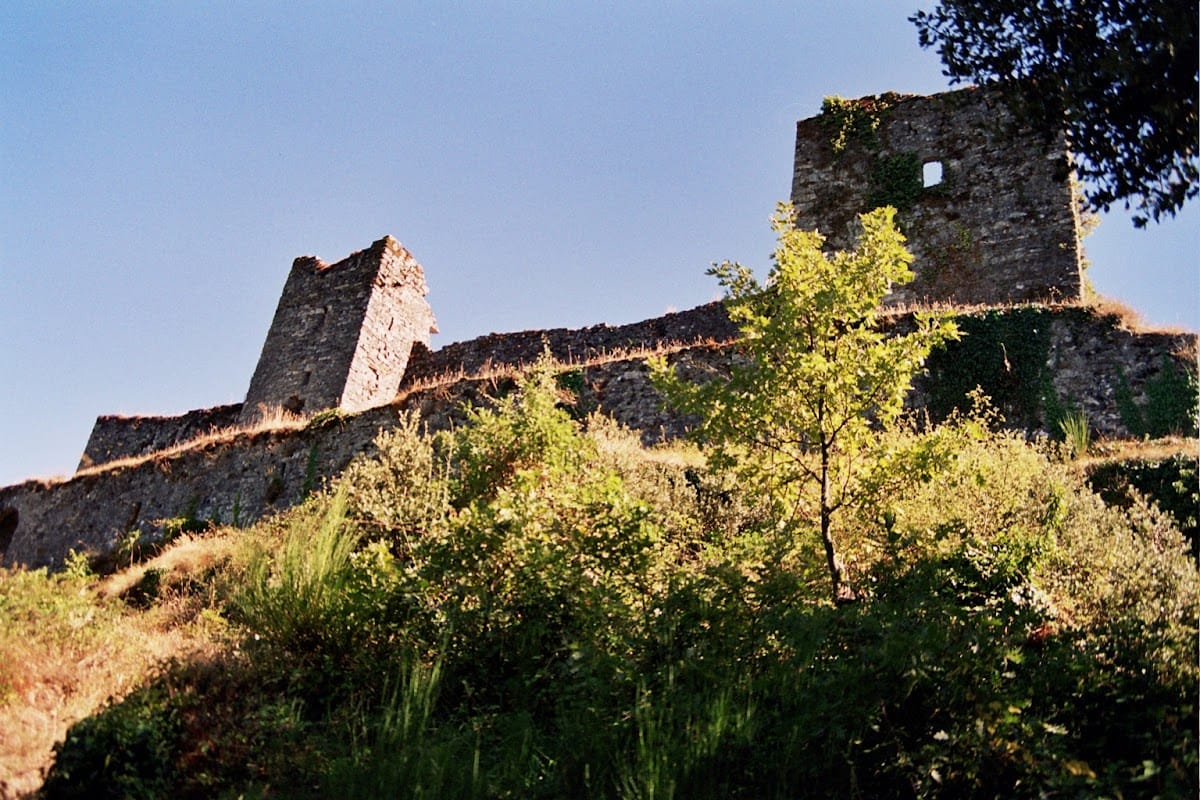
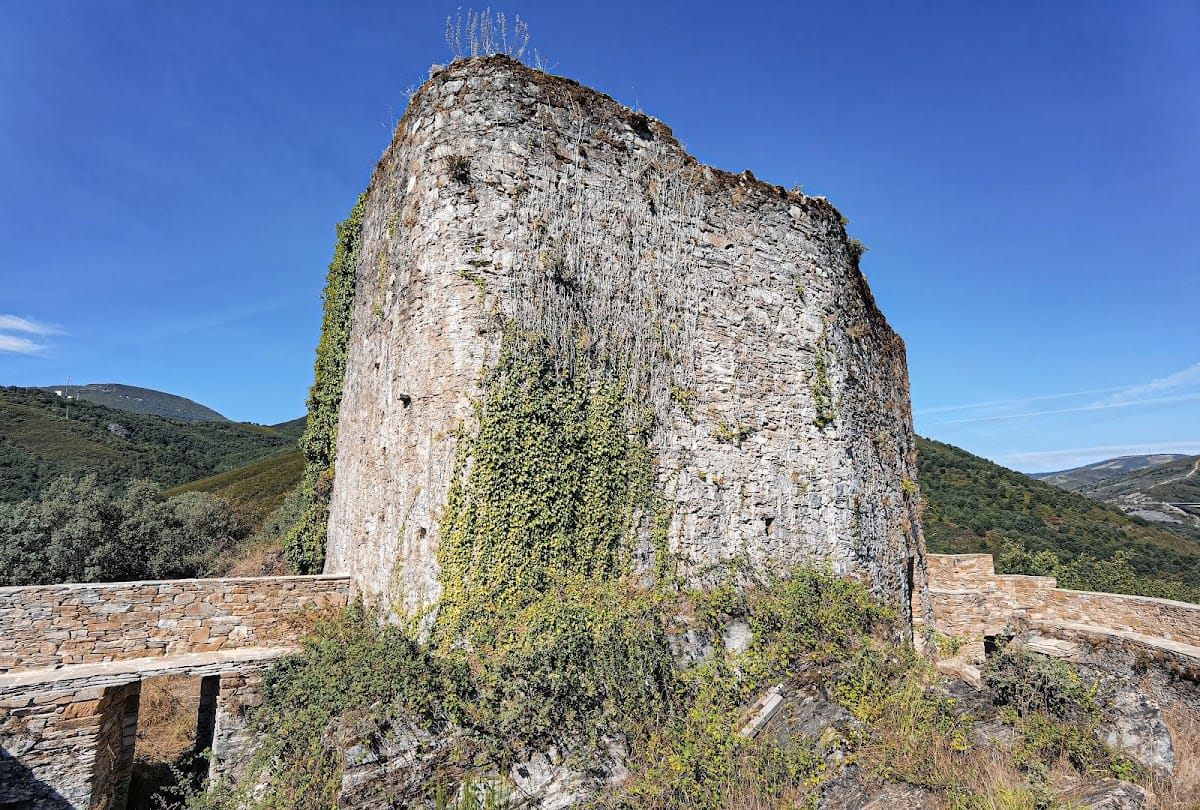
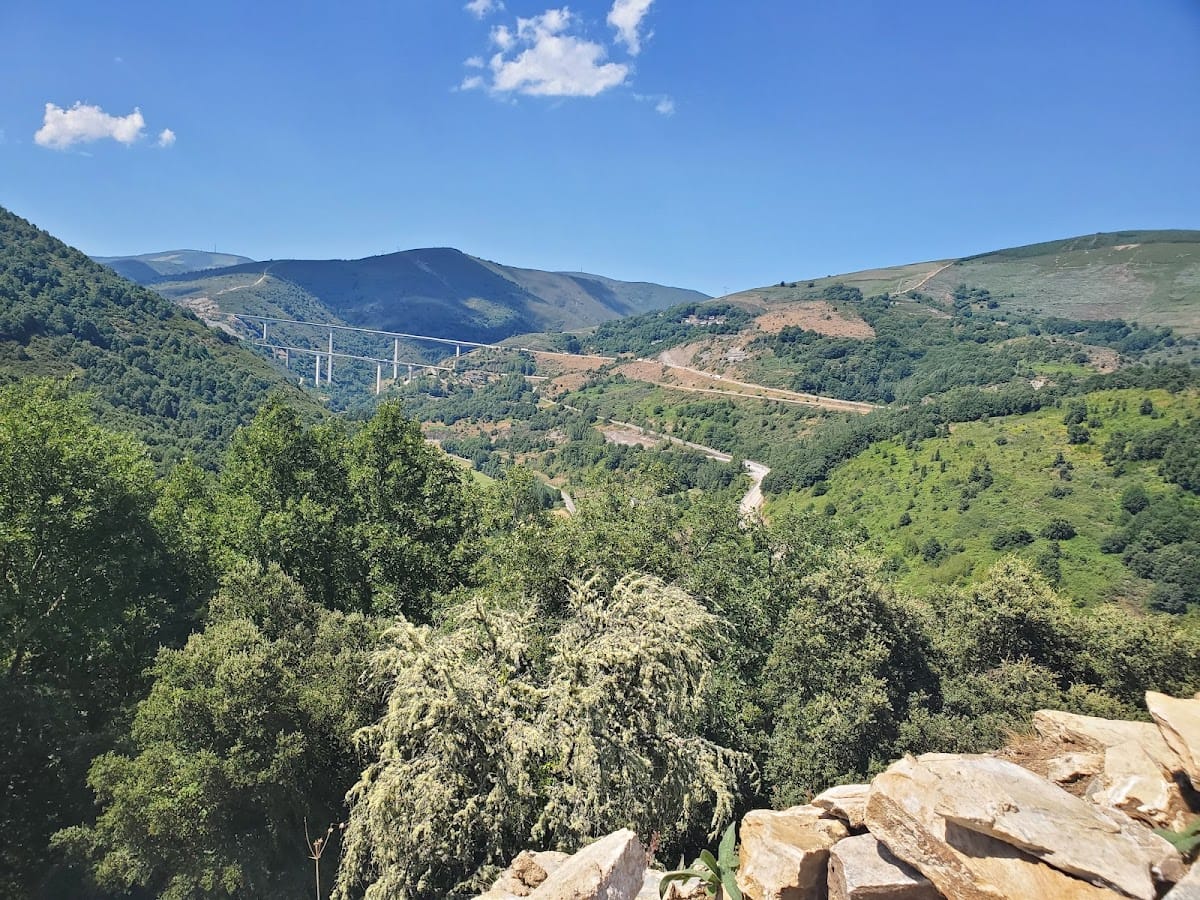
The castle occupies a crag on the slope of Mount Vilela, also called Villaus, a mountain mentioned in the medieval Codex Calixtinus, a collection of texts associated with the pilgrimage route to Santiago de Compostela. Its enclosure has an irregular rectangular plan divided into several internal dependencies. Stone, rubble masonry made from irregular stones set in mortar, and slate form the principal construction materials.
Enclosure and entrance
Access into the enclosure is through a doorway topped by a semicircular arch, whose curve forms a half-circle over the opening. The irregular plan and internal divisions preserve the organization of the fortified compound, while the surviving masonry reflects the use of local stone, rubble, and slate.
Towers and defensive evidence
Two towers survive within the ruins. One contains a splayed arrow slit, a narrow opening widened on the inside to allow projectiles to be fired through the wall. Clearance work in 2014 exposed twelve arrow slits and recovered archaeological materials including ceramic fragments, a buckle, points, and what appears to be the blade of a knife.
The castle may have been built over an Iron Age settlement. This possibility is based on its topographical position and the discovery of a socketed axe with two rings in the surrounding area. The surviving structure is in progressively deteriorating ruin, despite stabilization and restoration work.