Innes Chonnel Castle: A Medieval Stronghold of Clan Campbell in Scotland
Visitor Information
Google Rating: 4.8
Popularity: Very Low
Official Website: canmore.org.uk
Country: United Kingdom
Civilization: Medieval European
Site type: Military
Remains: Castle
History
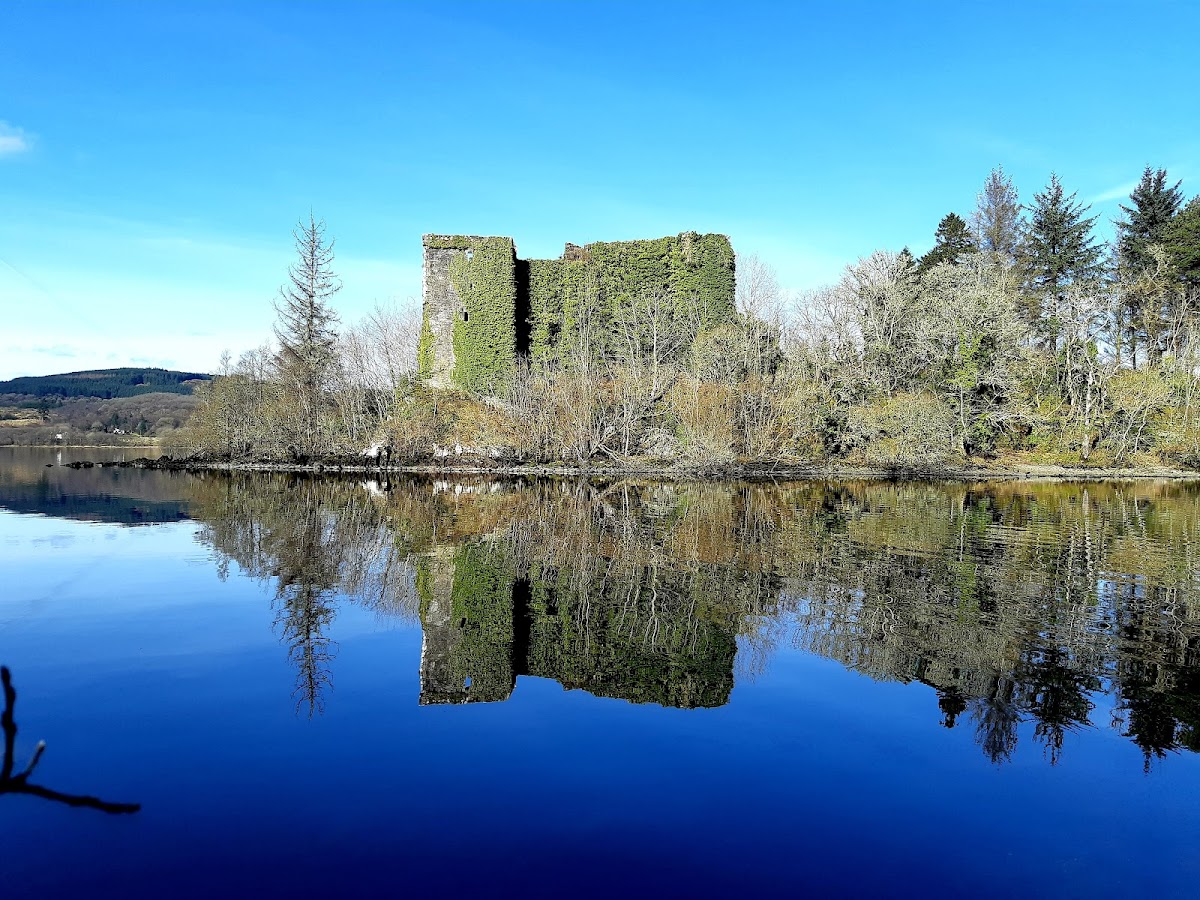
Innes Chonnel Castle is situated on the island of Innis Chonnell in Loch Awe within the municipality of Ardchonnell, Scotland. This fortress was constructed by members of the Scottish Clan Campbell during the medieval period, specifically in the 13th century.
The site likely served as the original stronghold for Clan Campbell, whose presence in the area may date back as far as the 11th century or even earlier. The castle’s early history is marked by notable clan conflicts and alliances. One prominent figure, Cailean Mór (also known as Sir Colin Campbell), was in possession of the fortress until his death in 1296 during a battle against Clan MacDougall. His lineage continued with his son, Sir Neil Campbell, who formed a pivotal alliance with Robert the Bruce through marriage and military cooperation, most famously at the Battle of Bannockburn in 1314. This connection strengthened the Campbells’ political and military standing in Scotland.
Throughout the following centuries, Innes Chonnel Castle remained the main seat of Clan Campbell until the 15th century. At that point, Inveraray Castle emerged as the Campbells’ principal residence, reflecting a shift in their power base. Despite losing its status as the clan’s chief domicile, Innes Chonnel did not fall entirely out of use. Allied clans, such as the MacLachlans, continued to inhabit or utilize the castle. Additionally, the site functioned as a prison, most notably holding Domhnall Dubh, the heir to the Lordship of the Isles. After his defeat in the 1484 Battle of Bloody Bay, Domhnall Dubh was imprisoned there before escaping, only to be captured again later.
By the 15th century, the castle ceased to be a residence, and by the early 19th century, it had fallen into ruin. The site remains a Scheduled Monument today, preserving its historical significance within the Scottish landscape.
Remains
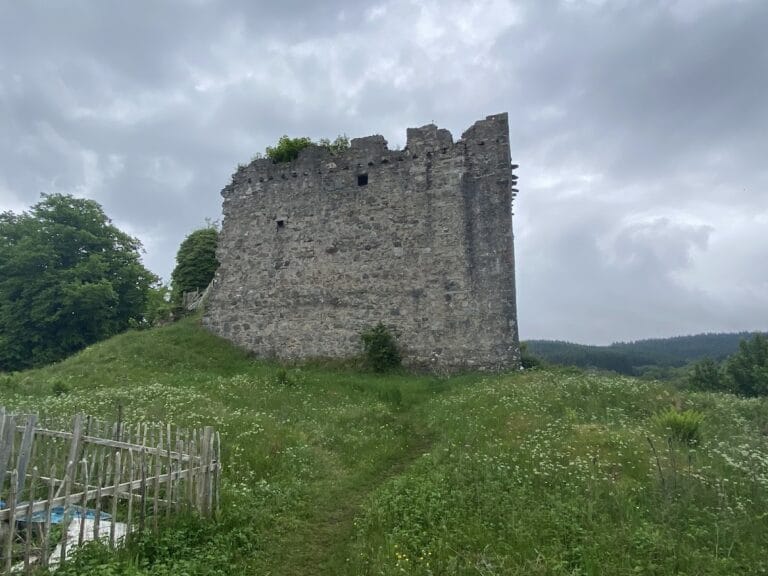
Innes Chonnel Castle occupies a significant part of its small island, featuring a complex layout composed of multiple enclosed areas. These include an outer bailey to the east, a central bailey situated westward of the outer court, and the main inner bailey positioned further west. The castle’s construction reflects medieval Scottish fortification practices, predominantly using stone masonry.
The core of the fortress is the rectangular inner bailey dating from the 13th century. This section maintains much of its original footprint, measuring approximately 25.7 by 25.1 meters, though it was subject to considerable remodeling in the 15th century. On the eastern side, a gatehouse, built during the 15th century, replaced an earlier 13th-century gateway. This gatehouse likely featured a single story with battlemented walls on the northern and southern faces, providing defensive Advantage overlooking the entrance avenue.
To the south lies the oldest part of the surviving structure, including the southeastern tower and the south façade, both primarily from the 13th century. Nearby, the courtyard contains buildings mostly added in the 15th century. Among these additions are a large four-story edifice occupying the southeastern corner and a smaller three-story building adjacent to it, which attest to the castle’s later development and use.
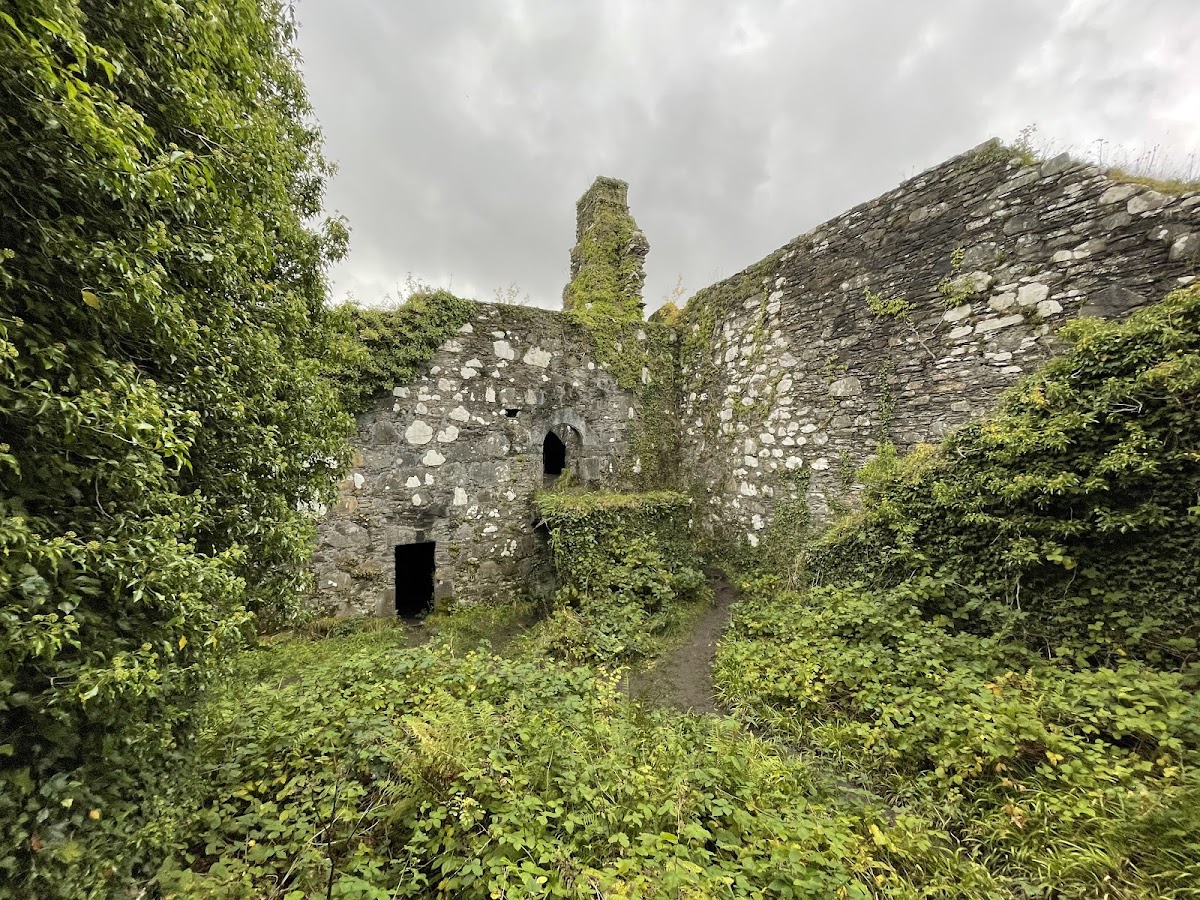
The western section saw substantial reconstruction in the 15th century, housing a hall and kitchen positioned above vaulted cellars. The vaulted cellars include a small prison area, consistent with the castle’s use for detention purposes. This area also features a southwest tower containing several smaller private chambers, indicating residential or administrative functions within the complex.
The northern curtain wall, probably dating to the original 13th-century construction, still survives in part, though it was later augmented with attached rooms. The middle bailey’s walls, mainly erected during the 15th century, remain best preserved along the southern and eastern edges, reaching heights up to 2.4 meters. These walls once enclosed the intermediate courtyard area between the inner and outer baileys.
The outer bailey, located on the eastern approach to the castle, displays remnants mostly from the 15th century. Its defensive walls are now fragmentary and incomplete, reflecting centuries of exposure and decay. Despite this, the footprint of the outer enclosure helps illustrate the castle’s layered defensive arrangements on the island.
Together, these remains offer a clear picture of a medieval island fortress that evolved over centuries, adapting to changing clan needs and defensive requirements. The surviving structures showcase the transition from the 13th-century origins to significant 15th-century enhancements, preserving Innes Chonnel Castle’s historical role in Scotland’s feudal landscape.
Nearby sites