Hoštejn Castle: A Medieval Fortress in the Czech Republic
Visitor Information
Google Rating: 4.5
Popularity: Low
Country: Czechia
Civilization: Medieval European, Modern
Site type: Military
Remains: Castle
History
Hoštejn castle stands near the village of Hoštejn-Zábřeh in the present-day Czech Republic. It was built in the late 13th century by the Hrabišic noble family, a prominent medieval lineage with significant regional influence. The earliest direct record of the castle dates from 1289, although an earlier written mention from 1267 refers to a Mutiš de Honstein, who likely served as a castle official under Boreš of Rýzmburk, the probable founder.
The castle was established to counterbalance the nearby Zábřeh fortress, held by political rivals of the Hrabišic family. The family supported King Rudolf of Habsburg and opposed King Přemysl Otakar II during their power struggles. After Rudolf’s death in 1278, control of Hoštejn briefly passed to Protiva of Zábřeh, an opponent, but was soon reclaimed by the Hrabišic faction under the guidance of Fridrich of Schonburk.
During the late 13th century, Hoštejn gained a reputation as a hideout for bandits, as described in the Zbraslav Chronicle. This prompted King Václav II to dispatch an army led by Záviš of Falkenštejn, who captured the castle, executed its garrison, and transferred ownership to his liege, the king’s stepfather. Following Záviš’s death in 1290, the Sternberg family came into possession of Hoštejn. Records confirm the Sternbergs controlled the castle from at least 1335 onward, combining it with their neighboring estates of Šilperský and Zábřeh.
At the end of the 14th century, the Hoštejn estate passed to the Lukov branch of the Sternbergs upon the death of Smil of Hoštejn in 1398. During this period, the family faced territorial disputes with Margrave Jošt of Moravia. The early 15th century saw Hoštejn become a focal point amid the Hussite movement. In 1406, Hynčík of Frývaldov, a noted Hussite supporter, was castellan of the castle, which made it a target for frequent assaults. Around 1424, the fortress suffered serious damage inflicted by forces of Albrecht of Austria.
By 1434, ownership had shifted to Jan of Zvole, a leader aligned with Catholic interests. Despite this, the castle had fallen into ruin by 1437, likely destroyed during ongoing conflicts known as the Hussite wars. In the early 1500s, the dilapidated stronghold became a refuge for bandits until Arkleb Trnavský of Boskovice captured and reportedly demolished it in 1522.
The castle’s final phase of destruction came during the 19th century, when remaining stones were dismantled to build embankments for the new Olomouc–Prague railway line, completed in 1845. Since 1964, the site has been protected as a cultural monument, preserving the memory of its complex history.
Remains
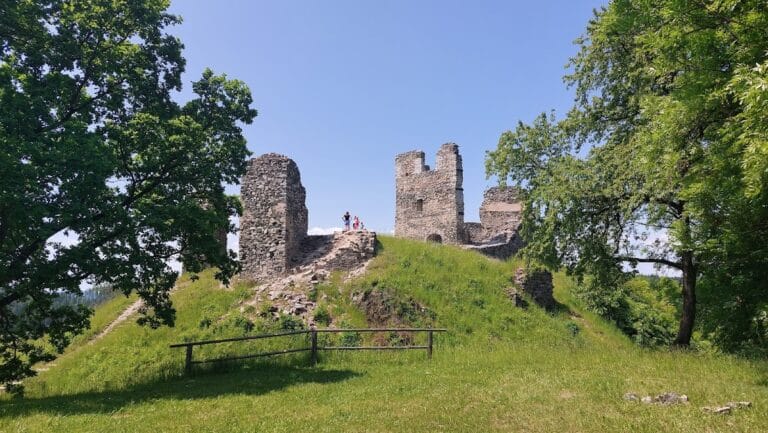
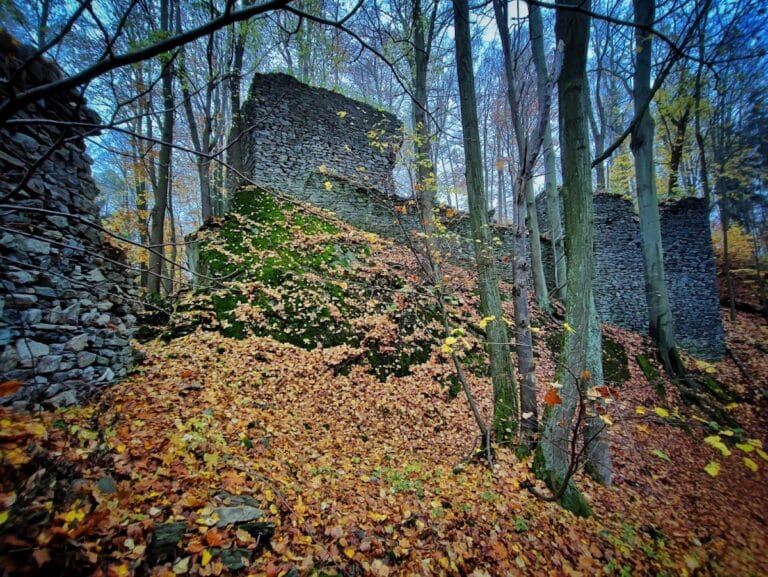
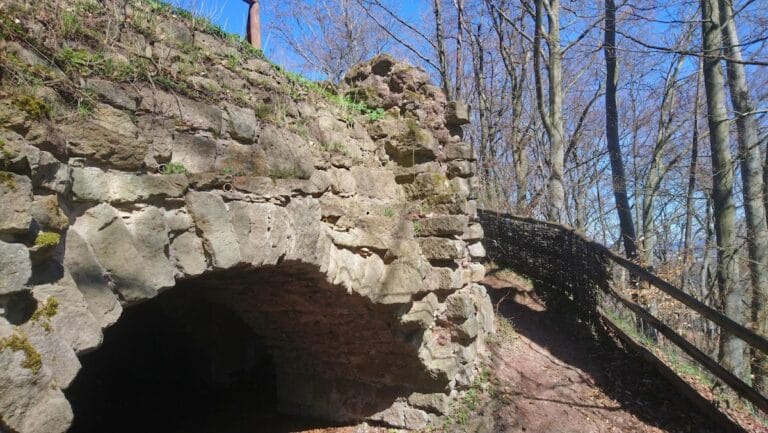
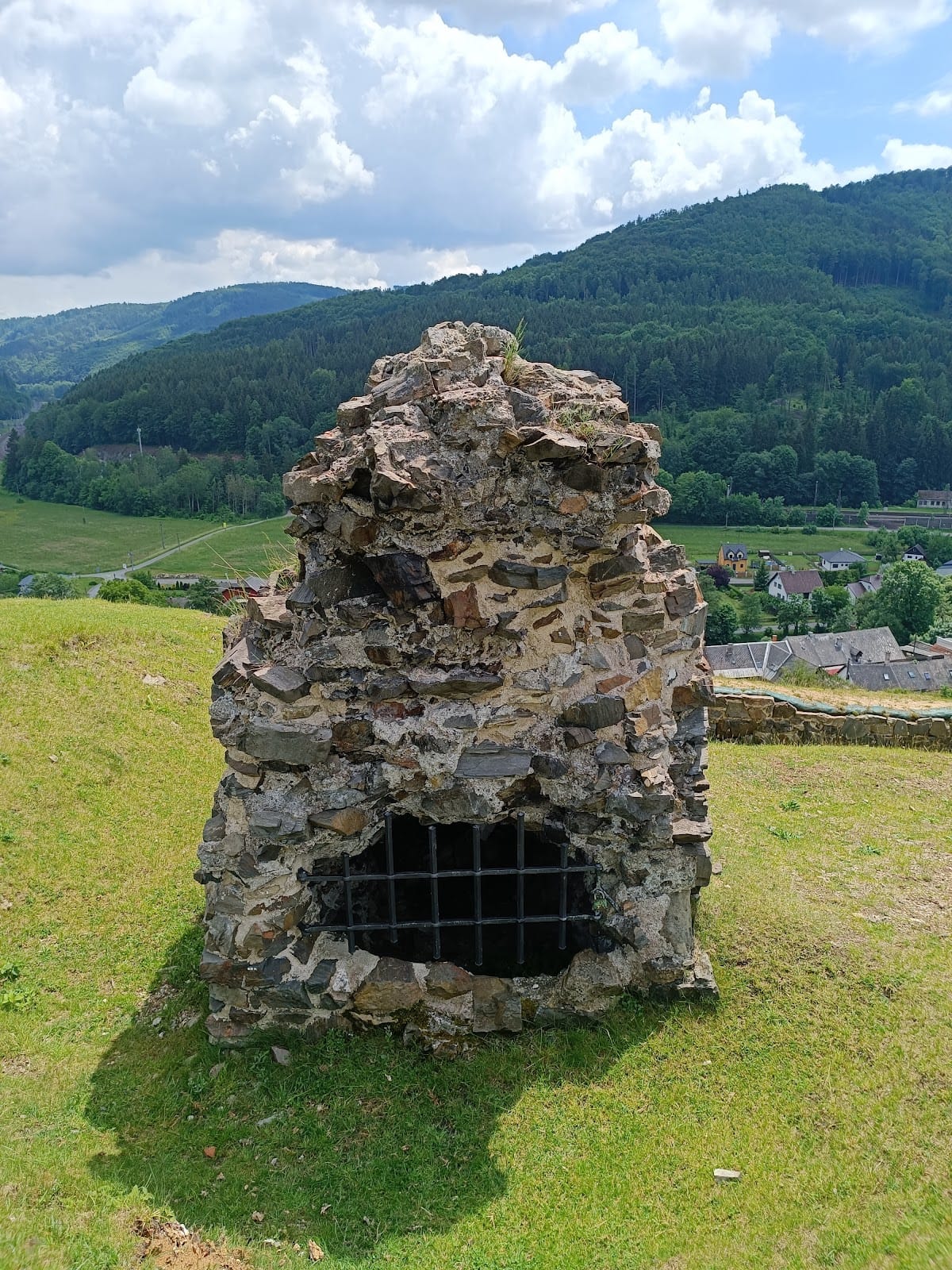
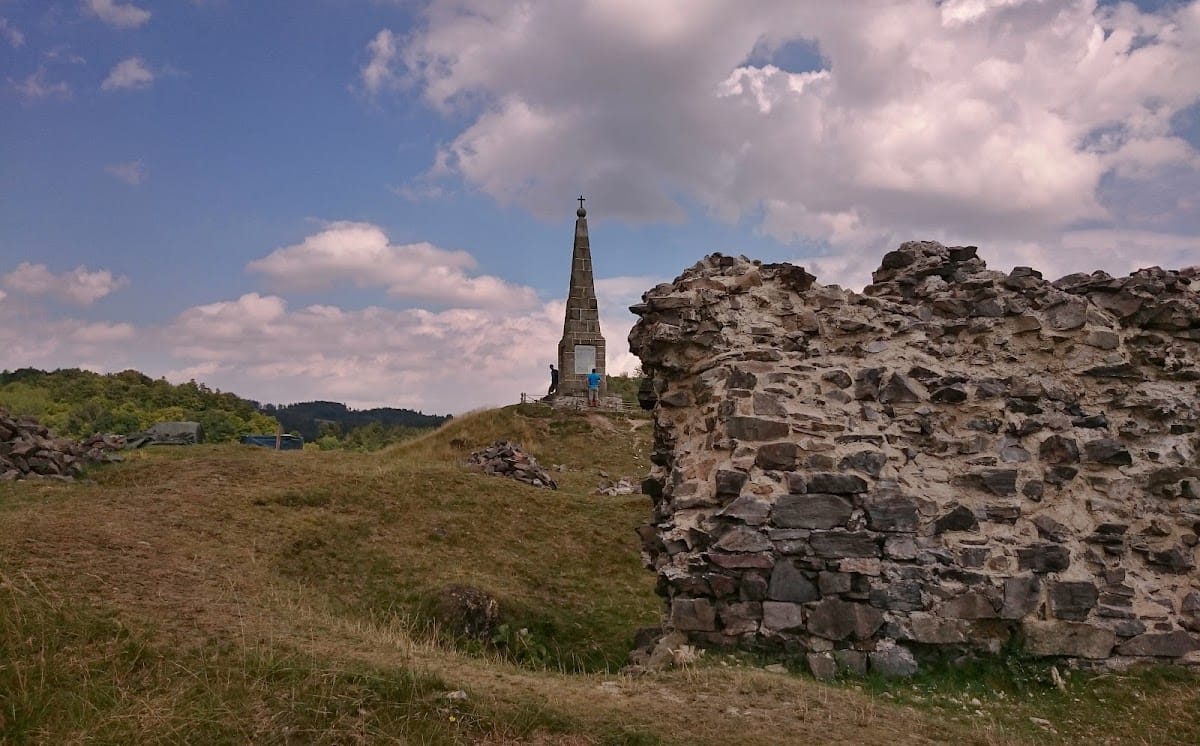
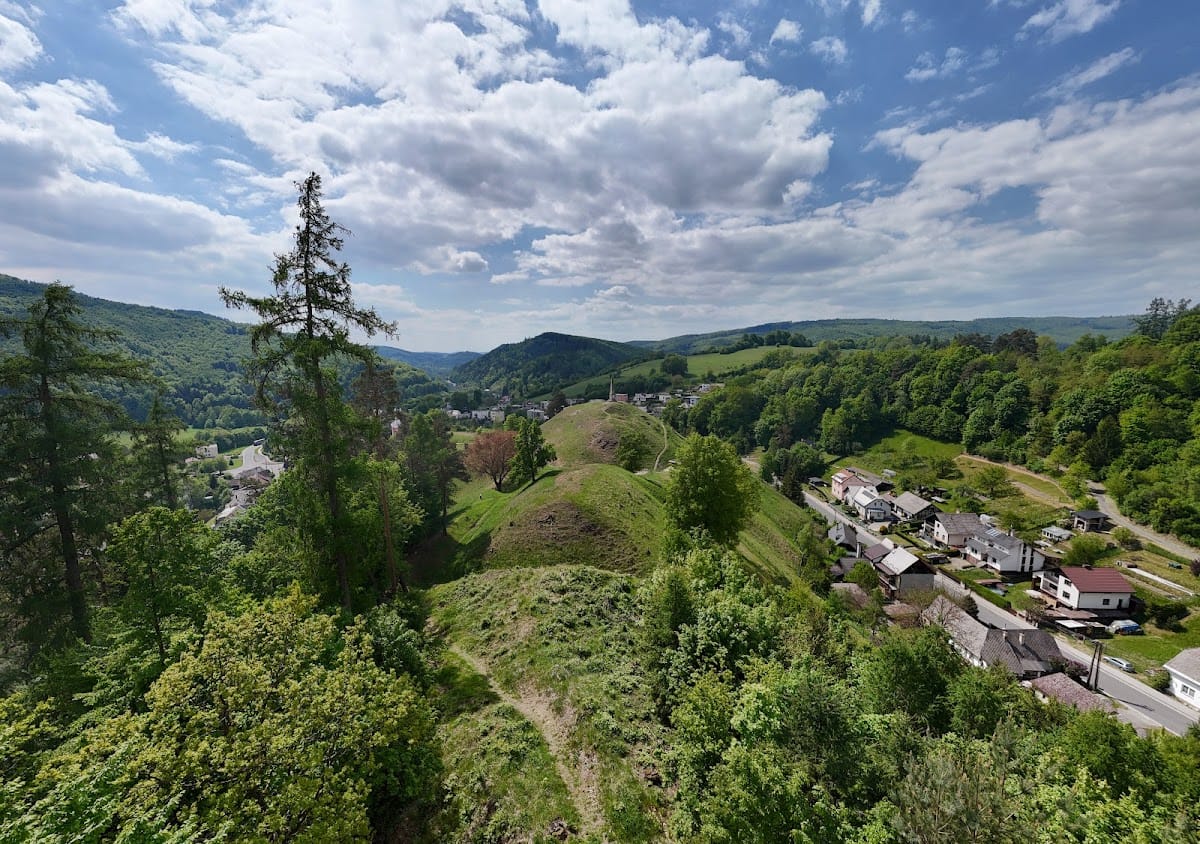
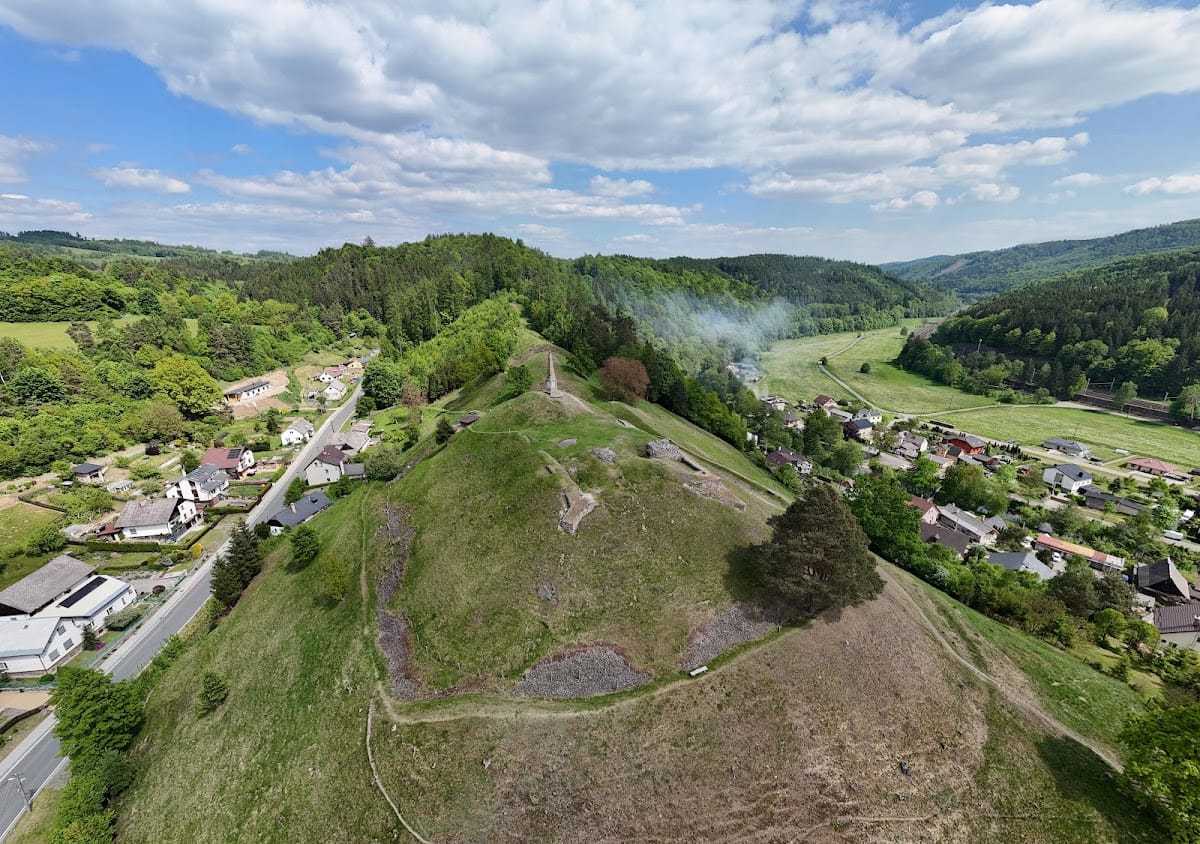
Hoštejn’s fortifications once extended about 450 meters, featuring a two-part defensive layout. The core area took an almost rectangular shape measuring roughly 50 by 20 to 25 meters. Within this core, archaeologists have uncovered remains of a palace, oriented across the site, approximately 25 by 9.5 meters in size. This building lay near the former position of a tower and is the only significant above-ground ruin visible today. A surviving section of the palace wall remains at the western edge of the castle enclosure, with parts of a cellar and a buried staircase still visible below ground.
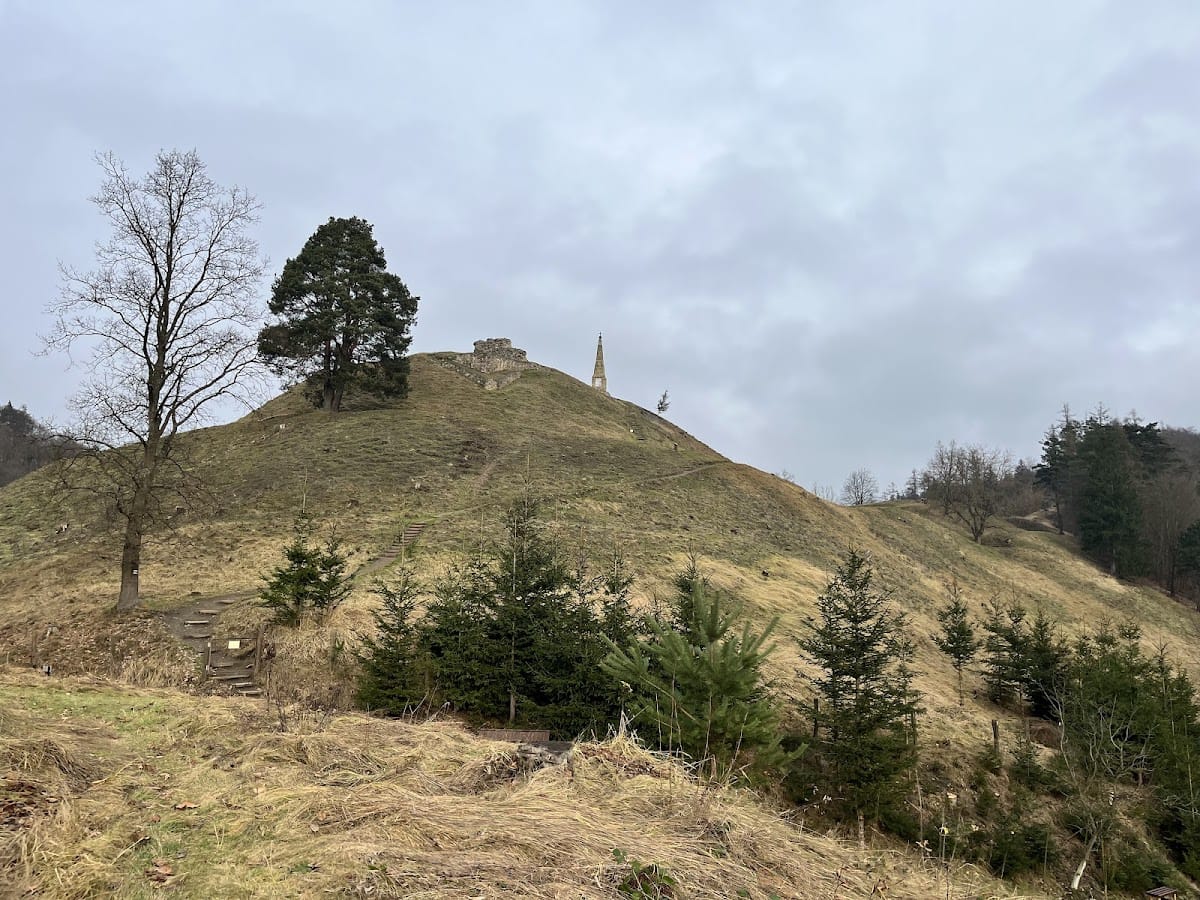
Surrounding the core was a circular earthwork forming a wide ditch, ranging between 18 and 38 meters in width. This rampart helped defend the heart of the castle. To the front of the complex lay the outer bailey, measuring about 45 by 14 meters. This area was enclosed by an embankment and ditch up to 25 meters wide near its narrowest point but showed no evidence of buildings or constructions within its boundary.
Close to the nearby church lies a large platform measuring 47 by 19 meters, bordered on three sides by signs of fencing and lower terraces. This feature may indicate an earlier settlement before the castle stood, a military encampment, or perhaps the site of the original church associated with Hoštejn. On the opposite side of the castle, a pentagonal mound measuring about 23 by 15 meters stands separated from the main fortification by a deep ditch nearly 17 meters wide and 5 meters deep. This advanced defense was likely positioned to protect the castle’s most vulnerable approach from siege weapons.
A sandstone monument now marks the presumed site of the castle’s former tower. It rises nearly 3 meters high and is approximately 7.5 meters in diameter. This monument commemorates the completion of the Olomouc–Prague railway, which played a role in the final removal of castle ruins in the 19th century.
Near the castle’s location, historical records note several related religious structures. The parish church of Saint Cunigunde, documented from 1350 but no longer standing, once served the local community. An 18th-century pilgrimage chapel dedicated to Saint Anne was rebuilt in 1815 nearby. Additionally, an Empire-style Holy Trinity sculpture dating from 1820 stands as a later spiritual landmark linked to the area surrounding the former castle site.
Nearby sites