Žampach Castle: A Medieval Fortress in Czechia


Site at a Glance
- Rating
- 4.4
- Popularity
- Low
- Country
- Czechia
- Primary era
- Medieval
- External website
- Open
- Eras represented
- Medieval
- Civilizations
- Holy Roman Empire, Kingdom of Bohemia
- Site type
- Military
- Remains
- Castle
On this page13 sections
History
Žampach Castle in Czechia was a medieval fortress founded in the second half of the thirteenth century, during the reign of the last Přemyslid rulers, as colonization expanded into the sparsely settled royal border forest of eastern Bohemia. The castle is also described as having been built at the beginning of the fourteenth century. Its foundation formed part of settlement activity along the right bank of the Tichá Orlice, undertaken by members of the Zebín noble family, whose coat of arms bore a hunting horn.
Foundation and Royal Possession
The earliest indirect written reference to Žampach dates from 1309, when Peter of Santbach was named among those harming the Zbraslav Monastery’s Lanšperk estate. Křesislav of Žampach was identified as the castle’s owner in 1312. Before 1324, the site passed to King John of Luxembourg, who ruled Bohemia from 1310 to 1346. John pledged the castle in 1324 to Henry of Lipá, and the Lords of Lipá still held it in 1340 and 1346.
After 1346, the knight John of Smojna, known as Pancíř, acquired Žampach and used it as a refuge for raids in the surrounding region. King Charles IV, John of Luxembourg’s son and the future Holy Roman Emperor, besieged and captured the castle, probably in autumn 1355 or in spring or summer 1356. Pancíř was executed, and the estate was placed under royal administration.
In 1357, Charles IV granted Žampach to Čeněk of Potštejn as compensation for Potštejn Castle and its estate, which had been confiscated from Čeněk’s father, the robber knight Mikuláš of Potštejn. Čeněk’s sons John and Mikuláš later succeeded him as holders of Žampach. Mikuláš Žampach of Potštejn, who died in 1427, supported Hussitism, the religious and reform movement associated with Jan Hus. In 1415, he jointly sealed the Bohemian and Moravian nobles’ complaint against Hus’s execution. Silesian Catholic troops ravaged the Žampach estate in 1421 in retaliation for its owners’ support of the Hussite cause.
Conflict and Fifteenth-Century Changes
The circumstances in which Jan Městecký of Opočno took possession of Žampach in 1425 are uncertain. After he returned to the side of the Bohemian king and Emperor Sigismund, Orphan forces captured the castle in 1429 with help from part of its garrison. They transferred it to John Žampach of Potštejn, Mikuláš’s son, who was last named as its owner in 1469.
During the second half of the fifteenth century, financial difficulties led the Žampach branch of the Potštejn family to pledge parts of the estate. John Žampach of Potštejn pledged the entire estate to Burian Trčka of Lípa in 1513. Hajman Krušina of Lichtenburk became its pledge-holder in 1519, followed in 1521 by the brothers Vojtěch and John of Pernštejn. None of these pledge-holders lived at Žampach, and the castle deteriorated during this period.
Zdeněk Žampach of Potštejn redeemed the pledge in 1539 and reunited the divided parts of the former estate. In 1540, he sought compensation for damage caused during the pledge period, estimating the loss at 4,000 kop of groschen. After his death, his sons divided the estate in 1568. Vilém received the castle, the Žampach court, Budy village below the castle, and eight other villages, but transferred this holding in 1569 to his brothers Jan Burian, Karel, and Čeněk.
Decline and Military Destruction
The brothers sold their share to John the Elder of Žerotín and Adam Bukovský of Hustířany. After the purchasers settled their interests, Adam Bukovský became sole owner. He built a new fortified residence in the village below the castle and allowed Žampach to decay. His family retained the estate until the Thirty Years’ War, the major European conflict of 1618 to 1648, which combined religious, dynastic, and political struggles.
A counterfeiting workshop operated at the castle during the first half of the sixteenth century, probably while the Pernštejns held the estate in pledge and most likely until 1539. The blacksmith Jan from Žampach made false coins there. In June 1542, two suspected accomplices described the workshop and the distribution of counterfeit money under torture. The blacksmith and the two accomplices were sentenced to death by burning.
Žampach suffered heavily when Imperial troops attacked it in 1634 and Swedish troops plundered it in 1639. Imperial soldiers occupied the castle twice in 1648. After these events, it definitively ceased to serve a residential or defensive function and gradually became a ruin.
Chapel, Stone Extraction, and Conservation
The castle chapel, mentioned in 1540, served as the Bukovský family tomb during the sixteenth and seventeenth centuries. The Jesuits, members of the Catholic Society of Jesus, rebuilt it in 1672 and dedicated it to the Holy Cross. It was demolished in 1789.
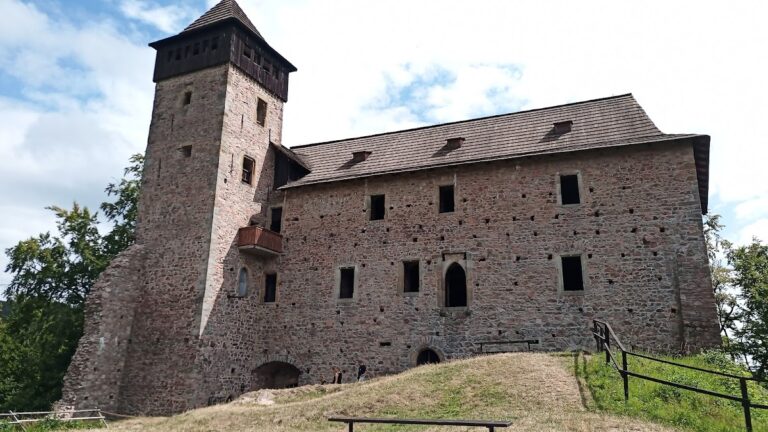
After the Thirty Years’ War, the abandoned castle became a source of building stone, first for the Jesuits’ residence below the hill. When the Jesuit order was suppressed, the castle passed to a religious fund, and stone extraction continued practically until the nineteenth century. This left mainly foundation walls. Partial conservation of the remaining masonry began at the start of the twentieth century. A wooden footbridge crossed the moat between the forecourt and inner castle, and a wooden lookout tower later stood on the palace ruins for several decades before disappearing.
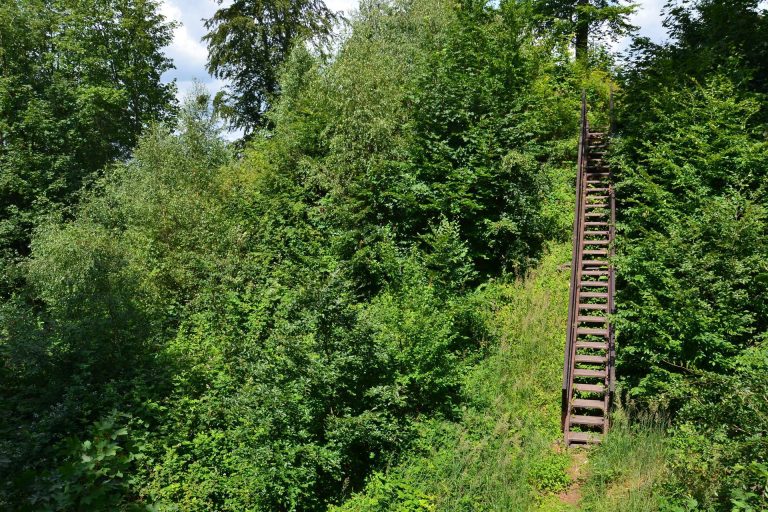
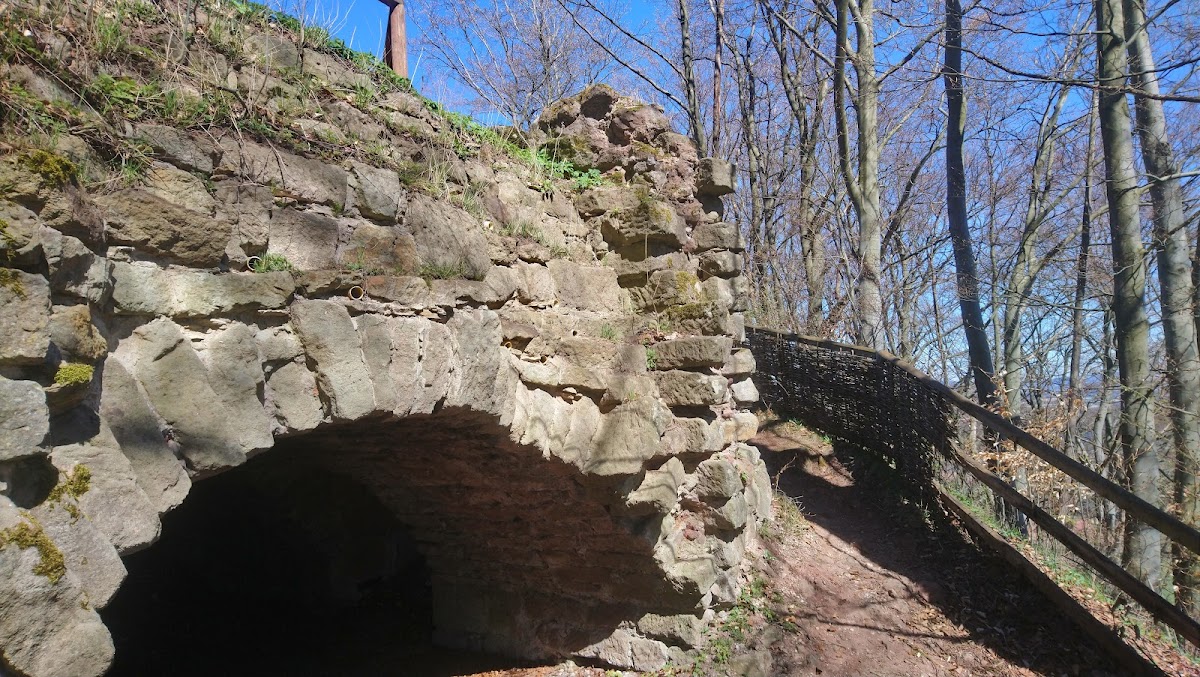
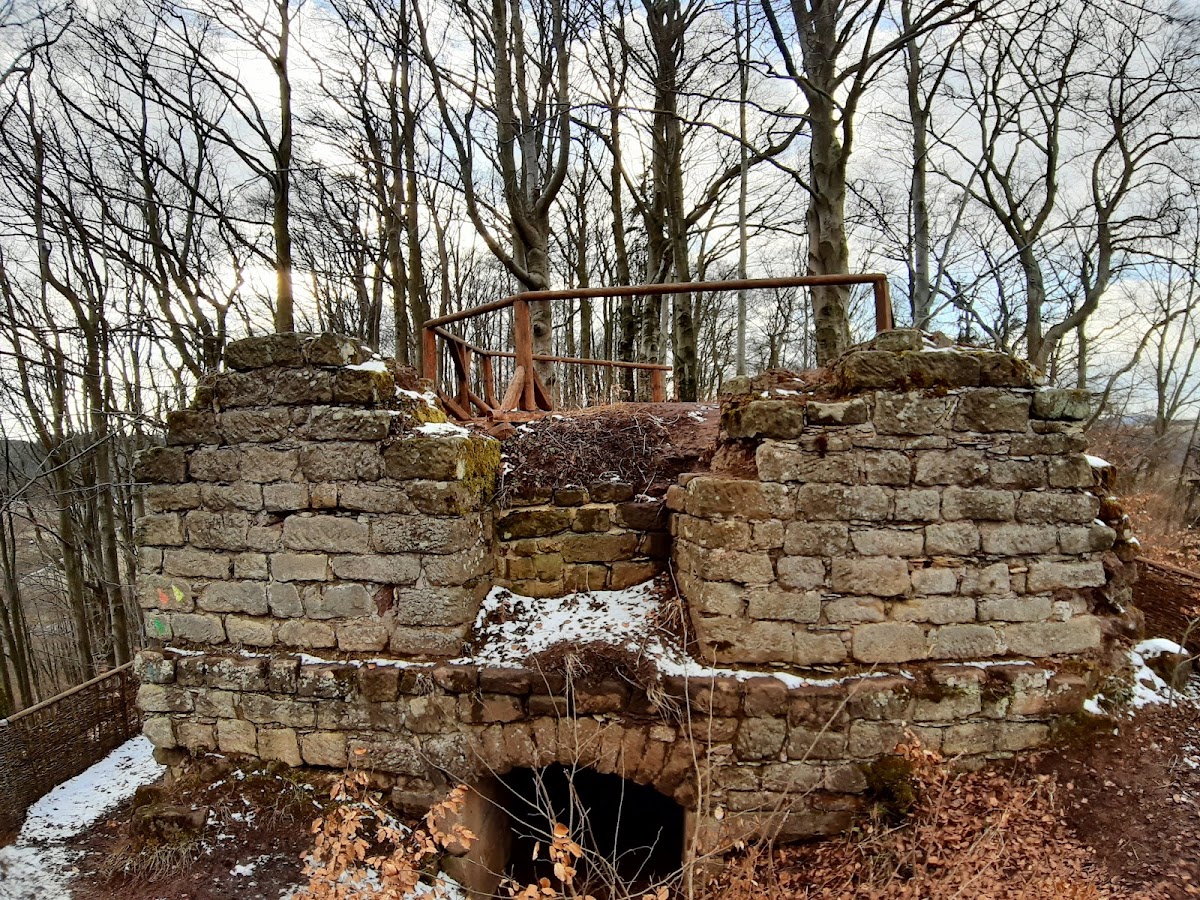
Modern preservation efforts were under way by the early 1990s. From 1991 to 2002, a rescue archaeological investigation led by Miroslava Cejpová of the East Bohemian Museum in Pardubice accompanied conservation of the masonry and improvements to the approach path. The work secured a structure beside the former castle brewery, stabilized and rebuilt a massive northern buttress, and conserved the surviving palace remains. The castle is protected as a cultural monument and is owned by the municipality of Žampach. A wooden footbridge installed in the 1970s was removed in 2011 because it had become dangerous, and a path with wooden steps crossing the moat replaced it in 2013.
Remains
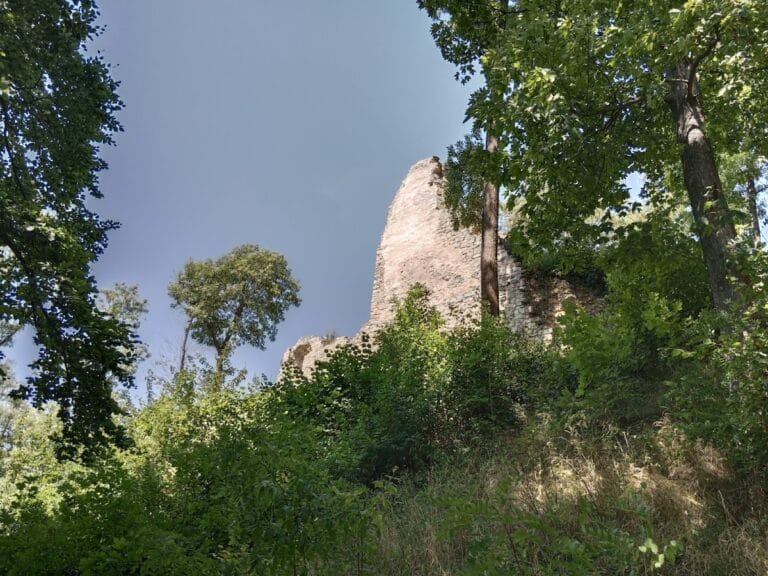
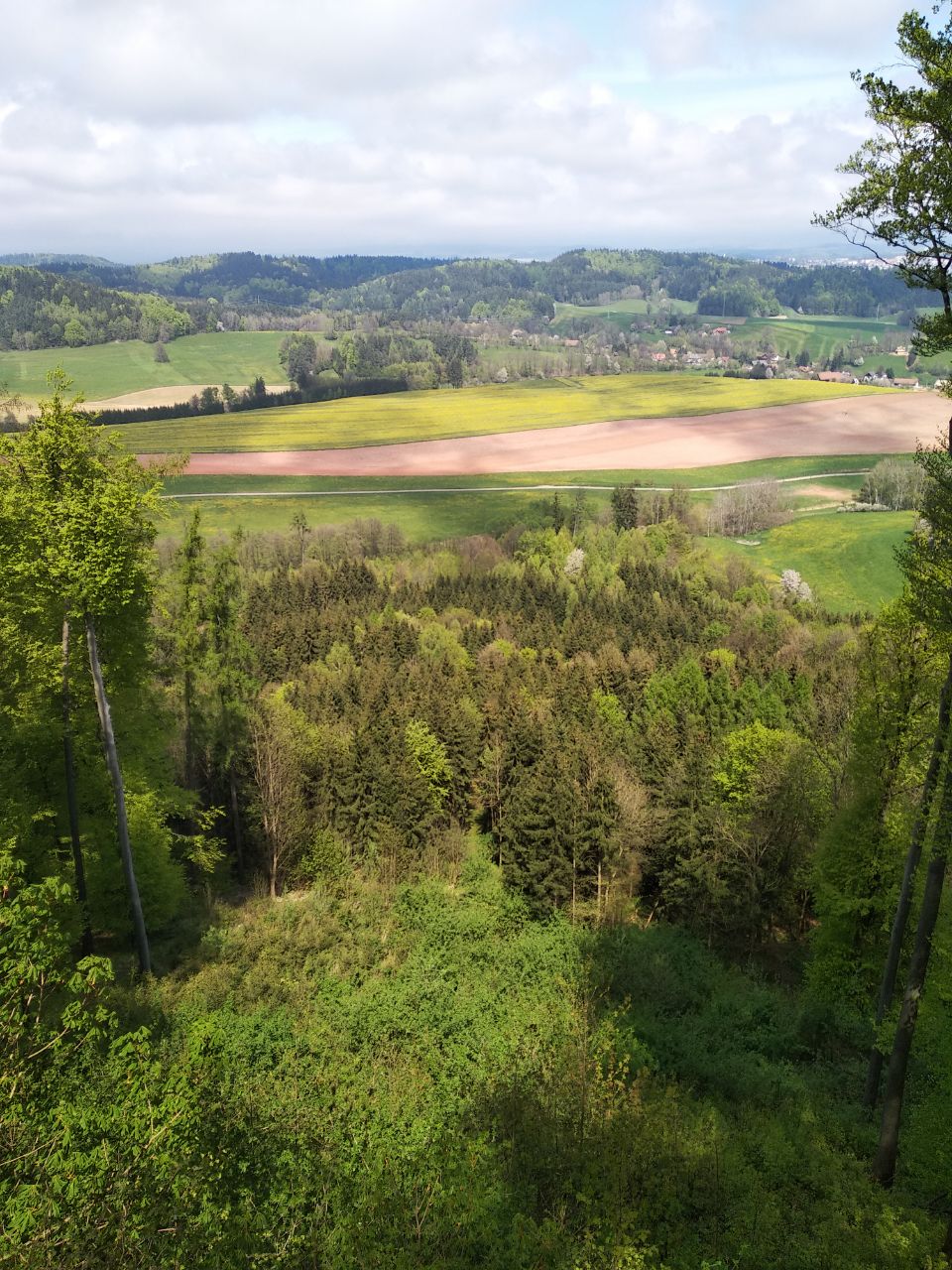
Žampach occupies a wooded, cone-shaped hill about six kilometres southwest of Žamberk. A rock-cut moat divides the summit into a western forecourt and an eastern inner castle. Stone enclosure walls, vaulted rooms, buried masonry, and fragments of economic and residential buildings preserve the main outline of the medieval complex, while later archaeological work has supplied evidence for its craft activities and construction history.
Forecourt and Approach
Forecourt Enclosure
The western forecourt was enclosed by a stone wall and probably held mainly wooden agricultural or service buildings during the earliest building phase. The inner castle was reached from the forecourt by a bridge. Because the inner area was restricted, it offered little room for a substantial courtyard. The approach road climbed the southern slope of the hill.
Later Economic Buildings
A rebuilding in the third quarter of the fifteenth century added stone structures to the forecourt, especially a brewery and a gravity-operated mill. An additional wall divided the forecourt and was intended to slow attacking forces. A new structure called the White Tower defended the approach to the gate. Stone blocks from earlier buildings were used in new and enlarged structures and also reused to strengthen the walls.
A detailed description from January 1540 portrays the forecourt buildings as mostly reduced to bare walls. The White Tower was severely damaged. The chapel had a partly collapsed roof and an injured interior, while the residential palace in the inner castle stood in a derelict condition. Archaeological work beside the former brewery later uncovered a large quantity of medieval pottery sherds.
Inner Castle and Lower Fortification
Residential Palace and Gate
The principal building of the inner castle was a transverse, tower-like residential palace. A tower may also have stood above the entrance gate. The surrounding wall enclosed the restricted inner area. The surviving palace masonry includes vaulted ground-floor spaces, sections of the northern inner-castle walls, and a conserved remnant reinforced through modern stabilization. A vaulted ground-floor remnant of the gate survives buried up to the level of its vault.
By the end of the eighteenth century, a corner stone carved with the date 1469 was reportedly visible in the remains of the tower-like palace. Related architectural fragments, including part of a portal surround and sections of window surrounds, are preserved in a lapidarium, a display collection for architectural stone fragments, and inside the Žampach château.
Chudoba Fortification
A fortification called Chudoba may have protected the lower part of the road ascending the castle hill. Its construction date is unknown. In 1540, it consisted of a relatively small residential building with an adjoining tower, surrounded by a wall and a parkan, a fortified outer strip between defensive enclosures. It was mentioned repeatedly in the later sixteenth and early seventeenth centuries, most recently in 1626.
The conventional interpretation places Chudoba at a separate location, partly on the basis of an idealized depiction of the Jesuit residence and castle ruins in the chapel of the Žampach château. A later interpretation identifies the name with the inner castle of Žampach itself, leaving the relationship between the recorded fortification and the surviving structures open to archaeological investigation.
Surviving Finds and Craft Evidence
The heavily wooded castle area retains indistinct sections of the forecourt walls, fragments of economic buildings, and parts of the perimeter wall. The conserved northern buttress and palace masonry form the clearest surviving elements of the inner castle. In 2013, fragments of technical pottery and copper sheets were recovered. These finds probably relate to the former counterfeiting workshop and provide physical evidence for the production of false coins at Žampach.