Haselburg Castle: A Medieval Hill Fortress in Bolzano, Italy

Visitor Information
Google Rating: 4.7
Popularity: Medium
Official Website: www.haselburg.it
Country: Italy
Civilization: Early Modern, Medieval European
Site type: Military
Remains: Castle
History
Haselburg is a medieval hill castle located above the Haslach district in the municipality of Bolzano, Italy. It was built in the early 13th century by the Lords of Haselberg, a noble family who named themselves after the local Haslach area. These lords served as ministeriales, or appointed officials, for the Bishopric of Trent, exercising judicial authority and lordship over the nearby Bolzano parish. In 1259, the family sold these extensive rights to Count Meinhard II of Tyrol-Gorizia in an important transaction that highlights the castle’s early political connections.
Around the year 1300, Haselburg suffered destruction, although it was partially rebuilt afterwards. The castle’s present appearance largely reflects renovations carried out in the mid-16th century under the direction of Leonhard II of Völs, a member of the Lords of Fiè family who significantly altered the structure between 1475 and 1541.
In 1549, Christoph Küepacher, serving as a councilor to Emperor Ferdinand I and secretary to Emperor Maximilian II, acquired the nearby Schloss Ried and was ennobled under the name “von Khuepach” a few years later. His son, Ferdinand von Khuepach, bought Haselburg in 1590, and the estate remained with the Küepacher family until 1730.
Following a fire sometime in the 18th or 19th century, considerable portions of the castle fell into ruin. Subsequent owners included the Counts of Sarnthein and, more recently, the Toggenburg family, who continue to possess the site.
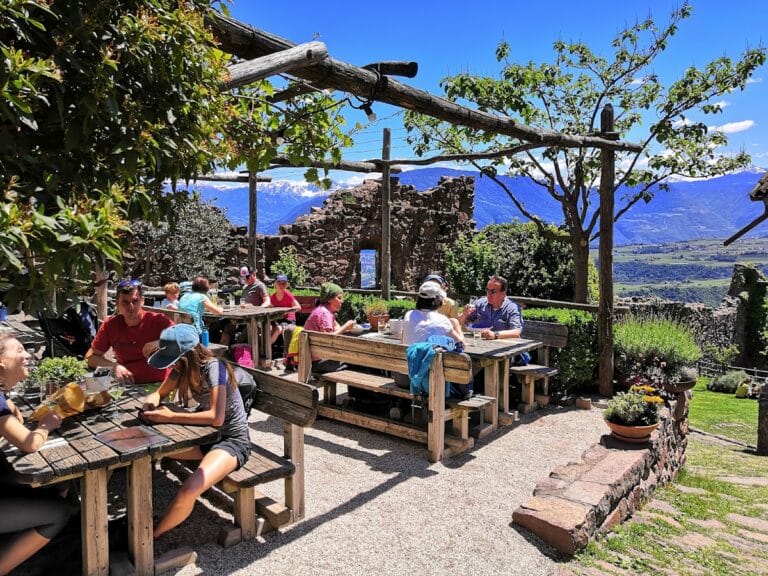
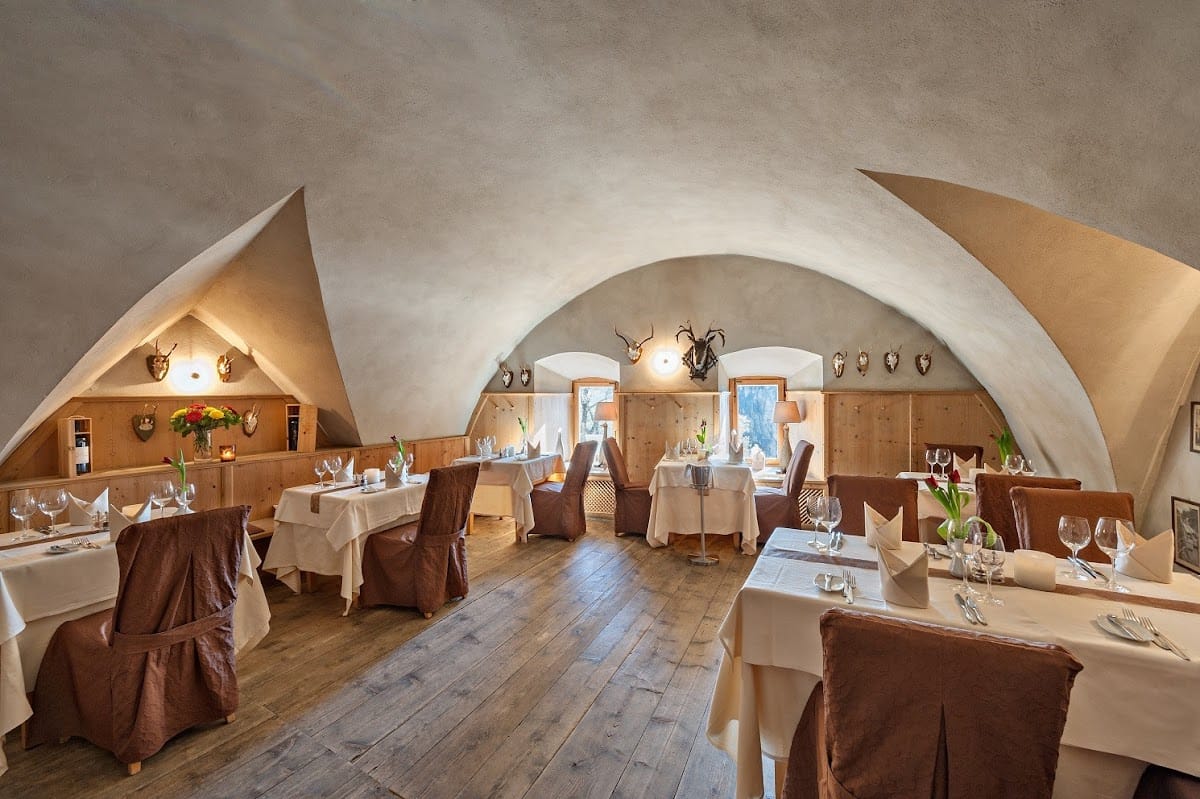
On June 18, 1933, Haselburg became the birthplace of the National Socialist “Südtiroler Heimatfront,” a movement that was renamed “Völkischer Kampfring Südtirols” in 1934. Today, the castle serves as a congress center with an adjoining restaurant, blending historic function with modern use.
Between 2001 and 2002, restoration efforts overseen by the Toggenburg family revealed archaeological traces beneath the castle, including remains of 14th-century construction discovered in an underground hall.
Remains
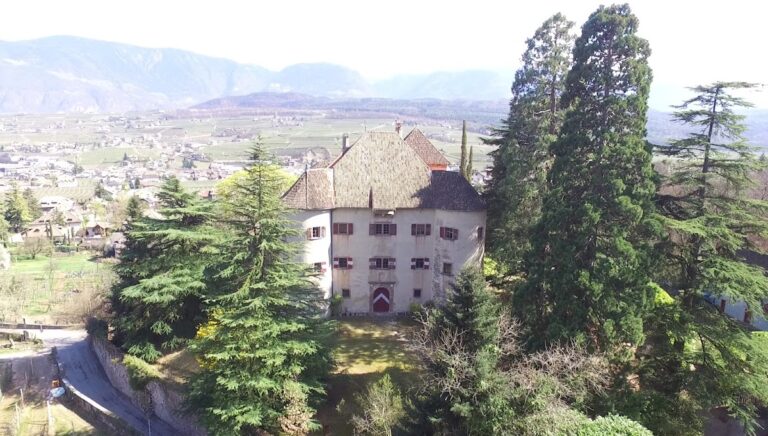
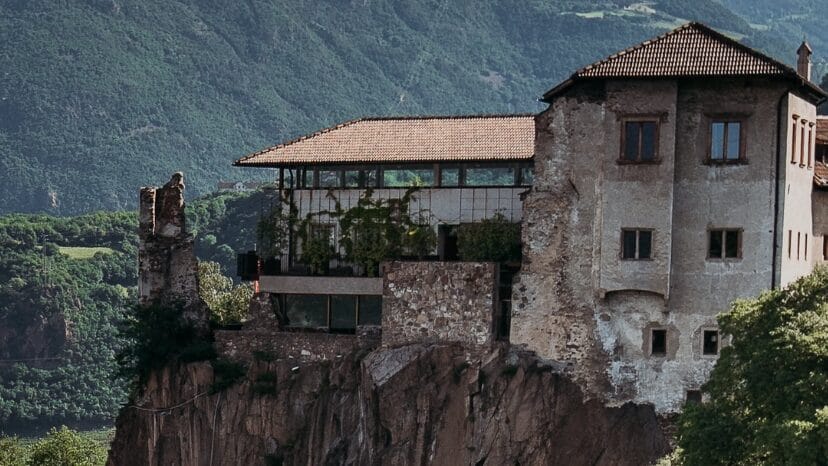
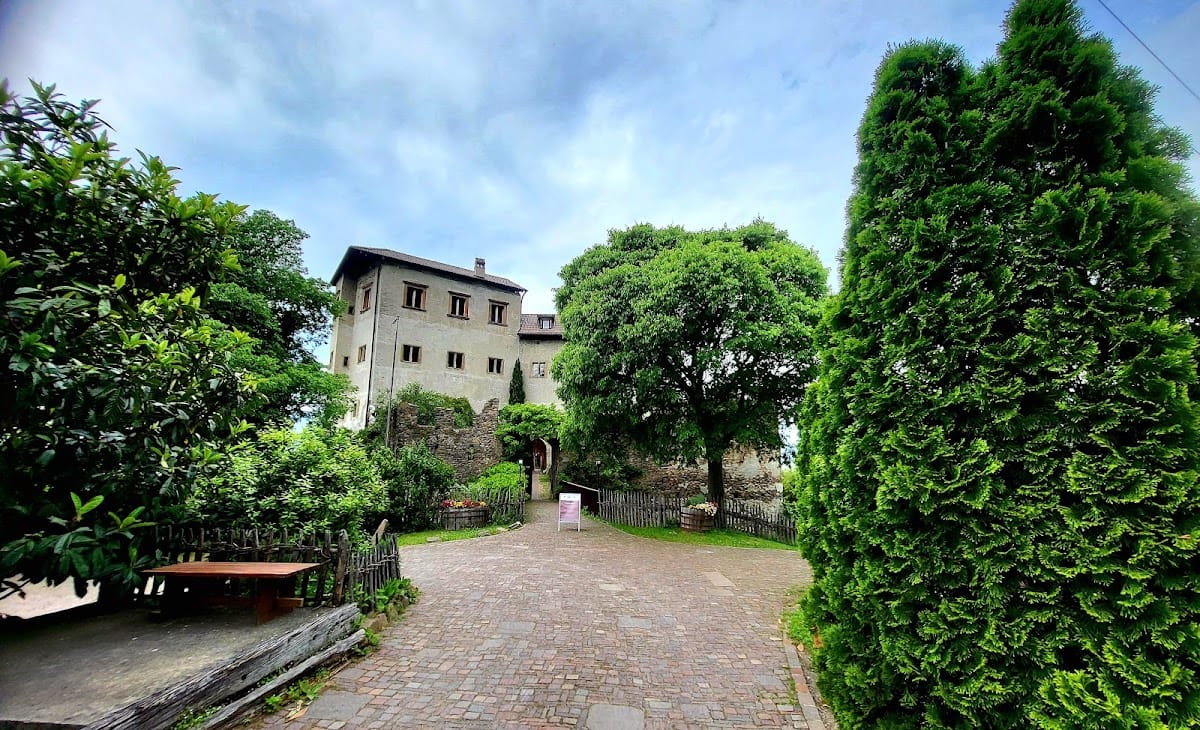
Haselburg presents as a hilltop fortress arranged in a three-winged layout, its form shaped primarily by renovations commissioned between the late 15th and mid-16th centuries by the Lords of Fiè, also known as the Völs family. This structural design creates a cohesive complex perched above the Haslach district, overlooking the municipal cemetery in Oberau and commanding views of the surrounding landscape.
A noteworthy feature introduced during the Völs family’s period of work is an artificial pond situated on the hill above the castle. This water element complements the castle’s defensive and aesthetic qualities and represents a significant landscape modification from the Renaissance period.
The interior of Haselburg once bore a series of Renaissance frescoes decorating its walls. These painted images include busts depicting ancient emperors and generals, scenes portraying episodes from their lives, and visual narratives drawn from the myth of Apollo. These artworks were created by the artist Bartlmä Dill Riemenschneider, who contributed to the castle’s cultural richness. Unfortunately, some of these frescoes were lost after the northern wing partially collapsed in 1880.
Restoration campaigns in the early 21st century focused on stabilizing and conserving the eastern and western wings of the castle, alongside reconstructing the northern wing to restore architectural coherence. Archaeological excavations carried out during this time uncovered structural remnants dating to the 14th century, particularly visible in an underground hall beneath the castle. These findings provide valuable evidence of the castle’s medieval phases and earlier building campaigns.
Together, Haselburg’s surviving elements reflect a layered history of construction, destruction, and rebuilding, combining medieval origins with Renaissance embellishments and modern conservation efforts.
Nearby sites