Castle Gandegg: A Medieval Residence and Renaissance Castle in Italy


Site at a Glance
- Rating
- 4.5
- Popularity
- Very Low
- Country
- Italy
- Primary era
- Early Modern
- External website
- Open
- Eras represented
- Medieval, Early Modern
- Civilizations
- Habsburg, Holy Roman Empire
- Site type
- Domestic
- Remains
- Castle
On this page7 sections
History
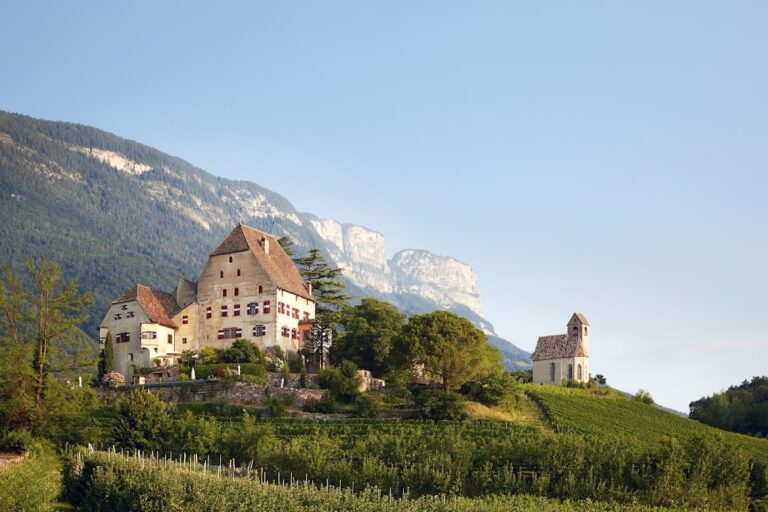
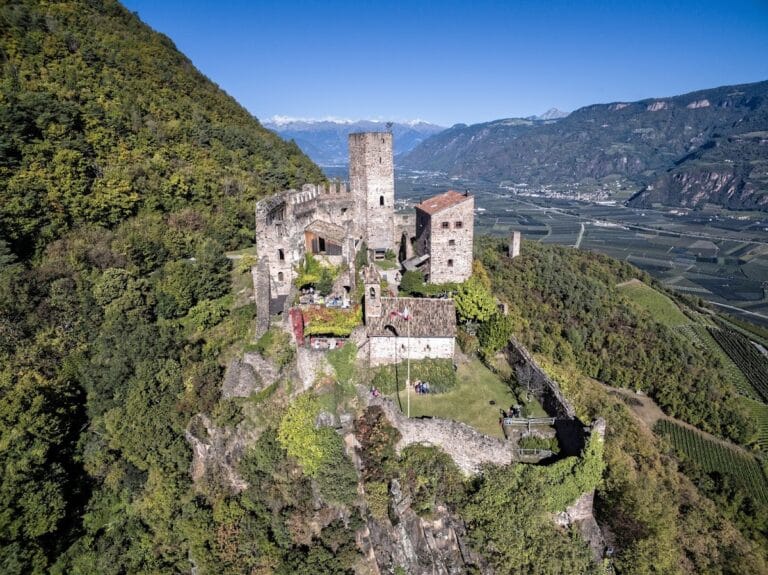
Castle Gandegg is a medieval residence in Italy, located in Pigeno in the St. Michael district of Eppan, South Tyrol. The complex developed from a residential tower erected around 1410 and was later transformed into a Renaissance castle that remained associated with the Counts Khuen von Belasi for centuries.
Legendary origins and medieval development
A legendary chronicle placed an earlier castle in the area above the road turning toward Englar. According to this tradition, a landslide destroyed it in 1001, while part of a tower supposedly remained visible. This account belongs to local historical tradition rather than a certain archaeological reconstruction.
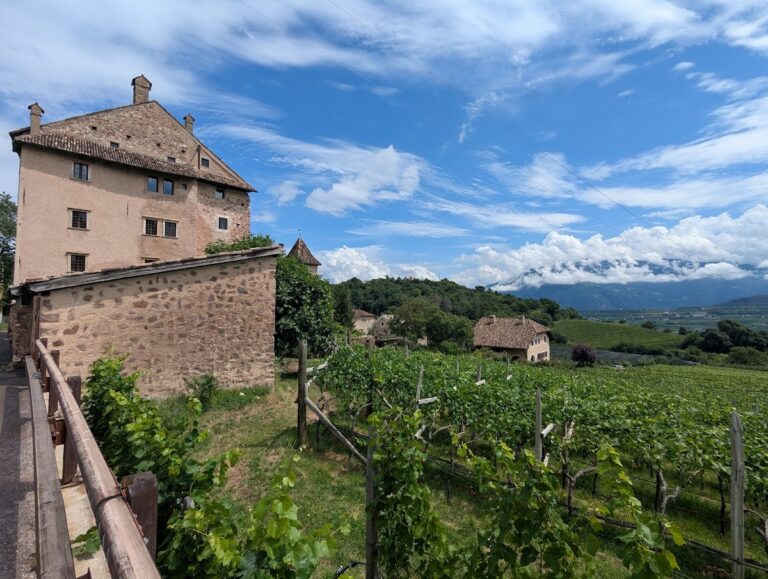
The present complex began with a medieval residential tower built around 1410. A separate tradition connects the same period with the fortification of an earlier farmstead known as the Maierhof, during conflicts between Frederick “Empty Pockets,” a Habsburg duke, and Heinrich of Rottenburg, a Tyrolean nobleman. Gandegg was recorded in 1434 as a “tower and dwelling.” The Lords of Annenberg granted it hereditarily to Konrad Herl in exchange for an annual rent of eight Bernese pounds, a historical currency associated with Bern. They appear to have treated the property as a source of revenue rather than as a personal residence, leasing it to peasants.
Like the Altenburg jurisdiction, an administrative and legal district, Gandegg was pledged at different times to Tyrolean noble families. In 1488, Marquard von Freudenstein renewed its enclosing walls. Jakob Fuchs von Fuchsberg sold Gandegg to Caspar Pernstich in 1510, and Pernstich was buried in the parish church of St. Paul’s Conversion in 1540.
Renaissance transformation
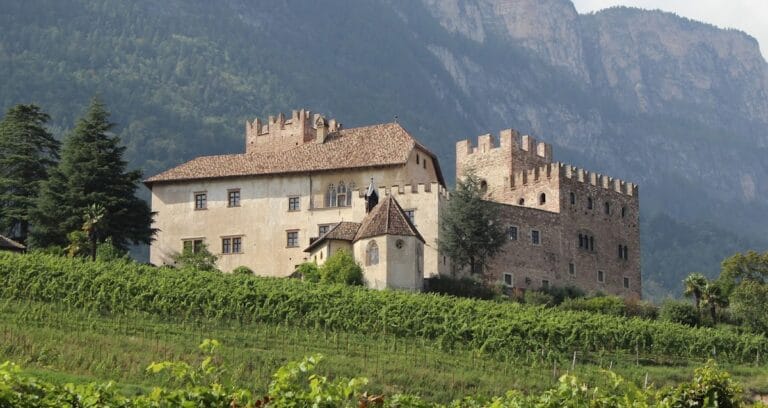
From 1534, Gandegg was held as a fief by Blasius Khuen, a Lower Austrian regimental councillor, meaning an official serving on a governing council associated with a military regiment. Between 1550 and 1558, he had a new Renaissance complex built around the older medieval tower. Renaissance architecture revived classical forms and proportions, and the rebuilding gave Gandegg the principal arrangement that survives today. The castle then remained in the possession of the Counts Khuen von Belasi for centuries.
Chapel and modern protection
The castle chapel of Maria Schnee, a devotional title meaning “Mary of the Snows” for the Virgin Mary, was enlarged and remodelled in the Baroque style by 1698. The work added a dome and lantern, a small structure at the top of a dome that can admit light. Castle Gandegg has been legally protected as a monument since 21 March 1951. It remains privately owned and is not generally open to the public.
Remains
Castle Gandegg consists of a square, three-storey main building enclosed by perimeter walls. Four circular towers occupy the corners of the Renaissance complex, while the original medieval tower is incorporated into its southern side. The castle is accompanied by a landscape park and service buildings, preserving the relationship between the principal residence, its enclosing structures, and its associated estate facilities.
Renaissance residence and towers
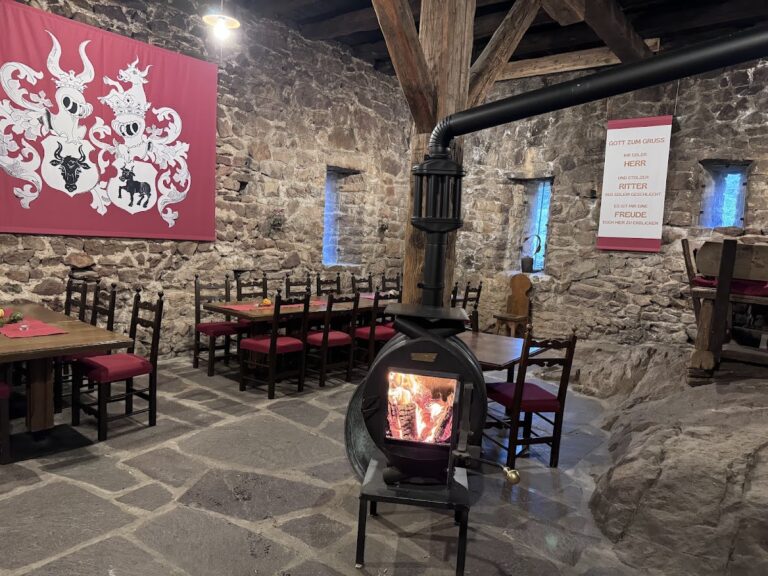
The main castle reflects the rebuilding carried out between 1550 and 1558. Its rooms include Renaissance coffered ceilings, which are divided into recessed decorative panels, as well as wooden doors from the sixteenth and seventeenth centuries. Inlaid doors and stoves from the same periods add to the surviving interior fittings. The medieval tower remains integrated into the southern side rather than standing as an independent structure.
Baroque chapel
The chapel of Maria Schnee retains Baroque stucco decoration and frescoes beneath its domed interior. Its early Baroque furnishings include a Humpel pipe organ from the beginning of the seventeenth century and an altar bearing a Marian image made by Jakob Poder of Kaltern. The ceiling fresco in the dome depicts an angel concert, combining painted decoration with the chapel’s later architectural form.