Ducal Palace of Nevers: A Historic Landmark in Central France

Visitor Information
Google Rating: 4.4
Popularity: Medium
Country: France
Civilization: Early Modern, Medieval European, Modern
Site type: Domestic
Remains: Palace
History
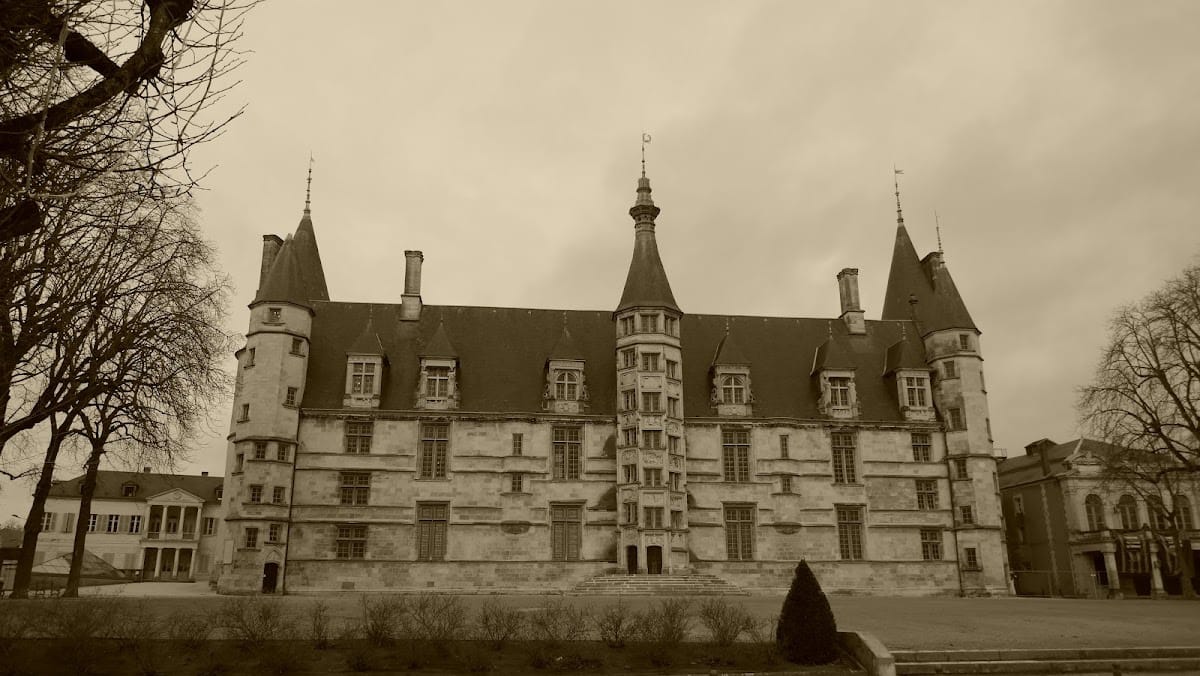
The Ducal Palace of Nevers is located in the city of Nevers, within the Nièvre department in central France. It stands prominently on a hill overlooking the old town center and the Loire River. The palace was built by the French nobility during the late Middle Ages and Renaissance periods.
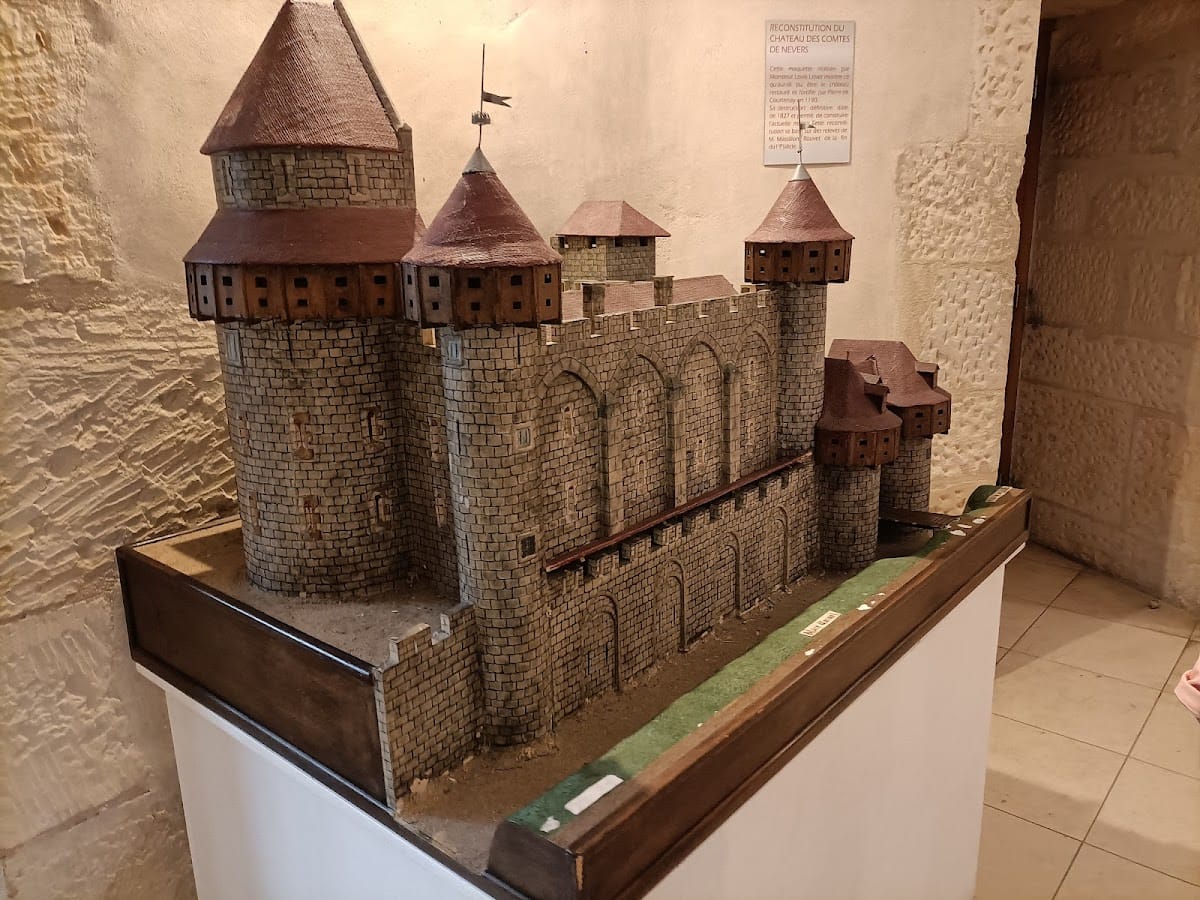
Construction began in the 15th century to replace an earlier fortress on the site. Jean de Clamecy, Count of Nevers, commissioned the initial building, which included two large towers at the rear. In the 16th century, the palace underwent significant remodeling under the Clèves family, who added a central turret featuring a grand staircase. This renovation gave the palace its distinctive Renaissance character.
In 1810, ownership of the palace transferred from the ducal family to the local city and department authorities. The building was then shared between the town hall and the court of justice until 1850. Afterward, the judiciary took full control, adapting the interior for legal functions and redecorating the façade with sculptures by François Jouffroy.
During the late 1970s, the city launched a restoration program to preserve the palace as a historic monument. The 19th-century room layout was maintained, but a monumental staircase replaced the western apartments, and a new lateral entrance was added using modern materials. The restoration continued into the 1980s under the direction of Pierre Bérégovoy.
Archaeological excavations during the 1988 restoration uncovered numerous artillery pieces, including a rare 14th-century veuglaire, a type of early cannon. This artifact is now preserved in Nevers’ municipal archaeological depot. On May 4, 1993, President François Mitterrand delivered a notable eulogy for Pierre Bérégovoy in front of the palace, marking its continued importance in French public life.
Remains
The Ducal Palace of Nevers features a layout combining medieval and Renaissance architectural elements. The oldest parts are the two large rear towers dating from the 15th century, constructed as part of the original fortress replacement. These towers are built with traditional stone masonry and have retained their structural integrity.
The palace’s façade, remodeled in the 16th century, displays a wide ochre-colored Renaissance front framed by polygonal turrets. Slate roofs cover the building, maintaining harmony with the façade’s proportions. The central turret houses a grand staircase added during the Clèves family renovation, serving as a key interior feature.
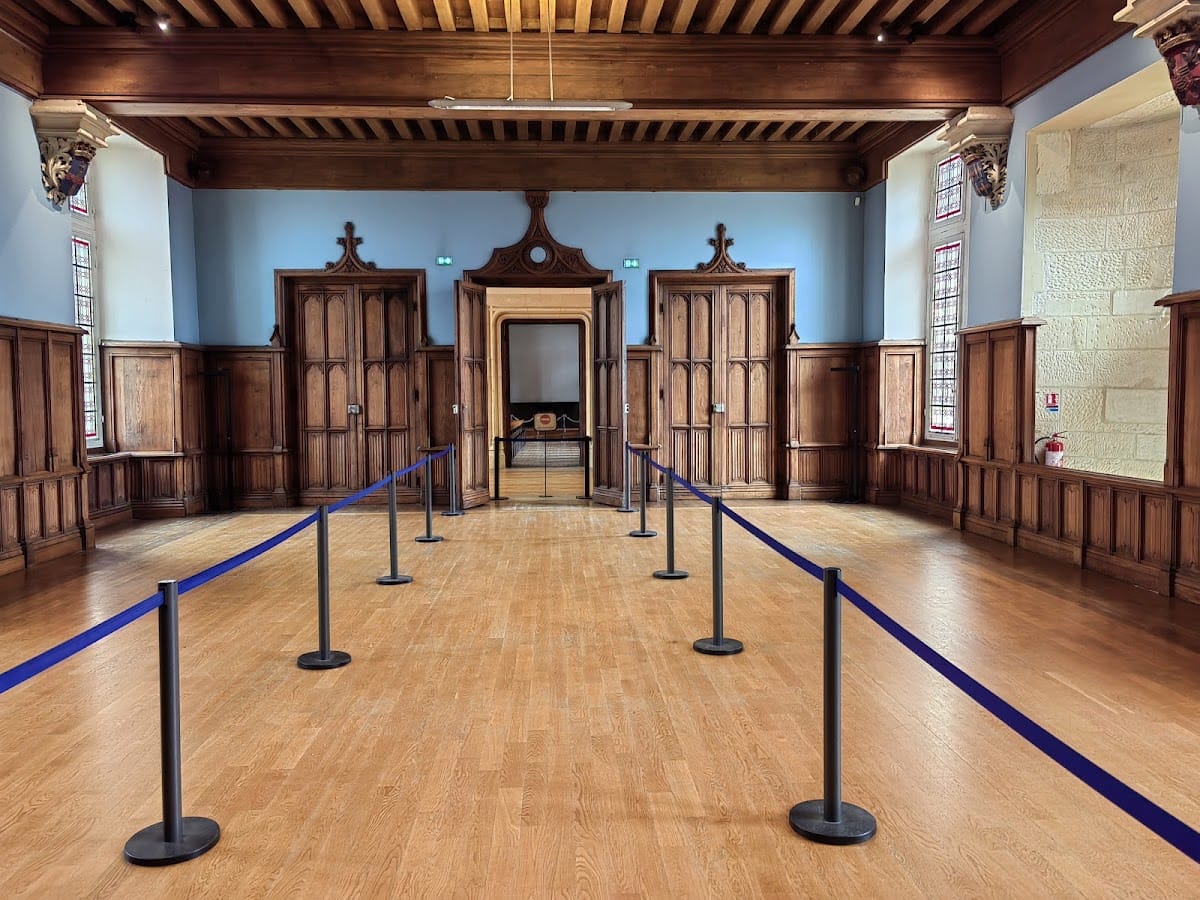
In the 19th century, the interior was extensively reconfigured to serve judicial purposes. New decorative elements were introduced, including sculptures on the façade by François Jouffroy. These sculptures differ from the original Renaissance decorations but remain integral to the palace’s historic character.
The 1980s restoration preserved the 19th-century room arrangement while introducing a monumental staircase that replaced the western apartments. A new lateral entrance was created using contemporary materials, carefully integrated with earlier decorative details.
The basement contains a permanent exhibition on Nevers’ history, supported by modern museography. Archaeological work during restoration revealed numerous artillery pieces, notably a unique 14th-century veuglaire cannon. This piece is conserved in the municipal archaeological depot, highlighting the site’s military heritage.
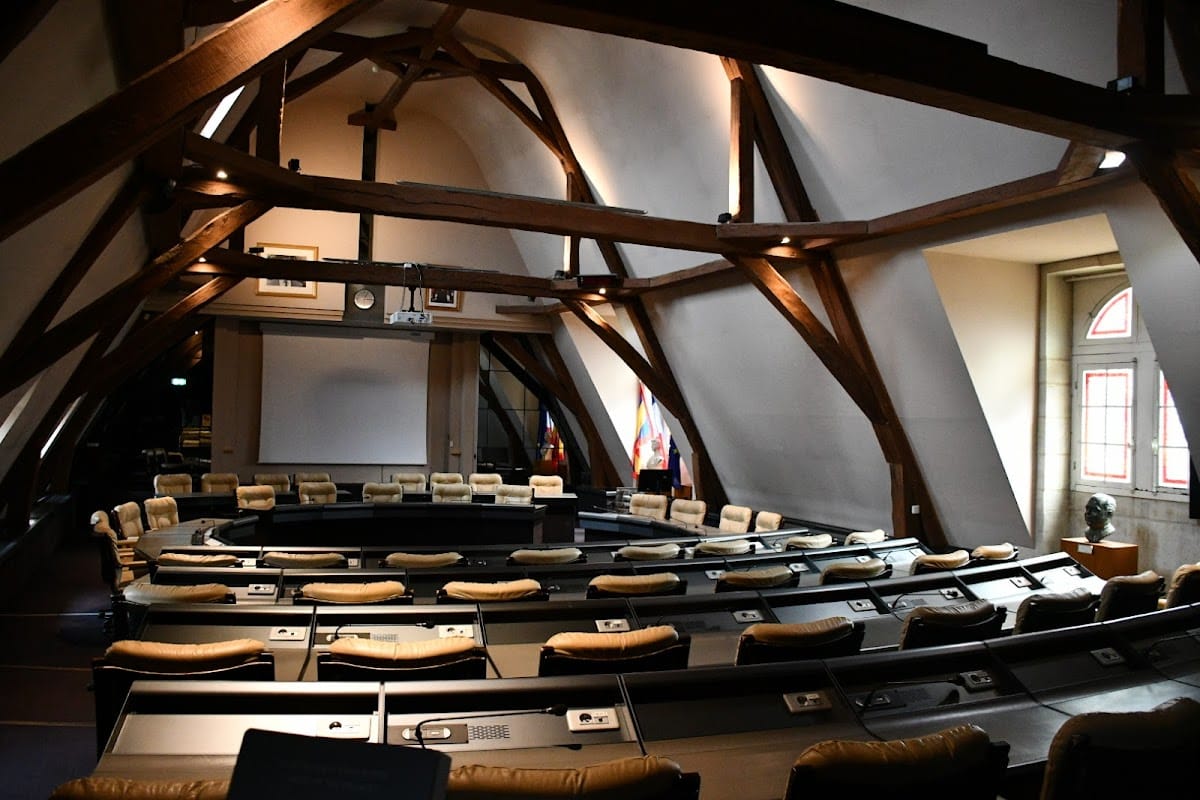
Today, the palace houses municipal offices, exhibition spaces, a tourist office, and an aquarium dedicated to fish from the Loire River, reflecting its adaptive reuse while preserving its historical fabric.
Nearby sites