Dubingiai Castle: A Historic Lithuanian Fortress and Noble Residence
Visitor Information
Google Rating: 4.7
Popularity: Low
Official Website: asvejosparkas.lt
Country: Lithuania
Civilization: Early Modern, Medieval European
Site type: Military
Remains: Castle
History
Dubingiai Castle is located in the municipality of Dubingiai, Lithuania, and was originally built by the medieval Lithuanian state. Its history reaches back to the 14th century when the site first appears in written records. Initially, it likely consisted of a wooden fortress situated on an island hill in what was then Lake Asveja. This early stronghold protected an important route to Vilnius, guarding against attacks from the Livonian Order.
In the early 15th century, Grand Duke Vytautas the Great undertook the construction of a new castle on the site, adding a wooden Catholic church within the castle courtyard between 1412 and 1413. During this period, Dubingiai Castle grew in strategic and religious significance. Over time, ownership transferred to the Radziwiłł family’s Biržai-Dubingiai branch, who held the castle from the 15th century onward. They repeatedly rebuilt the fortification, adapting and enhancing it until the early 17th century.
A notable chapter in the castle’s history occurred in 1547–1548 when Queen Barbara Radziwiłł resided there for approximately five months. Around 1565, the castle’s Catholic church transitioned to serve the Evangelical Reformed community, reflecting broader religious shifts of the time. In 1620, Janusz Radziwiłł replaced the original wooden church with a Renaissance-style stone church, which also functioned as the family mausoleum. This church was later destroyed by fire in 1735.
Throughout the late 17th century, Dubingiai Castle remained the main residence of the Biržai-Dubingiai Radziwiłł line until their relocation to Biržai Castle. The castle endured looting and confiscation during the Polish-Swedish wars but was eventually restored to the Radziwiłł family. By the middle of the 18th century, however, the castle had fallen into disuse and ruin.
Modern archaeological interest began in 1939 with investigations led by the Vytautas the Great Culture Museum. Additional surveys in 1969, 1979, and 1987 expanded knowledge of the site. From 2003 to 2011, Vilnius University archaeologists conducted extensive excavations, uncovering the remains of the church, the palace foundations, burial crypts, and the remains of prominent Radziwiłł family members. A significant event took place in 2009 when the remains of key Radziwiłł figures, including Mikołaj “the Black” Radziwiłł and Barbara Radziwiłł, were ceremoniously reburied at Dubingiai, highlighting the castle’s importance in Lithuanian heritage.
Remains
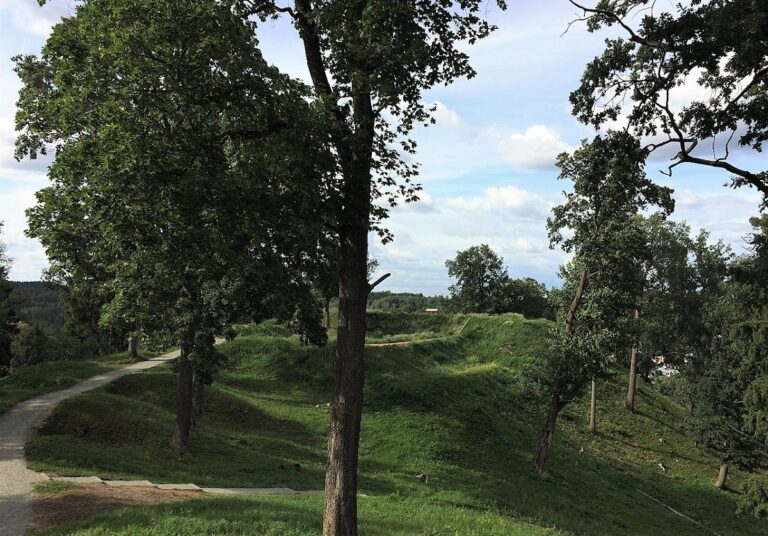
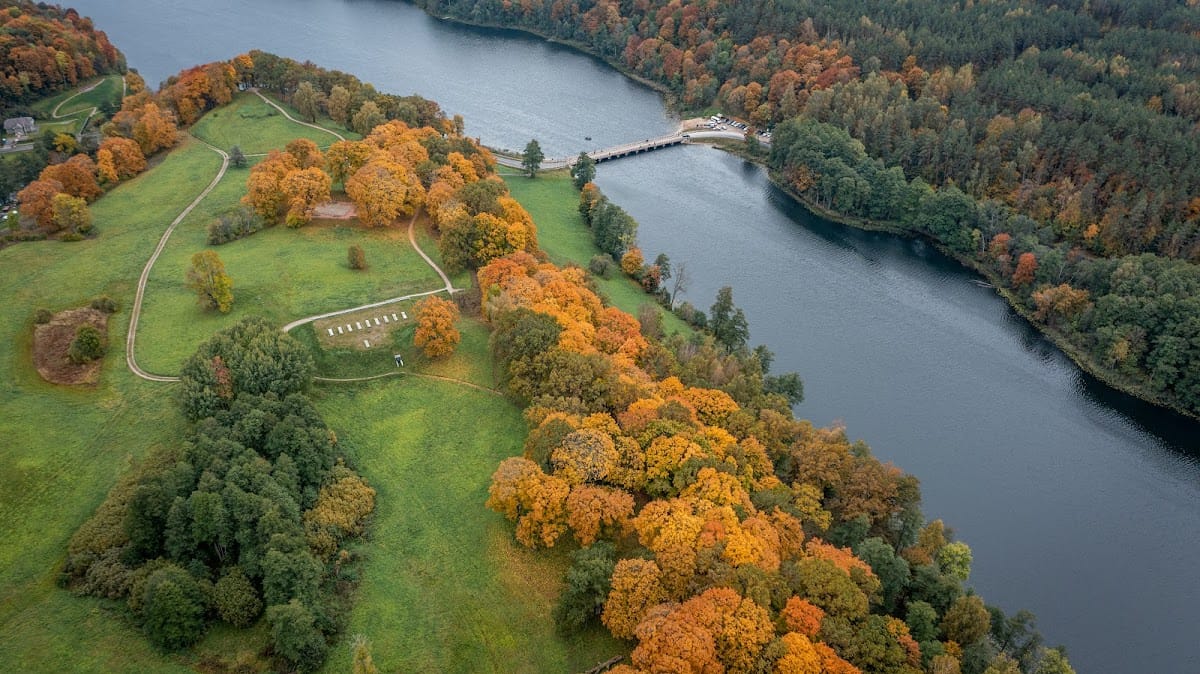
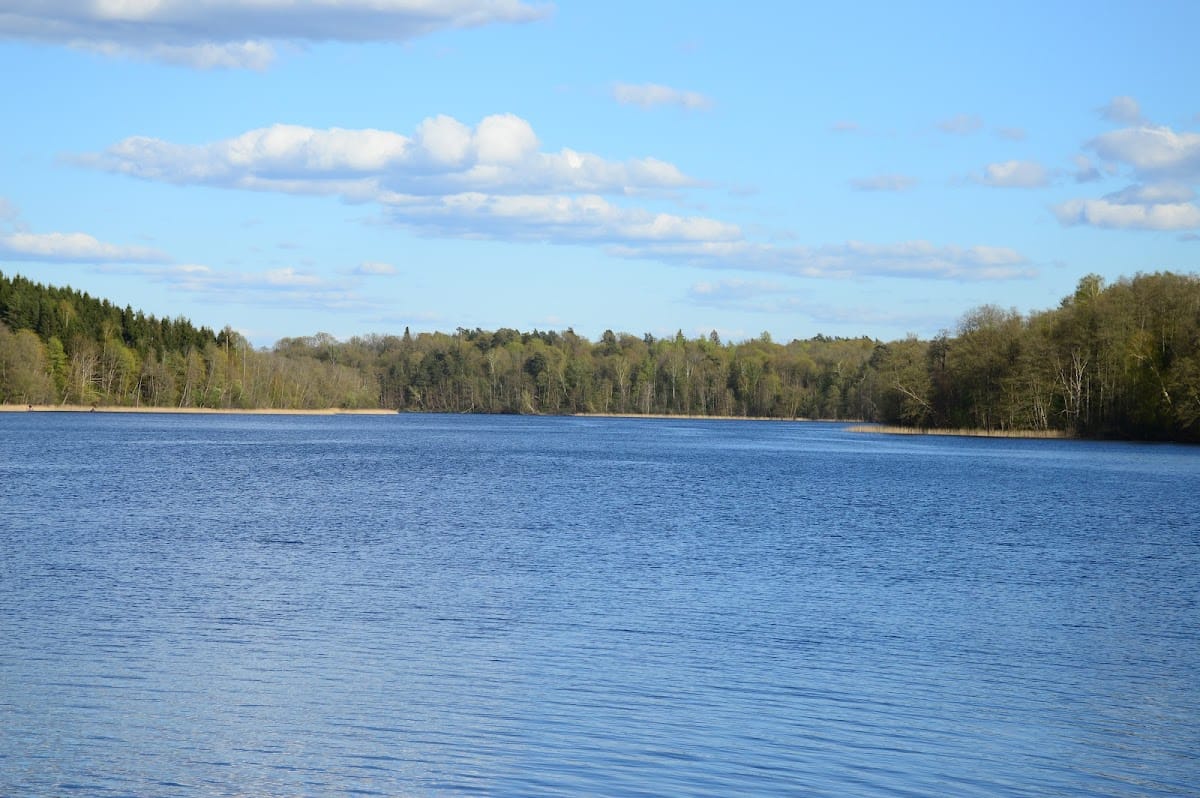
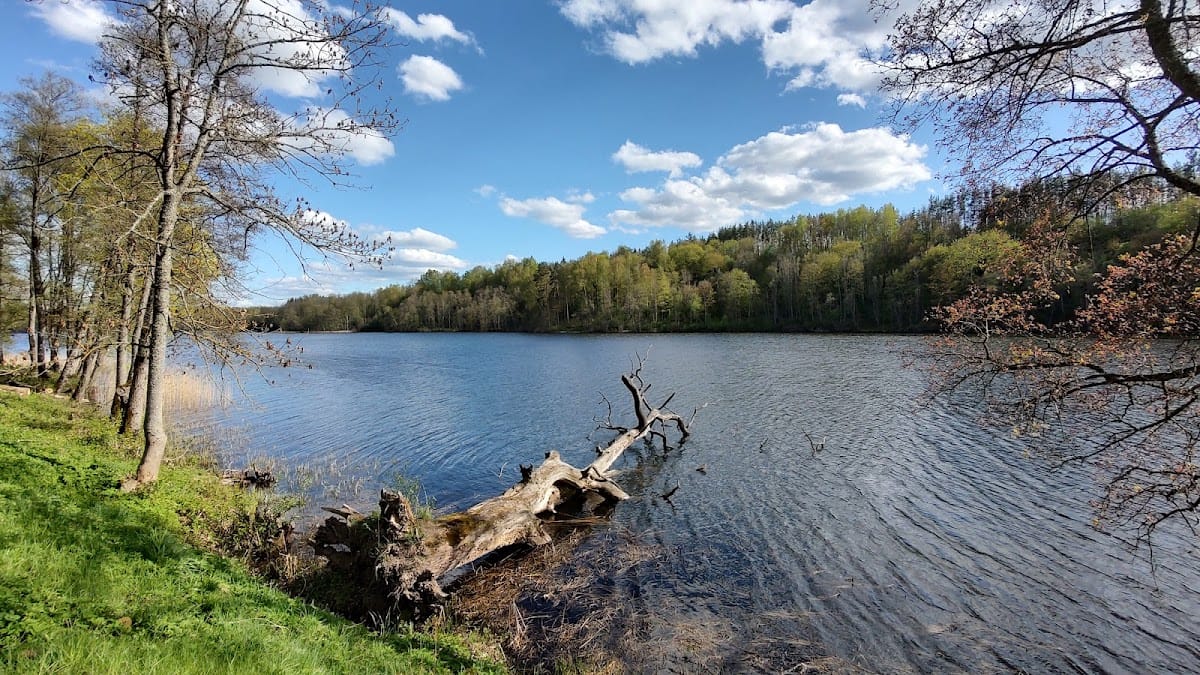
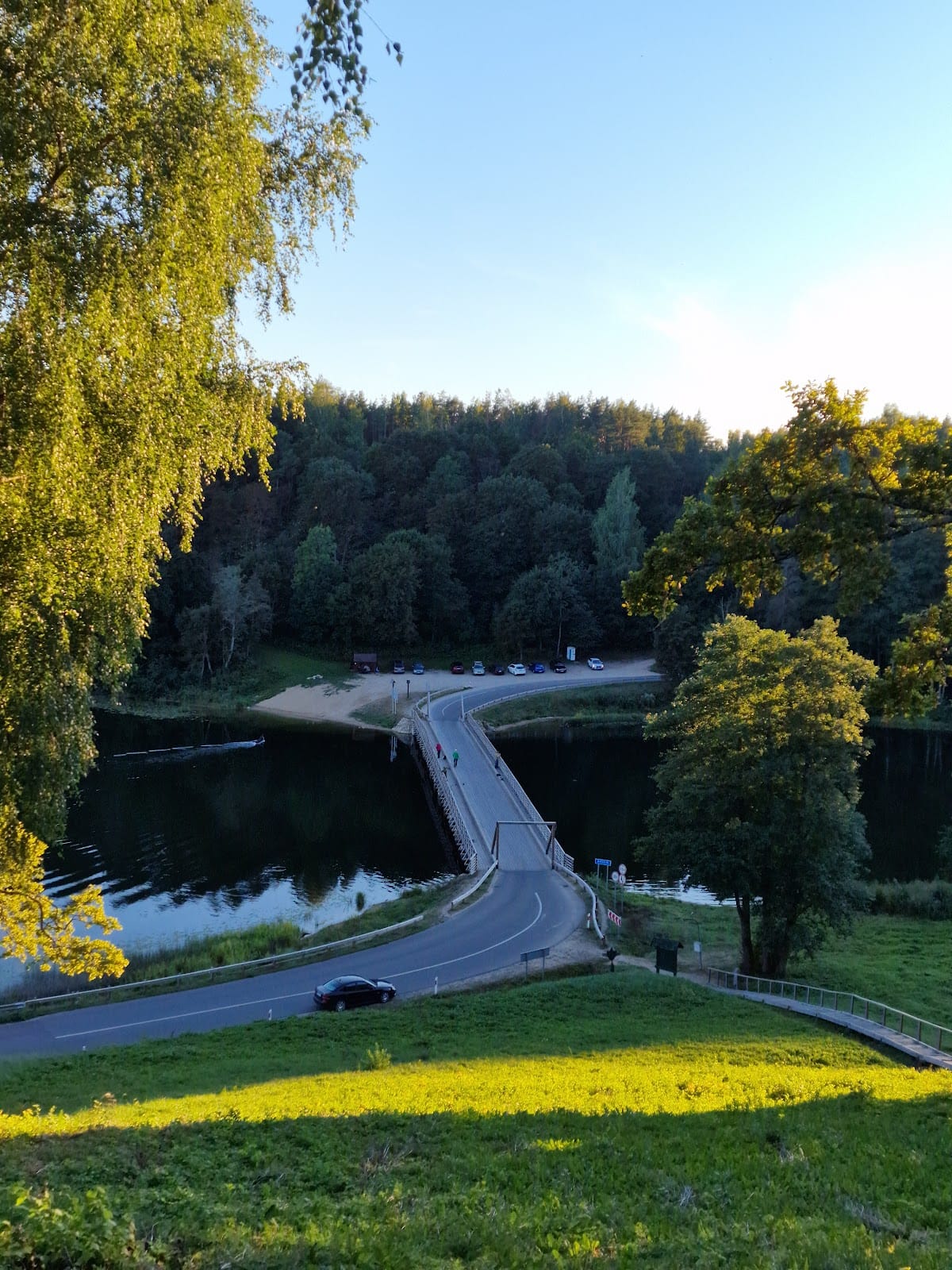
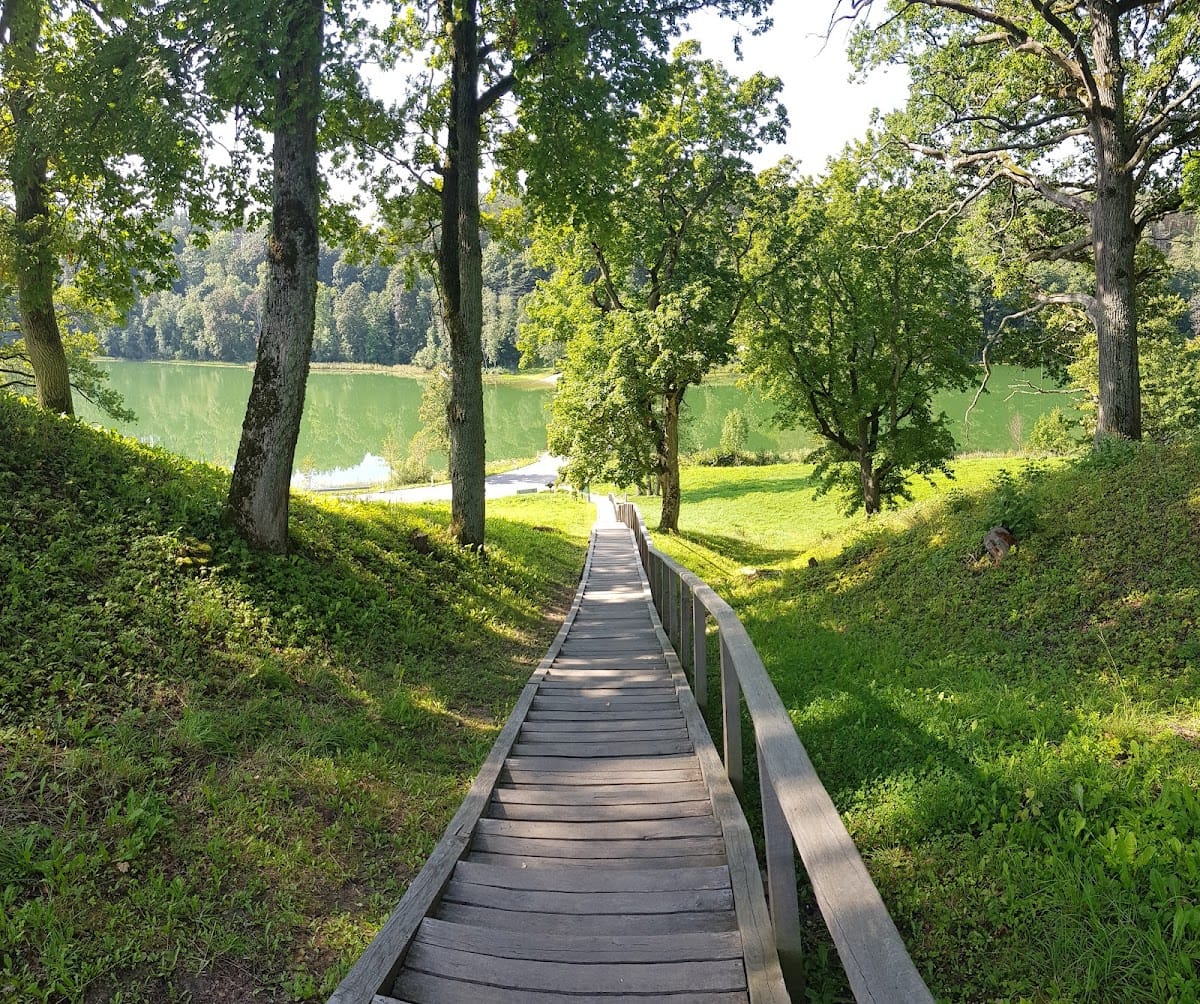
The remains of Dubingiai Castle occupy an extensive site on a hill formerly surrounded by Lake Asveja, now a peninsula known as Pilies Kalnas or Castle Hill. The area covers approximately 500 meters in length and varies between 100 to 220 meters in width, making it one of the largest castle mounds in Lithuania. Originally, the castle complex included wooden and later masonry structures arranged to provide both defense and residential functions.
Among the surviving archaeological features are the foundations of a multi-story Radziwiłł palace, depicted in 19th-century drawings with a tall tower and substantial walls. The palace’s architectural style shares similarities with other Radziwiłł estates in Nesvizh, Vilnius, and Kėdainiai, demonstrating Renaissance influences adapted locally. Excavations have revealed masonry walls and cellars that trace the layout and scale of these residential buildings from the 15th to 17th centuries.
The most notable religious structure at the site is the Evangelical Reformed church built in stone around 1620 by Janusz Radziwiłł. This church, constructed in Renaissance style, also served as the Radziwiłł family mausoleum. Archaeologists uncovered its foundations along with cellars and a burial crypt containing human remains. The crypt included a roughly 1.5 by 1 meter, box-shaped sarcophagus housing eight individuals carefully arranged according to anatomical order, reflecting respectful burial practices.
Remnants of defensive earthworks, such as ramparts, are visible on the southern and southwestern slopes of the hill. These earthworks would have augmented the castle’s natural defences, guarding the site against attack. While the castle’s wooden structures have long decayed, the masonry ruins remain partially preserved, conserving key elements of the palace and church.
Excavations also yielded various artifacts linked to the site’s historical inhabitants, including fragments of black polished marble slabs likely used in decoration, floor and roof tiles, nails, a 1661 copper shilling minted under King John II Casimir, and a ring. These finds contribute valuable insights into the life and status of the Radziwiłł family and the castle’s material culture.
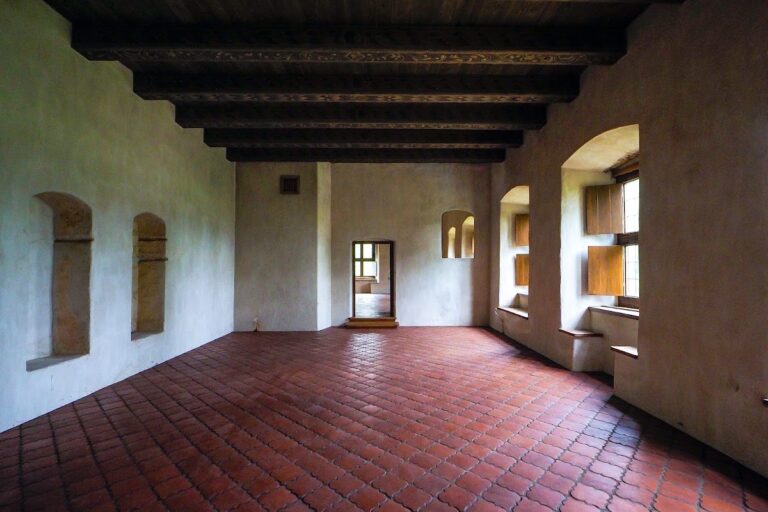
Today, Dubingiai Castle stands largely as a collection of foundations and partial cellars, with ongoing archaeological research and efforts to preserve its remains. Its extensive ruins continue to provide a window into Lithuania’s medieval and early modern noble residences and religious history.
Nearby sites