Devín Castle: A Historic Fortress in Slovakia
Visitor Information
Google Rating: 4.7
Popularity: High
Official Website: www.hraddevin.mmb.sk
Country: Slovakia
Civilization: Early Modern, Medieval European, Roman
Site type: Military
Remains: Castle
History
Devín Castle is located in the municipality of Devín within modern Slovakia and stands on a site that has witnessed human activity since prehistoric times. The castle’s origins trace back to early European civilizations, with evidence of settlement from the Neolithic Age through several key historical periods.
The earliest human presence at Devín dates to the Neolithic period, approximately 5000 to 4000 BCE. Over time, the site was fortified during the Bronze and Iron Ages, hosting inhabitants of the Hallstatt culture in the 7th to 6th centuries BCE. From the 3rd century BCE onward, Celts associated with the La Tène culture occupied the area, leaving behind material traces of their settlement. This long continuity of habitation illustrates the location’s enduring importance.
During the Roman era, from the 1st to the 4th centuries CE, the site became a military camp integrated into the frontier defense system known as the Limes Romanus. The Romans constructed stone buildings, including a sizeable structure containing four rooms and a semicircular apse, likely connected to conflicts such as the Marcomannic Wars between 166 and 180 CE. Roman activity in the region ended around 400 CE, as pressures on the empire’s borders intensified.
In the 9th century, Devín rose in prominence as part of the Great Moravian Empire. It functioned as a fortified center and political hub, particularly under Prince Rastislav, who is known to have reinforced the site against Frankish incursions. The castle is recorded in the Annales Fuldenses of 864 CE under the name “Dowina.” Archaeological discoveries have revealed the foundations of a Great Moravian church featuring a distinctive trefoil apsidal design and decorative frescoes. The castle formed part of a broader defensive network including smaller hill forts nearby, securing the northern approaches through the area known as the Devín Gate.
Following the collapse of Great Moravia, the fortress continued to serve as a border stronghold within the Kingdom of Hungary. Its rugged terrain prevented it from developing into a major town, though it remained strategically valuable. The stone castle that stands in ruins today began construction in the late 12th or early 13th century, replacing earlier fortifications with a robust hexagonal tower and forecourt.
Throughout the Middle Ages, the castle changed hands among noble families. The Garay family, prominent in the 15th century, expanded the complex with Gothic residential buildings and strengthened its defenses. In the 16th century, ownership passed to the Báthory family, who introduced Renaissance architectural elements and further improved the fortifications. From 1635 onward, the Pálffy family administered the castle through stewards but did not reside there, overseeing only modest upkeep.
Devín Castle suffered destruction in 1809 when Napoleonic forces retreating after the Siege of Pressburg set it ablaze. It was not rebuilt and gradually fell into ruin. In the 19th century, the castle became a powerful emblem of Slovak national identity and Great Moravian heritage. Slovak intellectuals, including Ľudovít Štúr, viewed it as a symbol of their cultural history. In 1896, the Hungarian government erected a monument on the castle hill commemorating the Árpád dynasty, which was later demolished by Czechoslovak legionnaires in 1921.
Scientific archaeological work at Devín began in the early 20th century, led by figures such as Josef Zavadil and I. L. Červinka. Subsequent excavations throughout that century, overseen by researchers like Ján Eisner and Ján Dekan, unveiled layers from Roman, Great Moravian, and medieval times. Since 1961, Devín Castle has been protected as a national cultural monument and forms part of Bratislava’s city museum, where efforts continue to conserve the ruins and present their history.
Remains
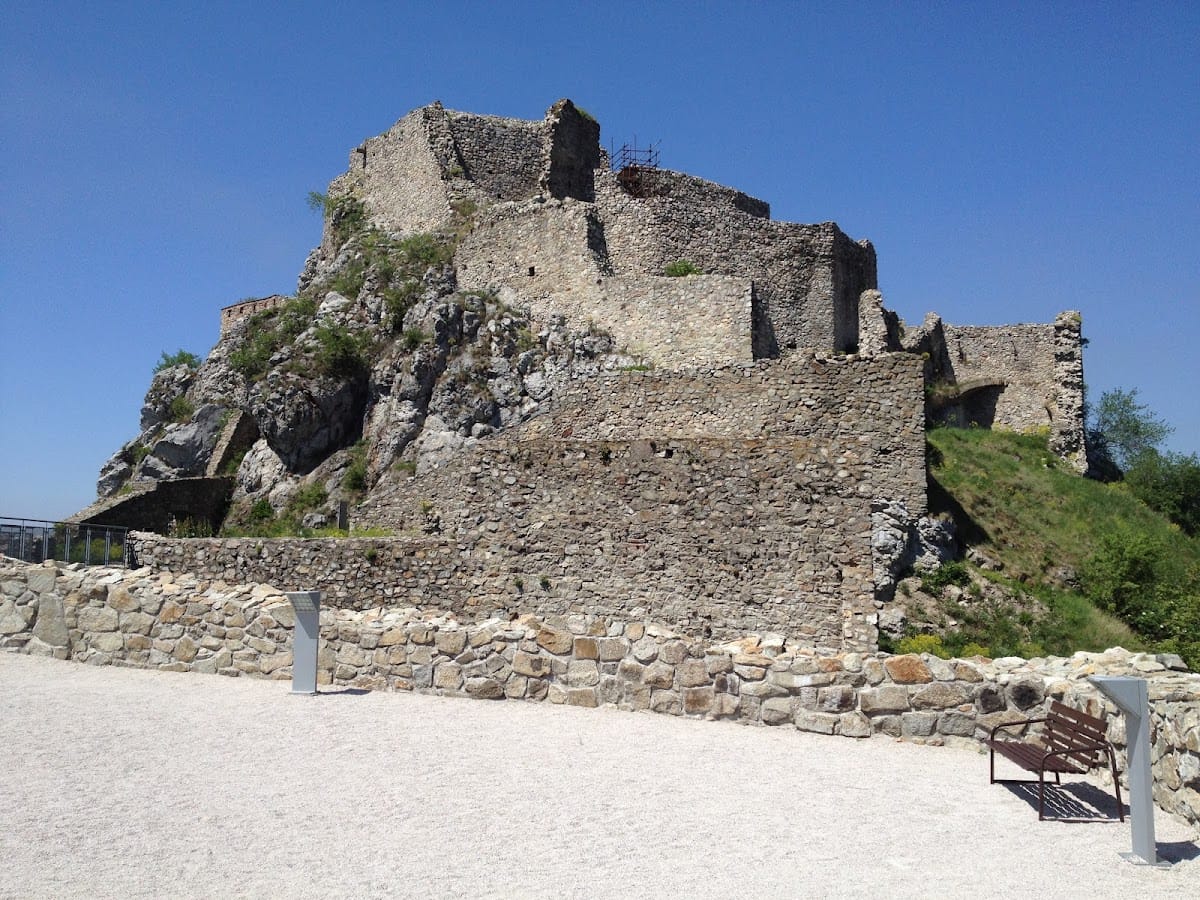
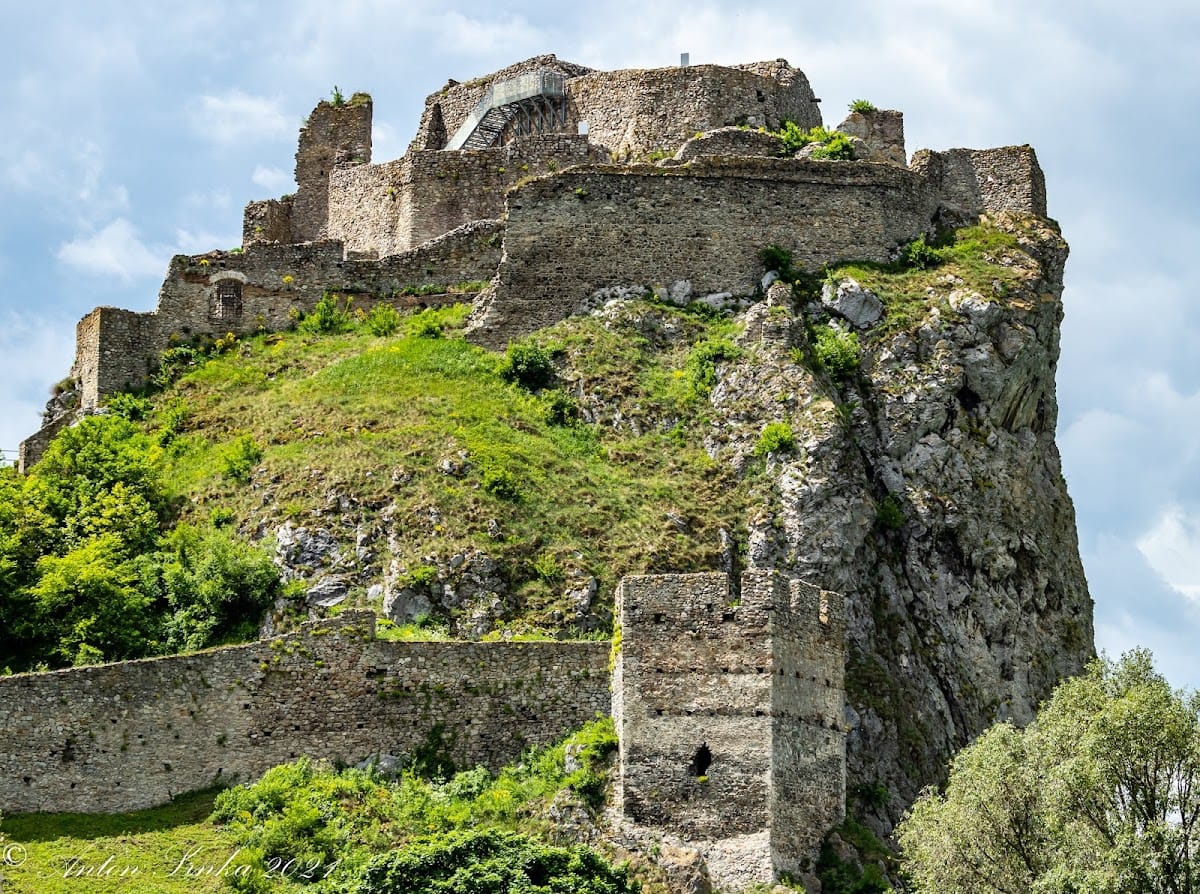
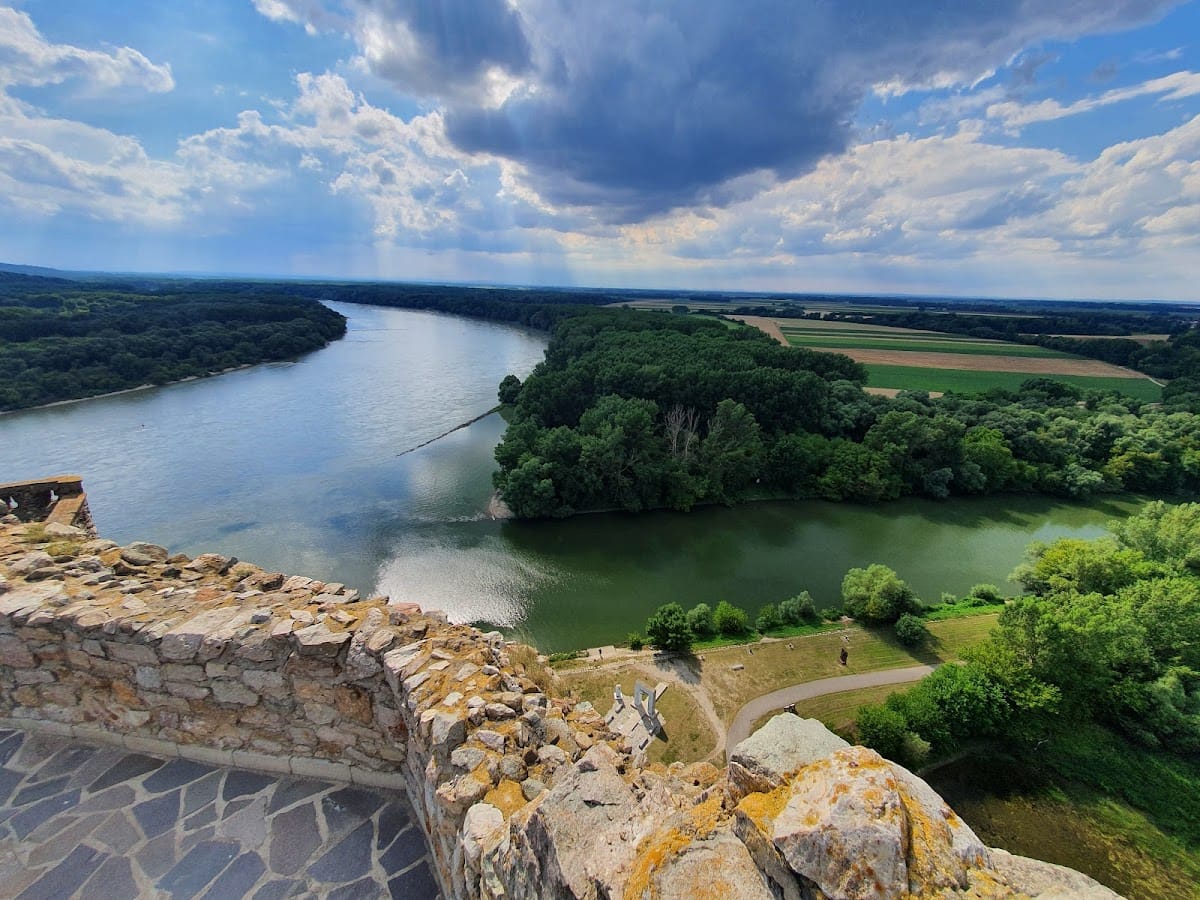
Devín Castle occupies nearly the entire summit of a rocky cliff standing 212 meters above sea level, commanding views where the Danube and Morava rivers meet. The natural landscape provided strong defenses: marshy terrain to the south, the flowing Morava River to the west, and the elevated massif of Devínska Kobyla to the north. The fortress extended over several levels of terraced rock, surrounded by walls and gates adapted to the site’s topography.
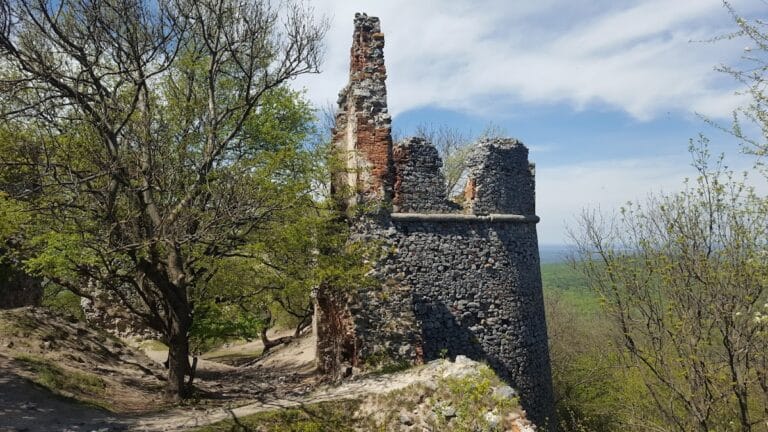
The earliest medieval structure on the upper rock consisted of a massive hexagonal stone tower along with a small forecourt. This tower occupied the highest point and functioned as the defensive core during the castle’s initial construction phase in the late 12th or early 13th century. Only fragments of the castle’s outer walls from this period remain today, and access was provided by a narrow eastern passage connecting to the neck of the hill.
In the 15th century, the Garay family expanded the castle by adding a Gothic residential palace on the southeastern slope. This building rose three stories high and featured timber-beamed ceilings and fireplaces for heating, suited for noble habitation. Adjacent to the palace, a semicircular bastion was constructed to bolster defenses. The castle’s fortifications evolved into a complex network, including polygonal towers, a western gate equipped with a drawbridge and a protective moat, and northern and southern gates built beneath the rock faces.
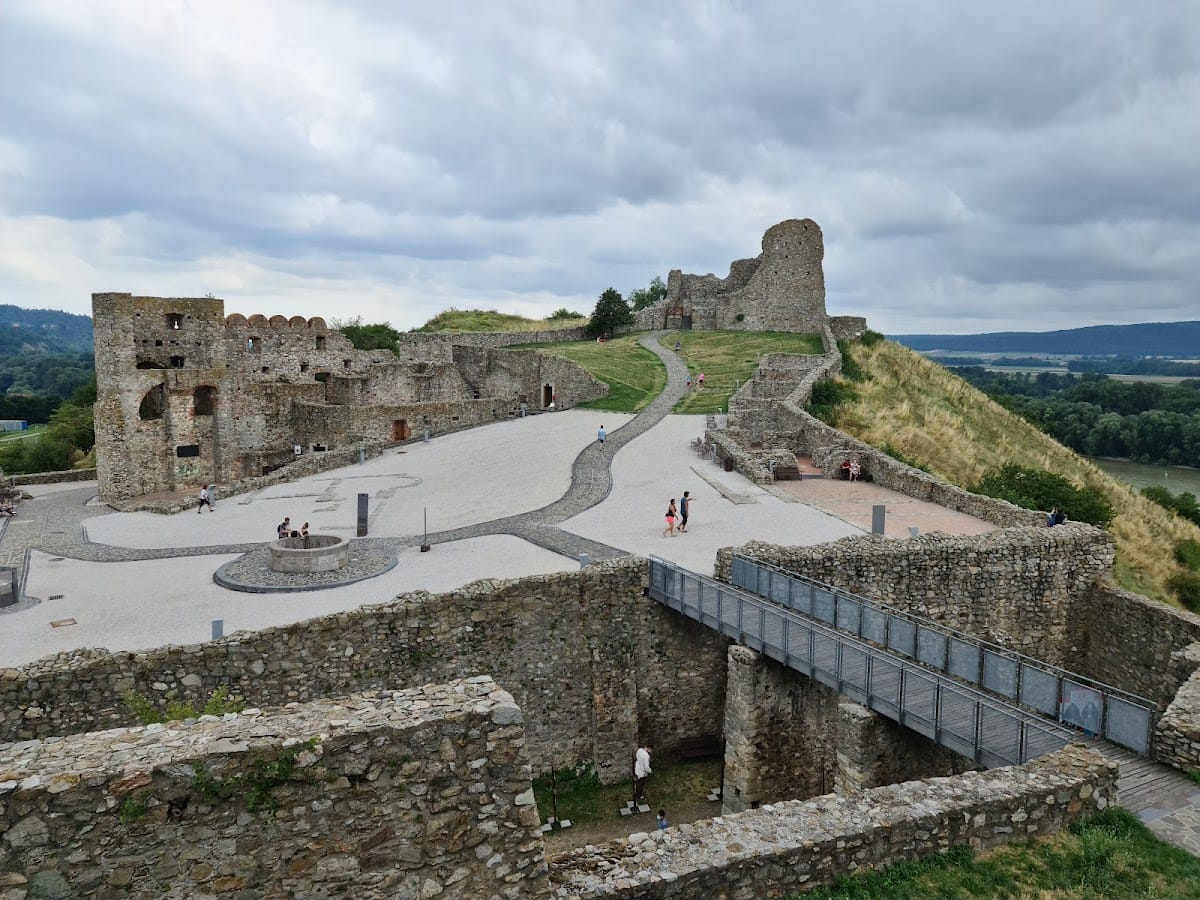
Within the northwest courtyard lies a deep well approximately 60 meters in depth, lined with sandstone blocks at its top and base and featuring a carved rock section in the middle, indicating sophisticated engineering to access water within the rocky terrain. Late medieval construction added a northern gate guardhouse with two rooms and a southeastern gate displaying early Renaissance architectural traits.
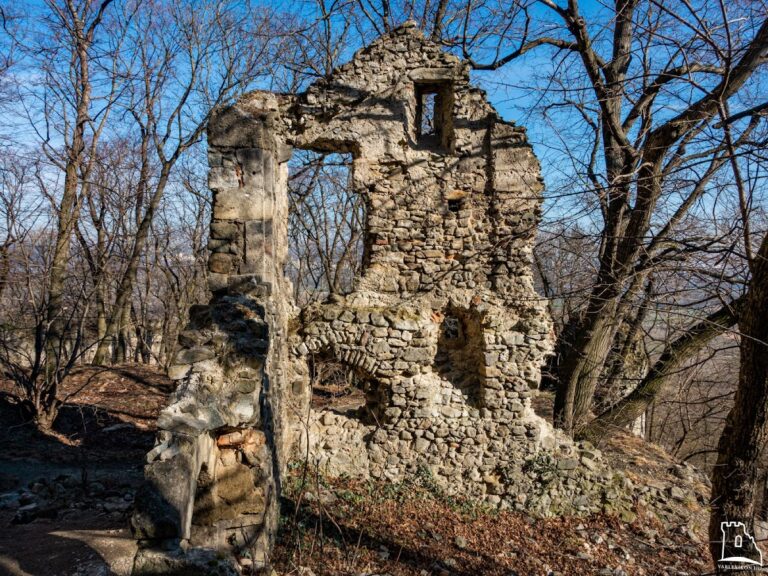
The Báthory family further altered the castle in the 16th century by adding Renaissance palace wings to the middle section of the fortress. These wings are characterized by arcaded attics and oriels—projecting window structures. Several of the Renaissance walls survive and have undergone conservation to preserve their form.
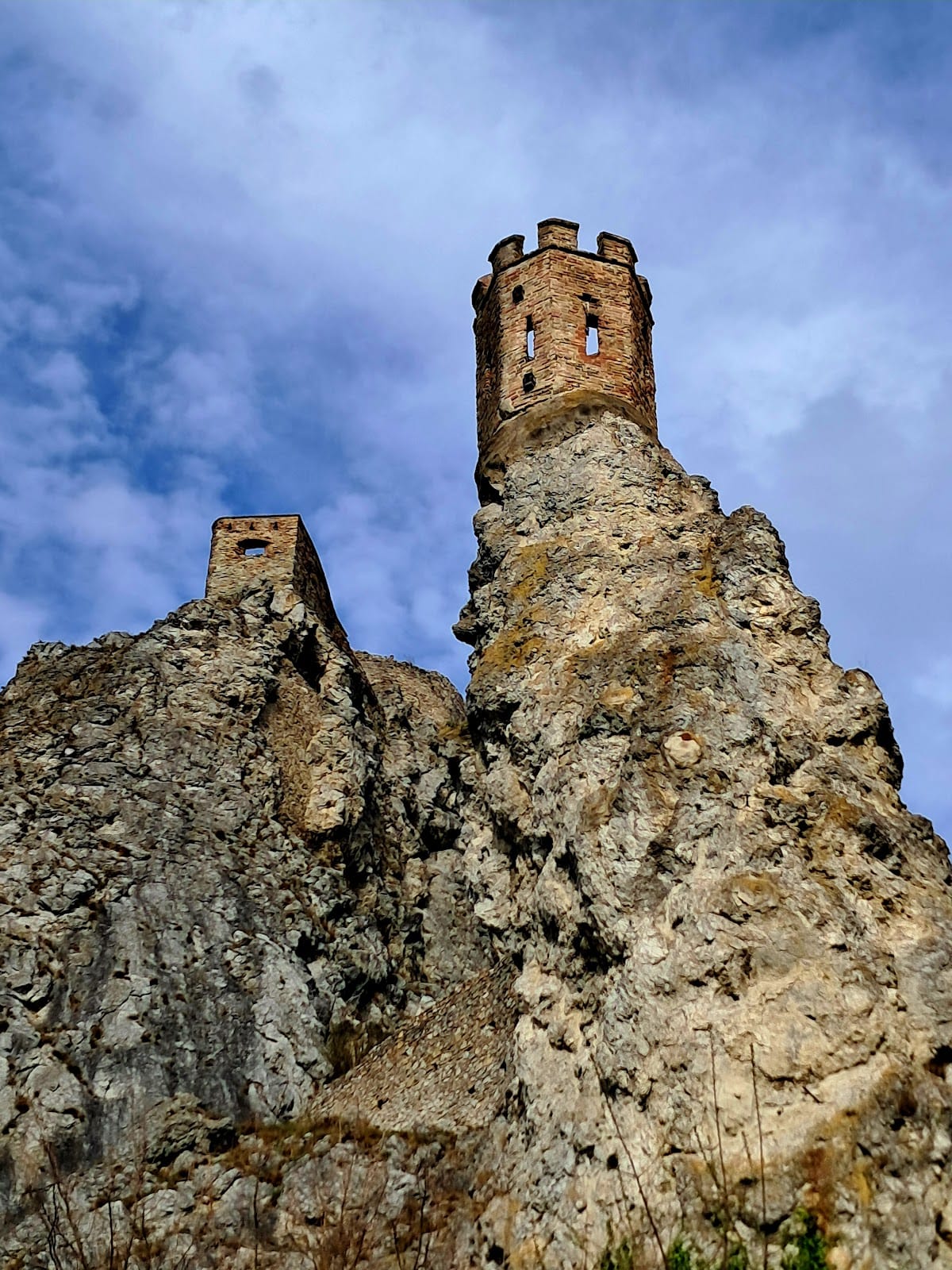
Rising on a southern outcrop stands the so-called “Maiden Tower,” a small polygonal watchtower separated from the main castle and surrounded by folklore. Despite its modest size, it served watch and signaling purposes and holds a place in local legend.
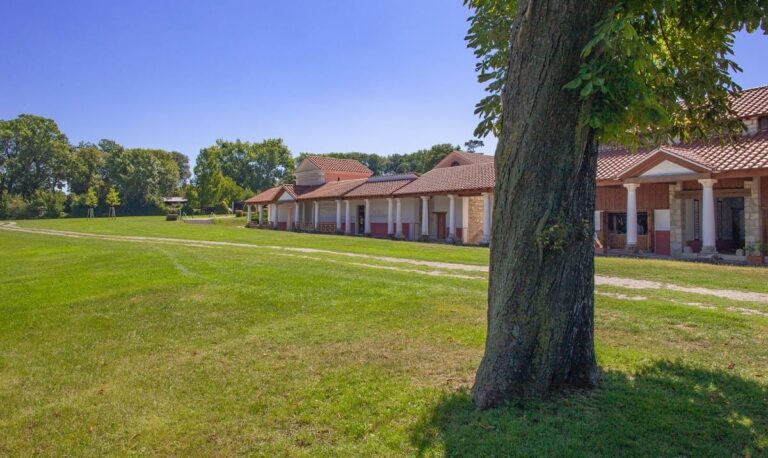
Archaeological excavations have uncovered substantial remains from previous occupiers beneath and around the medieval structures. In the western part of the middle castle, foundations of a Roman building measuring roughly 13.5 by 7 meters with four rooms and a semicircular apse were found. Nearby lies another Roman-era building containing an 11-meter-long stone channel, thought to have served a utilitarian function. Additionally, evidence of Roman above-ground wooden dwellings constructed with mortar floors has been revealed, showing the variety of structures at the military camp.
The foundations of an important Great Moravian church rest between the lower and middle castle areas. This church features a unique trefoil apse design—three semicircular recesses arranged in a clover-like shape—and preserved fragments of wall frescoes. Near these church remains is a Romanesque chapel, dating to the 11th to 13th centuries, built on a circular plan that suggests liturgical continuity at the site.
The castle grounds comprise extensive walls, staircases, and courtyards, with traces of former gardens now in ruins. Preservation and archaeological efforts have been ongoing since the mid-20th century, including work on two fortified terraces connected by a short bridge spanning a defensive ditch in the upper castle area. This section, which includes the base of the hexagonal tower, is currently closed to the public due to active restoration.
A notable natural feature near the southern slope is a tunnel-like cave carved into the rock, measuring 11.5 meters long and nearly nine meters high, known locally as the “tunnel cave.” This unusual passage adds to the complexity of the site.
Today, within the castle’s remaining structures, a museum exhibition space housed in the basement of the Renaissance palace hosts seasonal historical displays. A commemorative plaque from 1936 marks the centennial of a historic visit led by Ľudovít Štúr, celebrating the castle’s role in Slovak cultural memory. The terraces of Devín Castle offer sweeping views over the merging Danube and Morava rivers and the surrounding landscape, emphasizing the site’s long-standing strategic and symbolic significance.
Nearby sites