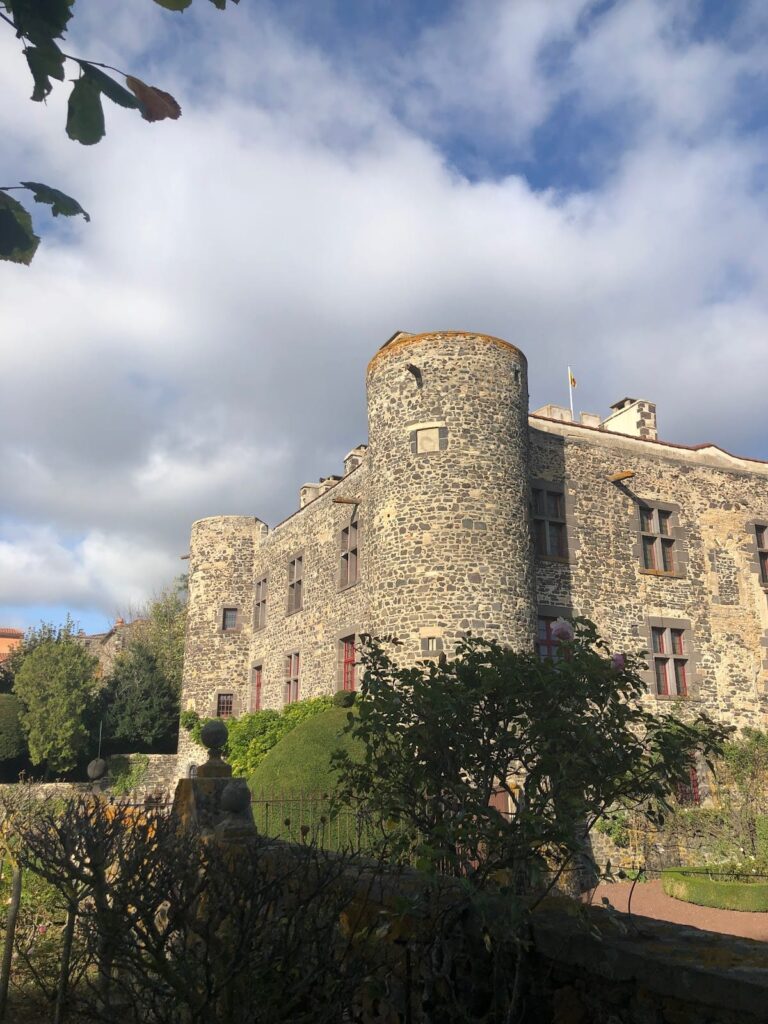
Dauphin Castle: A Medieval Fortress in Pontgibaud, France
Visitor Information
Google Rating: 4.4
Popularity: Low
Official Website: www.chateaudauphin.com
Country: France
Civilization: Early Modern, Medieval European, Modern
Site type: Military
Remains: Castle
History
Dauphin Castle is located in Pontgibaud, within the Auvergne region of central France. It was built by the medieval French nobility during the late 12th century, specifically between 1190 and 1197. The castle was established by Robert I, Count of Auvergne, who was known as the Dauphin of Auvergne. His family emblem featured a dolphin, which inspired the castle’s name. The fortress served as a key stronghold in the Dauphiné d’Auvergne, a territorial domain centered on Pontgibaud.
In 1213, the castle was taken by Archambaud de Bourbon acting for King Philip II of France. This military action supported Robert d’Auvergne, the bishop of Clermont, in a regional conflict. The castle was returned to its original owners in 1229 by Blanche of Castile, the regent for the young King Louis IX, under the condition that it would no longer shelter enemies of the French crown. This event marked the castle’s integration into the royal domain’s political framework.
The 15th century saw significant enhancements under Gilbert III Motier de La Fayette, a marshal of France and lord of Pontgibaud. He received royal permission from King Charles VII to strengthen the castle’s defenses and enlarge the square keep. Gilbert La Fayette was a notable figure, having fought alongside Joan of Arc during the Hundred Years’ War. His improvements reflected the castle’s ongoing military importance during this turbulent period.
During the French Wars of Religion in the 16th century, Dauphin Castle was captured in 1566 by Matthieu Merle, a Huguenot captain. This event illustrates the castle’s strategic role in the religious conflicts that divided France. Following this period, the castle was gradually abandoned in the 17th century as the owners preferred a more comfortable residence built within the lower courtyard, leading to the fortress’s decline.
The French Revolution brought further change when the castle was confiscated and sold as national property in the late 18th century. Many archives related to the castle and the surrounding commune were destroyed during this time, resulting in the loss of valuable historical records. Despite this, the castle remained in private hands, passing to the family of César I de Moré, a royal musketeer who acquired it in 1756.
Between 1886 and 1891, the castle underwent restoration led by architect Jean-Bélisaire Moreau, a follower of the famous restorer Viollet-le-Duc. This work was commissioned by Count César III de Pontgibaud, a descendant of the Moré family. Since then, the castle has remained in the same family line. Over time, the castle and its associated structures have been recognized as historic monuments, with final classification granted in 1995.
The site also reflects the region’s long history of silver mining, which dates back to Roman times and continued actively until the late 19th century. Mining operations peaked between 1853 and 1897, producing significant quantities of lead and silver. A museum on the grounds preserves this industrial heritage alongside the castle’s medieval and early modern history.
Remains
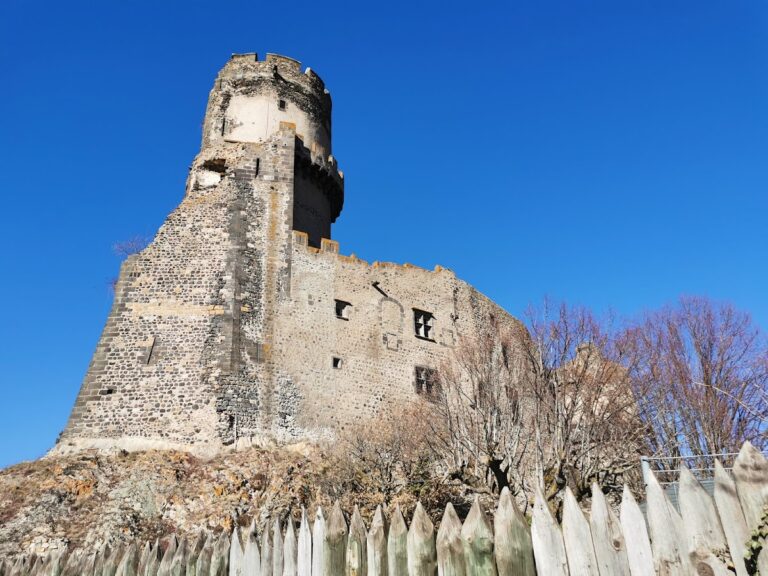
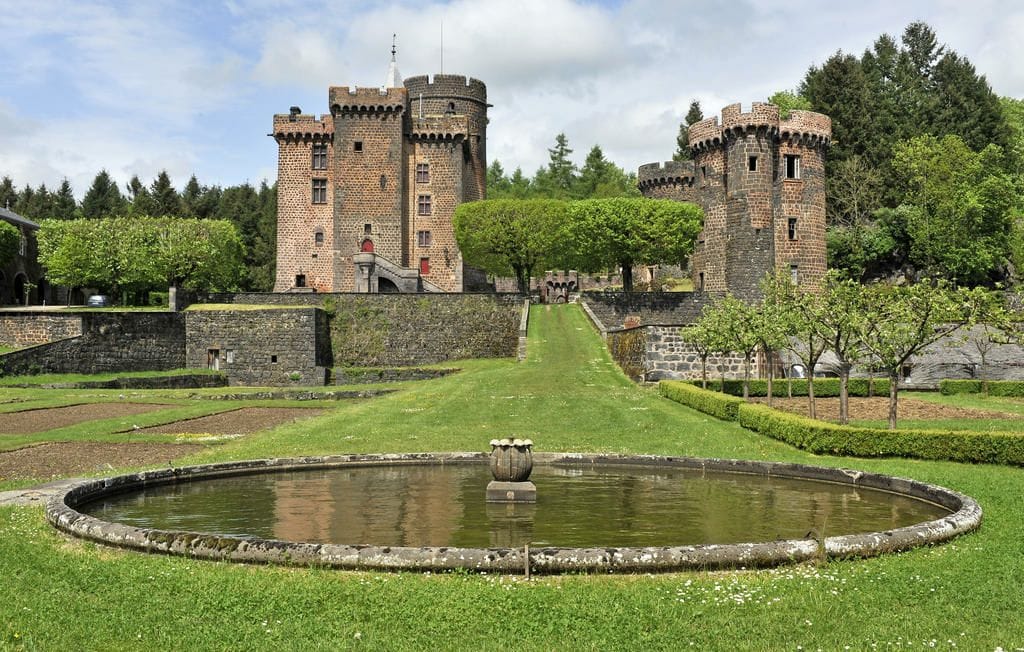
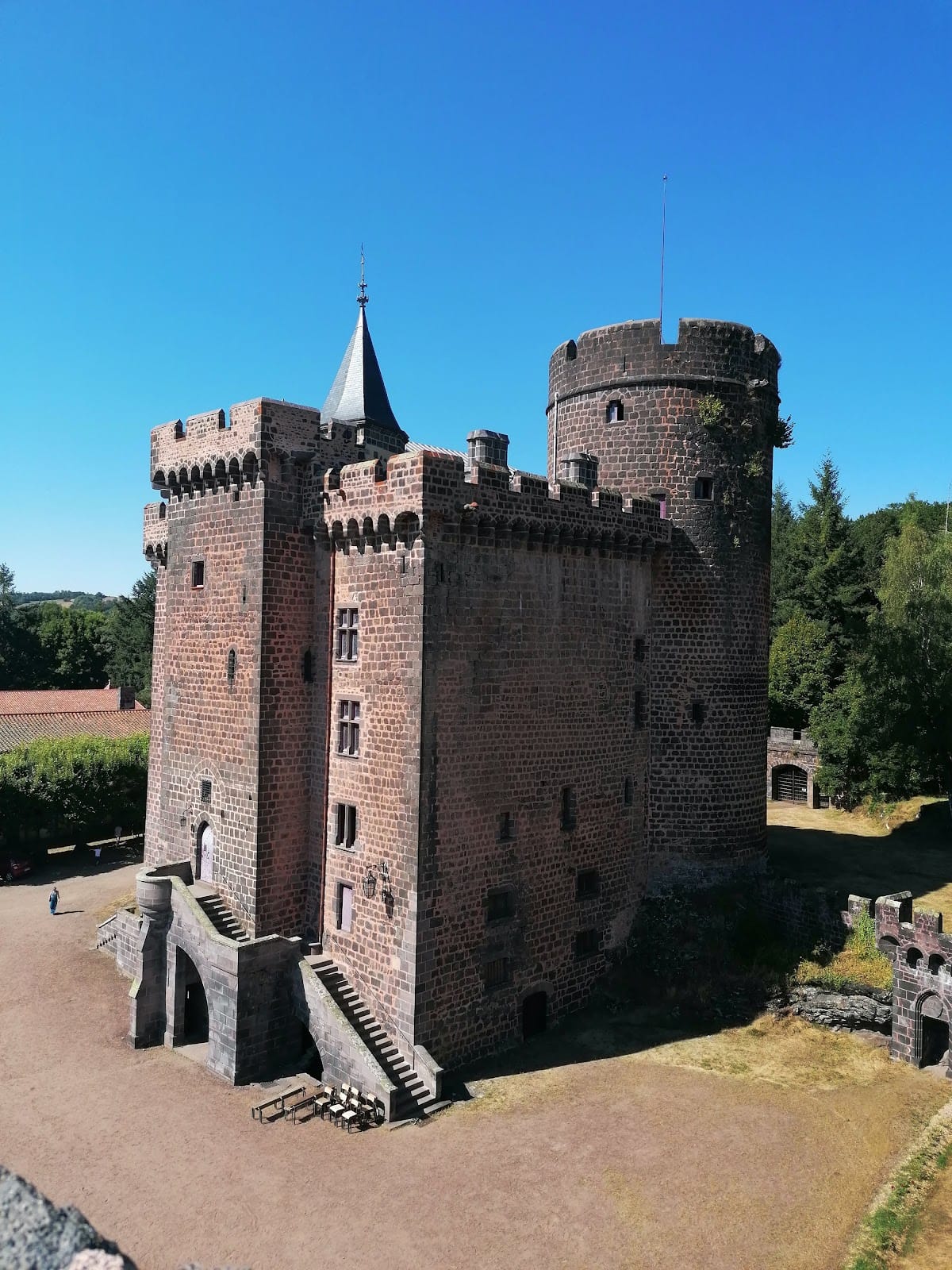
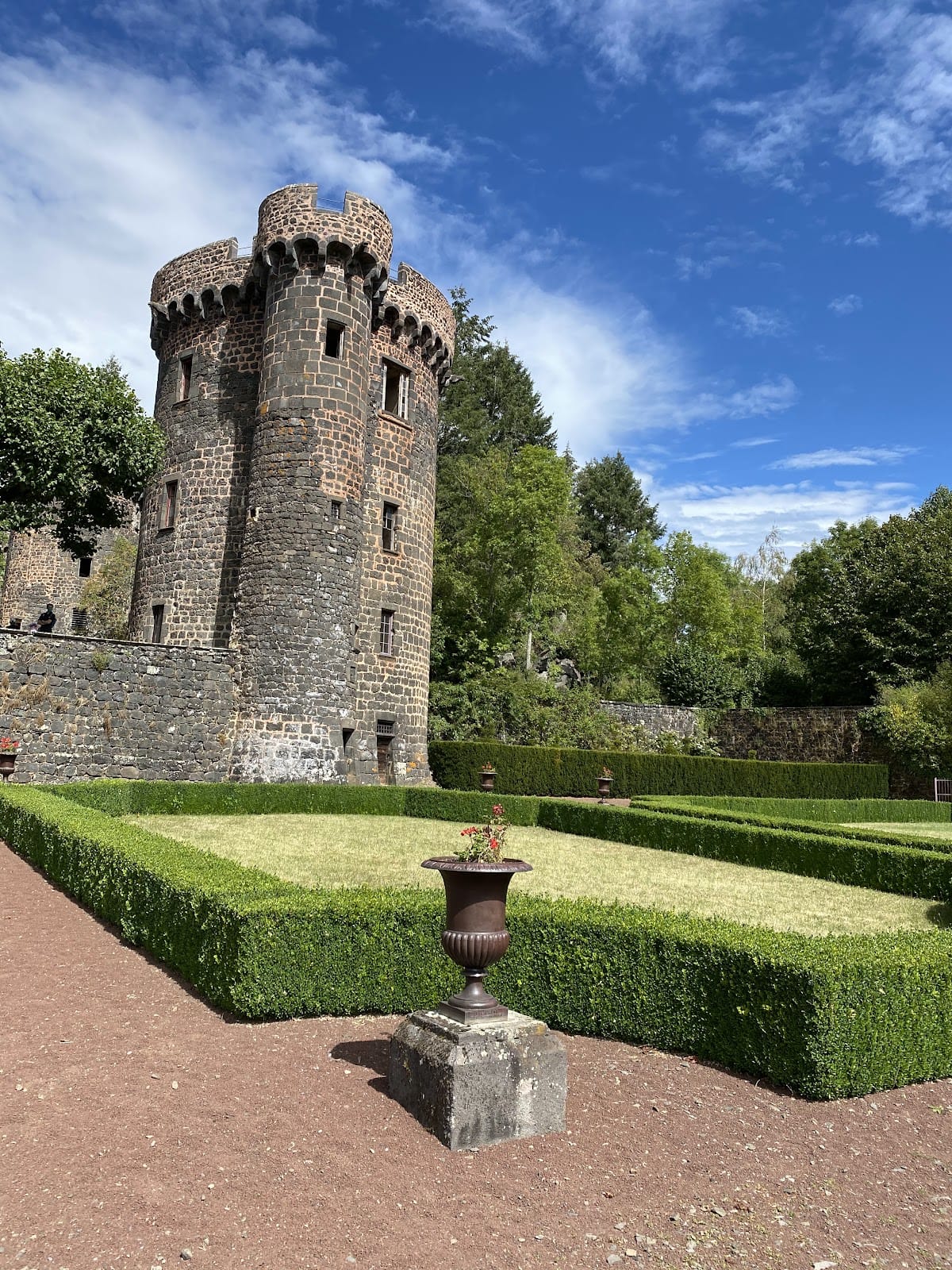
Dauphin Castle is composed of a double keep, featuring a large square tower and a round tower at one corner. These two keeps are structurally separate and rest directly on solid bedrock. The square keep measures about 22 by 25 meters and originally enclosed an open courtyard, which was later covered with a glass canopy in the 19th century. The main entrance to this courtyard was once defended by a murder hole, a small opening used to attack invaders.
The round keep contains a deep, heavily fortified lower chamber known as a cul de basse-fosse, with walls nearly four meters thick. This space likely served as a prison. The lower floors stored weapons and supplies, while the upper levels housed living quarters and a watchtower. Access to the upper floors is provided by a spiral staircase built within the thickness of the walls, one of which bears the La Fayette family coat of arms.
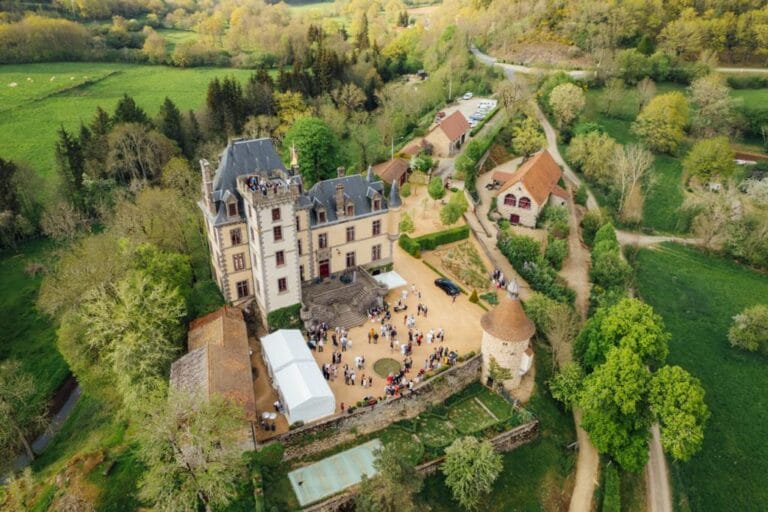
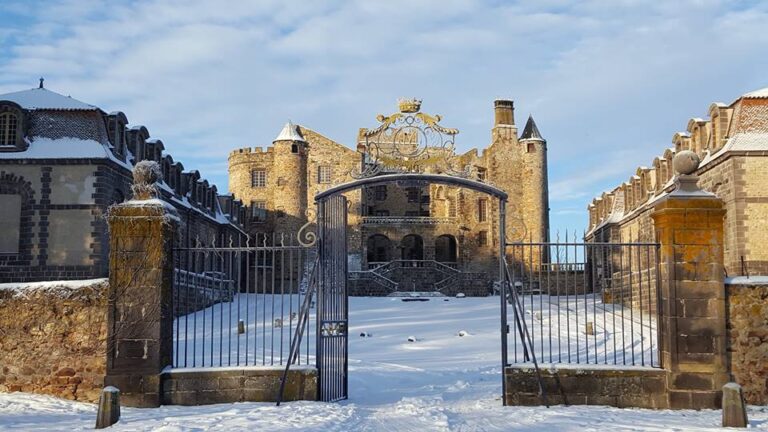
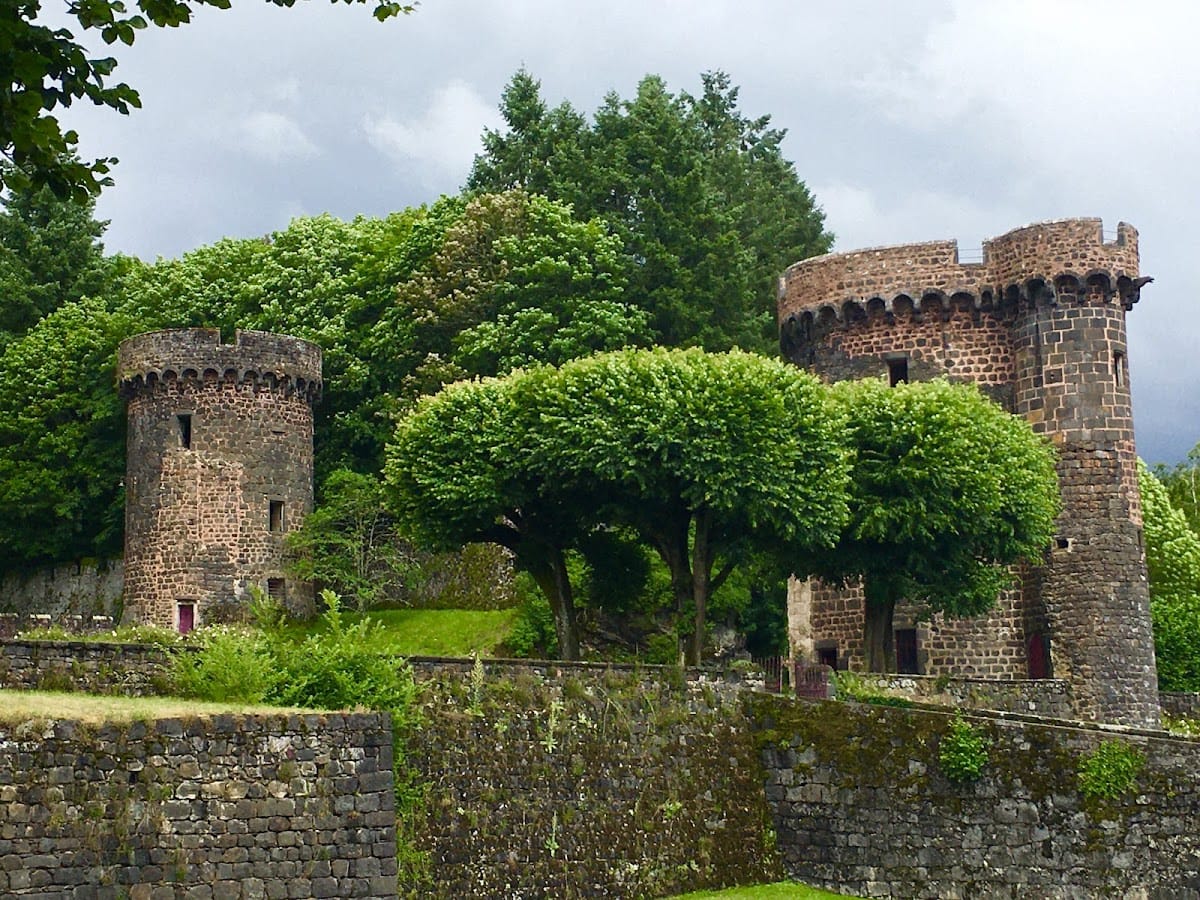
Originally, the castle’s defensive wall, or curtain wall, enclosed the lower courtyard and connected seven towers. Today, six of these towers remain standing. The seventh, called the Clapiers tower, is undergoing restoration due to structural damage caused by fissures and water infiltration. The curtain wall itself dates from the 15th century and currently faces risks of collapse, which threatens nearby 19th-century farm buildings.
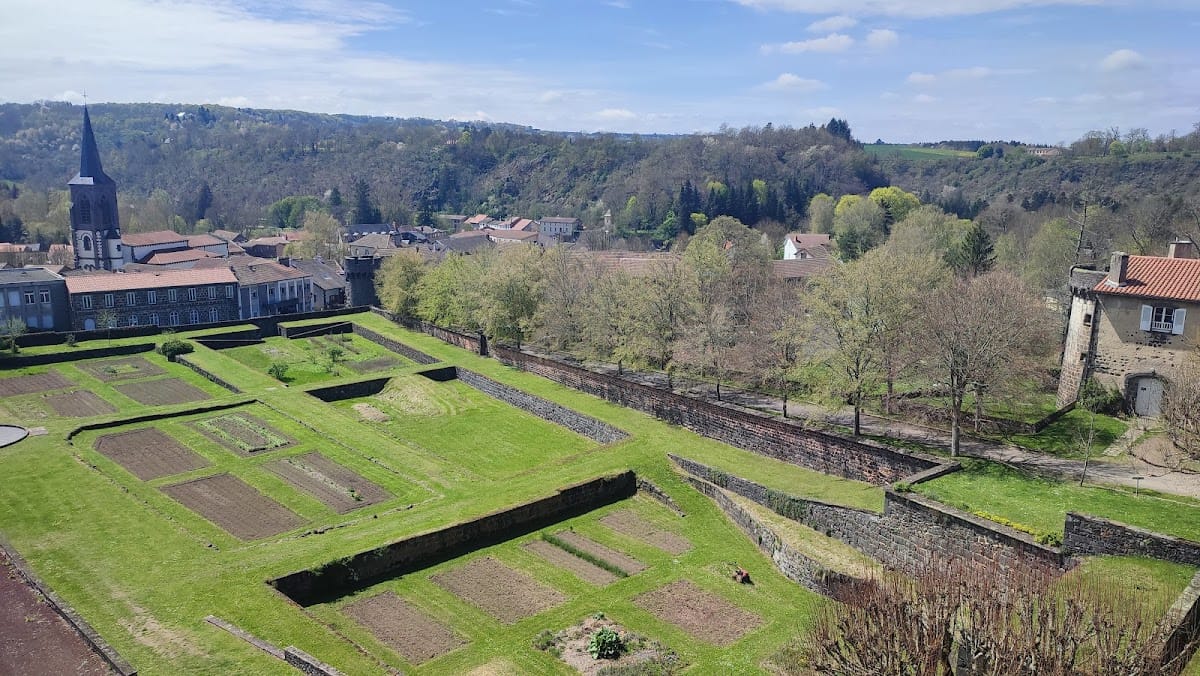
The estate covers about 45 hectares of wooded parkland, along with cultivated fields and meadows. Historically, the domain was much larger, extending to approximately 3,000 hectares in the 18th century. The kitchen garden, established in the 16th century and remodeled in the 18th, occupies 96 ares (just under one hectare). It is terraced on three levels with straight, intersecting paths. The garden’s retaining walls are made from well-fitted slabs of trachyandesite lava stone, which absorb and retain heat to benefit plant growth.
Water features in the garden include 18th-century fountains fed by a spring located several kilometers away. Overflow channels were designed to keep the water at ambient temperature, aiding irrigation. The garden’s layout was carefully planned to create perspective views from the castle, which is positioned slightly off the garden’s central axis.
Inside the castle, several rooms display 19th-century decorative work. A large salon features frescoes by the Italian painter Maioli and a local artist, along with oak paneling crafted by Martin and ironwork by Larchevêveque. Other notable interiors include a dining room with oak paneling, a vaulted library with a painted ceiling, a chamber of honor decorated with wood and fabric from Riom, and a chapel adorned by Maioli.
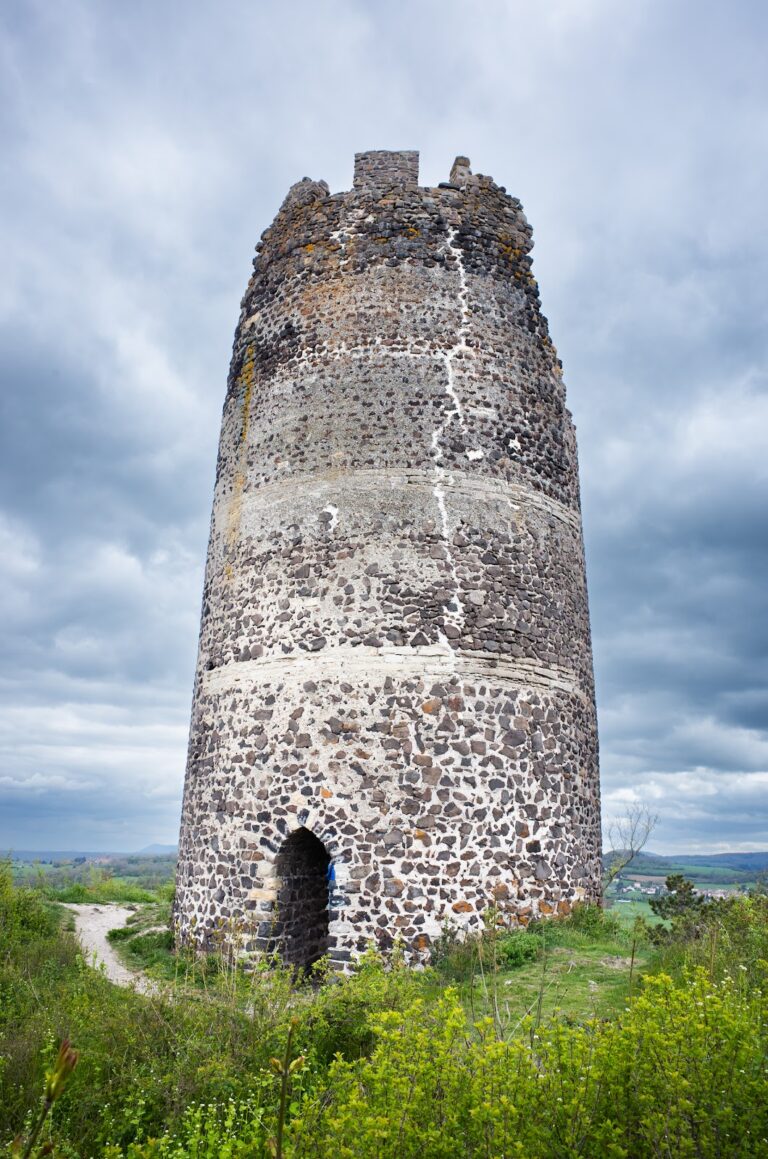
The castle was modernized in the 19th century with electricity generated by a hydraulic turbine on the nearby Sioule River. Running hot and cold water were also installed during this period. Outbuildings on the property include a museum building, a carriage house, a farm, and a 19th-century dovecote constructed from lava stone near the farm tower. The farm tower itself is recognized as a historic structure.
Nearby sites