Château de Miremont: A Neo-Renaissance Residence and Feudal Castle Site in France


Site at a Glance
- Rating
- 4.6
- Popularity
- Low
- Country
- France
- Primary era
- Modern
- External website
- Open
- Eras represented
- Medieval, Early Modern, Modern
- Civilizations
- French
- Site type
- Domestic
- Remains
- Elite Residence
On this page6 sections
History
The Feudal Castle
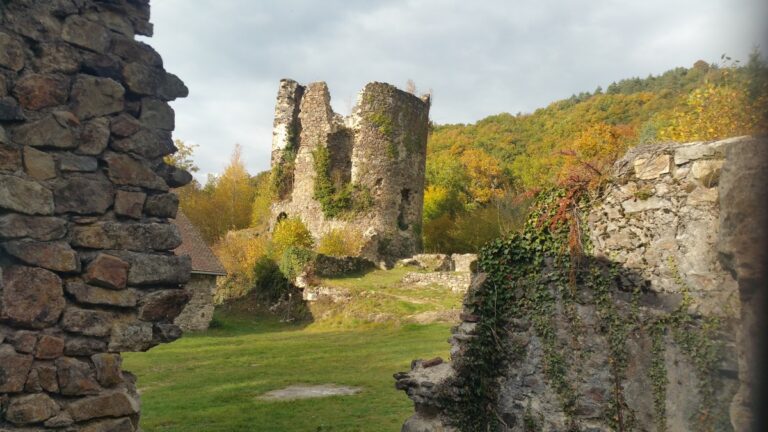
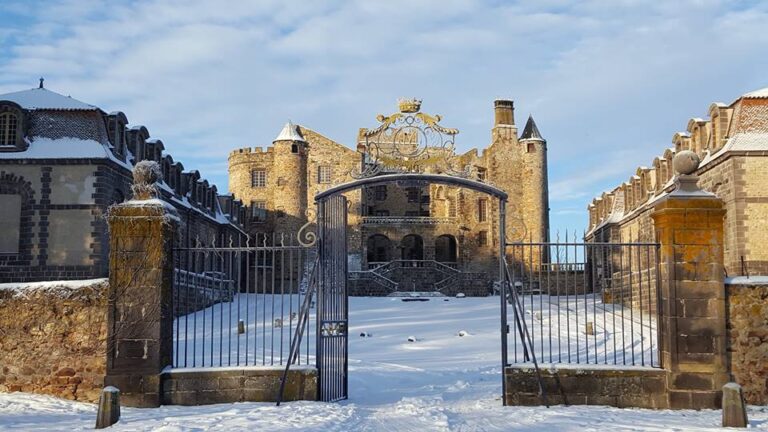
Château de Miremont, also known as Château de La Rochette, is a nineteenth-century residence associated with the remains of a feudal castle in Miremont, France. The present house was begun in the nineteenth century in the Neo-Renaissance style, a movement that revived Renaissance forms and decoration, and was completed in 1868.
The site is especially associated with Pierre de la Rochette, the most celebrated lord of La Rochette. He died at the Battle of Poitiers in 1356. The château’s large reception room, known as the Pierre de la Rochette Salon, commemorates him.
Heritage Protection and Later Use
The remains of the feudal castle were entered on France’s register of historic monuments by an order dated 8 December 1927. This registration, known in France as a historic-monument inscription, provides legal protection below the level granted to a fully classified historic monument.
Château de Miremont is now a private residence. Its farm building has been restored and is used as a reception venue, giving a later practical role to one of the site’s historic structures.
Remains
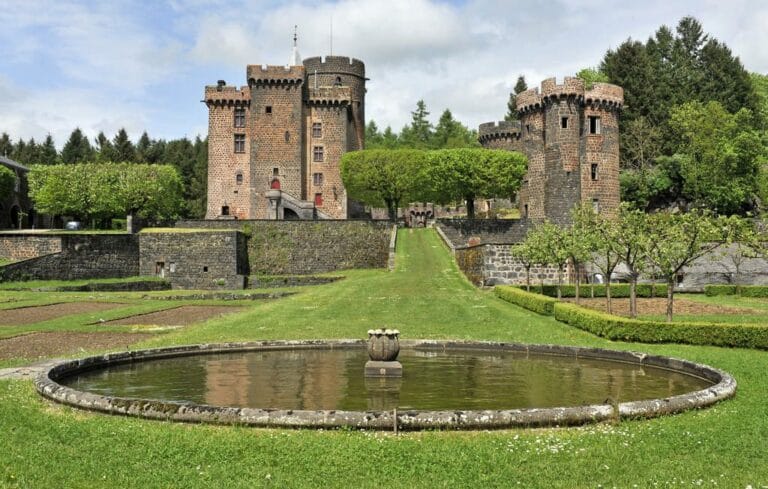
The château stands on a small hill about 1 kilometre from the village centre and faces the village’s twelfth-century Romanesque church, which occupies another small hill. The château lands are bounded by the Chancelade stream, a tributary of the Sioulet. Within the grounds, the courtyard of honour, gardens, fountain, and farm building form the principal described elements of the surviving estate.
Courtyard and Gardens
The courtyard of honour contains a rose parterre arranged in constellation patterns. The gardens were restored by a student of the École de Versailles. An eighteenth-century fountain with a reflecting pool and four central jets decorates the courtyard, while its mask is made of Volvic stone.
Farm Building
The farm building is an eighteenth-century Auvergnat farmhouse. Its interiors include reconstructed enclosed beds, also called wagon beds, a traditional regional sleeping arrangement built into a cabinet-like enclosure. The beds were recreated with technical assistance from the Regional Museum of Auvergne in Riom. The building also holds a private collection of typical eighteenth-century objects.