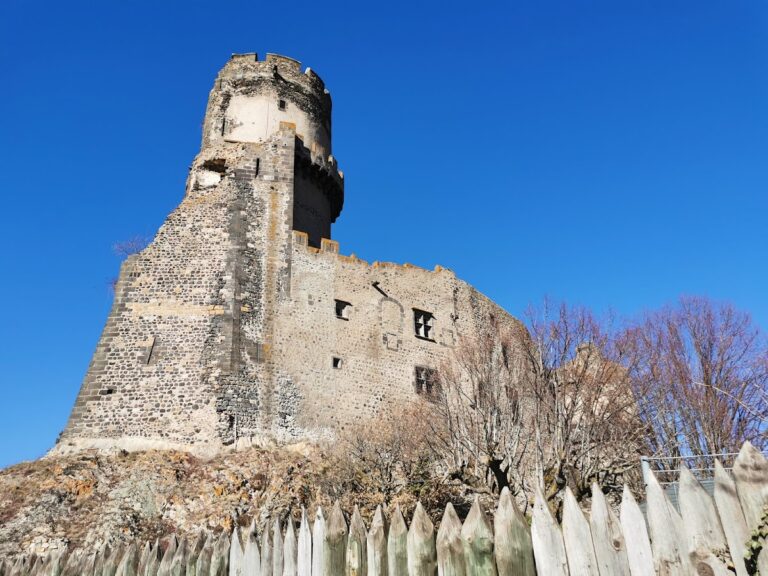
Château de Montrognon: A Medieval Castle in Ceyrat, France
Visitor Information
Google Rating: 4.4
Popularity: Low
Country: France
Civilization: Medieval European
Site type: Military
Remains: Castle
History
The Château de Montrognon is located in the municipality of Ceyrat, France. It was constructed during the late 12th century by Robert I, a member of the Montrognon de Salvert family. This noble family held the seigneurie, or lordship, of the castle and were vassals and relatives of the dauphins of Auvergne, connecting them to the nearby châtellenie (a territorial administrative unit) of Chamalières.
Throughout the 13th and early 14th centuries, a small village emerged at the foot of the castle’s central tower, consisting of several houses inhabited by people likely under the domain of the castle’s lords. This settlement lasted until the late 14th century when a series of hardships, including outbreaks of plague and incursions by mercenary groups known as routiers, led to its disappearance.
In the early 17th century, specifically in 1633, the Château de Montrognon was deliberately dismantled and partly destroyed. This action formed part of Cardinal Richelieu’s campaign to weaken the power of the nobility, thereby consolidating royal authority in France.
Over the following centuries, the castle endured further damage. In 1828, a tower collapsed, and severe winds in February 1840 caused sections of the walls and parts of the main keep (donjon) to fall. After these events, local inhabitants began using the castle’s stones as building material, further reducing the site’s remains.
A notable episode in the castle’s more recent history occurred in 1884 when two treasure hunters, searching for a legendary Templar treasure rumored to be hidden within the ruins, were caught beneath a collapse. One man died instantly, while the other was trapped for more than a week before being rescued.
Remains
The Château de Montrognon was originally surrounded by a trapezoidal fortified enclosure (enceinte), encircled by a ditch that added a defensive barrier. The walls of this enclosure were strengthened by semi-engaged turrets—small towers partly embedded in the wall surface—and topped with battlements designed for defense. Entry to the castle was gained through a gate on the western side, which was protected by a drawbridge crossing the ditch.
Inside the enclosure, behind tall curtain walls forming the outer fortification, various buildings were arranged around a central courtyard. This courtyard contained a cistern, a stone basin used to collect and store rainwater, essential for the castle’s inhabitants. The buildings served a range of practical functions needed to support life and defense within the castle grounds.
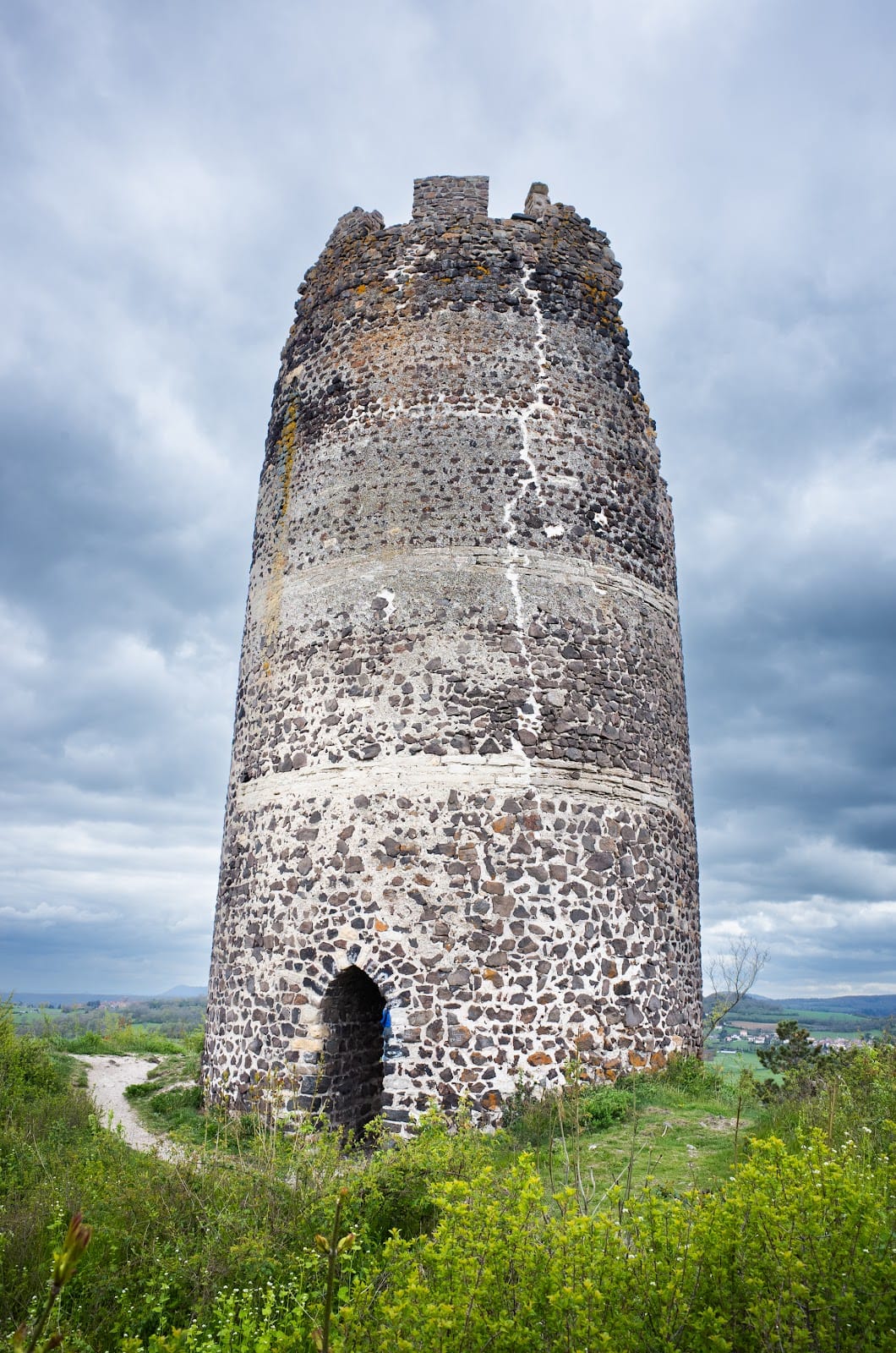
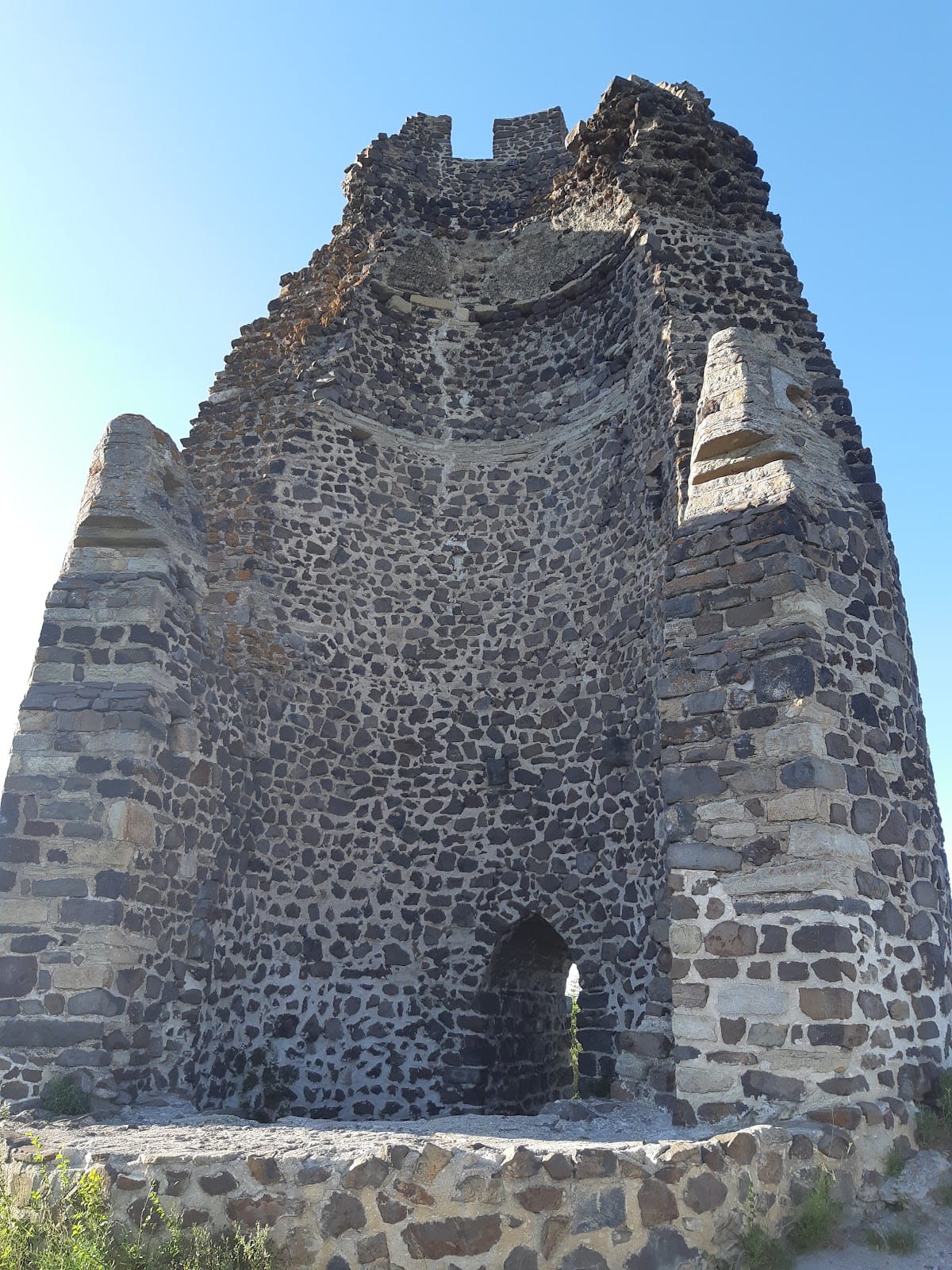
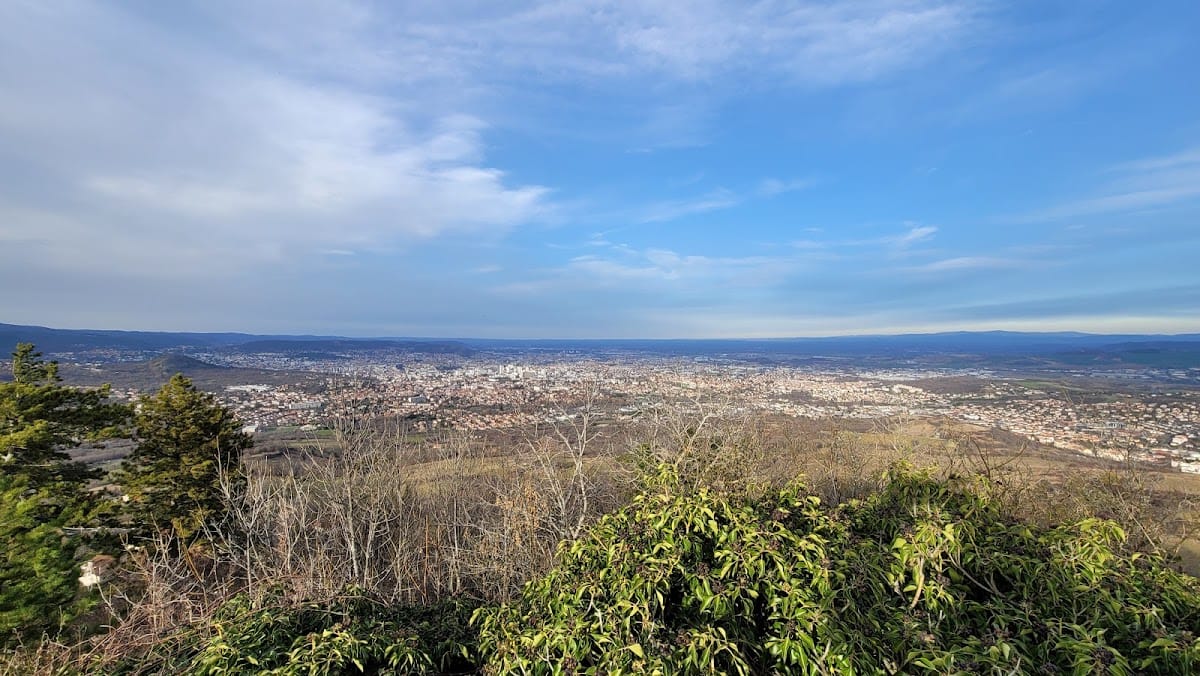
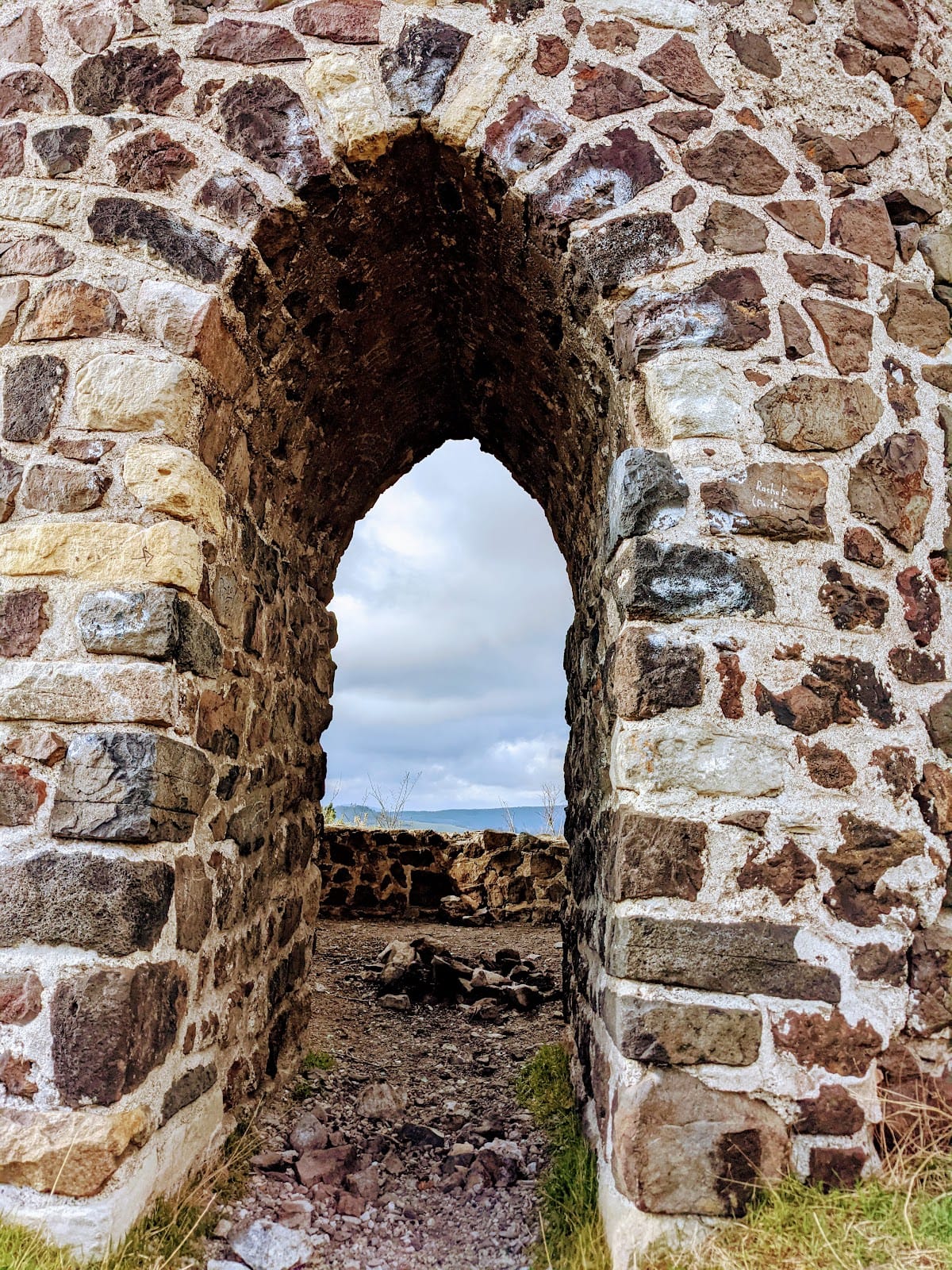
The most prominent surviving structure today is the donjon, a circular stone tower dating from the end of the 12th century. This tower originally featured three vaulted floors—spaces divided by arched ceilings made of masonry—providing sturdy, fireproof rooms. Above these floors sat a platform used as a watchtower, offering broad views over the surrounding landscape to monitor approaching visitors or potential threats.
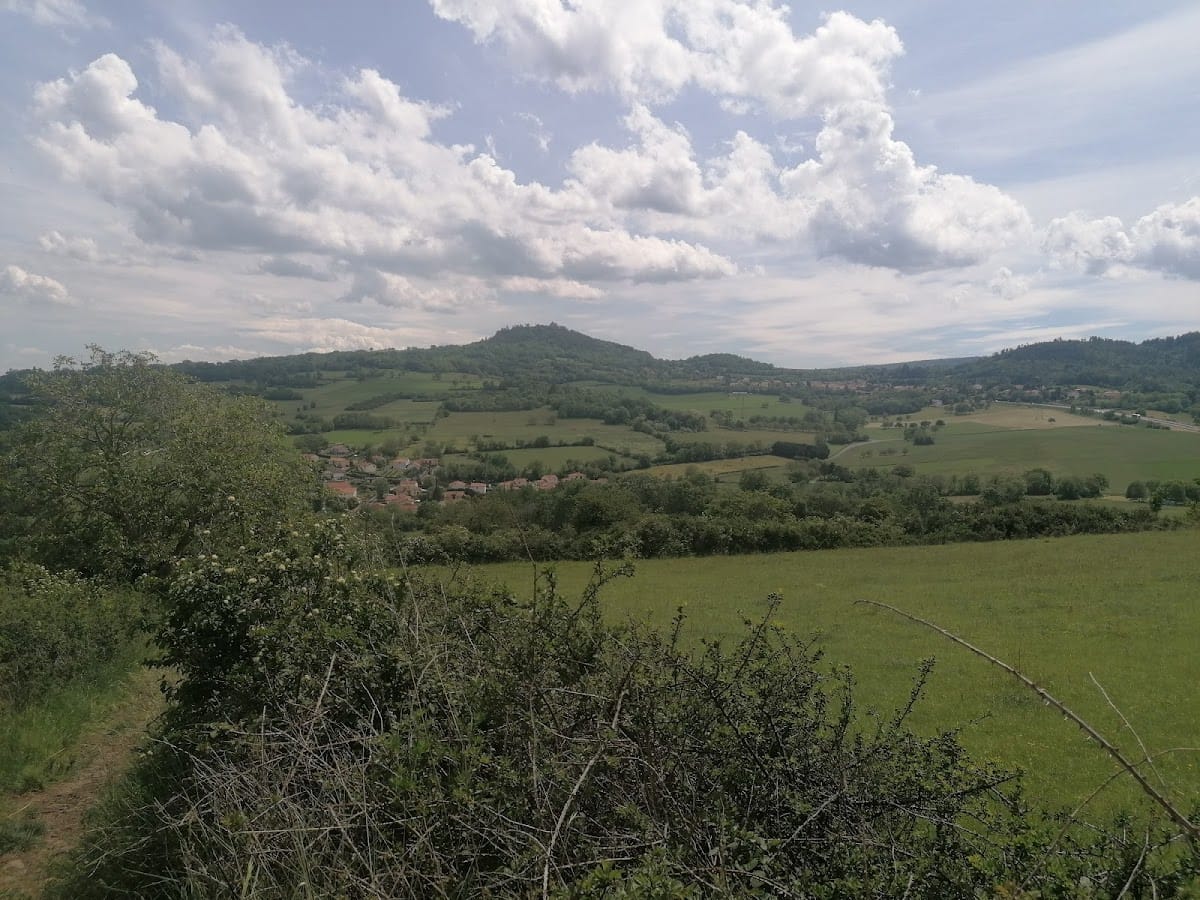
The castle is situated on a volcanic hill, known locally as a puy, rising to 699 meters above sea level. Although the site is now wooded with conifer trees, it once stood in open terrain at the start of the 20th century. The slopes around the castle support Mediterranean dry grasslands rich in orchid species, reflecting the area’s ecological diversity. Part of the site today is protected and managed by the Conservatoire d’espaces naturels d’Auvergne and is included within the Natura 2000 network, a European initiative aimed at preserving valuable natural habitats.
These archaeological remains provide a glimpse into the castle’s medieval past, illustrating the defensive strategies and living arrangements typical of a noble residence in the Auvergne region during the Middle Ages.
Nearby sites