Château de Fontaine-Française: A Historic Castle in France
Visitor Information
Google Rating: 4.3
Popularity: Low
Official Website: www.chateau-fontainefrancaise.fr
Country: France
Civilization: Early Modern, Medieval European
Site type: Domestic
Remains: Palace
History
The Château de Fontaine-Française is located in the municipality of Fontaine-Française, in modern-day France. It stands on a site that has been occupied since at least the early 13th century, originally developed by the medieval lords of the region.
The first known fortress on the site dates back to the early 1200s. This medieval stronghold is believed to have been established by Guillaume I de Vergy, likely following his marriage to Clémence de Fouvent, although an earlier fortification may have existed at the location. Through the Middle Ages, the castle served a military and administrative role, featuring defensive walls with towers and a central keep integrated into the fortress’s enclosure.
During the 16th century, the castle underwent significant changes in keeping with Renaissance architectural trends. Cardinal Claude de Longwy led a notable transformation, altering the fortress into a more comfortable and stylized residence. He added brightly colored tiled roofs in patterned designs and raised the watchtower near the drawbridge to reach over 32 meters high. The cardinal also replaced an external chapel with an elaborately decorated internal chapel, featuring stone vaulting and the cardinal’s family coat of arms repeated throughout.
The Château de Fontaine-Française is linked to several prominent historic figures. King François I visited the castle twice in the 1530s. Later, Henri IV is reputed to have stayed there following his triumph at the Battle of Fontaine-Française in 1595, although some historical accounts question this detail. Following turmoil in the 17th century, including damage during the War of the Ten Years, the fortress lost some of its defensive purpose. After the Franche-Comté region was annexed by France in 1678, the castle was opened up and adapted into a more comfortable residence.
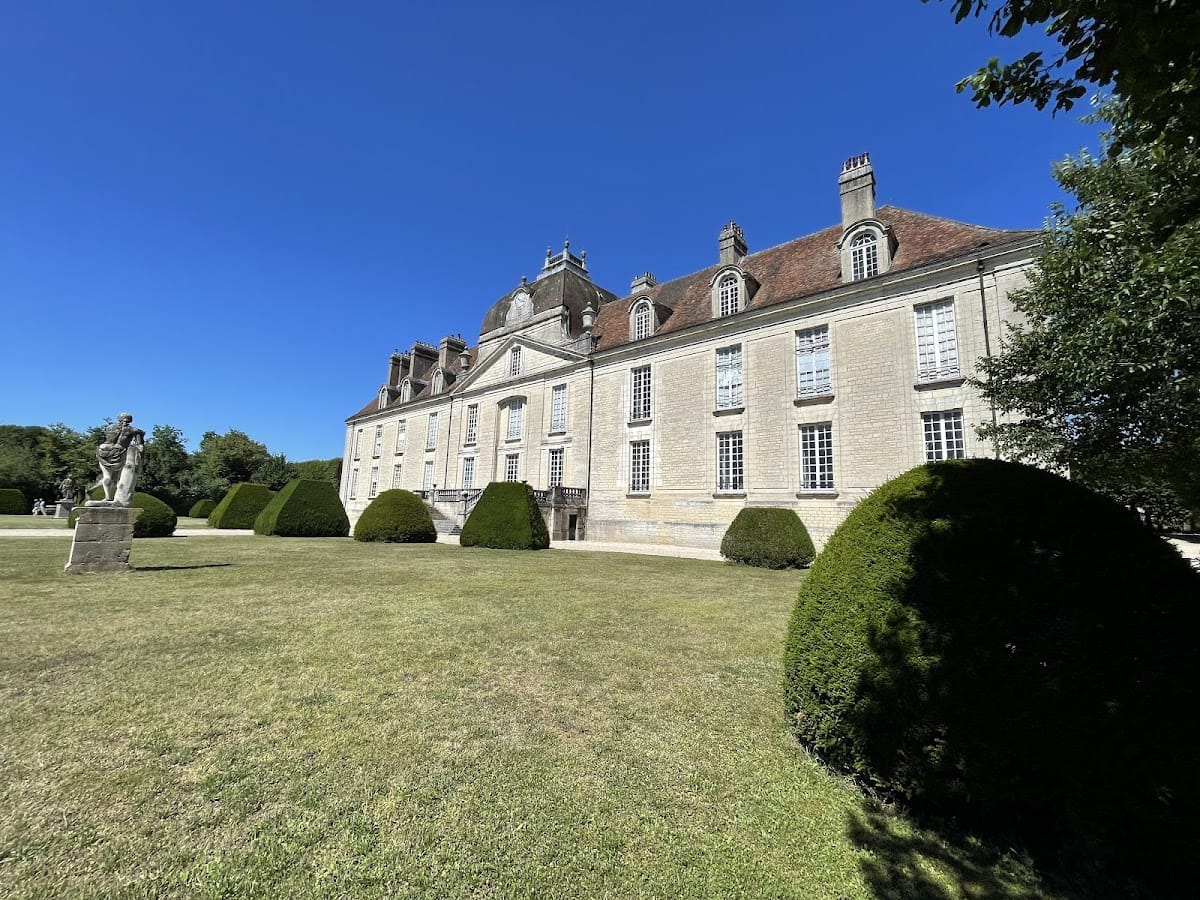
In the mid-18th century, François-David Bollioud de Saint-Jullien undertook a classical-style reconstruction of the château. Built between 1754 and 1758 under the direction of the Parisian architect Souhard, this project reused many of the medieval walls. Bollioud de Saint-Jullien was a counselor to King Louis XV and served as general receiver of the clergy of France. He also added a chapel within the left wing. The estate became a social and intellectual center, hosting eminent figures such as Voltaire and Madame de Staël, who worked on her novel “Corinne ou l’Italie” at the château.
During World War II, from 1943 to 1944, the château offered refuge to artworks evacuated from the Dijon Museum of Fine Arts, protecting significant pieces and archival materials. The castle remains privately owned and has been recognized as a historic monument since 1945. It also holds protected status for its gardens and park, the latter receiving the “Jardin remarquable” distinction in 2015. Historically, the château is connected to the Grimaldi family of Monaco through Honorine-Camille-Athénaïs Grimaldi, who married René-Louis-Victor de La Tour du Pin, a former owner, and was laid to rest at Fontaine-Française.
Remains
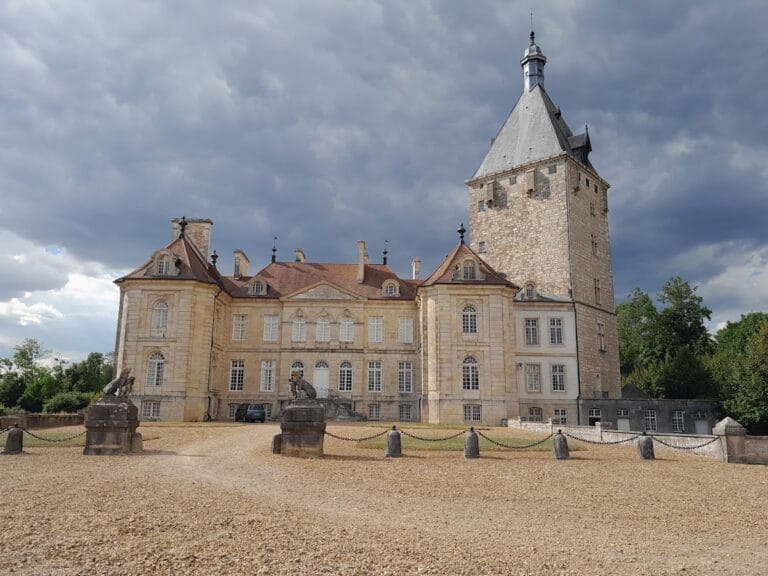
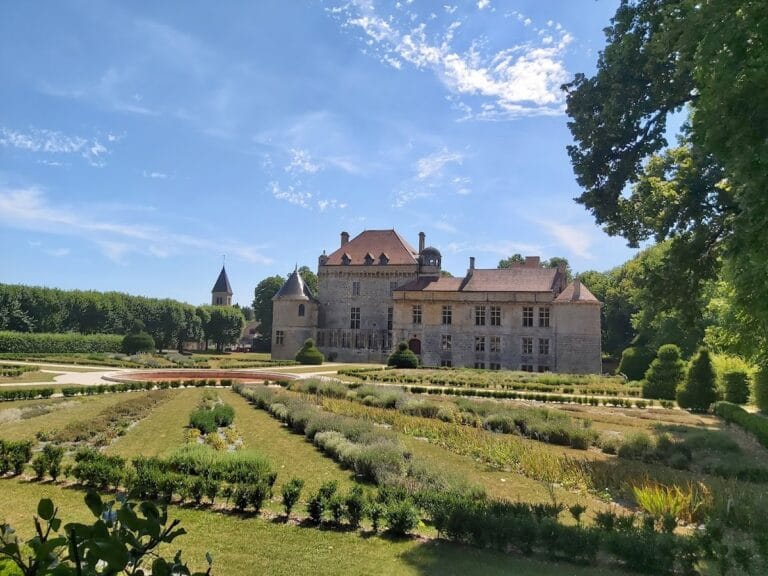
The Château de Fontaine-Française presents a classical architectural layout arranged around a central main building with two wings extending forward to form a courtyard. The classical design features symmetry and clear geometric forms, yet the château preserves elements of its medieval origins within some of its walls.
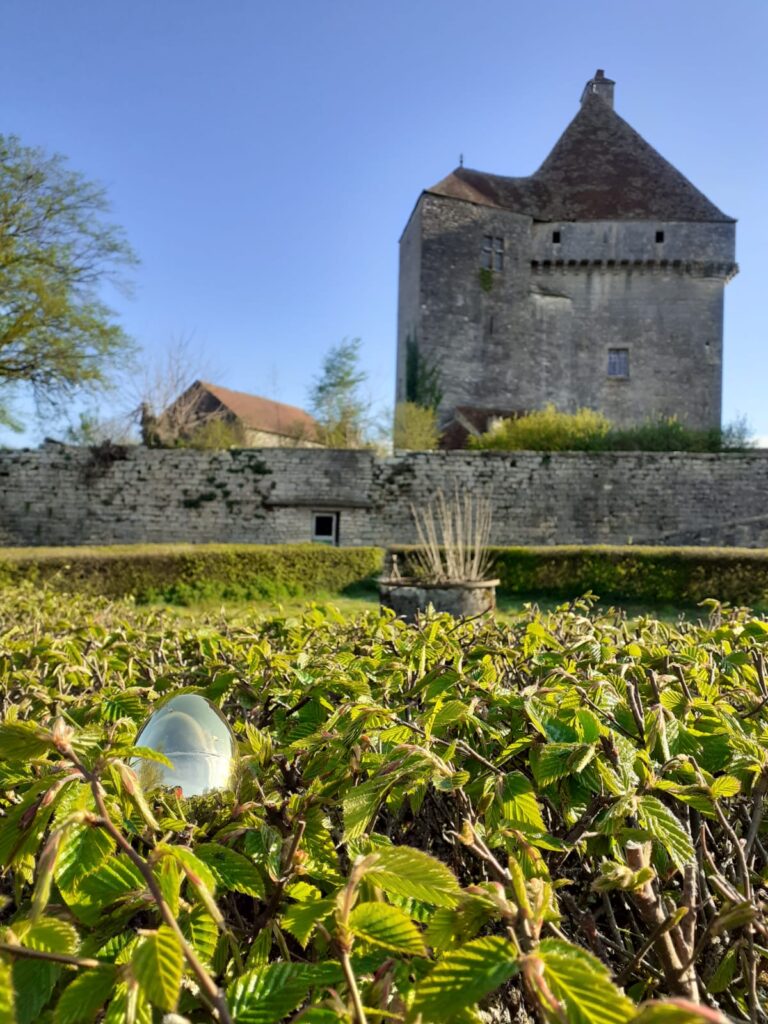
From the medieval period, remnants of the fortress’s defensive enceinte, or enclosing wall, endure. This wall included towers at each corner and a donjon, or fortified keep, that was incorporated into the curtain walls surrounding the inner courtyard. These original defensive structures are built from stone and illustrate the fortified character of the early castle.
Renaissance modifications introduced in the 16th century remain visible in parts of the château’s roofing and tower height. Notably, the watchtower above the drawbridge was elevated to surpass 32 meters, while the roofs were covered with glazed, multicolored tiles arranged in a “point de Hongrie” pattern, inspired by regional examples in Dijon. These tiles are laid in green, yellow, red, and black, adding striking color and texture to the roofs surrounding the courtyard.
The windows facing the courtyard stand out for their height—measuring approximately 4.5 meters—and are adorned with decorative mascarons, sculpted stone faces representing allegorical figures. Above the central section, a dome rises to 25 meters, containing two clocks and topped by a small terrace known as a terrasson.
The courtyard fronton, or triangular architectural feature above the entryway, originally displayed the coat of arms of the Saint-Jullien family. These arms were defaced during the French Revolution and, in the late 19th century, were replaced by the heraldic emblem of the family de Chabrillan. This new coat of arms depicts a tower guarded by a bear’s paw and flanked by two crowned lions.
Inside the ground floor is a sequence of enfilade rooms—rooms aligned so one can see through all doorways—comprising the tower chamber, grand salon, music room, and the guardroom, which is the largest. A grand staircase leads to the first floor, which contains a gallery housing a chapel along with the named Voltaire and Monaco rooms.
Around the castle, the service buildings once included stables, hay barns, a tithe barn used for storing agricultural taxes, a press likely for extracting oils or juices, a dovecote for pigeons, a poultry house, and a warren for rabbits. Specific locations of these structures relative to the main enclosure have not been documented.
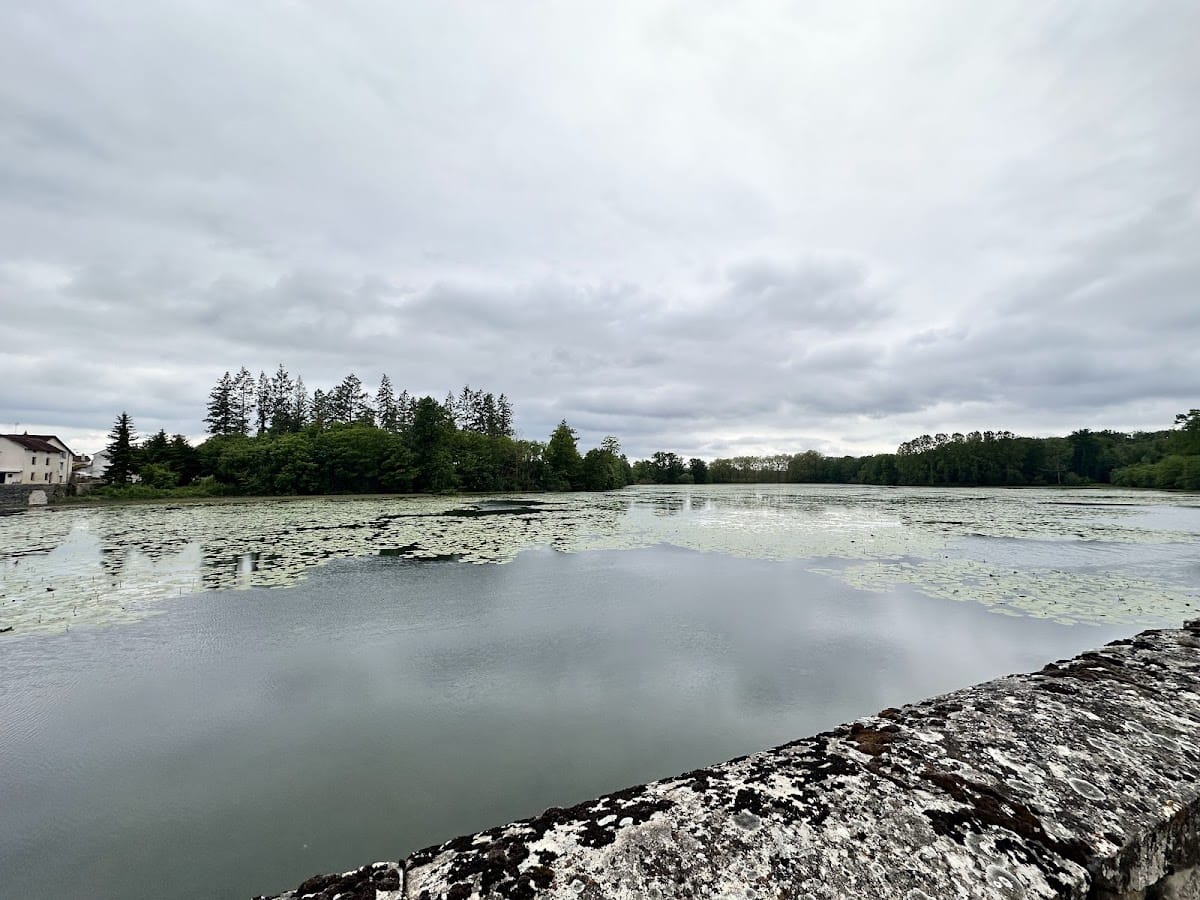
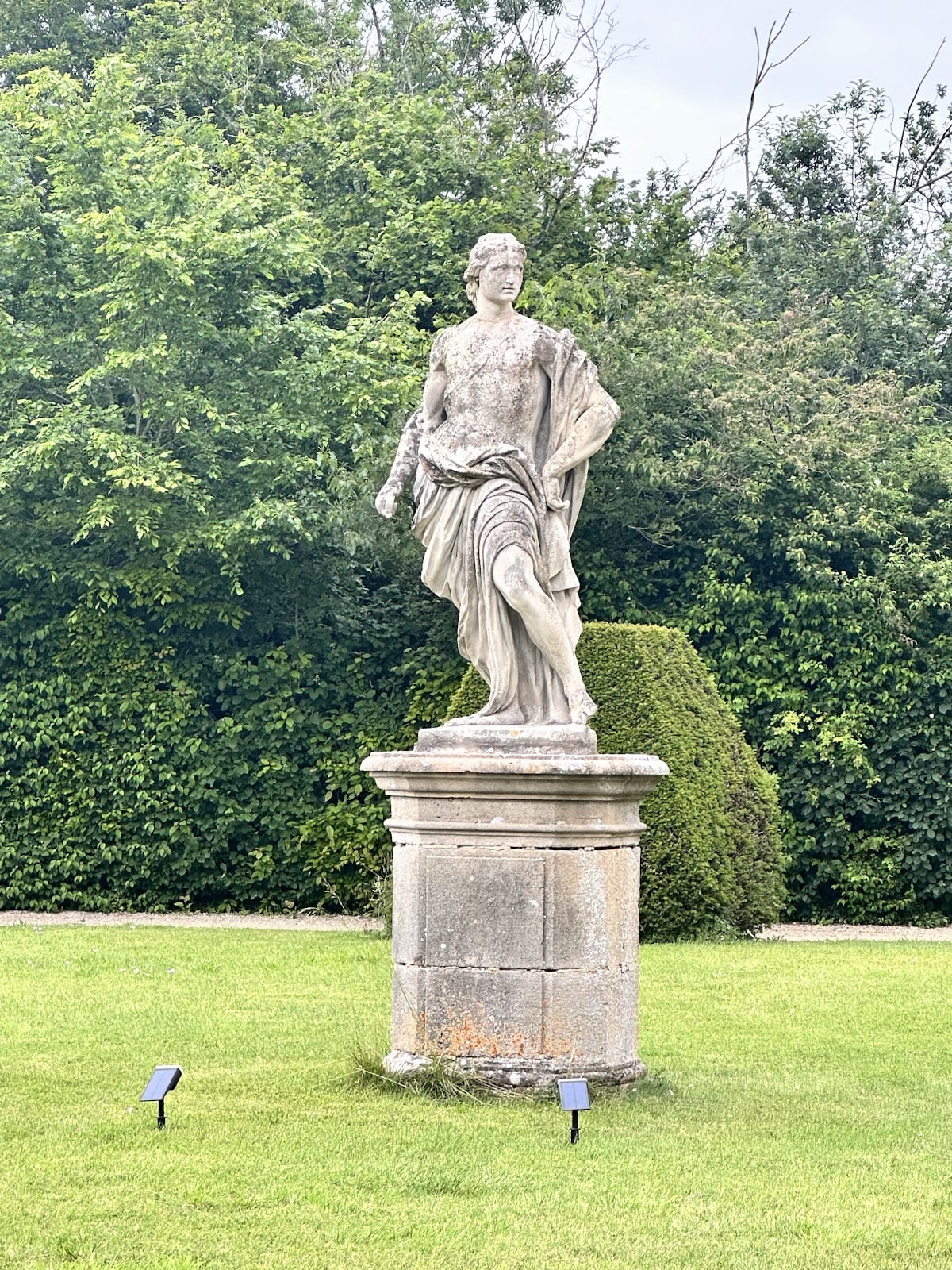
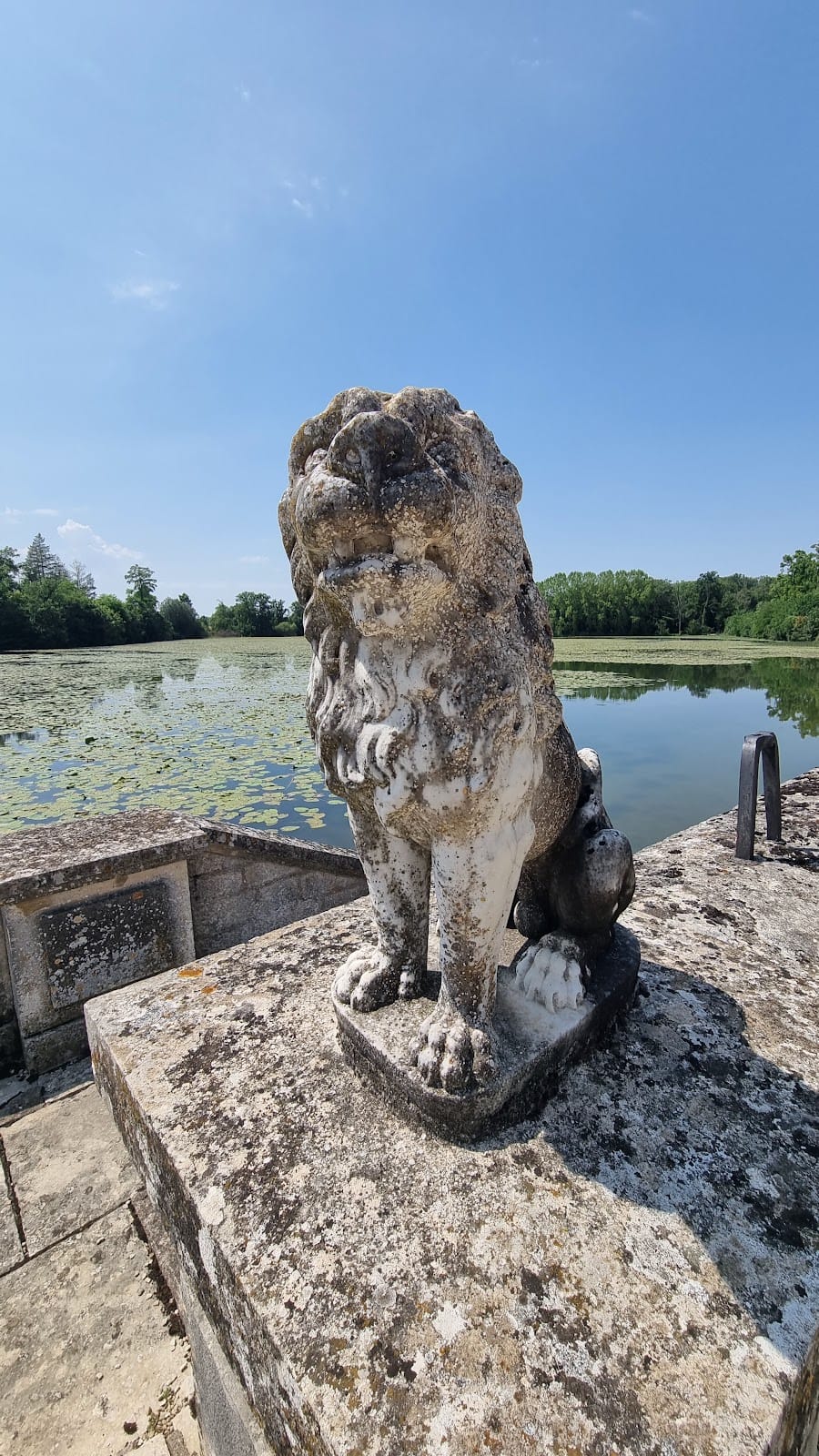
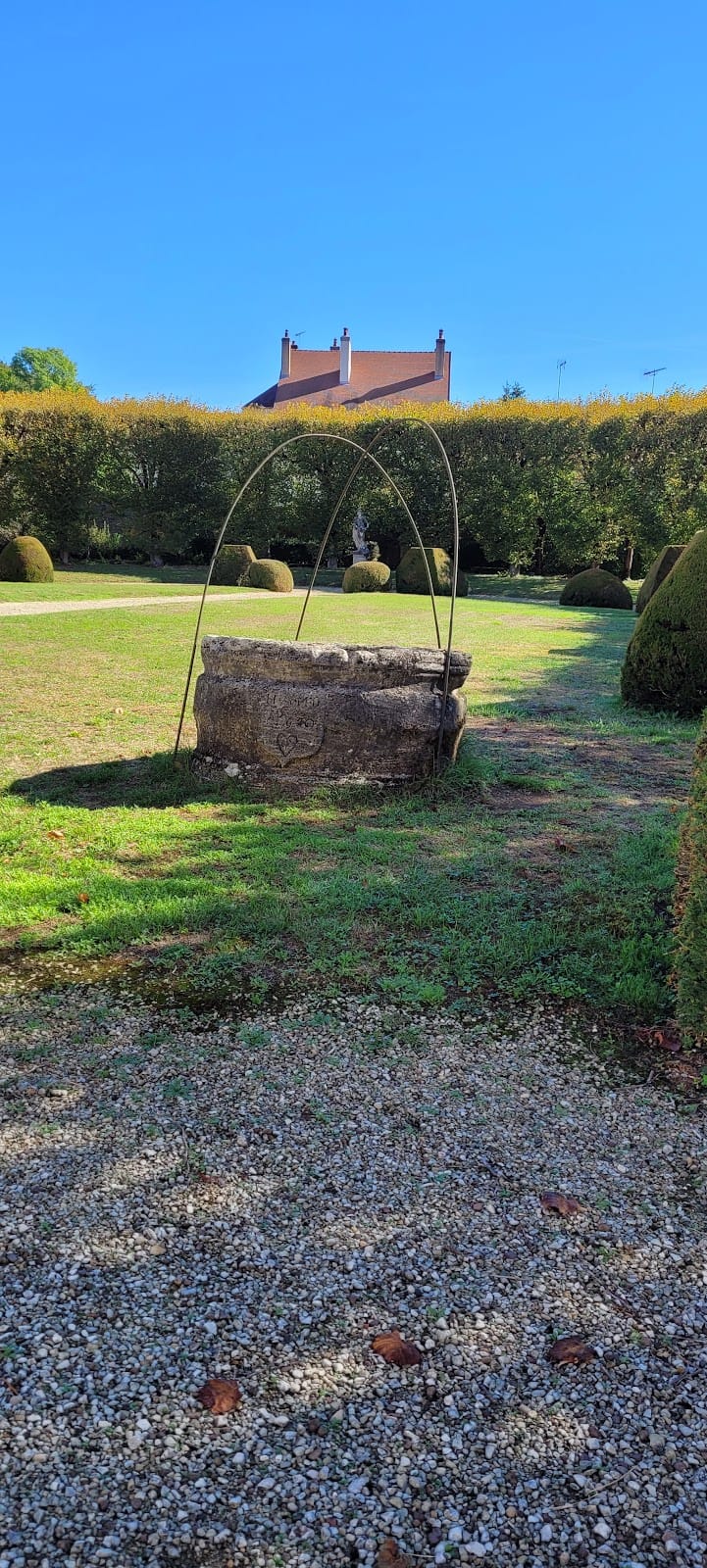
The château is enveloped by an extensive French formal garden covering roughly 3 hectares. The garden features a remarkable collection of 372 linden trees pruned into archways called porticoes, alongside meticulously shaped yew trees trimmed into spheres and hedges of boxwood. Within the courtyard’s lawn, a statue represents Flora, the Roman goddess of flowers and spring. Near the pond, statues of Acis and Apollo add to the garden’s artistic character.
Commemorative garden elements honor historical events and figures connected to the château. A pavilion topped with a bust of King Henri IV and his trophy of arms celebrates his victory at the local 1595 battle. Elsewhere, a shaded grove contains a bust of King Louis XVIII with an inscription praising him as “the Savior and the Father” of his people.
The château, its accompanying outbuildings, and its gardens have been recognized and protected as historic monuments since 1945. Additional heritage protections for the orangery and gardens were granted in 1993, with the park itself inscribed in 2017 and then elevated to classified status in 2023, ensuring the preservation of this historically layered site.
Nearby sites