Castle of Campo Maior: A Historic Fortress in Portugal

Visitor Information
Google Rating: 4.3
Popularity: Low
Official Website: www.campomaior.pt
Country: Portugal
Civilization: Early Modern
Site type: Military
Remains: Castle
History
The Castle of Campo Maior stands in the municipality of Campo Maior, Portugal. Its origins trace back to a strategic location atop Santa Vitória hill, where early peoples established settlement. Evidence shows that the site hosted prehistoric populations before successive occupation by Celts, Romans, and later Muslim settlers.
In the early 13th century, the site was reclaimed from Moorish control by the Kingdom of León, with the first known charter granted around 1260 by the Bishop of Badajoz, signaling nascent administrative organization. By the late 13th century, between 1295 and 1296, Portuguese forces took control, and the region was officially incorporated into Portugal through the 1297 Treaty of Alcañices. A significant rebuilding of the fortress was ordered in 1310 by King Denis to strengthen the border defenses facing Spain.
During the fifteenth and sixteenth centuries, notable reinforcement took place under the reigns of Kings John II and Manuel I. In this period, fortifications were expanded with new designs attributed to Duarte d’Armas, reflecting the evolving needs of military defense in the region.
Following the Portuguese Restoration War around 1640, the fortress underwent comprehensive modernization beginning in 1645. King John IV commissioned engineer João Cosmander to upgrade the castle’s defenses, a process continued by Nicolau de Langres and Luís Serrão Pimentel into the 17th and 18th centuries. These efforts added essential military structures such as bulwarks, secondary walls, ammunition storage, stables, and living quarters for soldiers.
The fortress saw active combat during major conflicts, including a siege in 1712 amid the Spanish War of Succession and again in 1762 during the Seven Years’ War. A particularly devastating event occurred in 1732 when a lightning strike ignited the castle’s powder magazine. Containing roughly 90,000 kilograms of gunpowder and thousands of munitions, the explosion destroyed large portions of the castle and the surrounding town. King John V mandated the reconstruction of the magazine in 1735 to restore the fortress’s operational capability.
In the early 19th century, during the Peninsular War and specifically the Battle of the Oranges between 1810 and 1811, the castle changed hands, with Portuguese forces first surrendering and later regaining control of the fortress.
Recognizing its historical importance, the Castle of Campo Maior was declared a National Monument on March 18, 1911. Throughout the 20th century, restoration took place in several phases, notably during the 1940s, the 1960s and 1970s—including work on the Chapel of Nossa Senhora dos Aflitos—and again in the late 1980s. In 1992, management responsibility for the site was transferred to the Instituto Português do Património Arquitectónico (IPPAR). More recently, in 2010, adverse weather conditions led to the partial collapse of some castle walls.
Remains
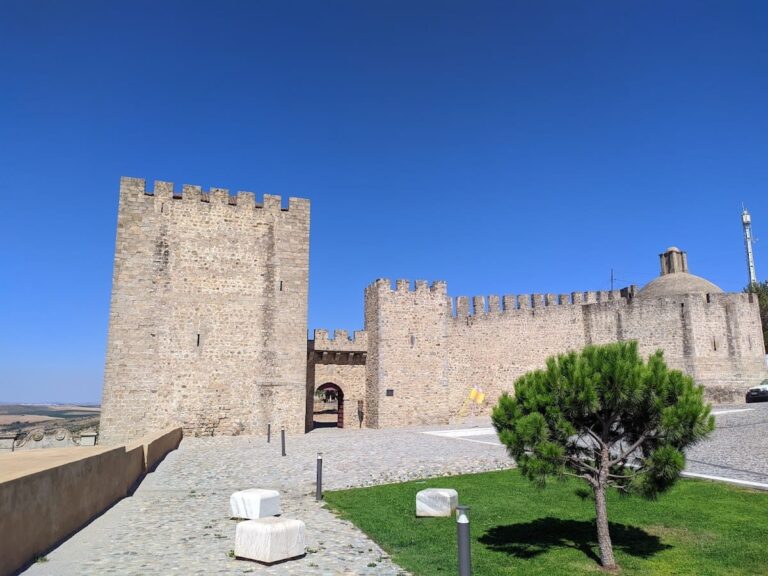
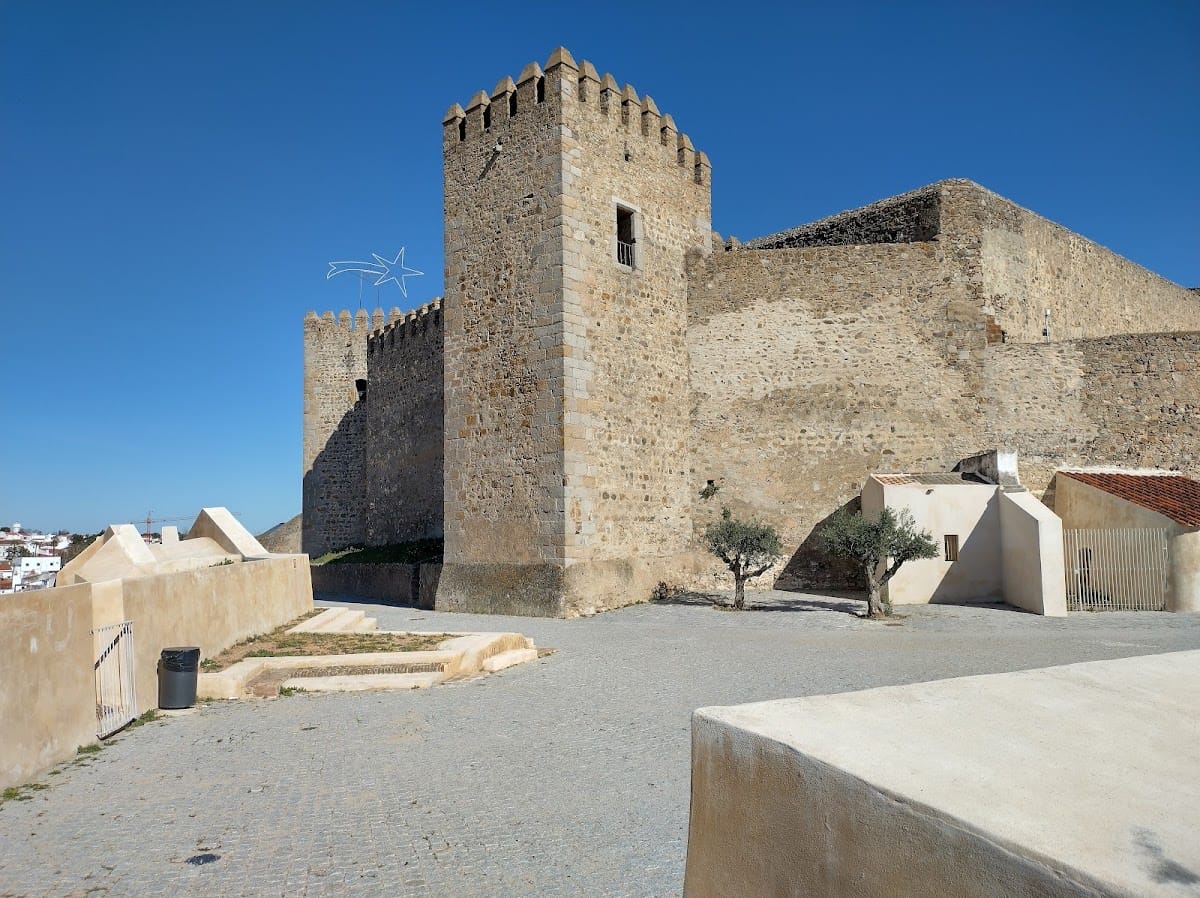
Set on Santa Vitória hill at an elevation of 299 meters, the Castle of Campo Maior occupies a commanding vantage point near the Spanish border. The fortress features a polygonal curtain wall with ten distinctive sides, forming an irregular, enclosed layout designed to control and defend the surrounding territory. The walls incorporate multiple bulwarks, including Boa Vista, São Sebastião, Vila gates, Lisbon, Curral dos Coelhos, Santa Cruz, Cavaleiro (also called São João), Príncipe, Fonte do Concelho, São Francisco, and Santa Rosa. Some of these bulwarks occupy central positions along the walls, reinforcing key defensive sectors.
The curtain wall is reinforced by counterscarps, which are secondary outer walls intended to strengthen defense, particularly on the southern and northeastern sides where breaches are visible. Four turrets complement this system, providing additional lookout and firing positions.
Inside the enclosure, numerous military buildings survive, such as warehouses for storing arms and supplies, barracks that housed soldiers, stables for horses, and quarters used for living and administrative purposes. These structures have seen continued use over the centuries and contribute to the fortress’s functional character.
Originally, the castle had six towers, of which two remain intact. These towers stand along the irregular trapezoidal interior space, accessible via battlements and wall-walks called adarves. The tower walls are topped with battlements and have truncated pyramid-shaped domes with rounded tops. Inside, vaulted ceilings can be seen at the level of the wall-walks. Notably, the northern tower features a Renaissance-style window with decorative elements, marking a period of artistic embellishment.
To the south lies the old village area, enclosed by lower elliptical walls equipped with seven towers—six of which have a rectangular plan while the northeast tower is octagonal and serves as the main entrance to this lower enclosure. These walls and towers were built lower than the main curtain walls to support cannon emplacements and barbettes (platforms for artillery), reflecting advances in military technology.
A battlemented tower near a false gate is located on the southwestern side, reinforcing the defenses in that area. Within the complex, the Chapel of Senhor dos Aflitos occupies a position in the southeastern section, underscoring the fortress’s religious as well as military character.
Today, the grounds include residential areas, notably housing gypsy communities within the São Sebastião bulwark. The castle also accommodates cultural institutions such as a historical and military museum, as well as facilities related to storage, animal keeping, and waste management, indicating ongoing functional use of the historic site.
Nearby sites