Kastellaun Castle: A Medieval Fortress in Germany
Visitor Information
Google Rating: 4.5
Popularity: Low
Official Website: www.kastellaun.de
Country: Germany
Civilization: Medieval European
Site type: Military
Remains: Castle
History
Castle Kastellaun is a medieval fortress located in the municipality of Kastellaun, Germany. This hilltop stronghold was first documented in the early 13th century and was built by the Counts of Sponheim, a noble family influential in the region during the Middle Ages.
The castle appears in records from 1226, associated with individuals named Hilger and Gerhard von Kestellin, although it remains unclear whether their name originated from the castle itself or the surrounding settlement. By 1301, Simon II of Sponheim-Kreuznach was living at the castle, establishing it as a seat of power. However, in 1321 Archbishop Baldwin of Trier laid siege to the castle as part of his attempts to limit Sponheim influence in the area. Baldwin responded to this conflict by constructing a nearby fortress, Burg Balduinseck, in 1325 to counterbalance the castle’s strategic importance. The castle was abandoned by Walram of Sponheim in 1340, thereafter being overseen by appointed bailiffs and officials rather than residing lords.
Following the extinction of the Sponheim dynasty, ownership of Kastellaun Castle passed jointly to Margrave Bernhard of Baden and Count Friedrich of Veldenz. This condominium rule reflected a shared administration by these two noble houses. When the Veldenz share transferred in 1444 to Stefan of Pfalz-Simmern-Zweibrücken, the castle became integrated into the Palatine realm, which involved it in various regional disputes linked to this shifting political landscape.
Between 1594 and 1600, the castle served as a refuge for Margrave Edward Fortunatus of Baden-Baden, who chose it as a residence until his accidental death there in 1600. During the prolonged conflicts of the Thirty Years’ War (1618–1648), Kastellaun and its castle were occupied intermittently by Spanish, Swedish, Lorraine, Hessian, and French armies, highlighting its continued strategic significance.
The castle met its final destruction in 1689 when French forces demolished it during the War of the Palatine Succession. An attempt to blow up the powder tower was incomplete, allowing part of this structure to survive the destruction. In the 19th century, the castle changed hands, becoming privately owned from 1820 until it was acquired by the town of Kastellaun in 1884. Efforts to stabilize the ruins began at that time. Later, between 1990 and 1993, more extensive restoration and excavation work took place, including reconstruction of the lower castle and its access routes. Since 2007, the lower bailey has housed a documentation center presenting regional historical artifacts spanning from prehistoric times through Roman and medieval periods up to the modern era.
Remains
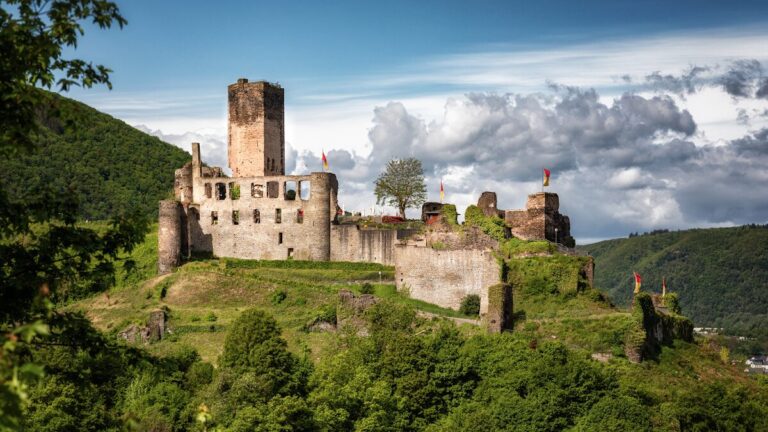
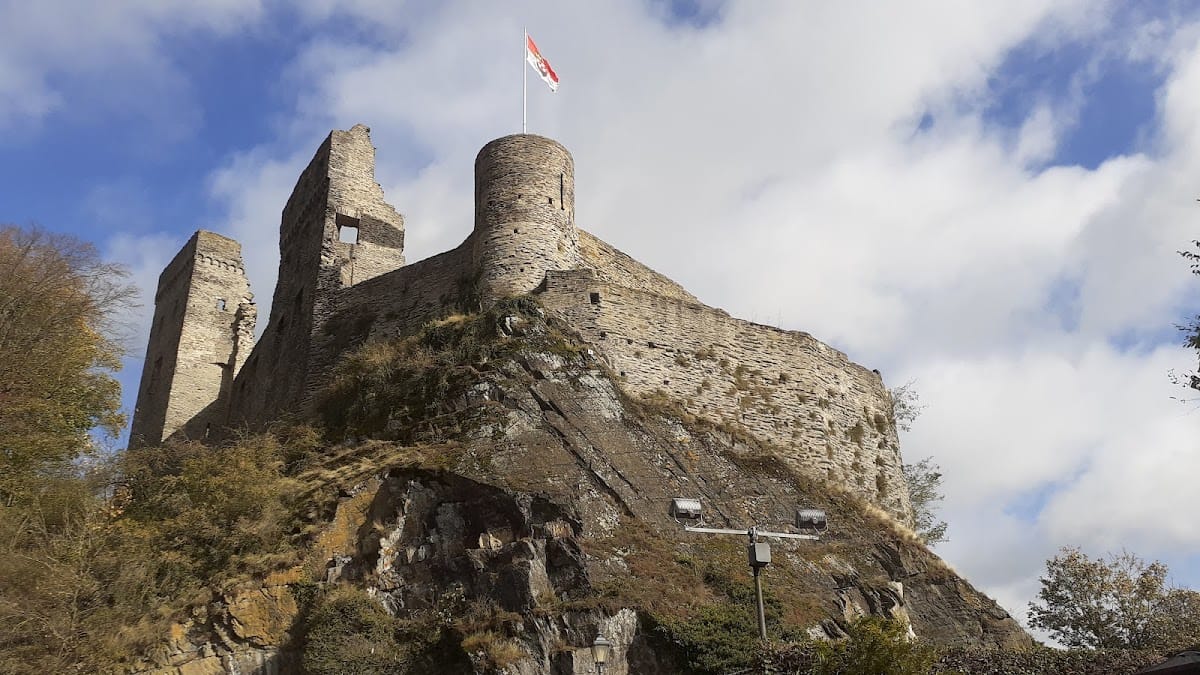
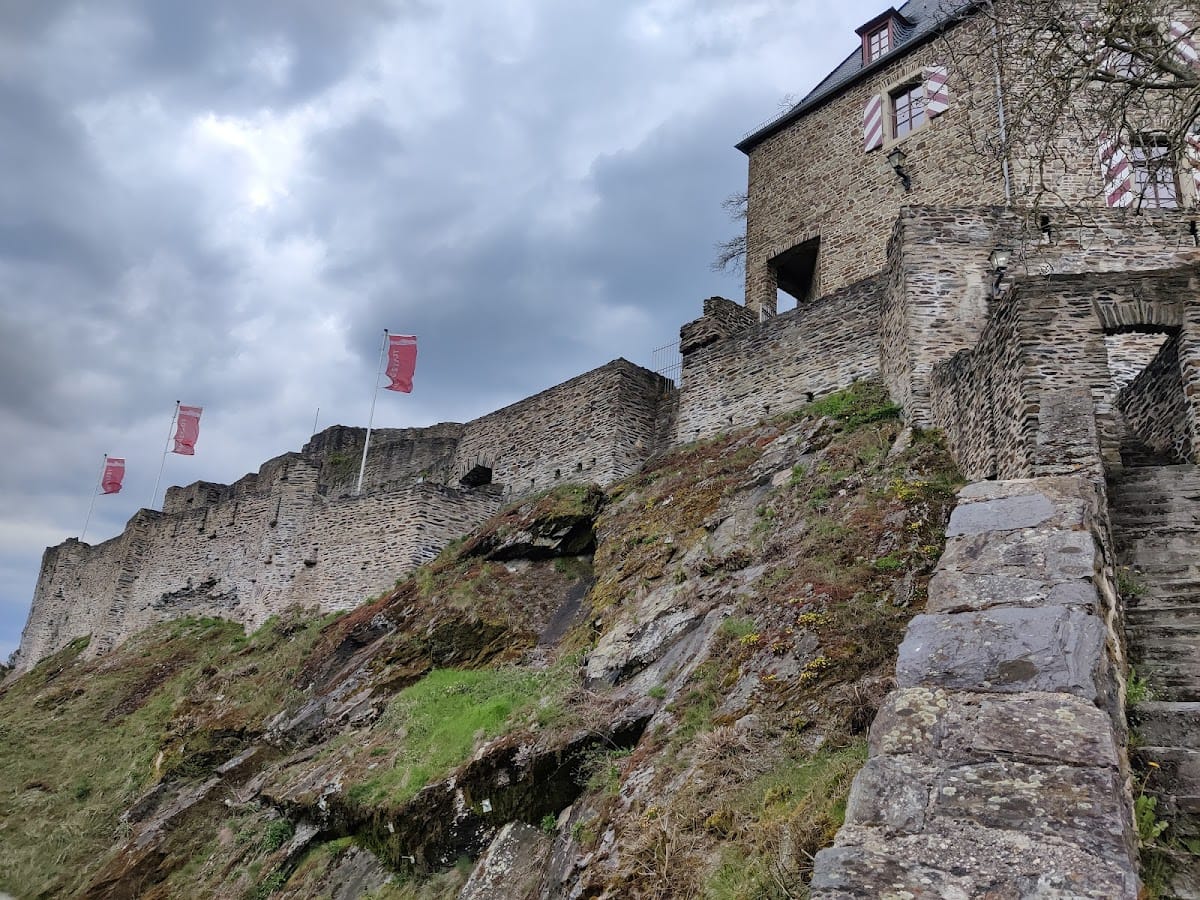
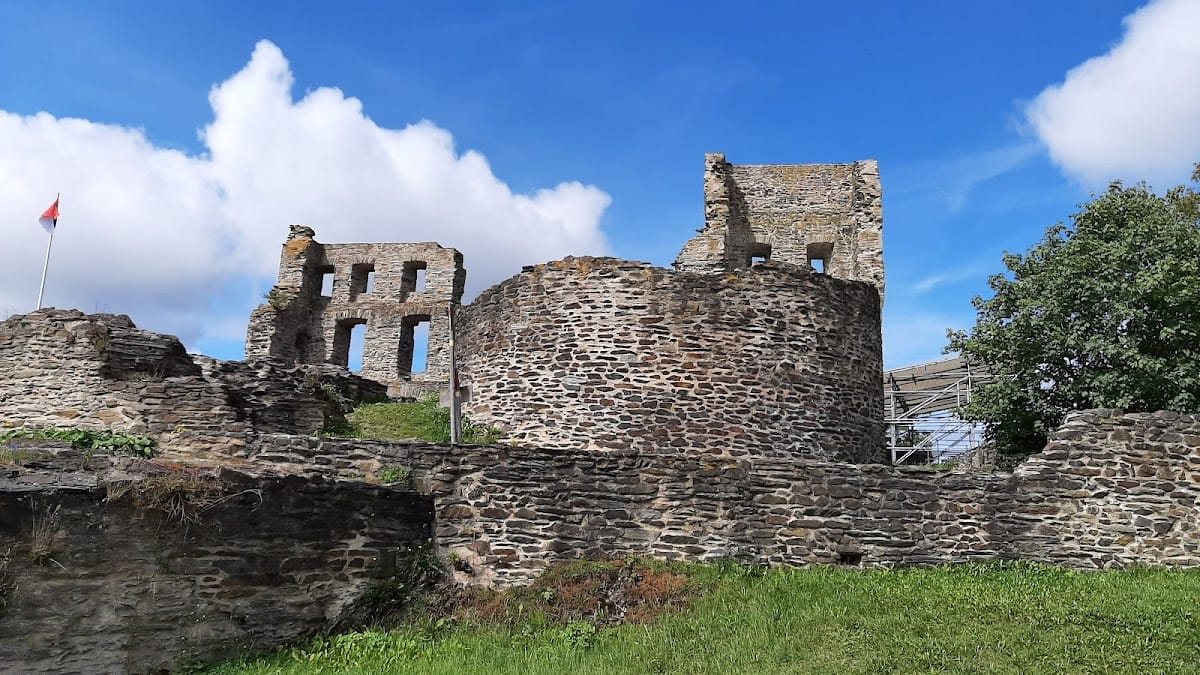
Kastellaun Castle is a hilltop fortress linked to the former town wall, consisting of two main sections: the inner (main) bailey and the outer bailey. The core of the fortress includes the remains of defensive and residential structures that reveal development from the 13th through the 16th centuries.
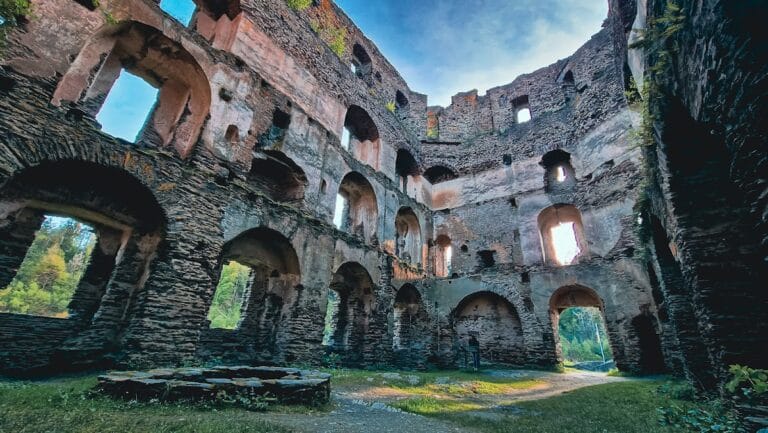
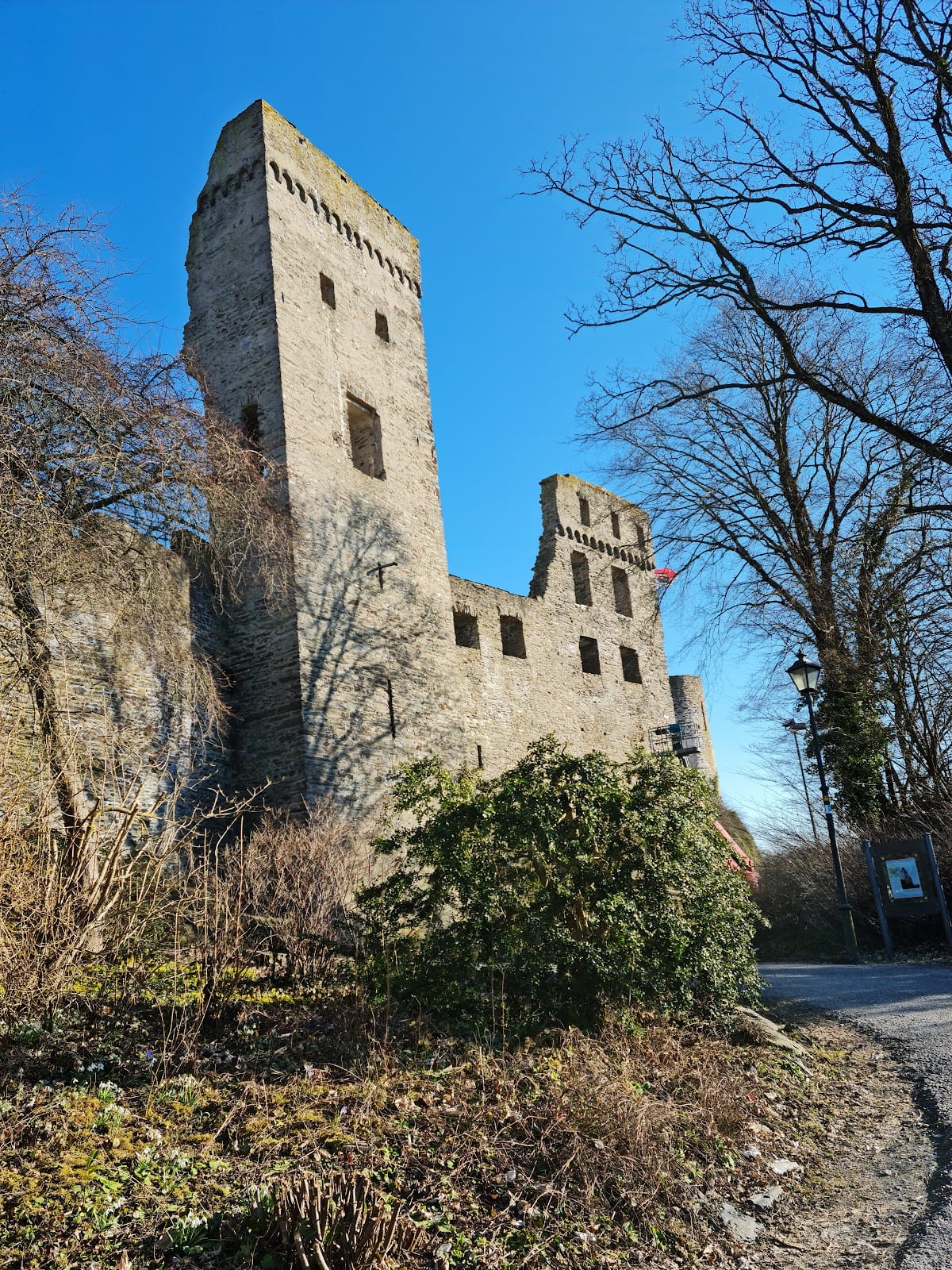
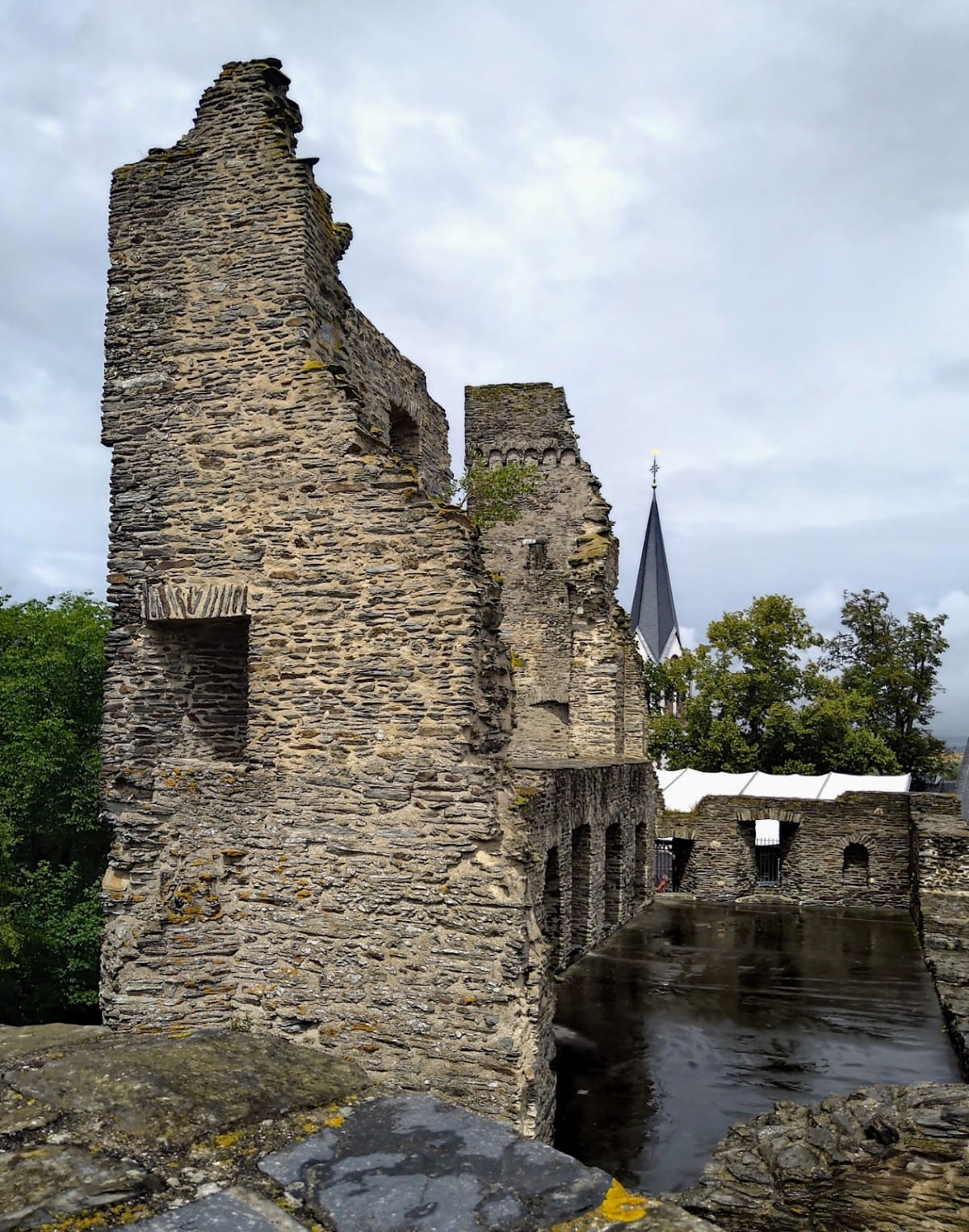
Within the inner ward, the fragmentary bergfried (a tall defensive tower typically central to medieval castles) stands among the ruins of a robust ring wall encircling the site. Two residential buildings remain identifiable here. The older of these, situated on the eastern side, dates back to the 14th century. Excavations conducted in the early 1990s uncovered the cellar of this building, providing insight into the original construction techniques and layout. On the western side of the inner bailey lie visible ruins from the 16th century, including the eastern end of the palas — a great hall used for official events and living space — alongside a rectangular powder tower, which once stored gunpowder for the castle’s defenses.
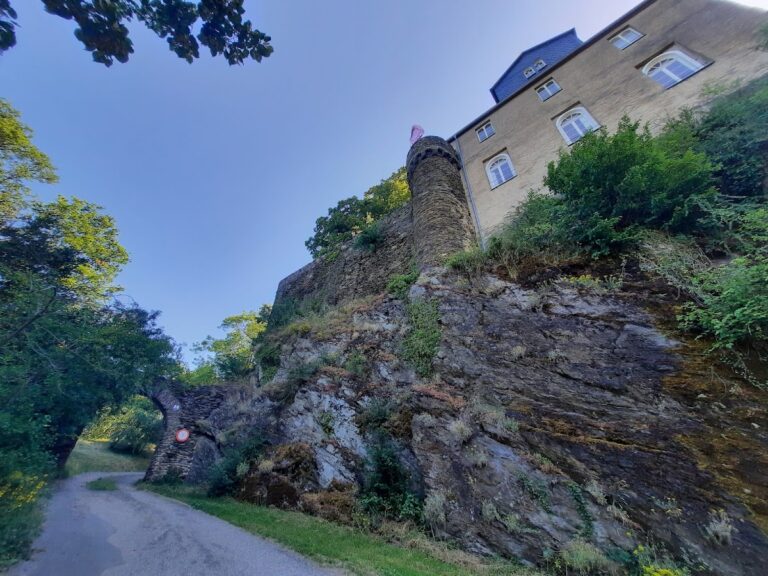
A zwinger, which is an outer defensive courtyard or wall designed to slow down attackers, is located on the east side facing the town. The original entrance to the castle was secured by a gate tower positioned at the northern corner of the inner ward. Today, visitors enter through a modern gate, but the location of the medieval gate tower remains part of the castle’s historical footprint.
The outer bailey includes two modern structures built atop the foundations of historic buildings, reflecting the layers of use the site has experienced. Restoration efforts between 1990 and 1993 reconstructed parts of the lower castle and its access pathways, revitalizing the connection between sections of the fortress.
The former palas now serves as an open-air theater stage, while the castle’s cellars and reconstructed lower bailey spaces accommodate a restaurant offering medieval-themed fare, blending historic architecture with contemporary use.
Within the documentation center housed in the lower bailey, numerous artifacts reveal the region’s long history beyond the medieval period. Exhibits include Celtic pottery, brooches known as fibulae, various jewelry items, and a reconstruction of a wagon burial uncovered in 1938. A detailed model of a Roman legionary helmet further illustrates the military presence and cultural influences of the Roman era in this area.
The powder tower remains partially intact, its survival owed to the incomplete explosion caused during the French demolition in 1689. This tower stands as a tangible link to the castle’s violent past and its role in early modern warfare.
Nearby sites