Schloß Schöneck: A Medieval Castle and Baroque Residence near Boppard

Site at a Glance
- Rating
- 4.3
- Popularity
- Very Low
- Country
- Germany
- Primary era
- Medieval
- External website
- Open
- Eras represented
- Medieval, Early Modern, Modern
- Civilizations
- Holy Roman Empire
- Site type
- Military
- Remains
- Castle
On this page6 sections
History
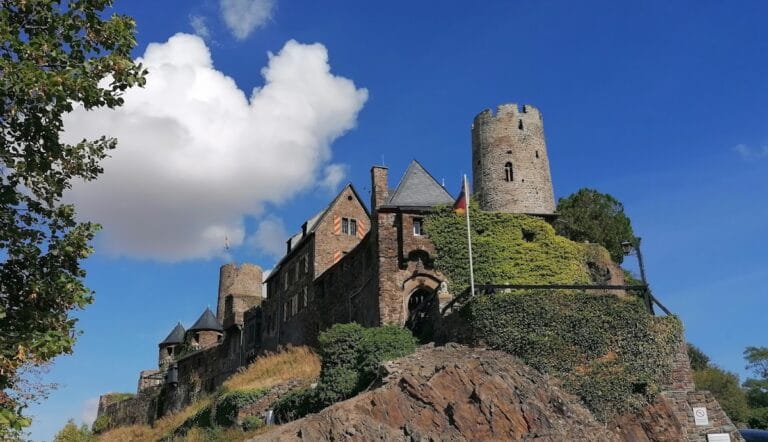
Schloß Schöneck is a medieval castle complex in Germany, located near Boppard in the Hunsrück. Conrad of Boppard, an imperial ministerialis, built it around 1200 as an imperial castle. A ministerialis was a medieval official or military servant who held status and property through service to an emperor or another ruler. Conrad’s descendants took the name Knights of Schöneck and occupied the castle until their family became extinct in 1508.
A jointly held medieval castle
Several branches of the family lived at Schöneck together, making it a Ganerbenburg, or castle jointly occupied and held by different family lines. The Gallscheider Gericht, a territorial judicial district, was administered from the castle. During the Eltz Feud of 1331 to 1336, a conflict involving rebel knights and Baldwin of Luxembourg, Archbishop and Elector of Trier, Schöneck belonged to a protection and defence alliance formed by the rebels. In 1354, the castle became a fief of the Electorate of Trier, the ecclesiastical principality ruled by the Archbishop of Trier, who was also an imperial elector.
Changes of ownership and enlargement
Troops of the Count Palatine occupied Schöneck in 1488 during the Beilstein War, but the castle returned to the Electorate of Trier soon afterward. After 1508, it changed hands several times while remaining a Trier fief. From 1560 to 1646, a collateral branch of the Lords of Eltz held it in pledged possession.
From 1646 until about 1677, Schöneck belonged to the Sötern fee tail, a legally restricted estate arrangement intended to preserve property within a designated family line or foundation. Archbishop Philipp Christoph von Sötern was the driving force behind this transfer. The complex was enlarged with Baroque wings in the mid-seventeenth century and thereafter became known as Schloss Schöneck.
Private ownership
The site passed into private ownership in 1805, after which several new buildings were added. A milk spa operated there from 1846 to 1848, using milk and whey as part of its treatments. The painter Wilhelm Steinhausen acquired the complex in 1912. Since 1922, it has been owned by a family foundation.
Remains
Castle layout and surviving defenses
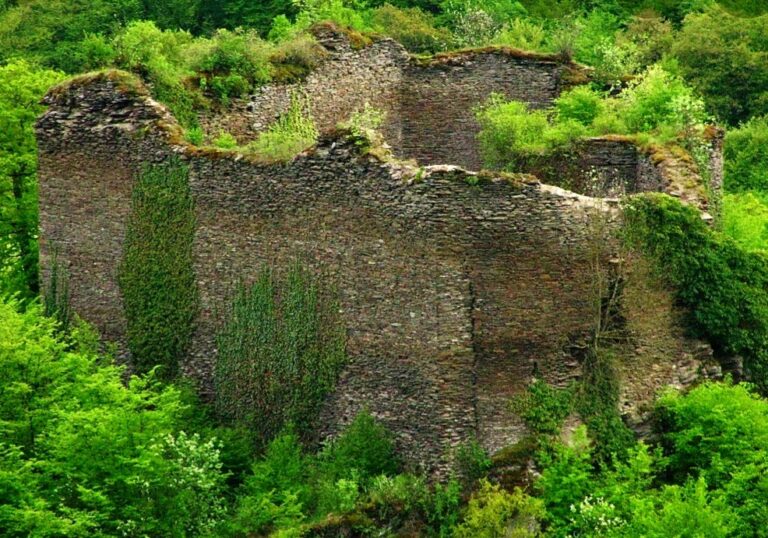
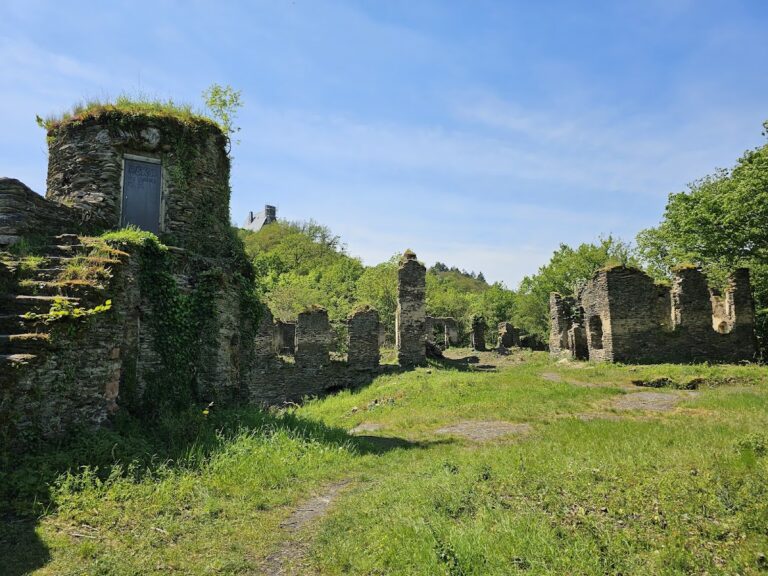
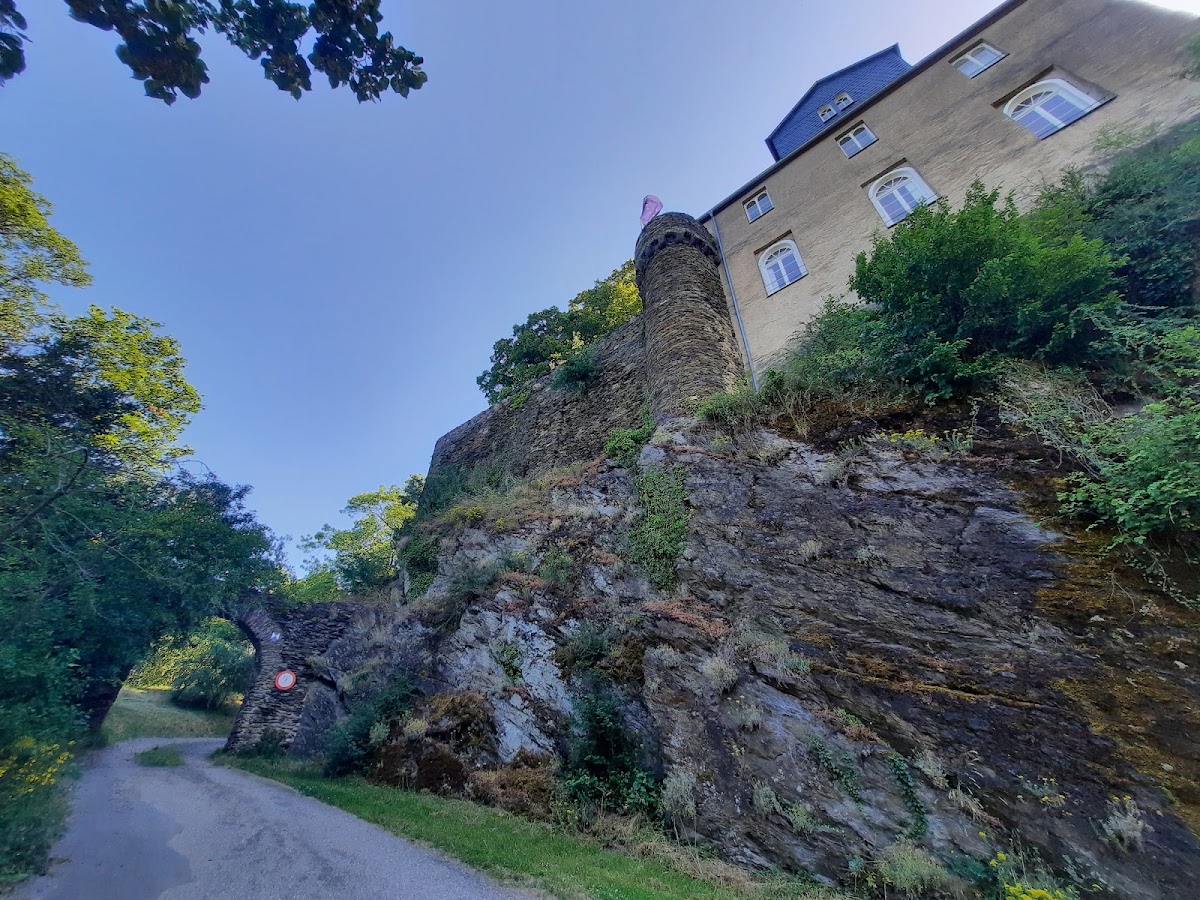
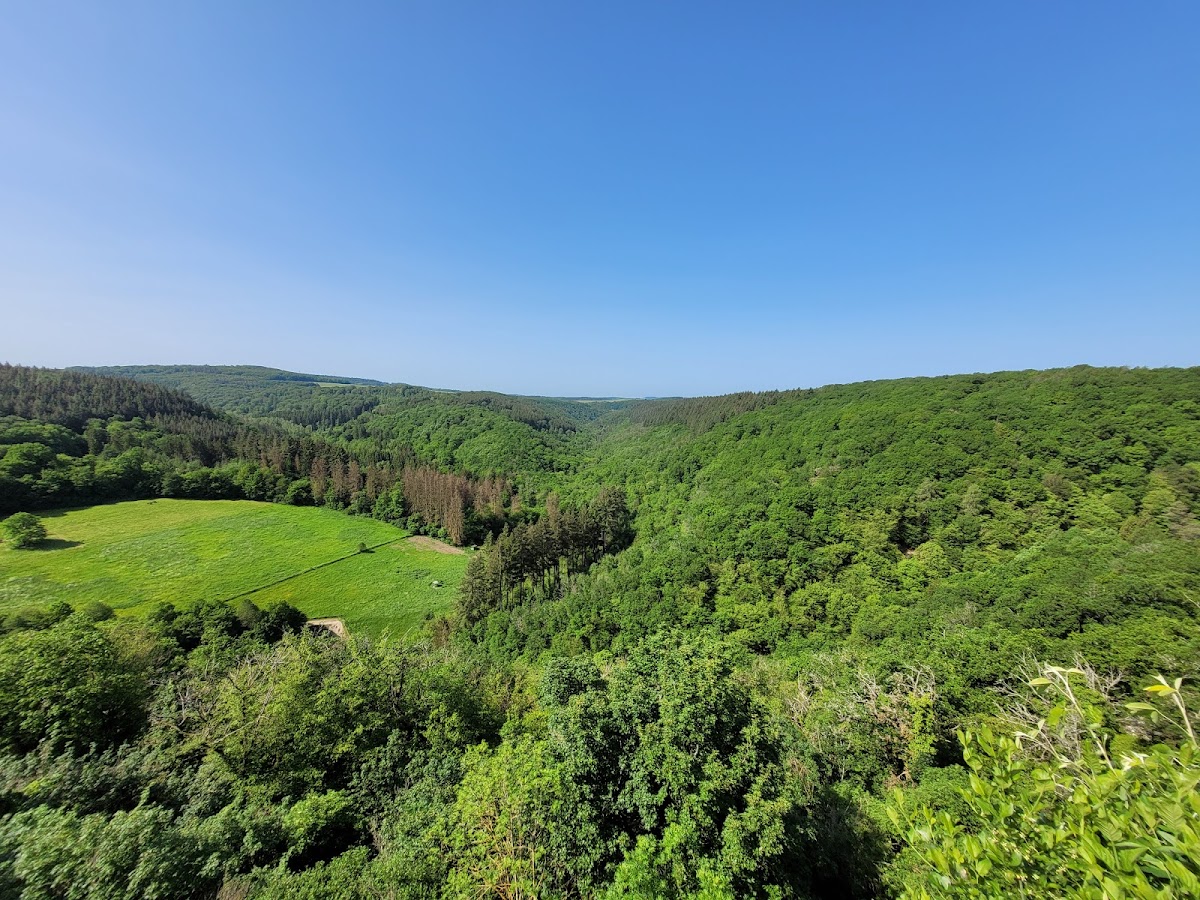
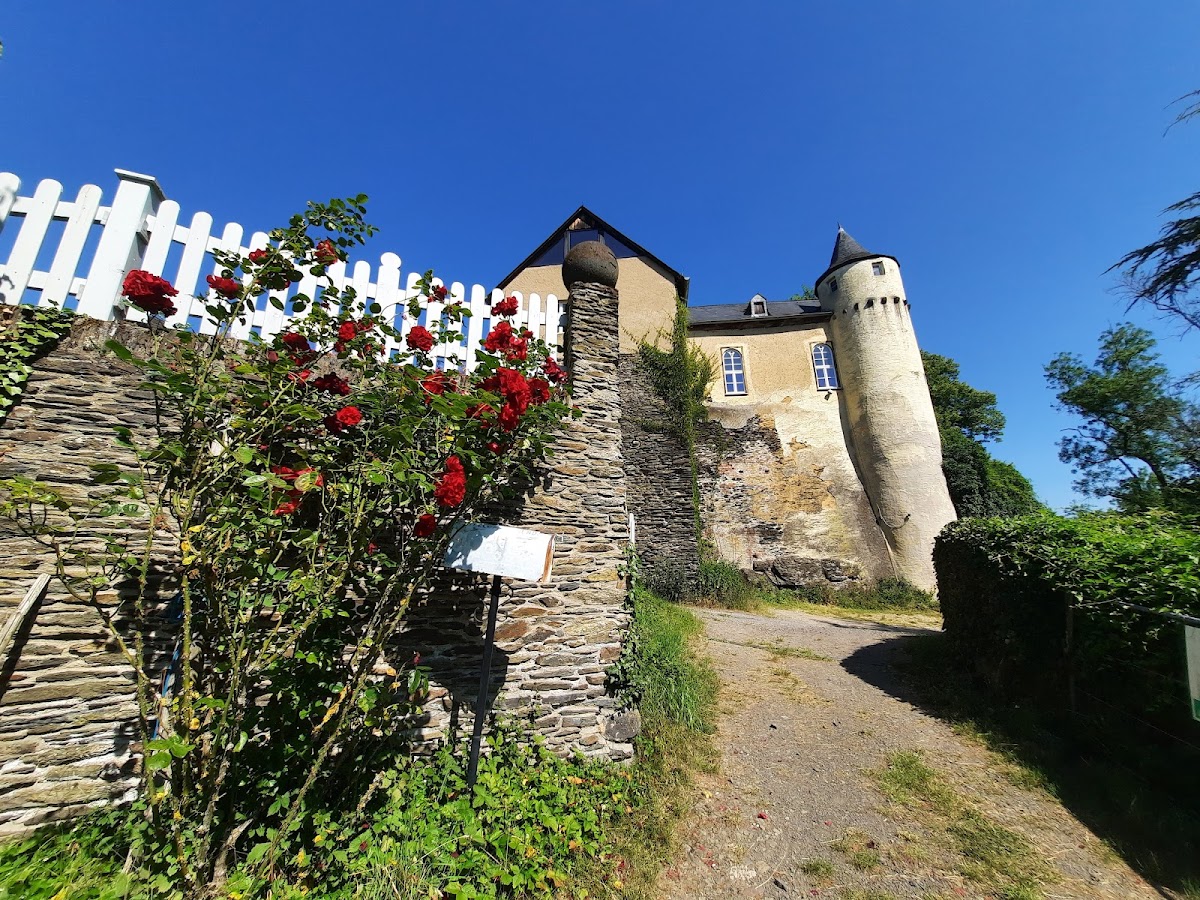
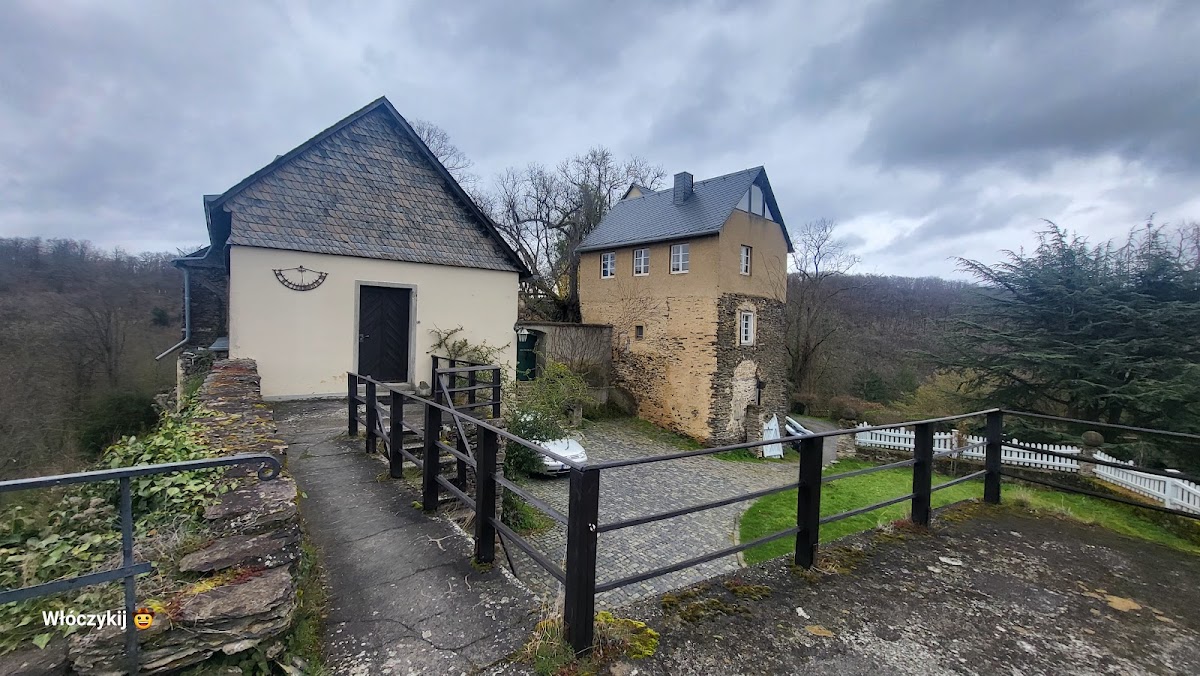
Schloß Schöneck stands on a rock outcrop in the Ehrbach Gorge, within the Boppard borough and the Herschwiesen cadastral area. Its medieval plan is divided into an upper bailey and a lower bailey, enclosed castle courts that formed the principal wards of the fortress. The present complex consists mainly of buildings from the nineteenth and twentieth centuries, together with the Baroque wings added during its seventeenth-century enlargement.
Medieval fabric survives in the cellars, supporting walls, towers, and part of the surrounding enceinte, the fortified defensive enclosure. On the uphill side, the remains of a neck ditch mark the defensive cut across the landward approach, separating the castle from the adjoining terrain.