Castillo de Higuera de Vargas: A Medieval Fortress in Spain
Visitor Information
Google Rating: 3.9
Popularity: Very Low
Country: Spain
Civilization: Medieval European
Site type: Military
Remains: Castle
History
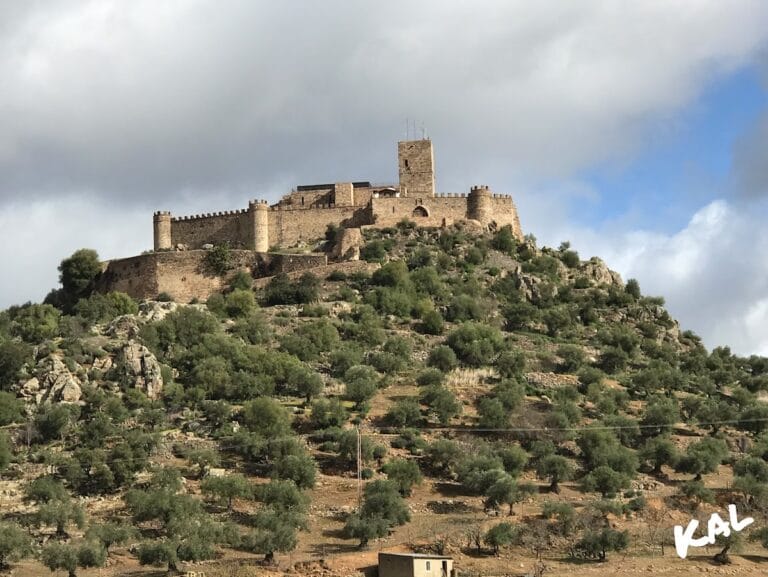
The Castillo de Higuera de Vargas is a medieval fortress located in the municipality of Higuera de Vargas in Spain. It was constructed in the 14th century, during a period of territorial consolidation in the region.
Initially, the castle was under the ownership of the Knights Templar, a religious and military order known for their role in the Crusades and the defense of Christian territories. Their possession of the fortress came as a result of a donation by King Alfonso IX, reflecting the strategic and religious importance of the site during that time. The Templars maintained control of the castle for only a few years before it passed into other hands.
In the year 1374, King Enrique II granted the castle to Alfonso Fernández de Vargas. The influence of this family was significant enough that the nearby village was named after the new owner, indicating the castle’s connection to local governance and settlement identity. Subsequently, the castle entered the possession of the Duke of Feria due to the absence of direct male descendants among earlier proprietors. This transfer highlights the typical medieval patterns of inheritance and feudal tenure in the region.
Remains
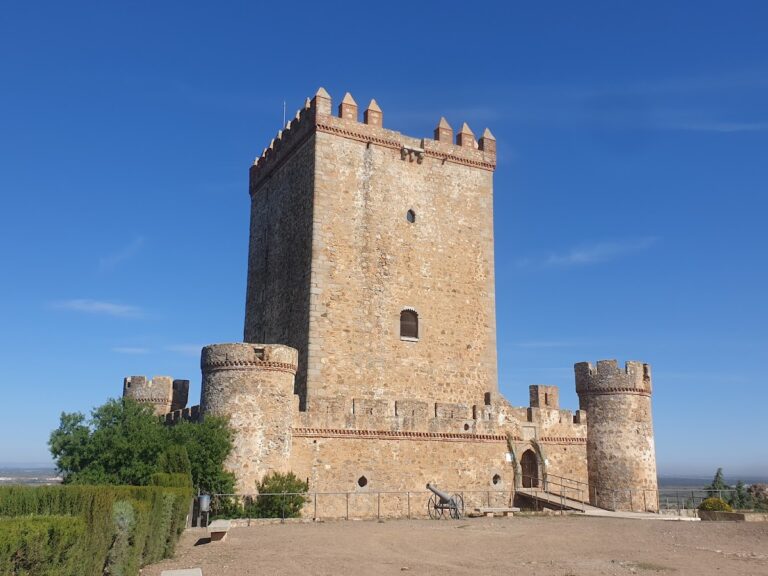
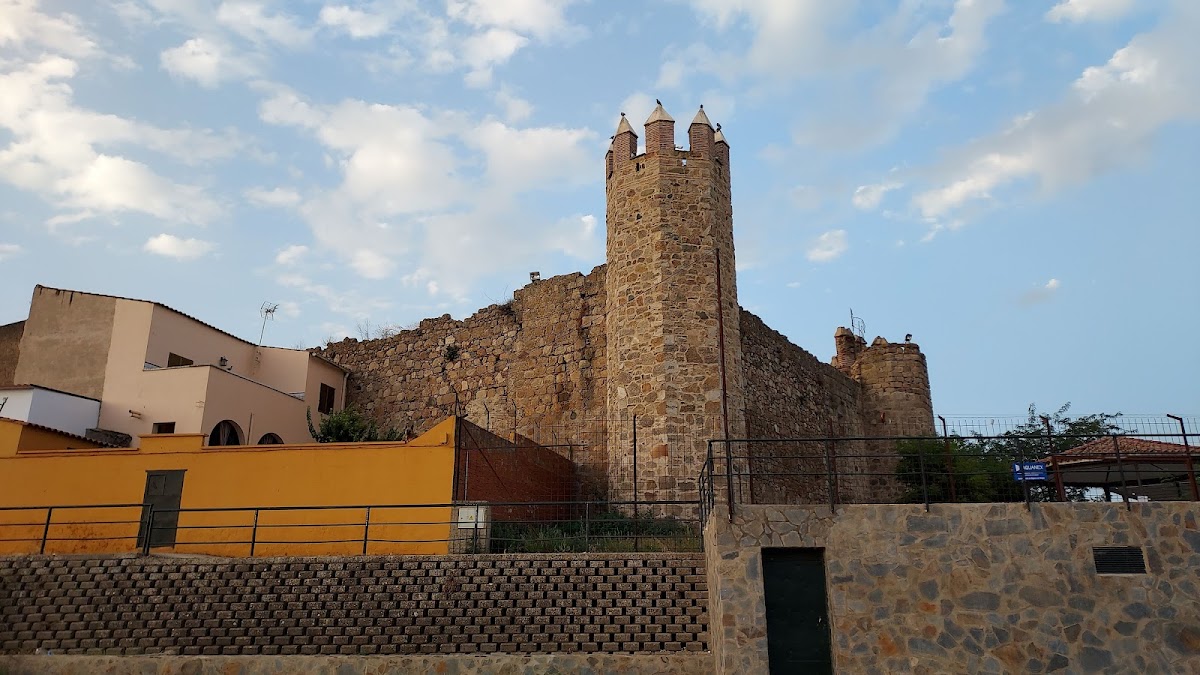
The Castillo de Higuera de Vargas is laid out in a quadrangular plan, with its design centered around a main courtyard known traditionally as the patio de armas, or the weapons yard. Its original structure featured four octagonal corner towers which defined the fortress’s defensive perimeter; however, today only one of these towers remains standing, offering a glimpse into the castle’s original fortifications.
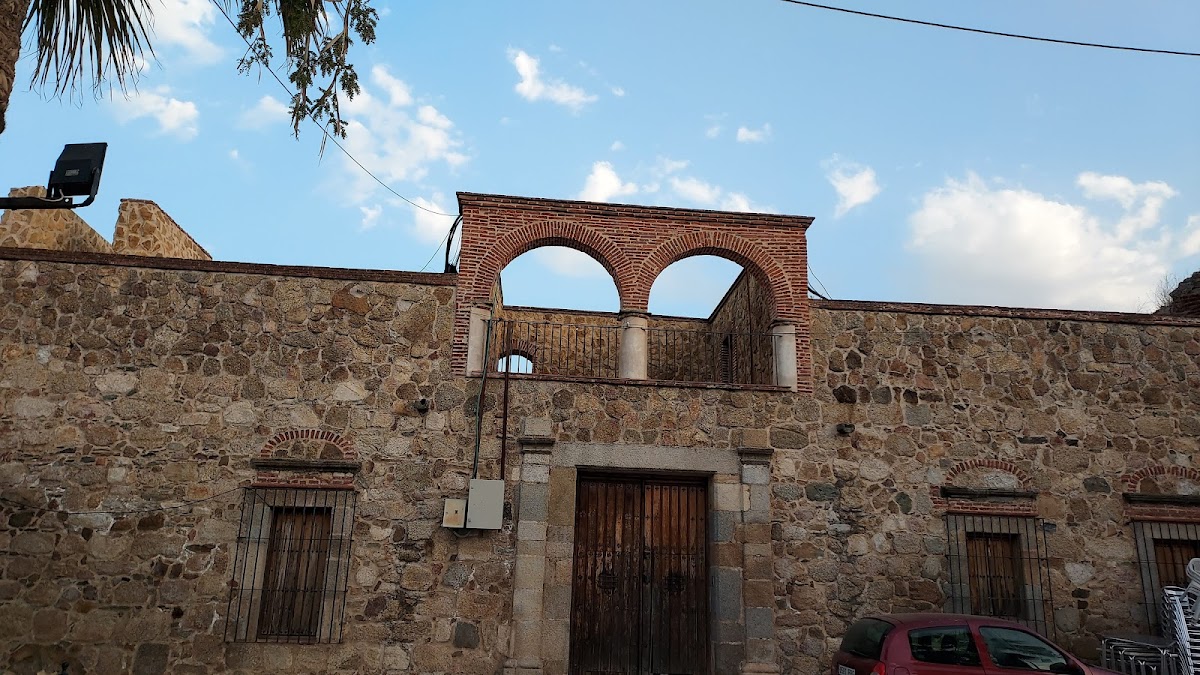
Constructed primarily from masonry, ashlar, and rubble stonework, the castle’s walls display a combination of sturdy building techniques suitable for defense along with ornamental elements. Decorative brick courses can be found beneath the battlements—the defensive parapet walls on top of the fortress—and on the merlons, which are the upright sections of the battlements. These brick features serve an aesthetic purpose rather than a defensive one.
The castle’s northeast, northwest, and southwest facades are largely concealed by houses that have been built adjacent to the fortress over time. In contrast, the southeast side faces the village square and preserves a more residential or palatial look, suggesting this front served as an important official or noble entrance. This side reflects the dual function of the castle as both a military stronghold and a noble residence throughout its history.
Nearby sites