Castle of Jerez de los Caballeros: A Medieval Fortified Enclosure in Spain
Site at a Glance
- Rating
- 4.6
- Popularity
- Low
- Country
- Spain
- Primary era
- Medieval
- Eras represented
- Medieval
- Civilizations
- Kingdom of León
- Site type
- Military
- Remains
- Castle
On this page10 sections
History
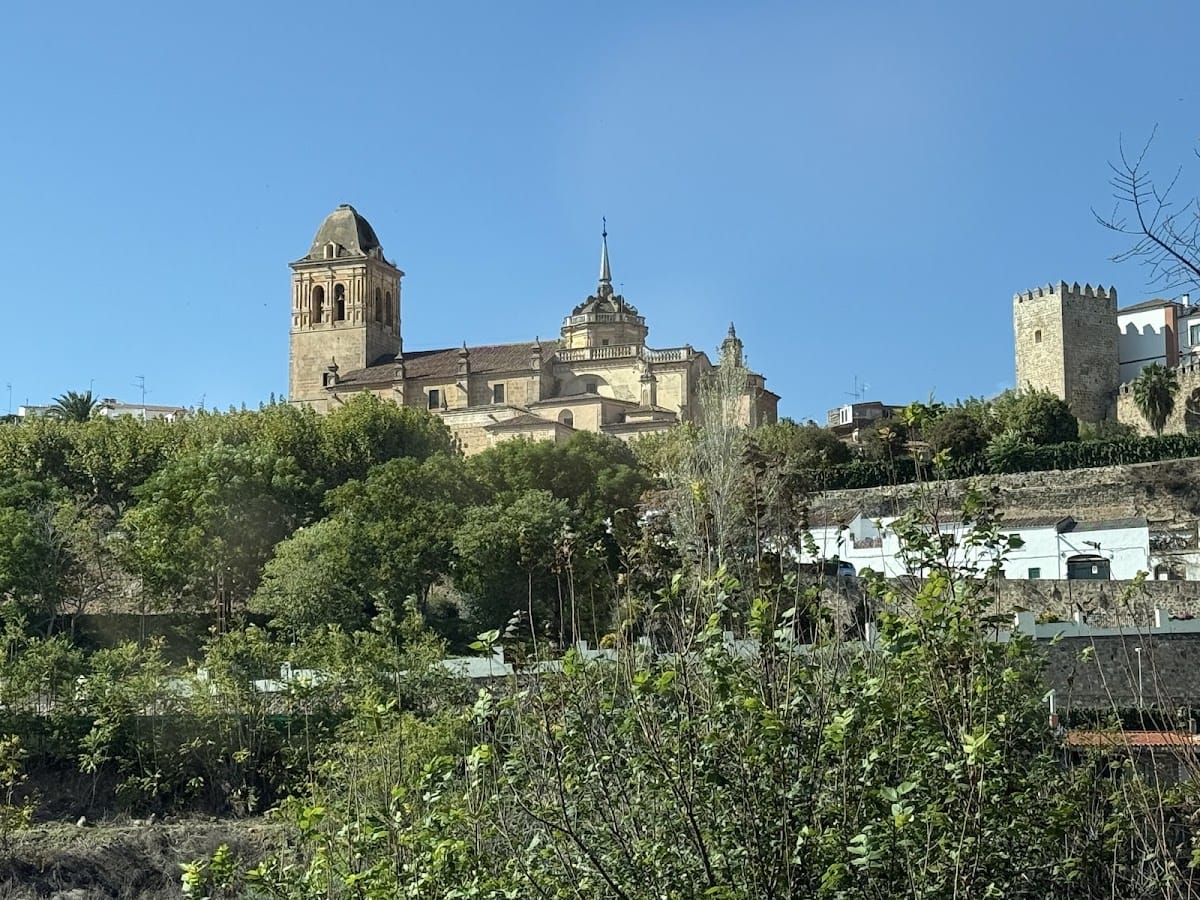
The Castle of Jerez de los Caballeros is a fortified medieval complex in Spain, occupying a strategic position within the historic town of Jerez de los Caballeros. Its origins are disputed, with construction placed variously in the ninth or tenth century and in the thirteenth century. A reconstruction in the thirteenth century is attributed to Alfonso IX, the king of León associated with Christian expansion in western Iberia.
Earlier settlement and Christian reconquest
The surrounding settlement passed through Phoenician, Roman, Visigothic, and Muslim phases. Arab geographers Al-Umari and Al-Idrisi may have referred to the site as a fortified stronghold. The walls are traditionally associated with Phoenician origins, while surviving evidence indicates Roman and Visigothic presence in the area.
Alfonso IX reconquered Jerez de los Caballeros around 1238 with assistance from the Order of the Temple, also known as the Knights Templar, and the Order of Santiago. These medieval military-religious orders combined monastic organization with military and territorial functions during the Christian reconquest of the Iberian Peninsula. In the same year, Alfonso IX donated the settlement to the Order of the Temple.
Frontier defense and later use
The fortified town became part of the medieval defensive system of a settlement close to the Portuguese frontier. Its position exposed it to military pressure, including sieges by Portuguese forces. After the fifteenth century, neighborhoods developed beyond the walls as the population grew and the number of trades increased, changing the relationship between the enclosure and the expanding town.
The castle later acquired civic uses and served as a food market until 1950. Its heritage protection includes Spain’s general decree of 22 April 1949 and the Spanish Historical Heritage Law of 1985. Since 3 September 1991, Jerez de los Caballeros has held Asset of Cultural Interest status as a Historic Ensemble, a legal designation for a unified group of buildings and spaces recognized as a cultural site.
Remains
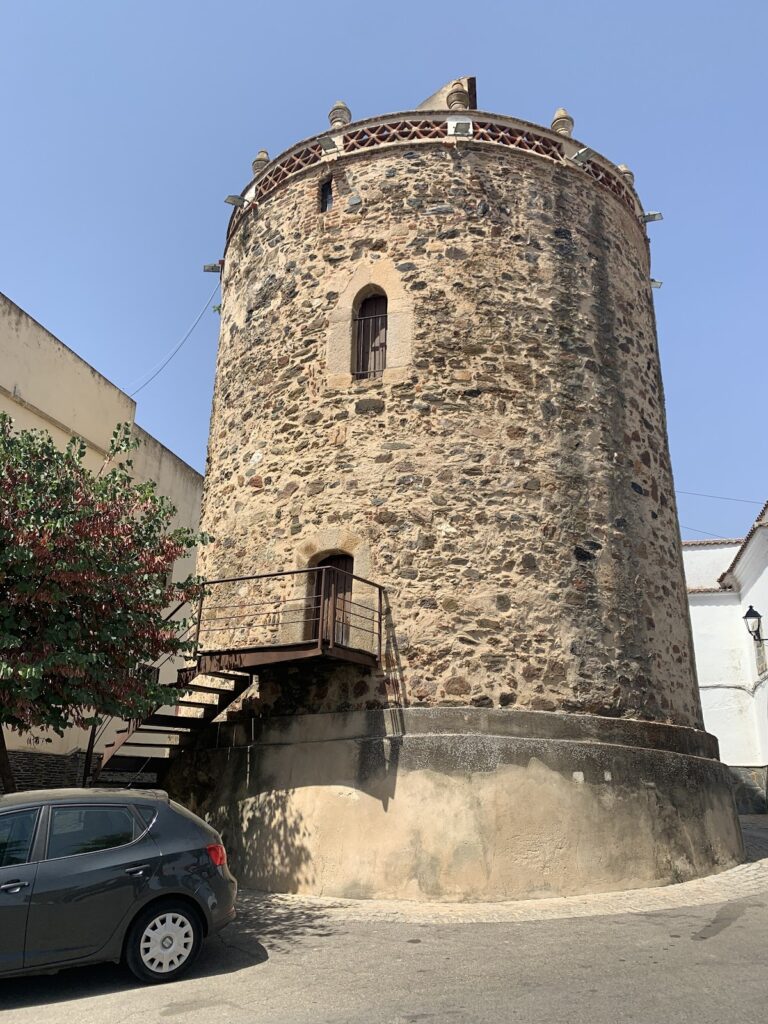
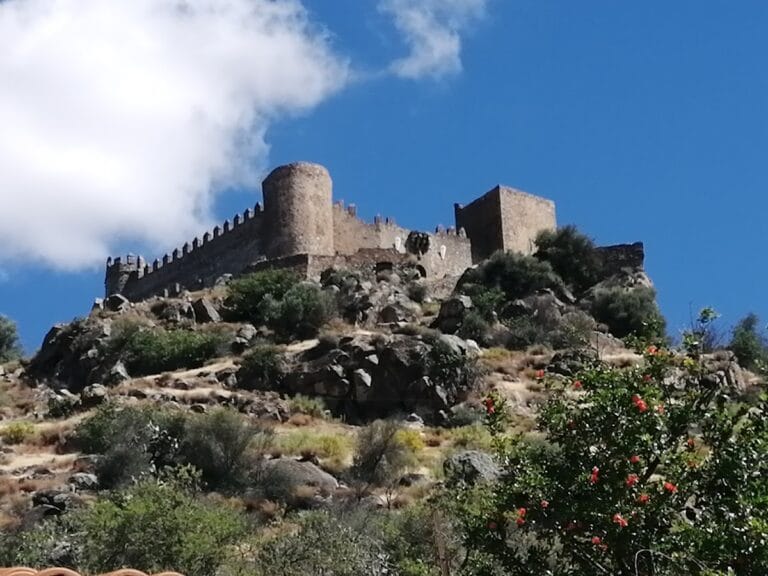
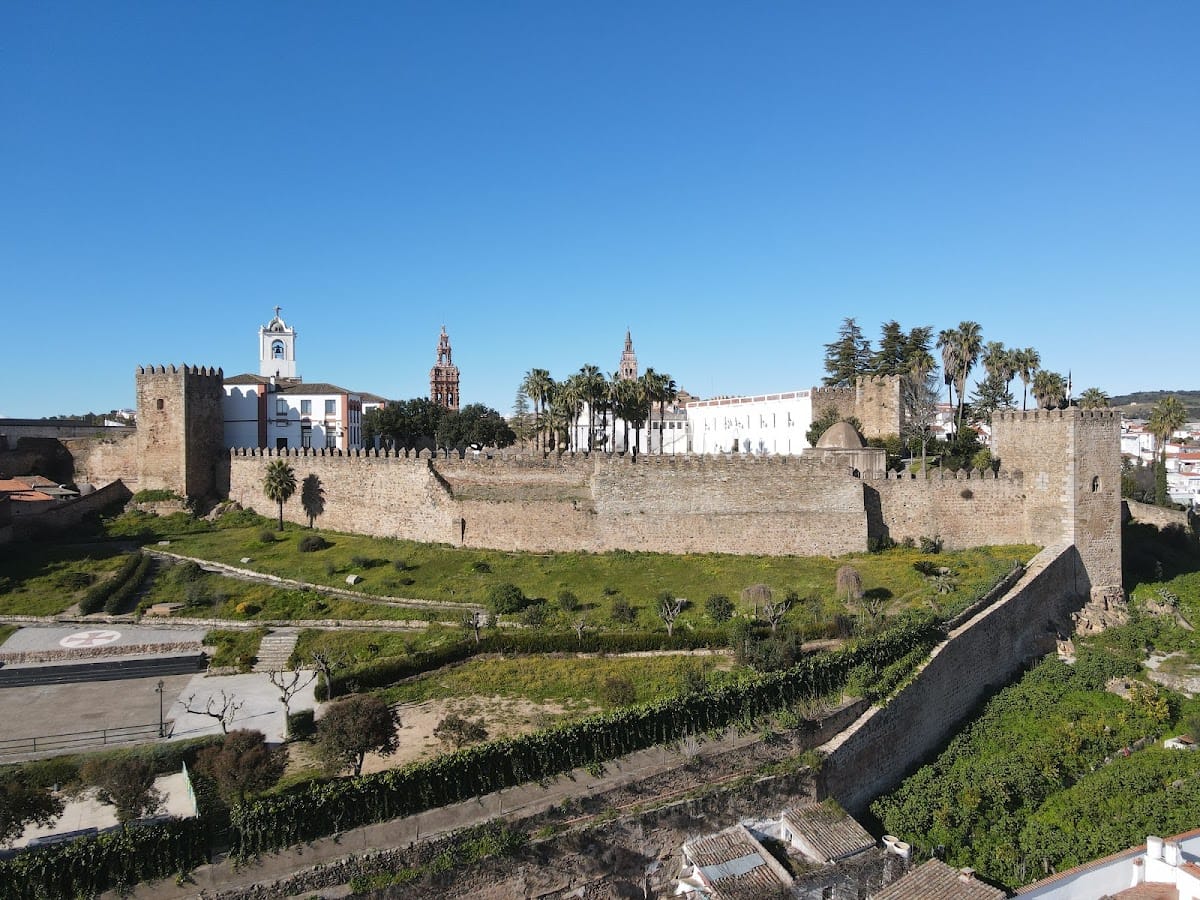
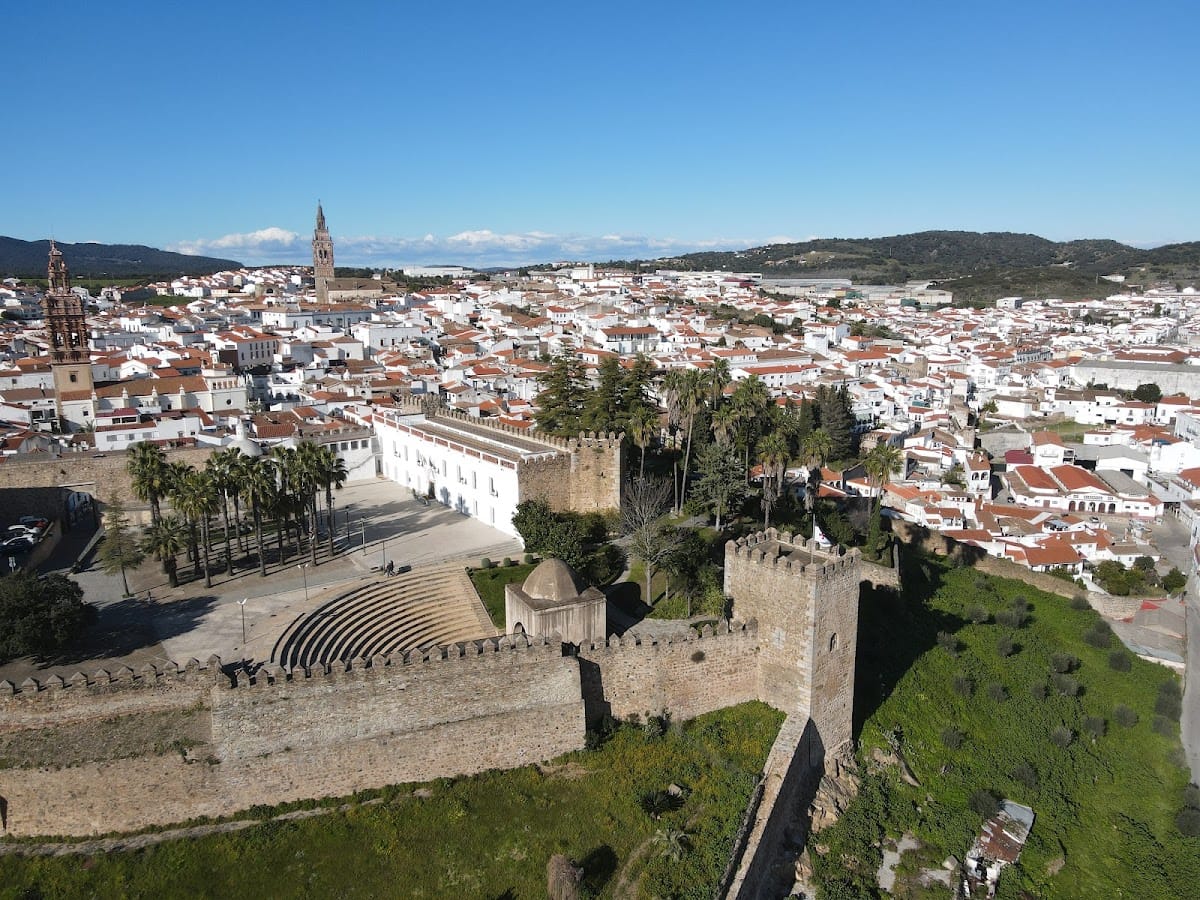
The castle occupies the western side of a hill on a high plateau overlooking the valley formed by the Ardilla River. It stands at one of the steepest and most difficult-to-attack points of the fortified enclosure. The castle has an irregular pentagonal plan, while the surrounding urban wall combines masonry and regularly cut ashlar blocks, with semicircular towers and restored battlements.
Fortified enclosure
Walls and towers
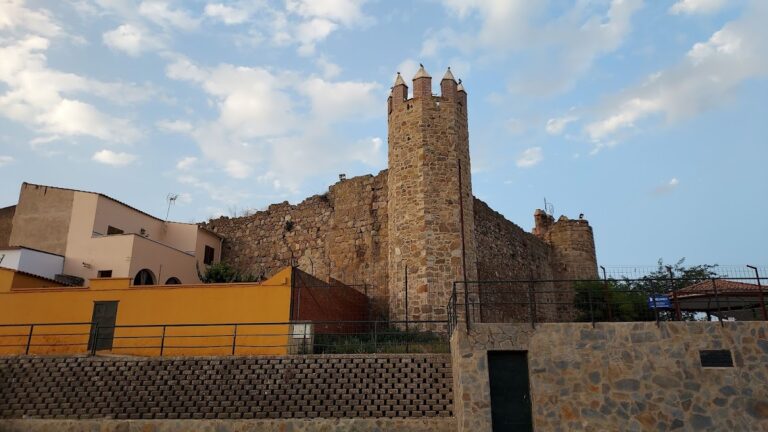
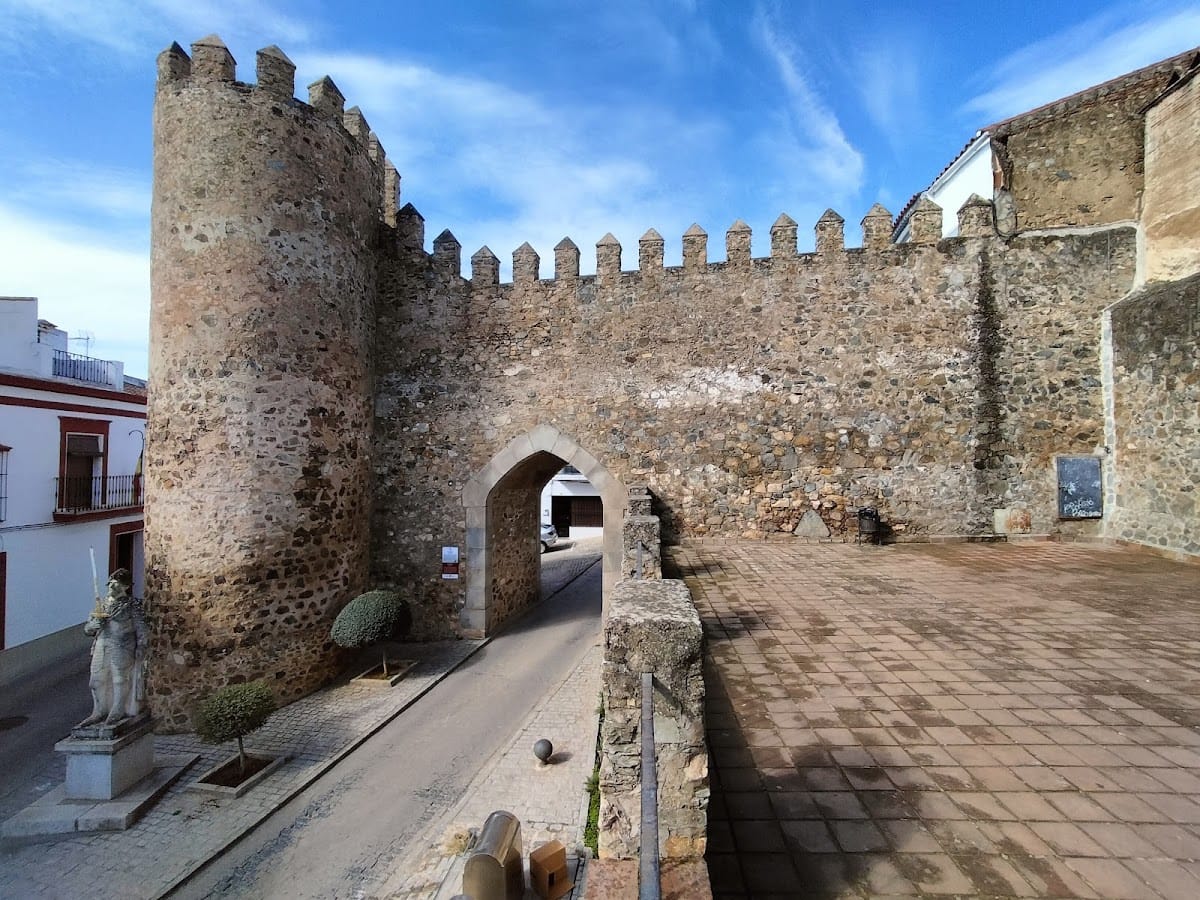
The urban wall encloses the historic defensive area with sections built in masonry and ashlar, a technique using regularly dressed stone blocks. Semicircular towers reinforce the wall, and their battlements have been reconstructed in modern times. The castle occupies one end of this enclosure, with defensive towers placed at some of its corners.
Gates
Entry into the fortified town was arranged through gateways incorporated into towers or projecting defensive structures. The Puerta de la Villa retains a bent entrance, which forces a change of direction within the gateway. The Puerta de Burgos has a Gothic opening. Small remnants of the Puerta de Santiago and Puerta de Alconchel also survive.
Castle structures
Keep and windows
The keep rises on the northeastern side of the irregular pentagonal castle. It contains a Gothic window with two openings and a polylobed outline, formed by several curved lobes. On the northern side are the Veleta Window and Arms Window. The southern angle includes the Carbón Window and the Clock Window, positioned on two separate wall sections.
Chapel and cistern
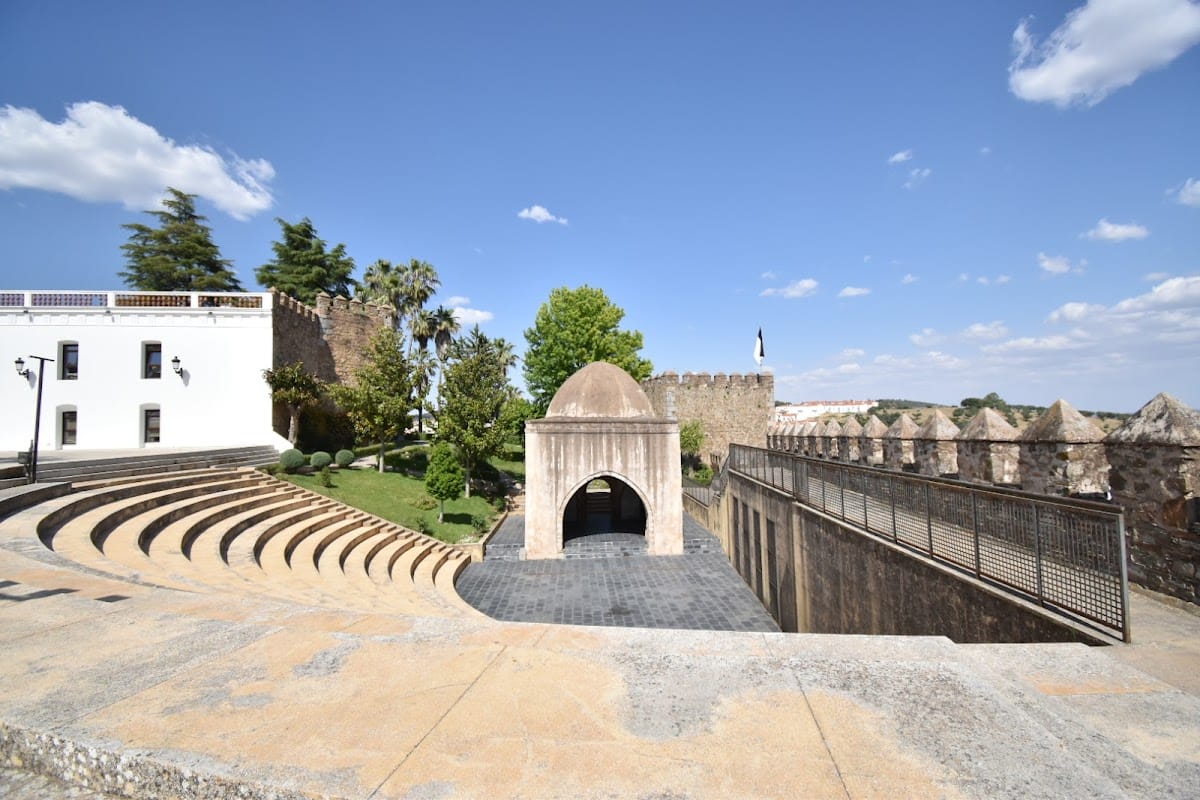
Most of the castle interior is now occupied by a garden. Surviving elements include a small fifteenth-century chapel and a cistern, a reservoir used to collect and store water within a fortified settlement. The castle was constructed from large ashlar blocks and remains in relatively good condition despite the sieges it experienced. Its battlements have also been restored.