Castell de Ribes de Freser: A Medieval Catalan Castle in Spain
Visitor Information
Google Rating: 4.1
Popularity: Low
Country: Spain
Civilization: Medieval European
Site type: Military
Remains: Castle
History
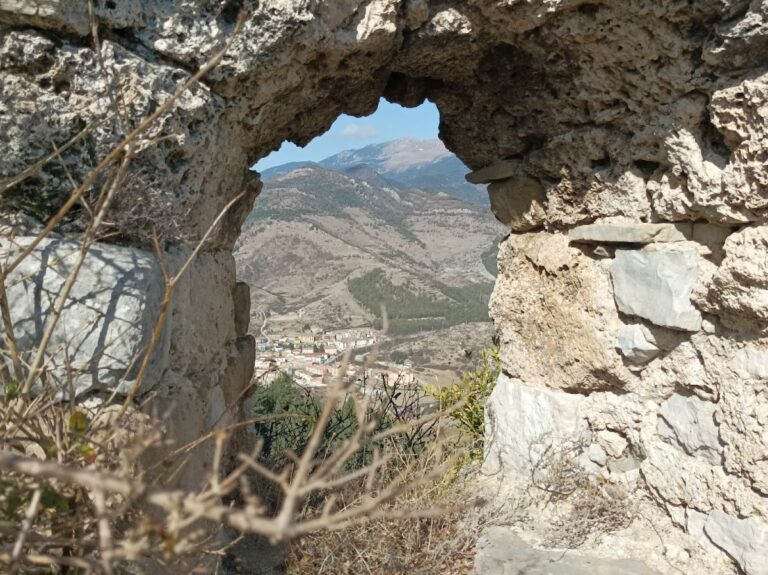
The Castell de Ribes de Freser is located in the town of Ribes de Freser in Spain and was originally built by medieval Catalan builders. Its position on a hill overlooking the surrounding valley placed it on the historic boundary between the counties of Cerdanya and Besalú, two important territorial entities in the early Middle Ages.
Constructed around the third quarter of the 11th century, the castle began as a modest defensive tower typical of rocky hilltop fortresses found in this region. Its first recorded lord appears in 1140, when Galceran de Sales pledged loyalty to Ramon Berenguer IV, Count of Barcelona. This event reflects the castle’s political role within the expanding influence of Barcelona following the 1111 union of Besalú and Barcelona, which gradually diminished the castle’s importance as a border defense.
In 1194, King Alfonso the Chaste granted mills in the castle’s surroundings to the Monastery of Ripoll, yet the king’s son secured control over some mills near the castle, maintaining local feudal authority. Later, after the death of James I of Aragon, the Ribes Valley and its castle gained renewed military relevance as part of the short-lived Kingdom of Mallorca. The castle then served once again as a frontier post between differing Catalan monarchies.
One notable episode in the castle’s history occurred in 1289, when it endured a siege lasting fifteen days during a preemptive assault by King Alfonso II of Aragon against the Kingdom of Mallorca. A few years later, a 1292 document from King James II described the castle as a stone tower surrounded by a wooden defensive enclosure known as a bastida. Returning to Mallorca’s control under the Treaty of Anagni, the castle remained part of that kingdom until 1343.
By the late 14th century, the castle had suffered damage and was partially in ruins. Royal inspections in 1369 led to reconstruction efforts lasting until 1374, under the supervision of local officials. That year also saw an unsuccessful siege by the Mallorcan heir, who commanded a force of 6,000 mercenaries attempting to reclaim the stronghold. The present shape of the castle largely dates from this rebuilding phase, which included new terraces and excavation of a defensive ditch excavated from rock that also served as a stone quarry.
Throughout the 15th century, the castle likely sustained damage from regional earthquakes and was involved in the civil war between King John II and the Generalitat of Catalonia, with the castle’s garrison supporting the monarch. Defensive enhancements continued into the 17th century as part of the broader Spanish frontier fortifications. Around 1689, French military campaigns targeted these frontier castles, possibly leading to the deliberate destruction of the Castell de Ribes de Freser to ease future invasions.
In the 19th century, the castle site was occasionally repurposed as a temporary cemetery, with archaeological evidence revealing over twenty graves mostly of children and adolescents. Since 2007, the castle has been the focus of archaeological excavations and preservation work by the Girona Provincial Monuments Service, aiming to consolidate and study its remaining ruins.
Remains
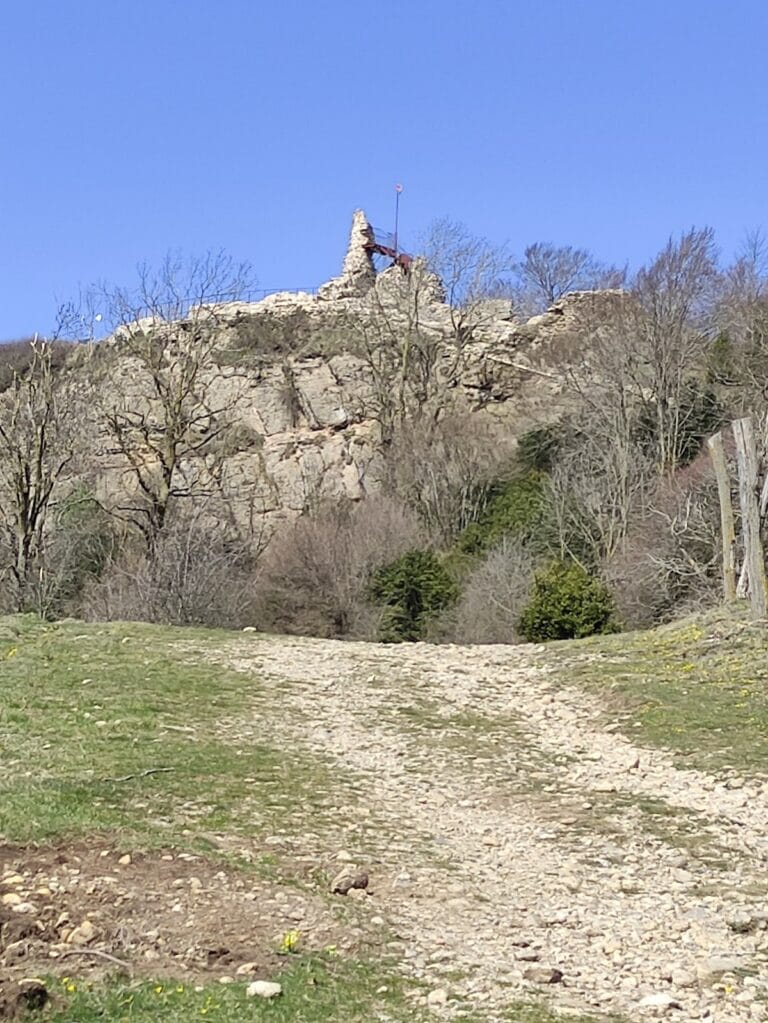
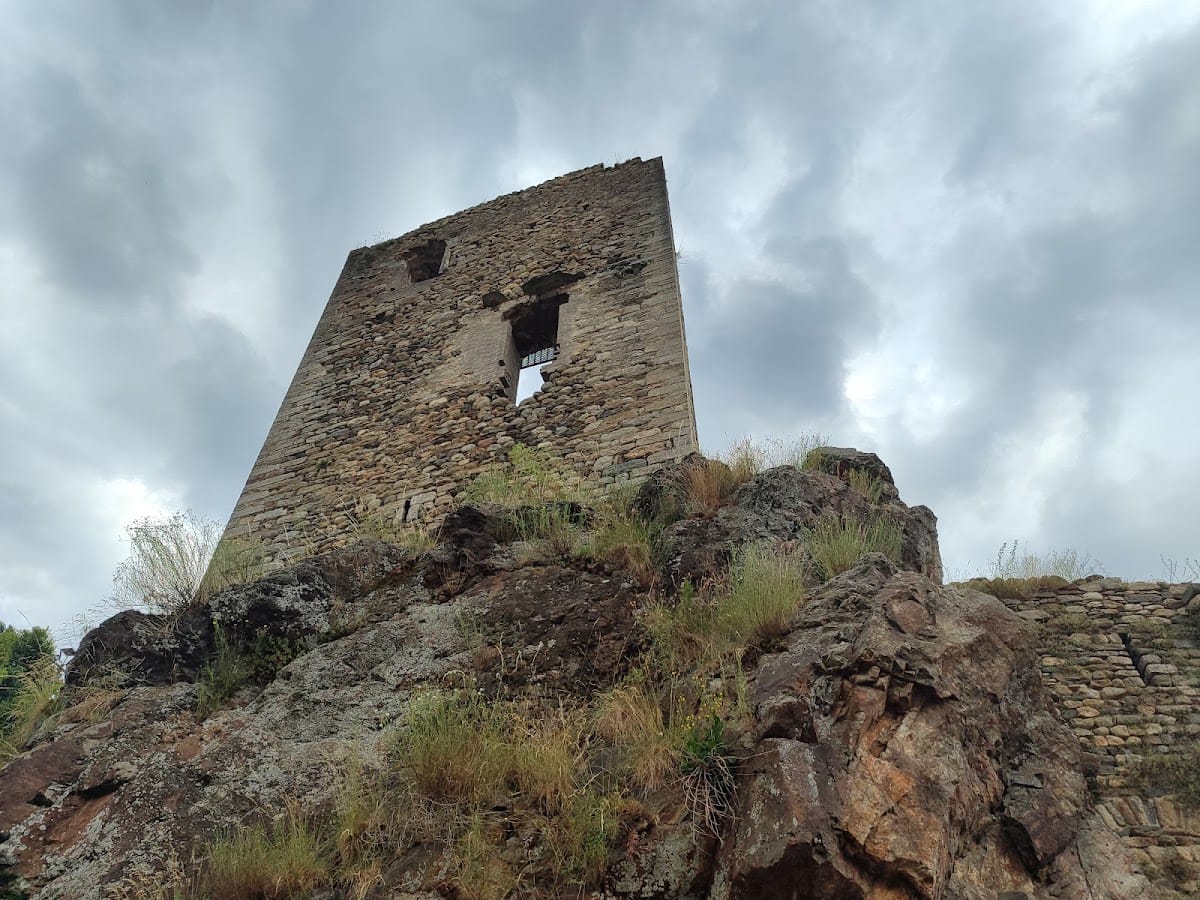
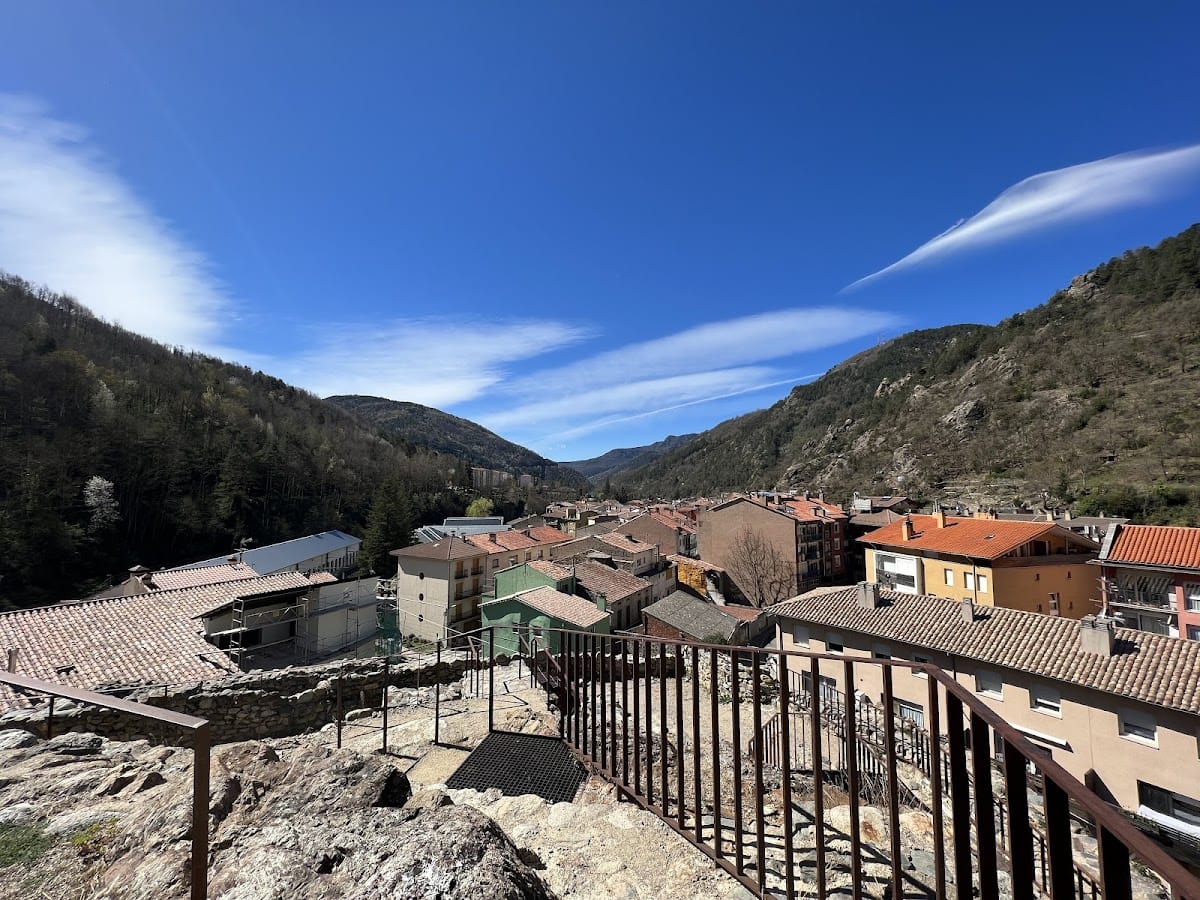
The Castell de Ribes de Freser occupies a hilltop, its layout shaped to fit the natural rocky terrain with an irregular polygonal perimeter. This adaptation to the steep landscape includes broad retaining walls and terraced platforms engineered to stabilize the fortress and enhance its defensive posture overlooking the valley below.
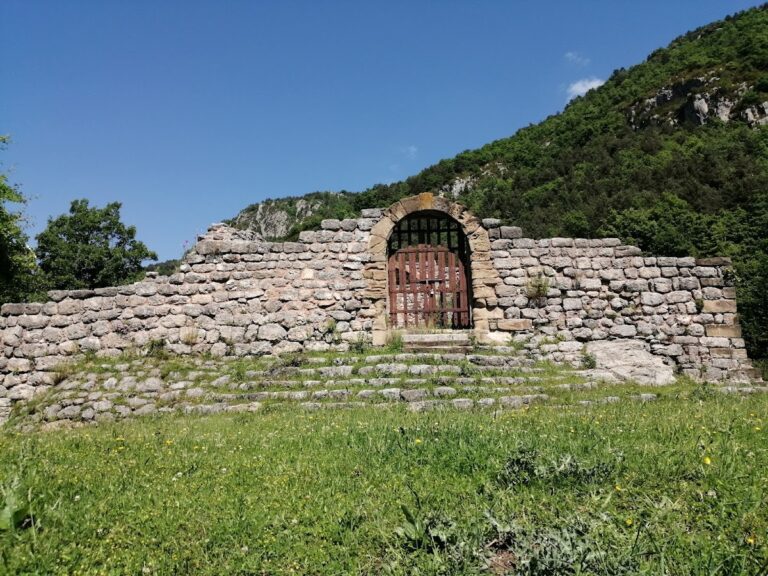
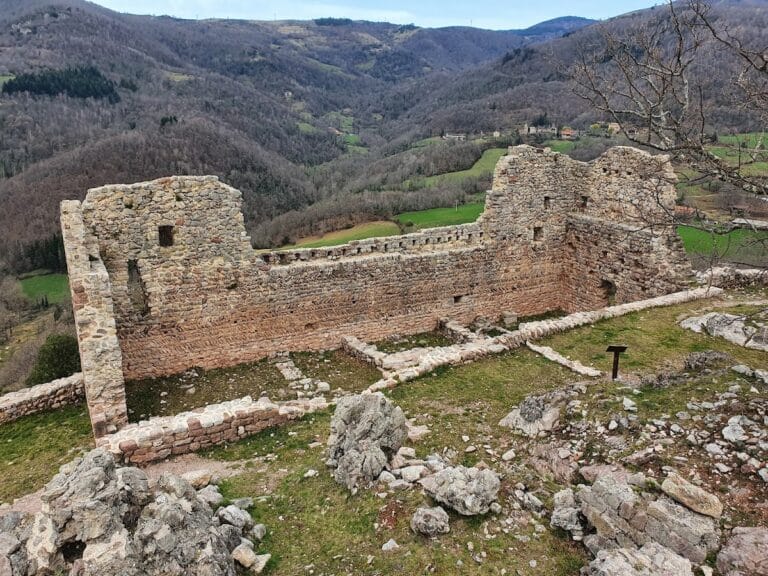
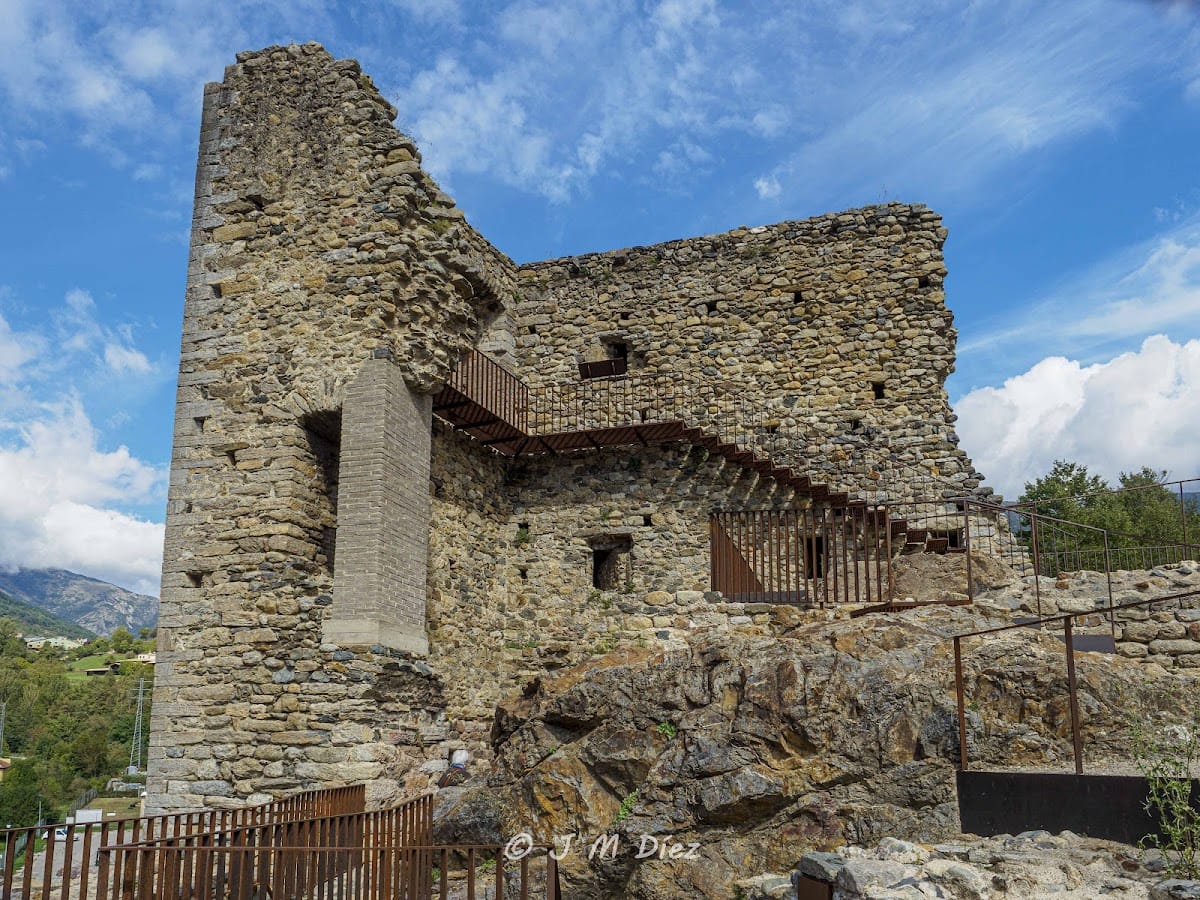
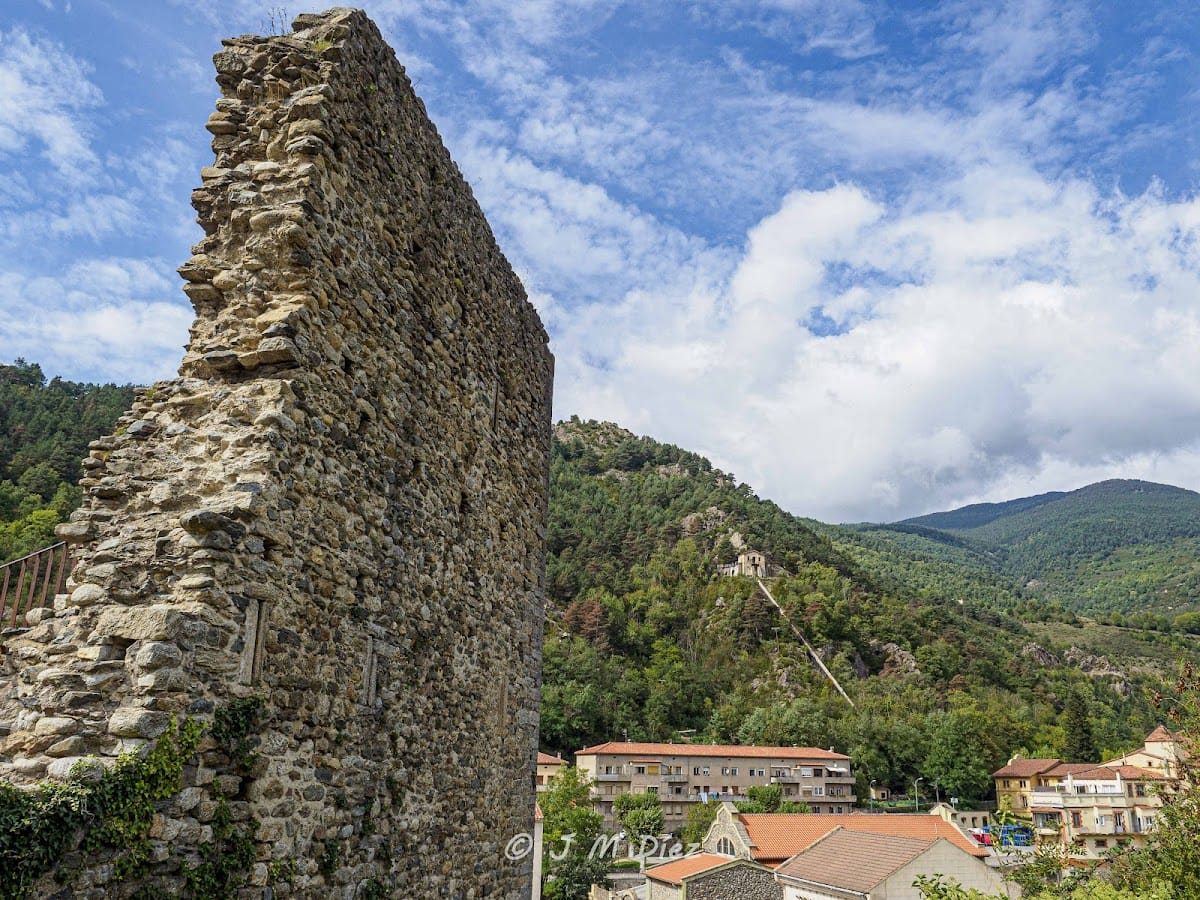
Among the surviving structures, a partly ruined stone tower stands on the northwest side, which was historically the castle’s main point of access and defense. This tower rises to three floors, although it has lost its original window details, likely due to the removal of stones over time. Adjacent to the tower, sections of stone walls persist, featuring relieving arches—arched supports built into walls to reduce structural weight—and several vaulted subterranean chambers and halls carved into the rock.
The castle contains carved drainage channels designed to carry rainwater away from the interior, as well as openings in the stone walls that allowed water runoff to pass safely down the slopes. These functional elements reveal attention to water management in the castle’s design, important for maintaining durable habitation on a rocky, exposed site.
Excavations have confirmed that the late medieval reconstruction introduced two additional terraces below the original level, created by leveling the ground to form usable defensive platforms. The defensive ditch surrounding the castle, cut deep into the bedrock, served as both a moat and a source of stone, illustrating efficient use of local materials for construction and defense.
The primary building material throughout the castle’s structures is stone masonry, with historical texts noting the use of wooden palisades or enclosures (bastida) at earlier stages, though no wooden remains survive today. Currently, the castle exists mostly in ruin, with only low stone walls and the partially preserved tower hinting at its former size and form.
Later reuse of the site is marked archaeologically by a small cemetery discovered on the premises from the mid-19th century. This burial ground includes more than twenty graves, predominantly of children and adolescents, offering a poignant layer of history centuries after the castle’s military role ended. Excavation and conservation efforts since the early 21st century continue to protect and reveal the castle’s complex story embedded in these stones and earthworks.
Nearby sites