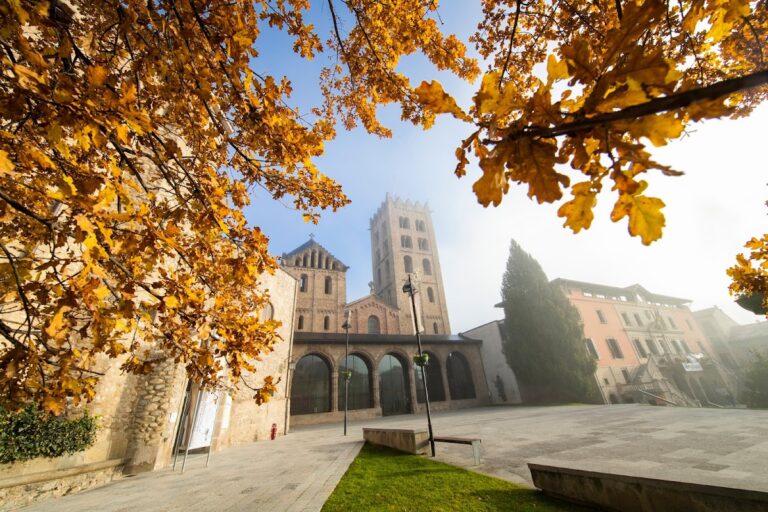
Castell de la Roca de Pelancà: A Medieval Valley Stronghold


Site at a Glance
- Rating
- 4.7
- Popularity
- Low
- Country
- Spain
- Primary era
- Medieval
- Eras represented
- Medieval
- Civilizations
- Crown of Aragon
- Site type
- Military
- Remains
- Fortified Town
On this page10 sections
History
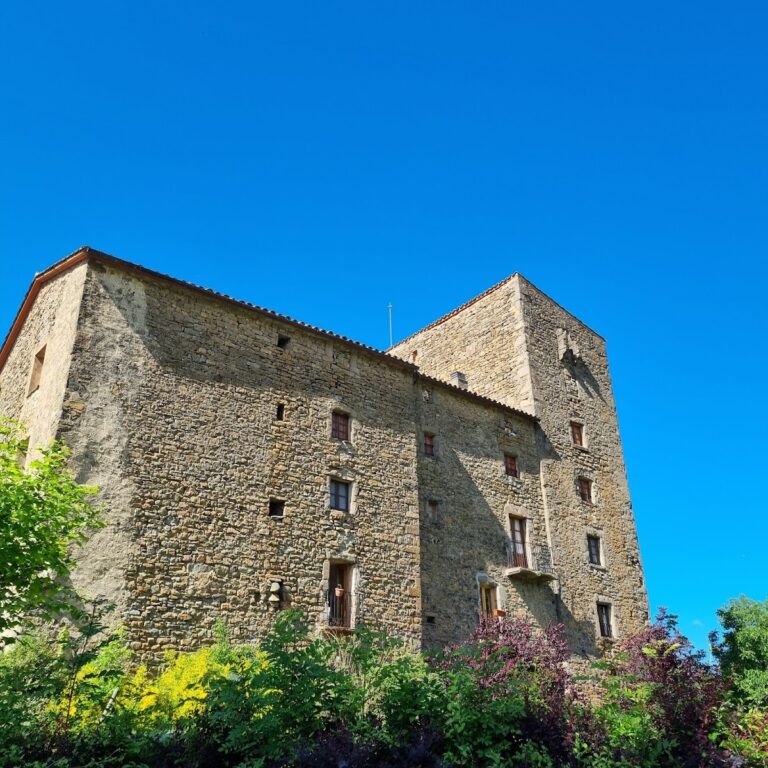
Castell de la Roca de Pelancà was a fortified settlement in Spain, established after AD 1000 during the feudalization of society. Built as a medieval stronghold on a rocky outcrop, it controlled passage between Camprodon and Setcases in the upper Ter valley. Together with the castle of Catllar, it formed a small but strategically placed defensive center within the County of Besalú.
Feudal origins and contested lordship
The castle stood in the County of Besalú, although it was held at some point by the Count of Cerdanya. Whether this reflected a seizure or an existing territorial right is uncertain. The first recorded reference comes from 1060, when Count Ramon Guifré of Cerdanya accused his vassal, Viscount Bernat of Cerdanya, of losing the castle through inadequate guardianship. The Count of Besalú had then recovered it by force.
Several men may have held the castle during the following decades. Guillem Ramon appears in records from 1067 to 1069, Ademar Ramon from 1090 to 1096, and Ramon Ademar in 1118. The castle probably belonged to the endowment of the Viscounts of Besalú through Catllar, while responsibility for its administration and defence, known as the castellan’s office, was granted to someone other than the castellan of Catllar.
The Milany inheritance
In 1244 the castle was held by Ramon de Milany, lord of Rocabruna. He granted the inhabitants several franchises to prevent the settlement from losing its population. These privileges did not include the right of remença, a payment or legal condition linked to the release of dependent peasants from feudal obligations.
Ramon de Milany’s will of 1258 left La Roca de Pelancà as an allodium, meaning land held in full ownership rather than as a feudal fief, to his son Pere. Rocabruna went to his other son, Ramon. Ramon d’Urtx was appointed guardian of the brothers and was to inherit the fortification of Pelancà if they died without descendants. After this apparently happened, Ramon’s widow, Beatriu, contested the will. In 1262 King James I ordered Ramon d’Urtx to return possession of both castles to her. The rights later passed to Beatriu’s daughter, Esclarmunda, and in 1310 to Esclarmunda’s son, Ramon Desbac.
Later medieval and early modern ownership
A hearth tax record from 1358 names Bernat de Sau, also known as Bernat de So, as lord of La Roca. The So family, Viscounts of Évol, retained dominion until the end of the sixteenth century, when ownership passed to Estefania de Requesens.
In 1607 Estefania de Requesens bequeathed the castle to the Dominican friars of Girona. They sold it in the early seventeenth century to Lluis Descatllar, after which the territory of La Roca was united with that of Catllar. At the end of the eighteenth century, both castles entered the patrimony of the Counts of Santa Coloma through marriage.
War and decline
During the civil war between the Generalitat, Catalonia’s representative governing institution, and King John II in the second half of the fifteenth century, La Roca de Pelancà became the headquarters of the captaincy for the entire valley. This conflict is commonly called the War of the Remences because it involved dependent peasants and the feudal order. After the war, the castle also became a center of substantial guerrilla activity against the French, who continued to occupy Roussillon.
The castle declined after artillery capable of firing explosive projectiles changed the nature of fortification. It later deteriorated as houses were built into the rocky site, leaving only limited masonry incorporated among them. Castell de la Roca de Pelancà is listed as a Cultural Asset of National Interest in Catalonia and as a Spanish Asset of Cultural Interest designated as a monument, under references including RI-51-0006181 and Catalan architectural heritage inventory number 1982.
Remains
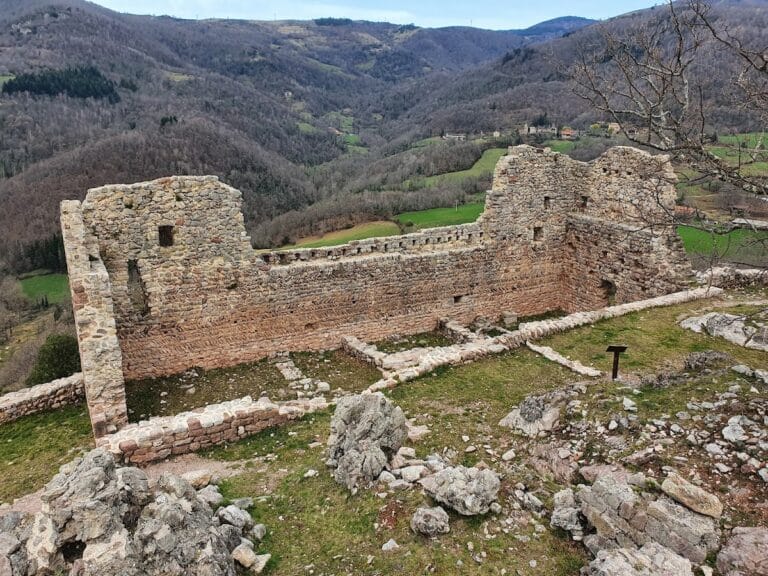
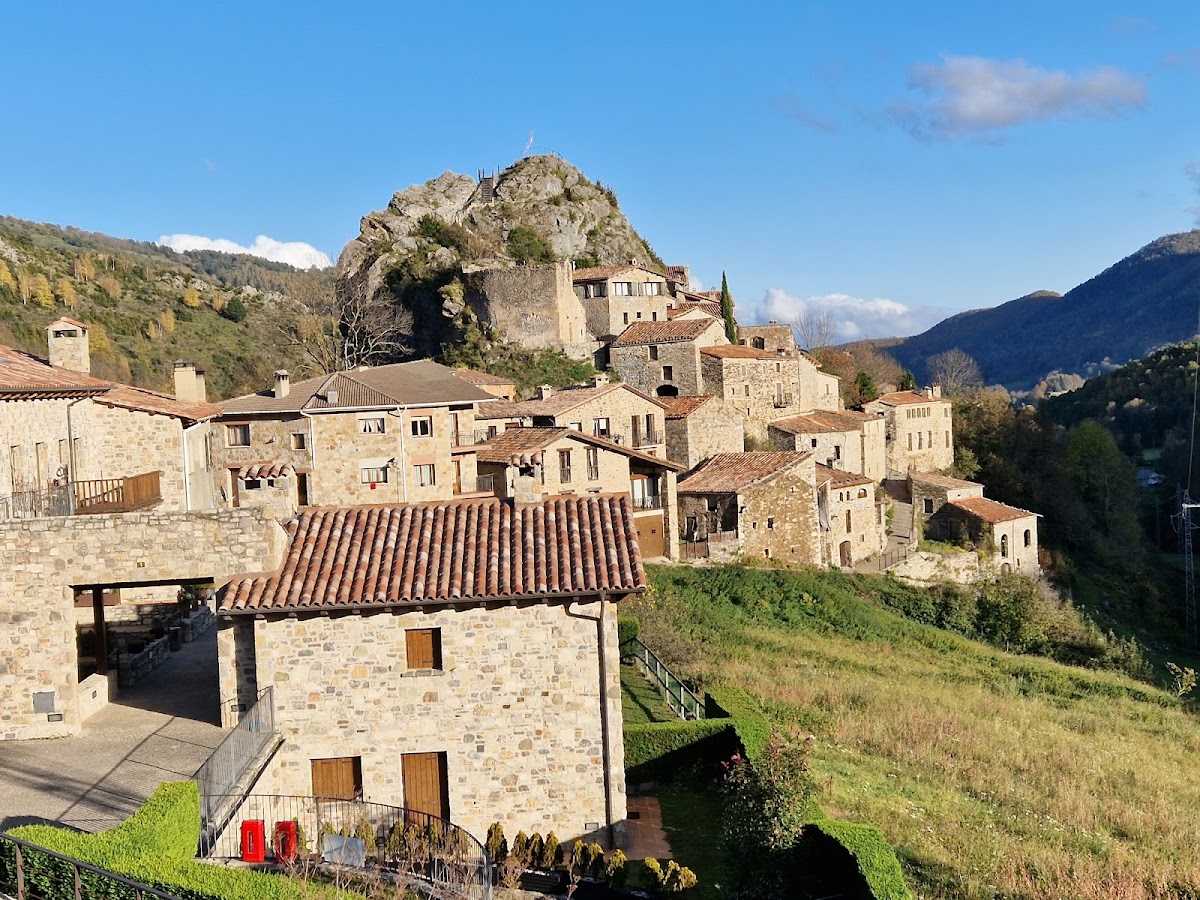
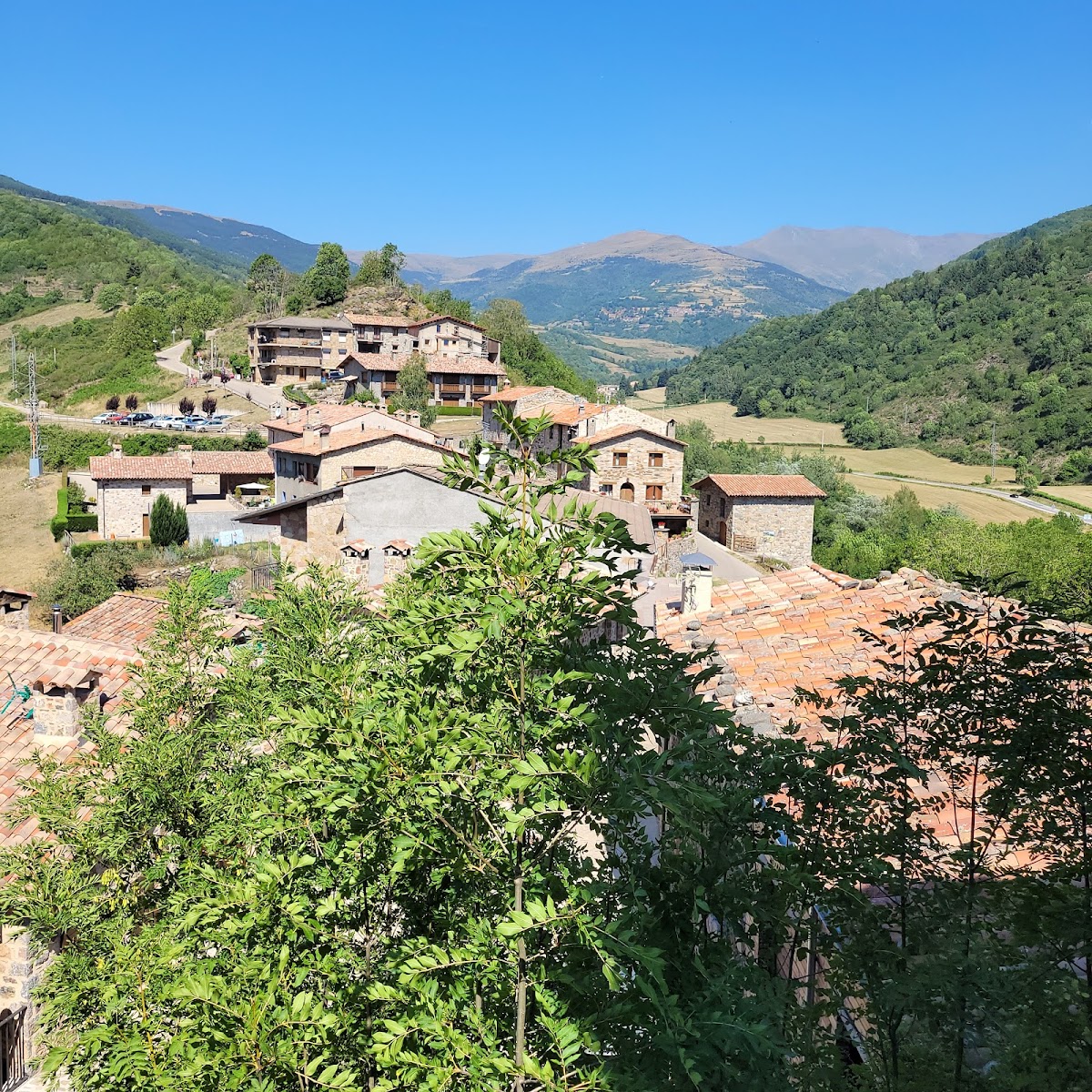
The former stronghold occupied a rocky outcrop at La Roca de Pelancà, about 2 kilometres south of Vilallonga de Ter. The site lies at approximately 1,040 metres above sea level, while the castle is recorded at 1,072 metres. The outcrop overlooks the meeting point of the Abella stream and the Ter River. Its elevated position provided natural defence and allowed the settlement to control movement through the valley.
Fortified settlement
Ashlar wall
The principal surviving castle feature is a wall built from regularly shaped ashlar masonry, or carefully cut stone blocks. A few additional courses of masonry remain among the houses constructed on the rocky site. Together, these elements preserve part of the fabric of the former walled stronghold and indicate the defensive construction that once occupied the outcrop.
Former entrance
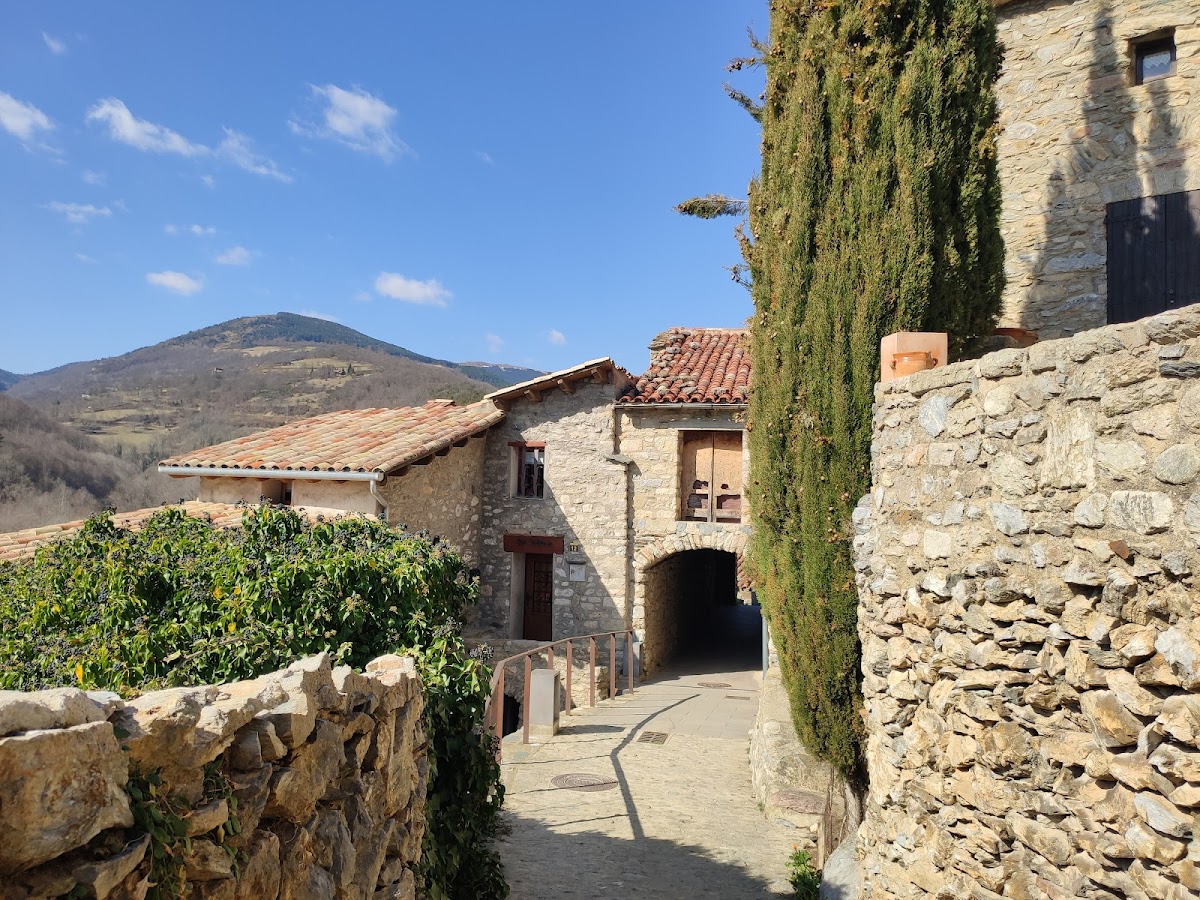
Part of a portal that provided access to the settlement, and probably also served as the castle entrance, has survived only in fragmentary form. The approach climbed the rocky outcrop by a shortcut path. A record from 1310 refers to the site as the castrum or forciam de Ruppe Pelonchano, terms identifying it as a castle or fortified place.
Romanesque church
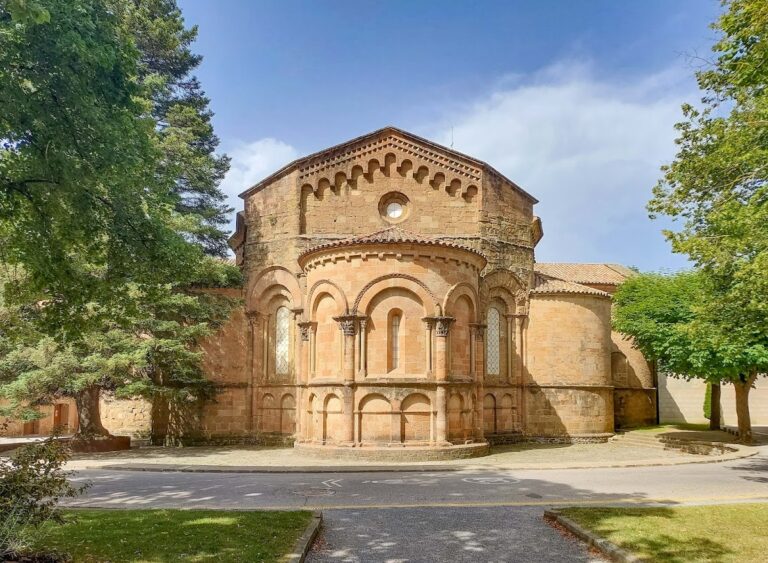
A small Romanesque church survives within the settlement. Romanesque churches belong to a medieval architectural tradition associated broadly with substantial masonry construction and rounded arches. The building was originally dedicated to Our Lady of Pelancà and is now dedicated to Our Lady of Piety. Its continued presence forms part of the surviving built fabric of the former fortified settlement.