Castell de Subirats: A Romanesque Frontier Fortress in Spain
Site at a Glance
- Rating
- 4.3
- Popularity
- Low
- Country
- Spain
- Primary era
- Medieval
- External website
- Open
- Eras represented
- Medieval
- Civilizations
- Crown of Aragon
- Site type
- Military
- Remains
- Castle
On this page7 sections
History
Castell de Subirats is a Romanesque Christian fortress in Spain, developed broadly between the tenth and thirteenth centuries as part of the medieval defensive system of the Penedès. By the beginning of the tenth century, it was regarded as the most advanced Christian fortress in an area facing continuing pressure from Muslim-ruled territory.
Frontier Fortress and Early Records
The castle was first recorded in 917, when Ermenard and Udalard, sons of the deceased Udalard, granted property to the Monastery of Sant Cugat del Vallès. A testament made by Mir Geribert in 1060 mentioned a donation to the church of Sant Pere at Subirats Castle, together with half of Castell de Lavit.
As the frontier moved south, Castell de Subirats changed in response to new political, economic, and social circumstances. The complex was enlarged in successive stages, and its keep was probably built during the eleventh century.
Lordship and Royal Jurisdiction
On 10 March 1368, Peter IV of Aragon, also known as Peter the Ceremonious, granted the town of Piera and the castles and places of Subirats and Sant Martí Sarroca to the royal prince Martin, the future Martin I of Aragon. The grant required the territories to return to the sovereign if Martin became king and prevented them from passing to a woman. Ramon Alamany de Cervelló obtained the castle in 1377.
Philip II of Spain confirmed an earlier privilege on 27 December 1553, while he was still prince of Asturias and Girona, and again on 13 July 1559 after becoming king. On 26 October 1568, the Countess of Aitona, heir to Francesc Gralla i Desplà, made a payment on behalf of the municipal community and parishes of Subirats using money supplied by the inhabitants. The arrangement left the inhabitants fully subject to royal jurisdiction.
Destruction and Protection
Castell de Subirats was demolished during the Reapers’ War, a conflict in Catalonia that lasted from 1640 to 1652. Historians A. Mauri and M. Soler consider it probable that the destruction followed the castle’s capture around 1641 by Pedro Fajardo, Marquis of Los Vélez.
A royal judgment of 27 November 1699 declared the Crown to be the sole universal tithe collector for the municipal community and parishes of Subirats. In modern times, a restoration and consolidation project carried out in 2004 addressed the surviving keep, adjoining enclosures, bastion, and eastern wall. The castle has been protected as a national cultural-interest monument since its heritage-register declaration of 8 November 1988.
Remains
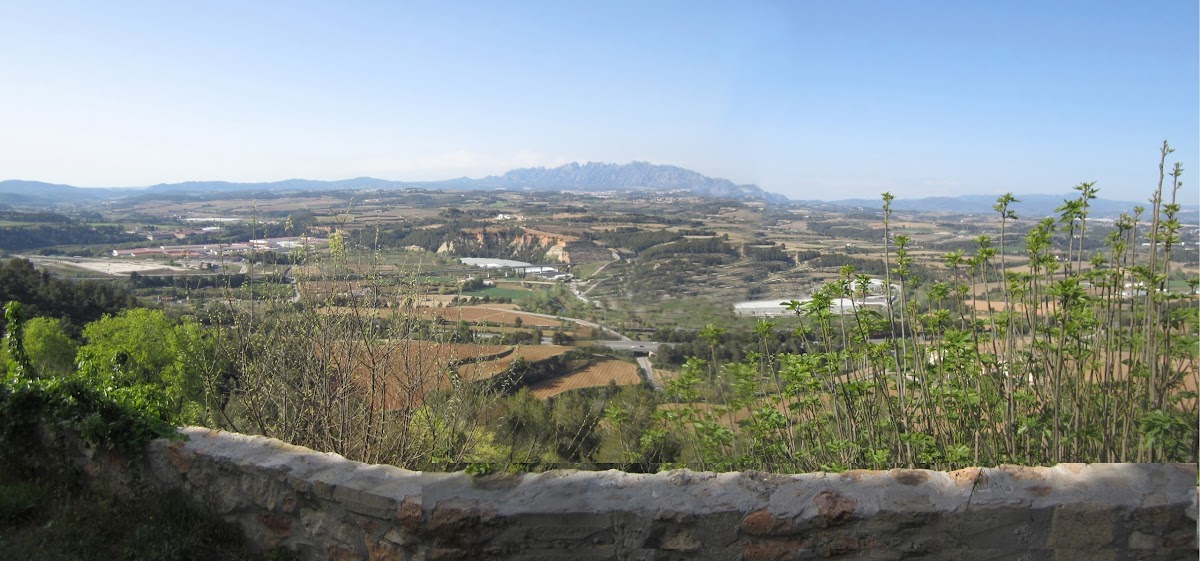
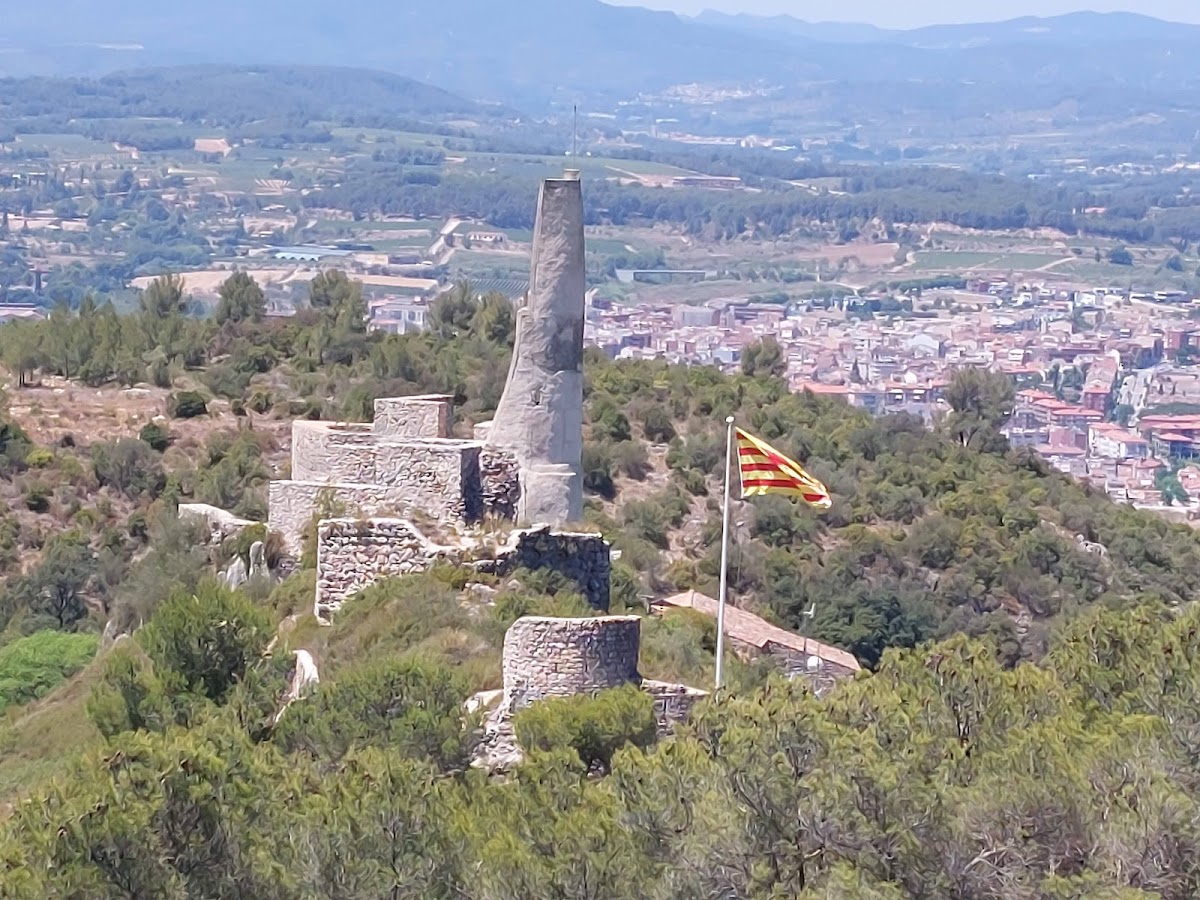
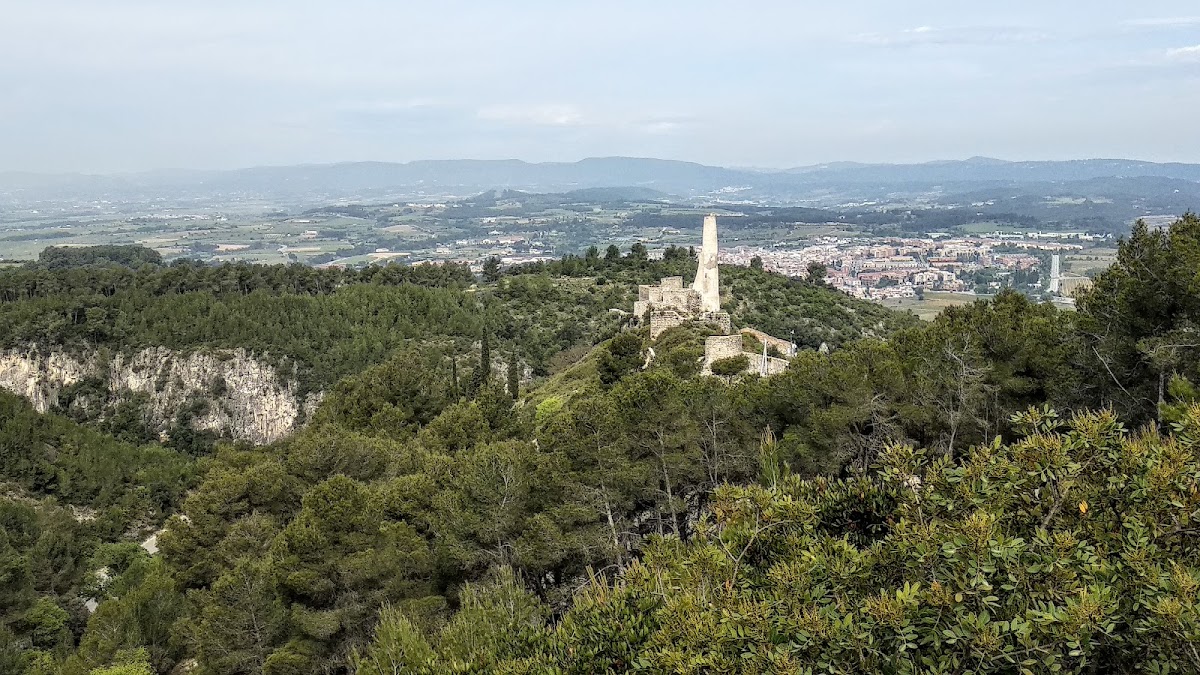
Castell de Subirats occupies a small, elongated limestone spur approximately 300 metres above the Penedès plain, between the valley and the plain. Its position lies at the eastern end of the Penedès and aligns with Castell de Gelida to the northeast and Torre Ramona farther north. The complex once covered the entire summit. Today, the surviving fabric includes part of the eastern wall, part of the structure known as the bastion, and part of the castle’s principal core.
Keep and Enclosures
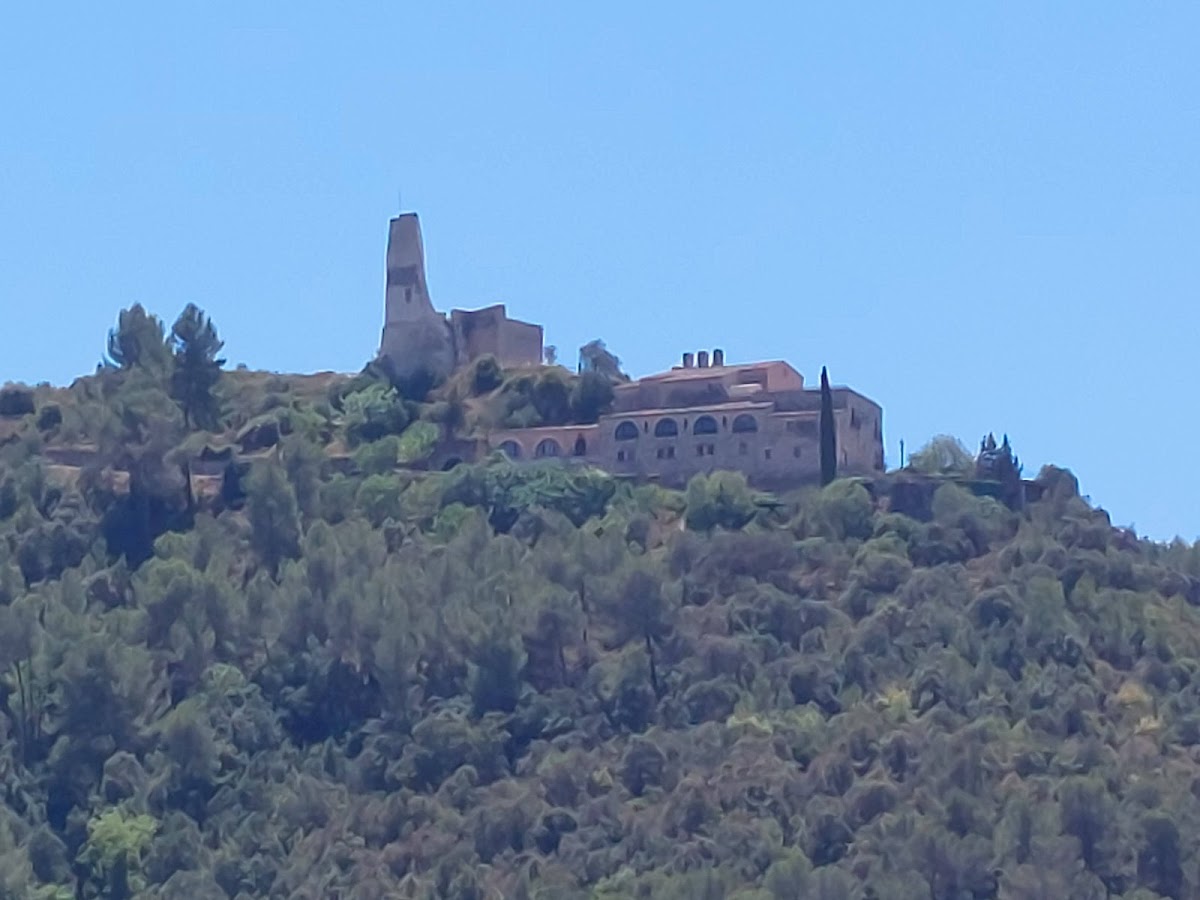
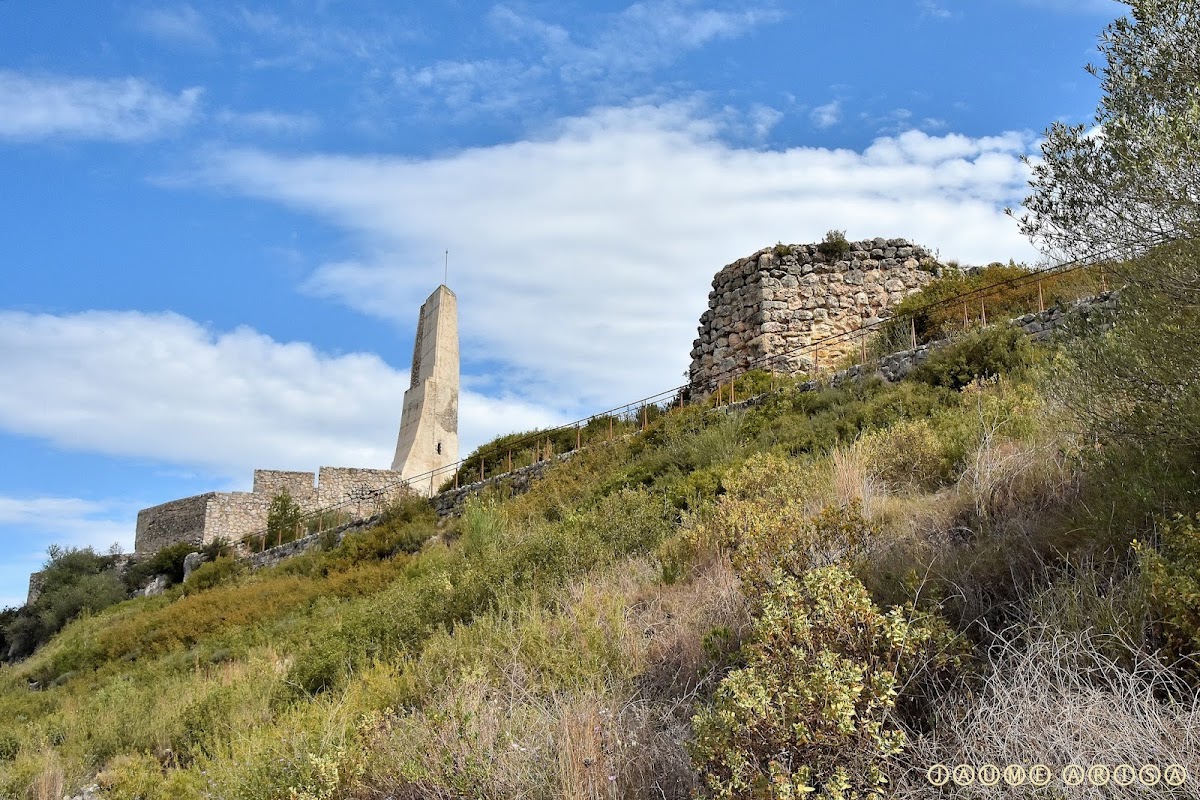
The keep is the most prominent surviving component of the castle and probably dates from the eleventh century. Its adjoining enclosures form part of the remains of the principal castle core and were included in the 2004 consolidation project. The castle stands beside the church of Sant Pere del Castell, also called the Sanctuary of Our Lady of Fontsanta.
Bastion and Eastern Wall
Other surviving elements include part of the bastion and a section of the eastern wall. Together with the keep and its enclosures, these fragments represent the remains of a fortified complex that occupied the summit of the limestone spur. The castle is associated with Romanesque architecture and lies within the protected Muntanyes de l’Ordal area.