Burghalder: A Medieval Hill Castle Site in Germany
Visitor Information
Google Rating: 4.8
Popularity: Very Low
Country: Germany
Civilization: Medieval European
Site type: Military
Remains: Castle
History
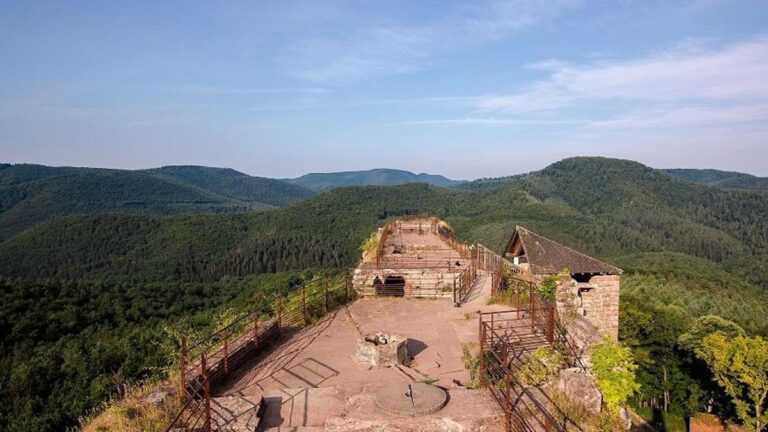
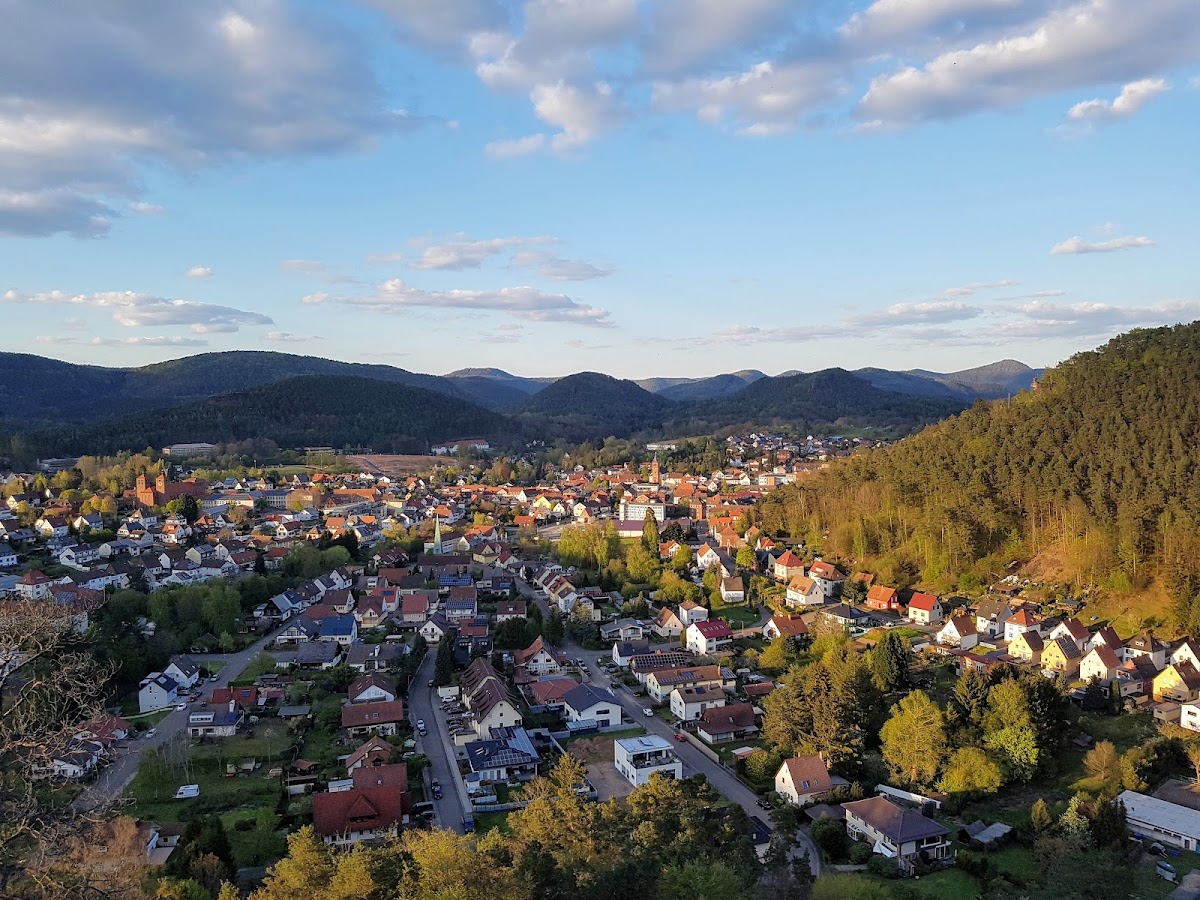
Burghalder is the site of a former medieval hill castle situated near the municipality of Hauenstein in present-day Germany. The castle was likely constructed and used by local medieval communities in the region, reflecting the architectural and defensive practices of the Middle Ages.
The origins of Burghalder can be traced back to at least the 10th or 11th century, based on the style of masonry and fortifications evident at the site. These features place it firmly within the High Middle Ages, when such hilltop castles were common for regional defense and control. Archaeological findings further support use during the 12th century, particularly shards of pottery uncovered in a defensive ditch, indicating continued occupation or activity during this period.
While some non-expert sources propose that Burghalder may have originated as a refuge castle during the late Carolingian era, around the 9th or 10th century, no historical documentation or archaeological evidence currently substantiates this earlier dating. Therefore, the castle’s construction and use are most reliably situated in the medieval period.
No recorded historical accounts mention Burghalder directly, and its specific functions remain partially uncertain. There is a possibility that the site included a chapel, suggested by local tradition or symbolic associations, yet this aspect remains speculative without firm evidence. A symbolic medieval stone connected with the castle is located at the nearby Catholic St. Bartholomew’s Church, further hinting at some religious significance in the locality.
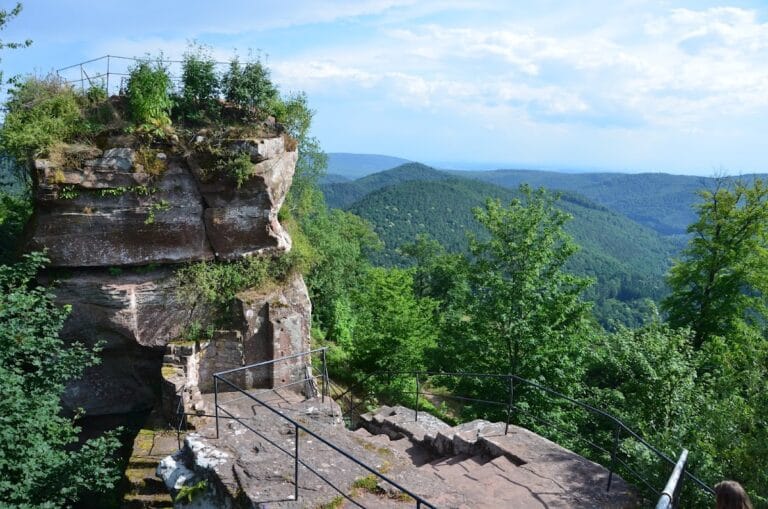
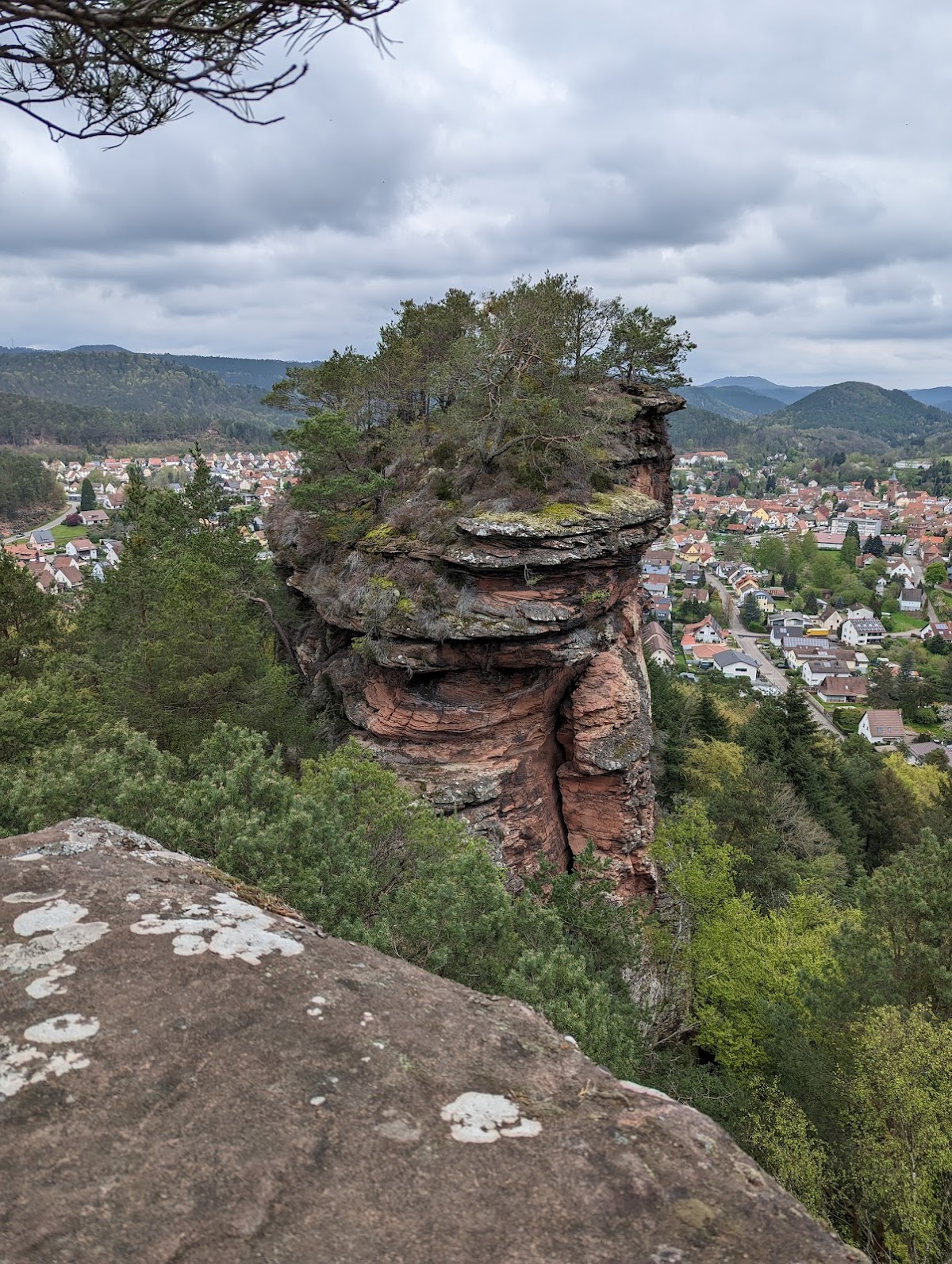
Through the centuries, Burghalder appears to have served primarily as a defensive and possibly religious structure, strategically placed on a rocky outcrop overlooking the surrounding valleys. Its name and precise historical events tied to it are not documented, leaving much of its story to archaeological interpretation.
Remains
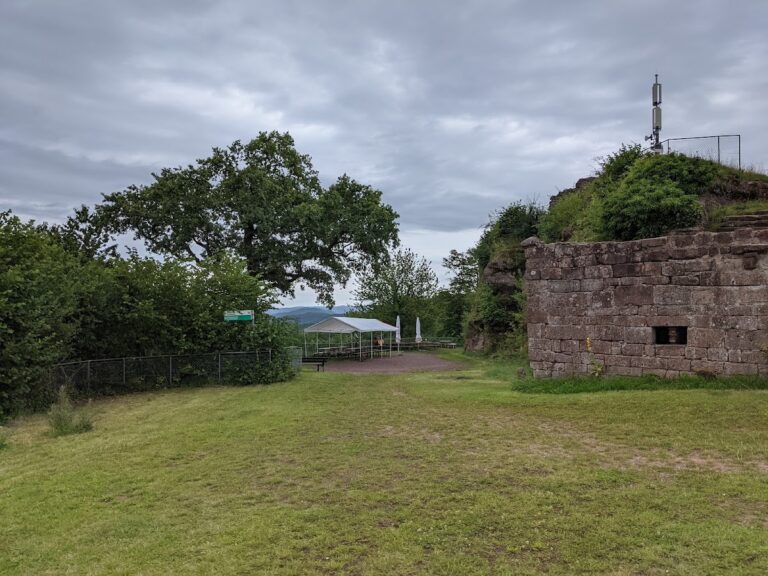
The ruins of Burghalder occupy a compact area roughly 30 meters long and 10 meters wide atop the natural rock formation known as Burghalderfelsen. This rock is a natural monument extending approximately 300 meters in length and forms part of a ridge that stretches between the higher elevation of Hoher Kopf and the northern tip where the castle once stood.
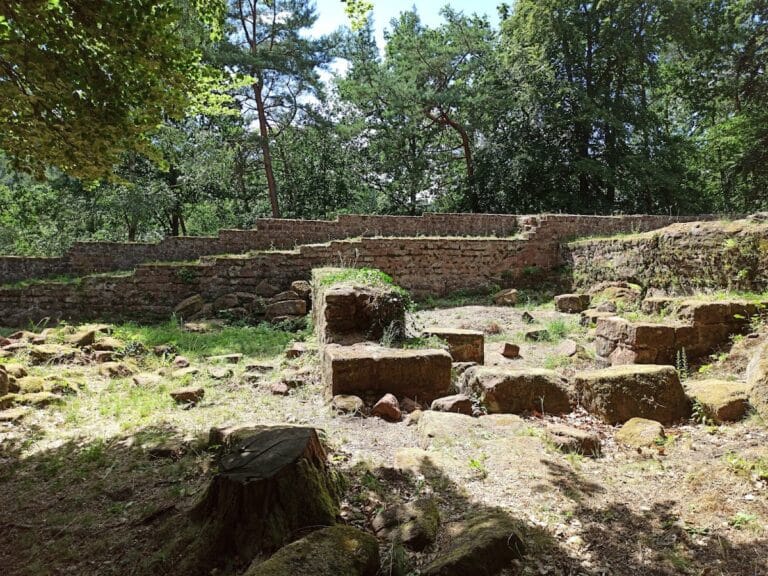
The remaining construction consists primarily of mortared walls built from roughly shaped stone blocks, characteristic of medieval masonry techniques. These stone walls are preserved only in fragments, offering a glimpse into the castle’s defensive perimeter. A faint neck ditch—an excavated trench designed to protect the castle by making access more difficult—runs near the site, demonstrating the strategic considerations of its builders.
The main entrance to the castle is believed to have been located on the southern side of the rock, where a gate complex is presumed to have existed. The exact details of this gateway, however, remain uncertain as no definitive structural remains have been identified. This southern approach would have provided access to the rear section of the rock formation, where the castle structures were concentrated.
On the upper part of the rock formation, the site is marked by Ritterstein number 219, a commemorative stone plaque that includes a plan of the location and a summary of the 1972 archaeological excavation that brought the site’s details to light. This marker helps identify and preserve the memory of Burghalder in the landscape.
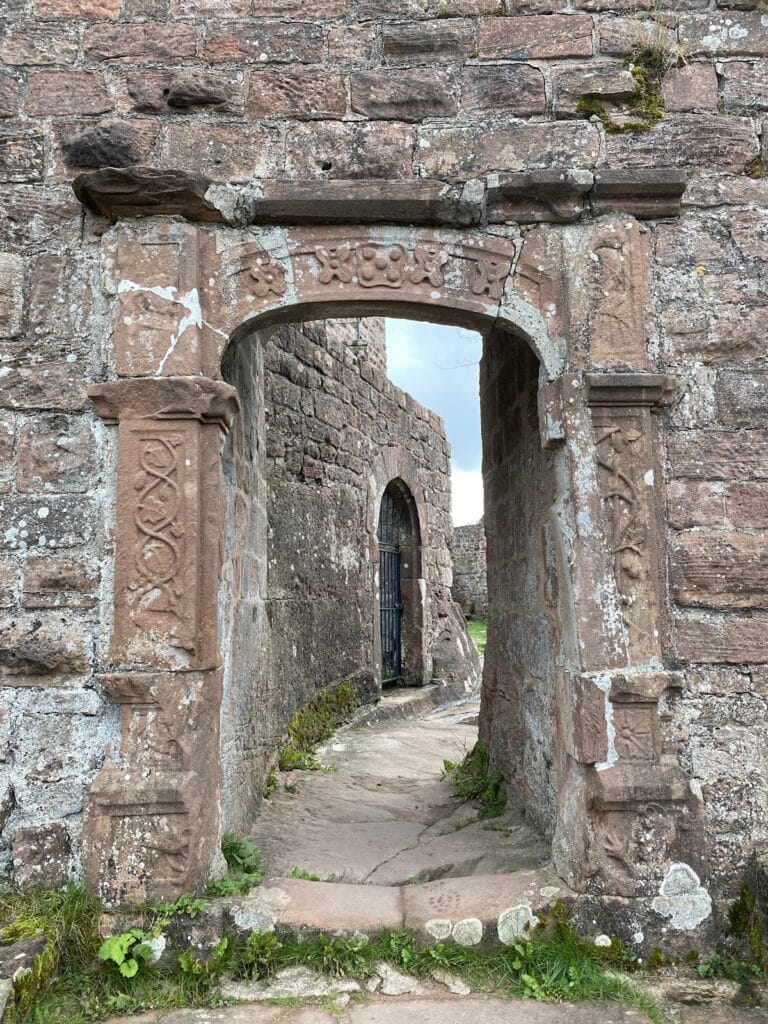
Pottery shards discovered within the neck ditch during the excavation are dated to the 12th century, confirming activity during this time. The castle’s ruins do not display decorative features, inscriptions, or extensive structural remains such as staircases or additional buildings, but the stones and ditch outline the modest scale and purpose of this medieval fortress.
Nearby, a medieval symbolic stone measuring 200 by 60 centimeters is situated in the nave of the Catholic St. Bartholomew’s Church. This stone is associated with the castle, further indicating a possible connection between the site and local religious practices, though its precise original role remains unclear.
Nearby sites