Boskovice Castle: A Medieval Fortress in the Czech Republic
Visitor Information
Google Rating: 4.6
Popularity: Medium
Official Website: www.hradboskovice.cz
Country: Czechia
Civilization: Early Modern, Medieval European
Site type: Military
Remains: Castle
History
Boskovice Castle is a medieval fortress located above the town of Boskovice in the Czech Republic, originally constructed by members of the local noble Boskovice family. Its founding likely dates to the early 13th century, with the earliest written record appearing in 1312. The castle served as the family seat and symbol of their regional influence during the Middle Ages.
In the late 14th century, the castle witnessed significant conflict when it was besieged amid the Moravian Margrave Wars. During this turbulent period, Jan Ozor z Boskovic, the castle’s defender, died in 1389 attempting to protect it. Shortly after, ownership shifted when the fortress was seized and granted to the Kunštát family in 1398, who received permission to reconstruct and strengthen the site.
The early 15th century brought turmoil during the Hussite Wars, a series of religious conflicts that swept through the region. Boskovice Castle was overtaken by Hussite forces and remained under their control for some time, reflecting the wider upheaval affecting Moravia. Later, in the mid-15th century, the Boskovice family regained possession and maintained it until the mid-16th century.
In the 1500s, the castle saw significant investment and architectural renewal. Kryštof z Boskovic initiated extensive renovations, adapting the structure in line with Renaissance tastes. However, financial pressures forced the sale of the estate to Šimon Eder in 1547, who introduced further Renaissance-style modifications and expanded the castle’s fortifications.
From 1547 until 1567, the Eder family owned Boskovice Castle before it passed to the Zástřizl family, who retained it until 1690. That year, the Dietrichstein family acquired the estate and became its final noble inhabitants. Walter Xaver of Dietrichstein departed the old castle around 1720, relocating to a newly built Baroque residence in the town of Boskovice. Following this move, the castle was repurposed for economic functions but gradually fell into decline.
By 1784, Boskovice Castle was abandoned, with its roof removed to provide building materials for nearby structures, accelerating its ruin. The surrounding estate changed hands again in the 19th century when the Mensdorff-Pouilly family came into possession in 1856. This family retained the property until the communist regime confiscated it in 1950. After the political changes of 1991, ownership was returned to the Mensdorff-Pouillys, who still hold it today.
Remains
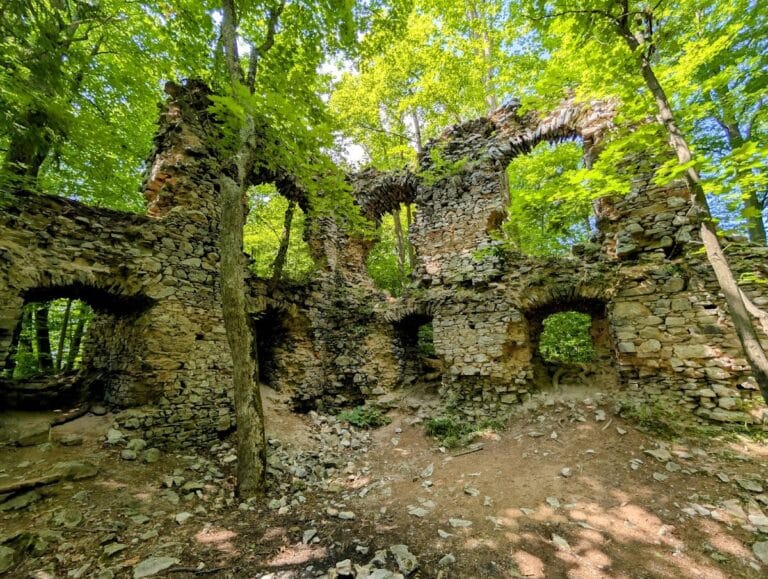
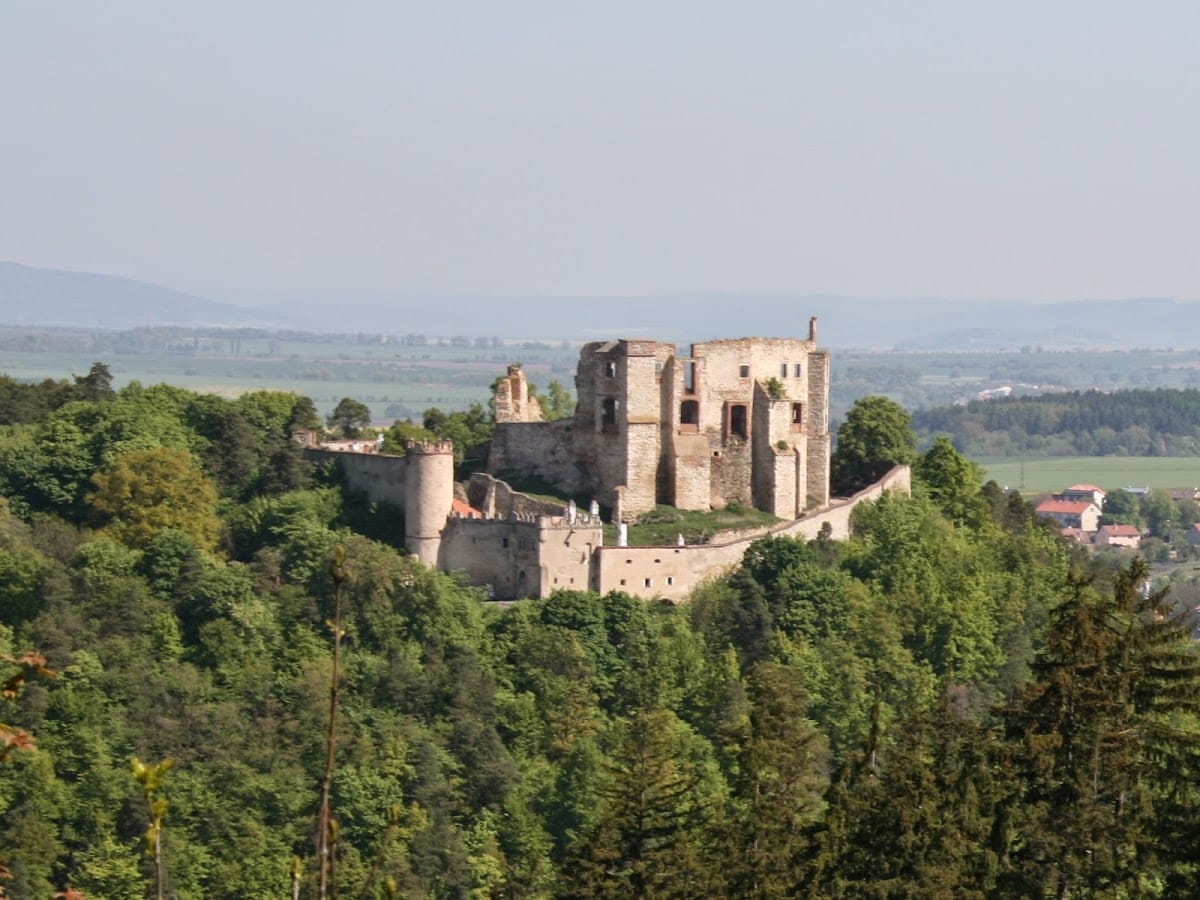
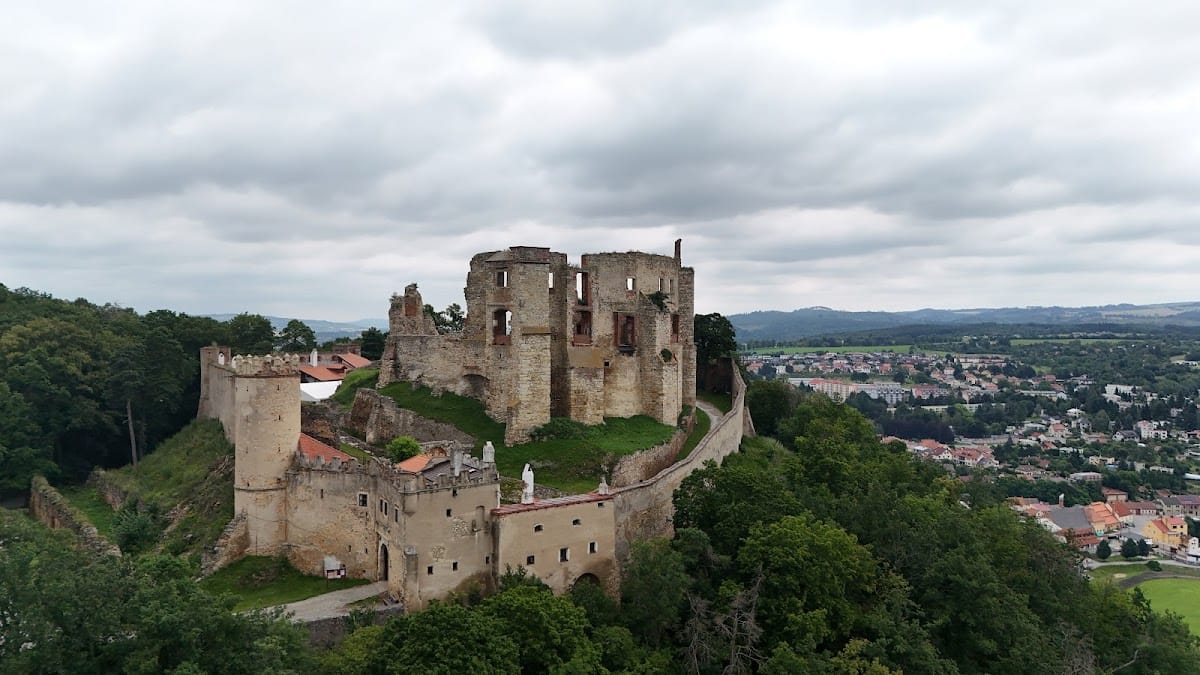
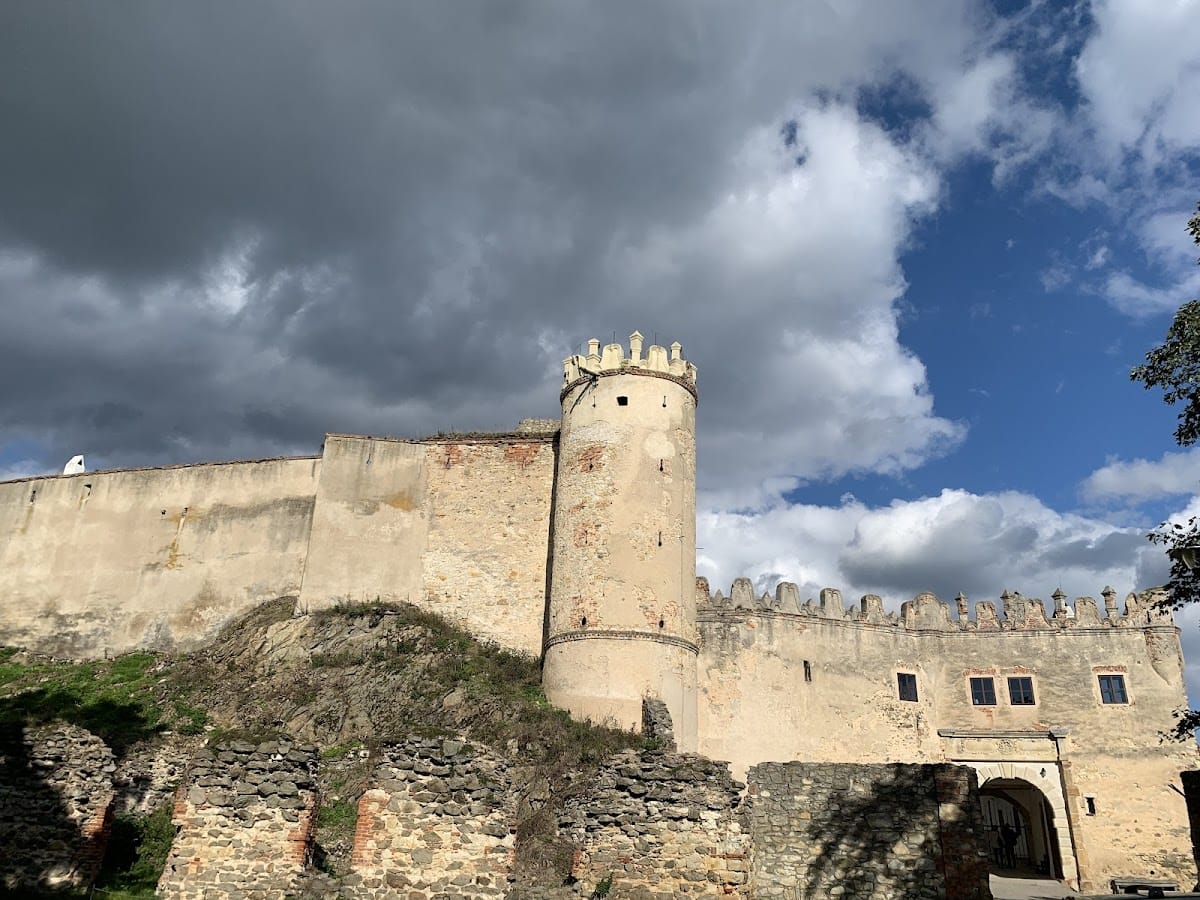
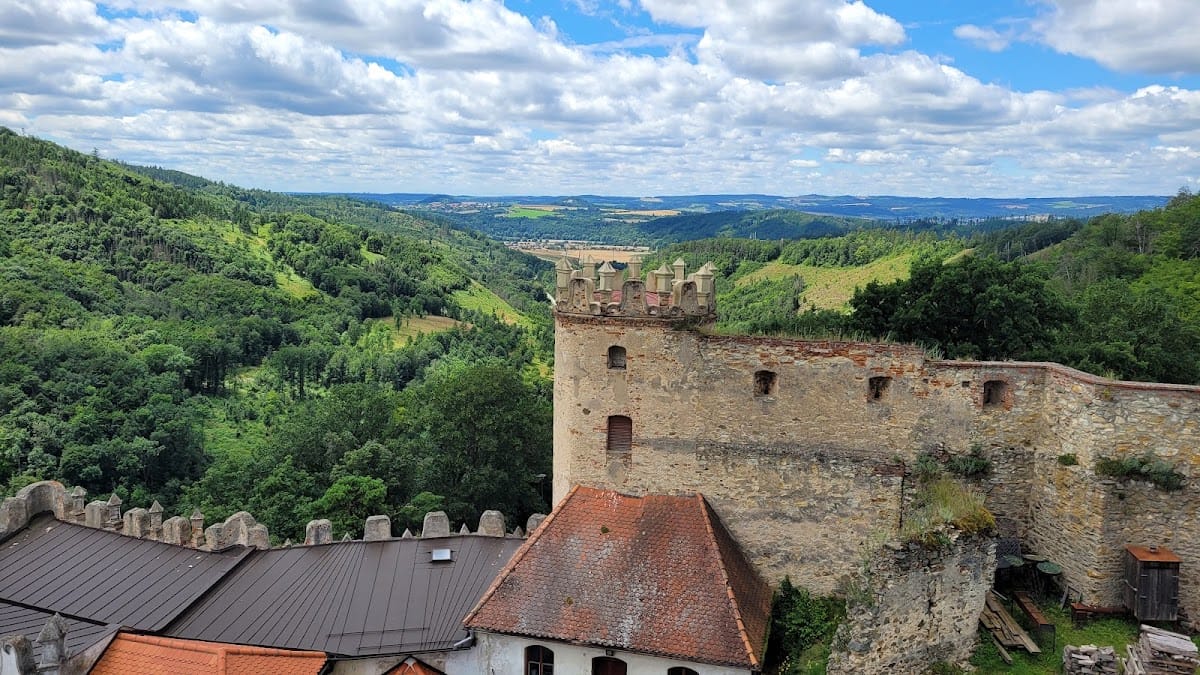
The ruins of Boskovice Castle occupy a prominent hilltop overlooking the town, covering roughly 64 ares, which makes it one of the most extensive castle ruins in the Moravian region. The castle’s layout reflects various construction phases, combining medieval fortifications with later Renaissance modifications.
A remarkable feature preserved on site is a deep wooden well, measuring 26 meters in depth and about 3.6 meters in diameter. This well includes a treadwheel—a large wooden wheel powered by human effort—dating from the 16th century, used to draw water from great depth. It is distinctive as the only well of its kind in the Czech Republic still functional today. The well was originally connected through a passage carved into the rock to an external water source situated beyond the castle’s defensive walls, though this external well has since been sealed.
Close to the castle ruins stands a large bastion, a defensive structure likely dating from the 15th or 16th century. Its size is comparable to the main castle area, suggesting its importance in the overall fortification system. While some historical interpretations have proposed an earlier origin—possibly from the 11th or 13th centuries—no definitive archaeological evidence has confirmed these theories.
During the Renaissance period, the castle complex saw the construction of a new gate portal, which prominently displays the coat of arms of the Zástřizl family, indicating their tenure and influence. Alongside this, a spacious armory was added to house weapons and equipment, and the castle was known at the time to possess a substantial library collection, reflecting its role as both a military stronghold and a center of noble culture.
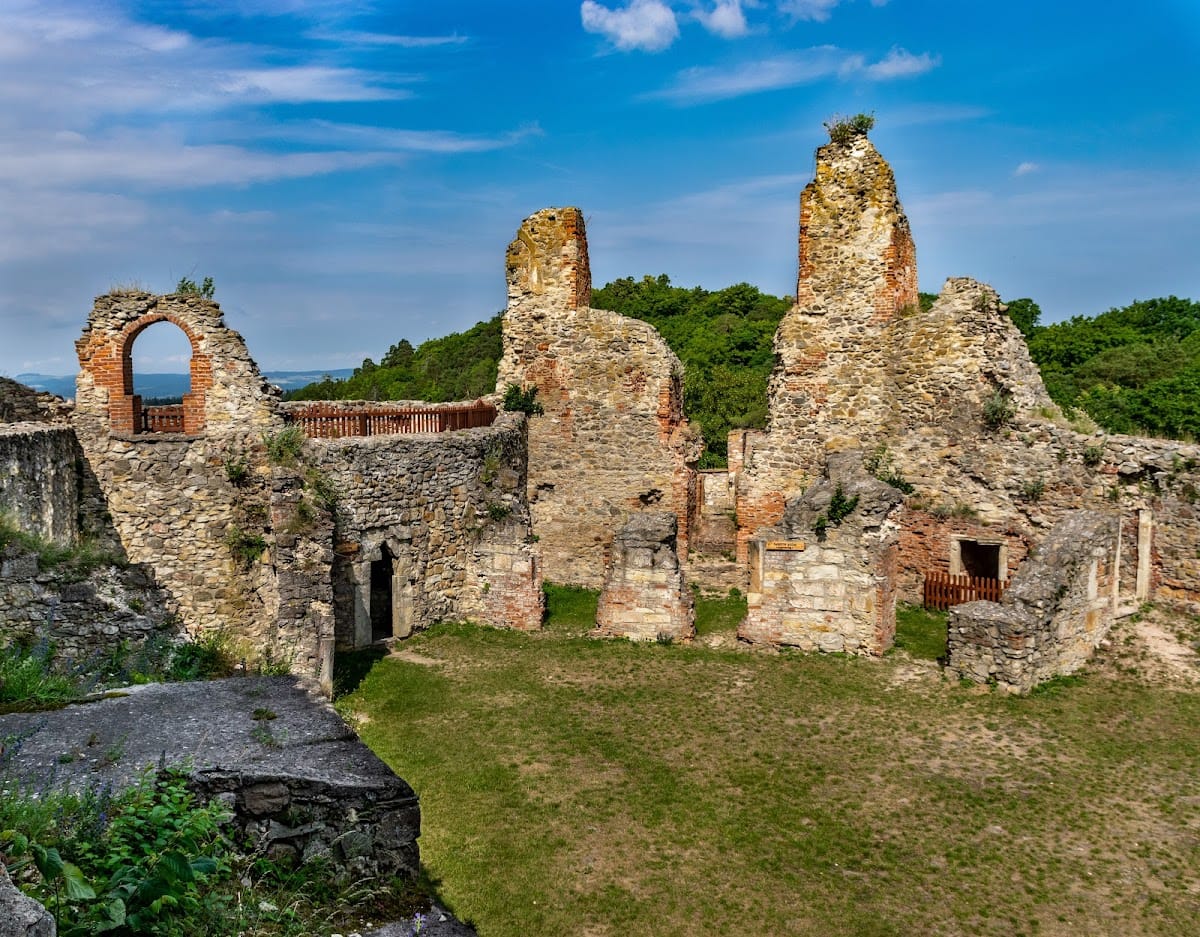
The castle’s outer defensive walls have undergone recent restorative efforts to stabilize the structures and prevent further deterioration. Despite these measures, the absence of a roof since the 18th century has led to ongoing weather-related damage. Over time, sections of masonry were removed for use in local buildings, further affecting the ruins.
In addition to the castle and bastion, the nearby hill known locally as Zlatník attracted attention in the 16th century when attempts were made to find gold deposits. These ventures into gold mining were not successful but form part of the historical narrative surrounding the site and its environs. Together, these features help illustrate the castle’s long history of construction, defense, and use before its decline.
Nearby sites