Balga Castle: A Historic Teutonic Fortress in Kaliningrad Oblast, Russia
Visitor Information
Google Rating: 4.4
Popularity: Low
Country: Russia
Civilization: Crusader
Site type: Military
Remains: Castle
History
Balga, located in the municipality of Kaliningrad Oblast, Russia, was originally established as a fortress by the Old Prussian people and was known as Honeda or Wuntenowe. In 1239, the stronghold was seized by the Teutonic Knights during their crusading campaigns aimed at converting the pagan Prussian tribes to Christianity. This conquest was led by Marshal Dietrich von Bernheim, with important support from Duke Otto I of Brunswick, who helped ensure the castle’s retention.
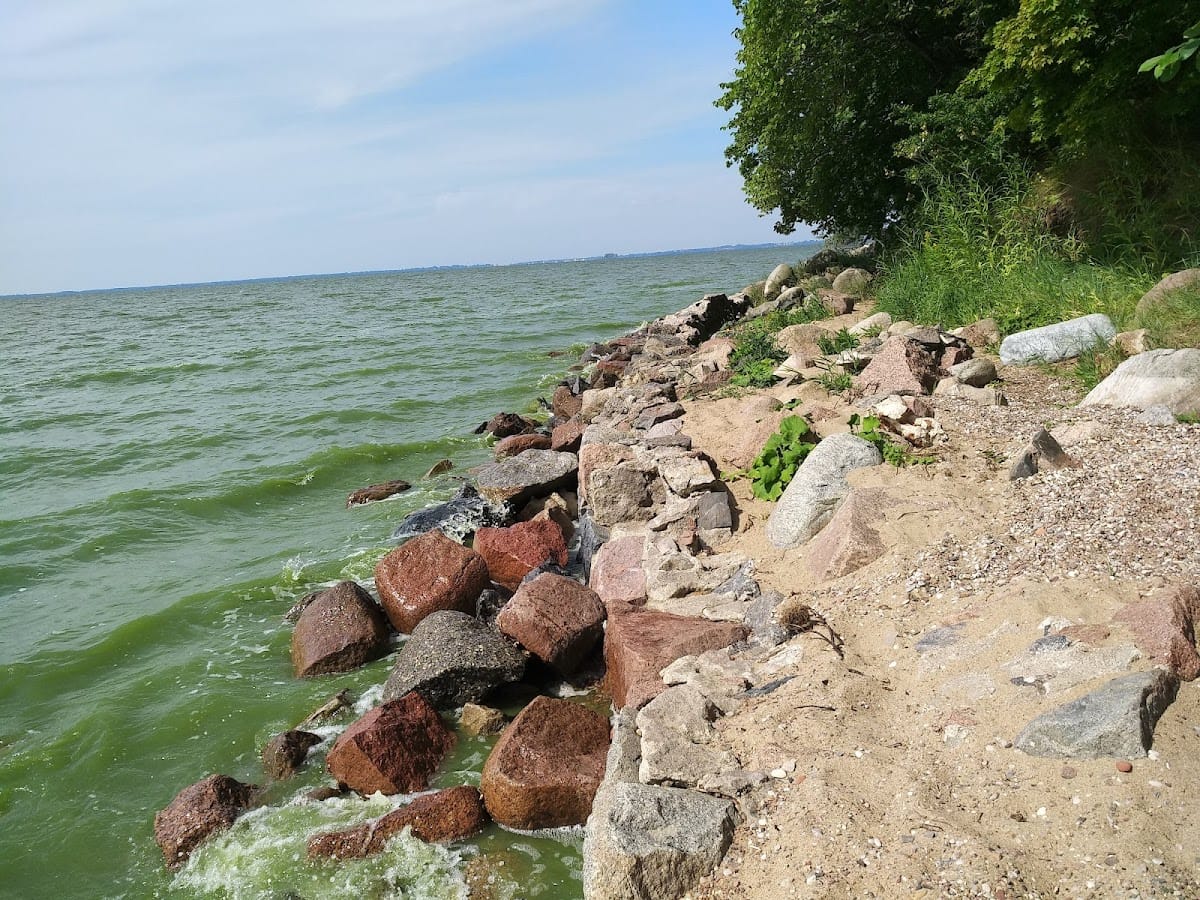
Following capture, Balga became the earliest Teutonic Order fortress in the region that is today part of Russia. From 1250 to 1499, it served as the commandery, or administrative headquarters, for the Knights. Strategically placed, it was instrumental in consolidating control over the Prussian tribal areas of Warmia and Natangen. The castle also oversaw the regulation of naval passage along the Vistula Lagoon, known historically as the Frisches Haff, reinforcing its military and economic importance during this period.
In 1525, when the Teutonic Order’s monastic state underwent secularization and transformed into the Duchy of Prussia, Balga passed into secular hands and was granted to Georg von Polenz, the Lutheran bishop who intermittently made the castle his residence up until around 1550. After this time, the fortress slowly fell into decline as its strategic role diminished.
During the 17th and 18th centuries, the castle’s condition deteriorated further, with parts dismantled intentionally to supply building materials for the fortress of Pillau (modern Baltiysk). This action was authorized in 1701 by King Frederick I. Prior to this, from 1626 onward, the castle functioned as a military magazine under the Swedish King Gustav II Adolf during the Polish-Swedish wars, highlighting its ongoing tactical use in regional conflicts.
The surrounding estate, including the village of Balga and its Lutheran church, was managed as a local administrative unit called Amt Balga. In 1736, King Frederick William granted this land to Johann von Buddenbrock. Ownership later transferred to the von Glasow family, who controlled the estate from 1849 until the upheavals of World War II in 1945. Throughout this period, Balga remained part of the Heiligenbeil district within East Prussia.
In the closing phase of the Second World War, Balga was one of the last defensive positions held by German forces on the eastern shore of the lagoon before the area was taken by the Soviet Army. Interest in the site revived in the 19th century when architect Conrad Steinbrecht carried out archaeological excavations in 1887, mapping the castle’s layout with precision. The castle’s tower received restoration in 1929, subsequently housing a local museum until wartime damages curtailed its use.
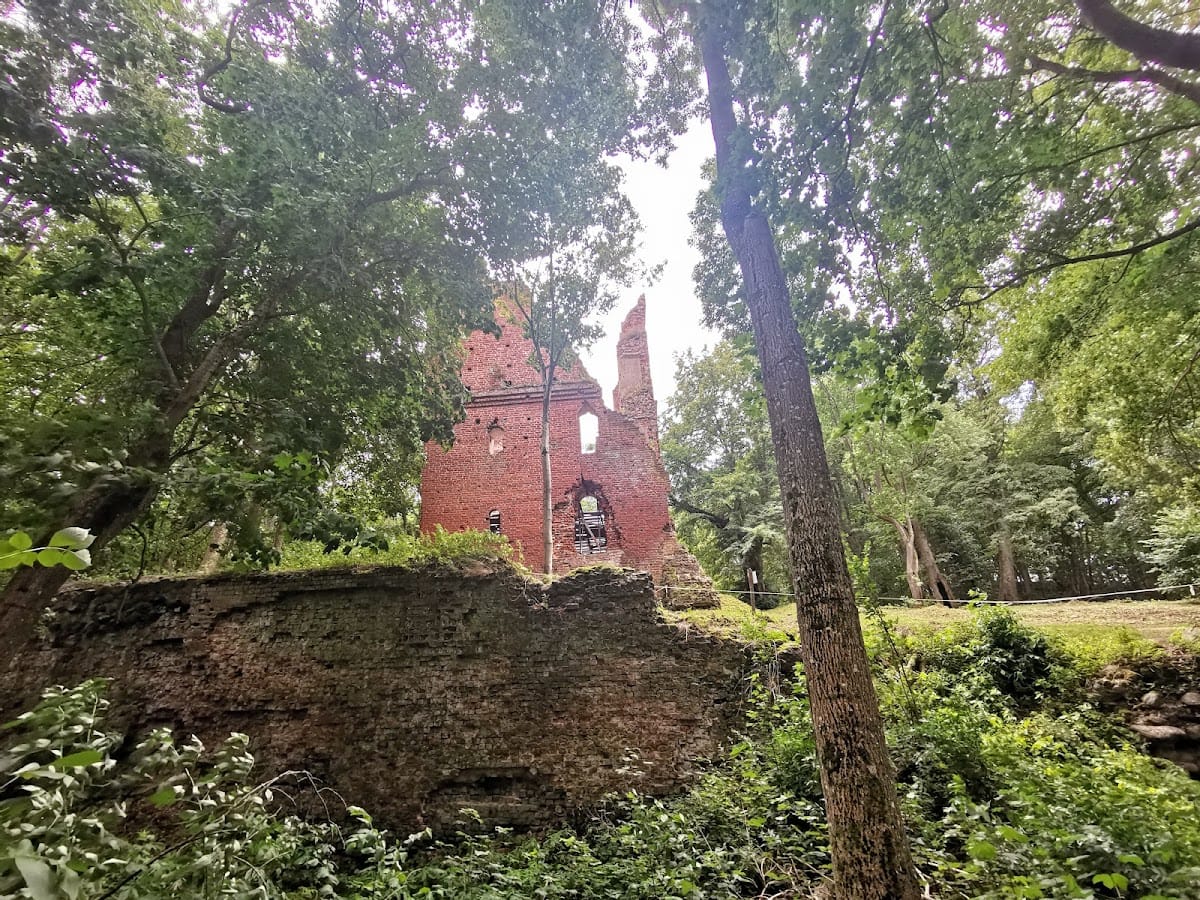
Today, the ruins of Balga are recognized as a protected cultural heritage site within the Russian Federation. Public access and some conservation efforts began in 2023, with plans for further restoration underway to preserve this historically significant fortress.
Remains
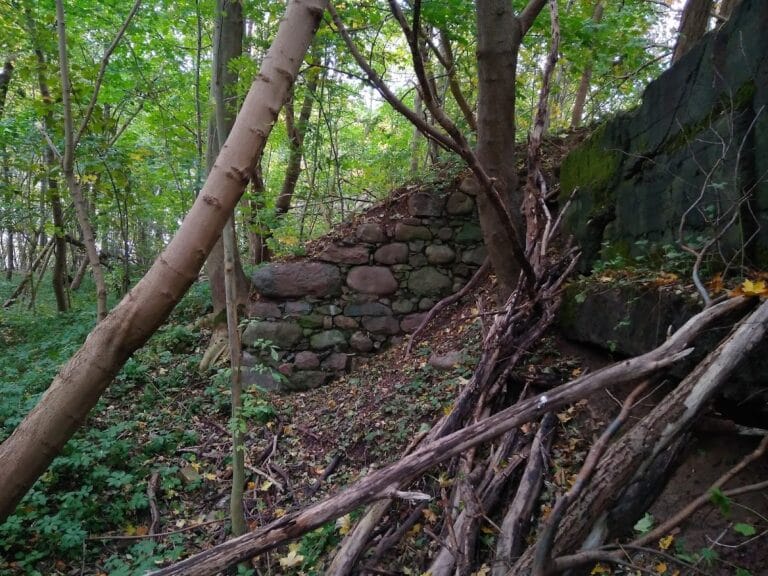
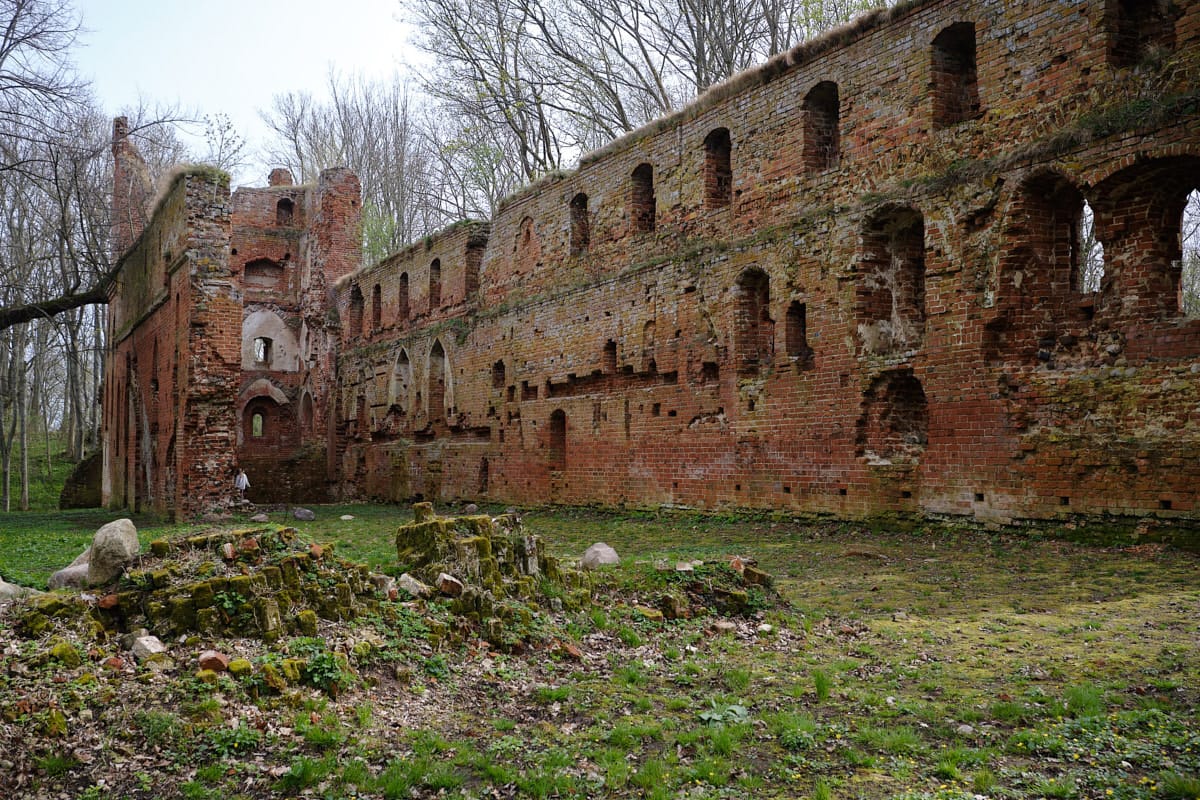
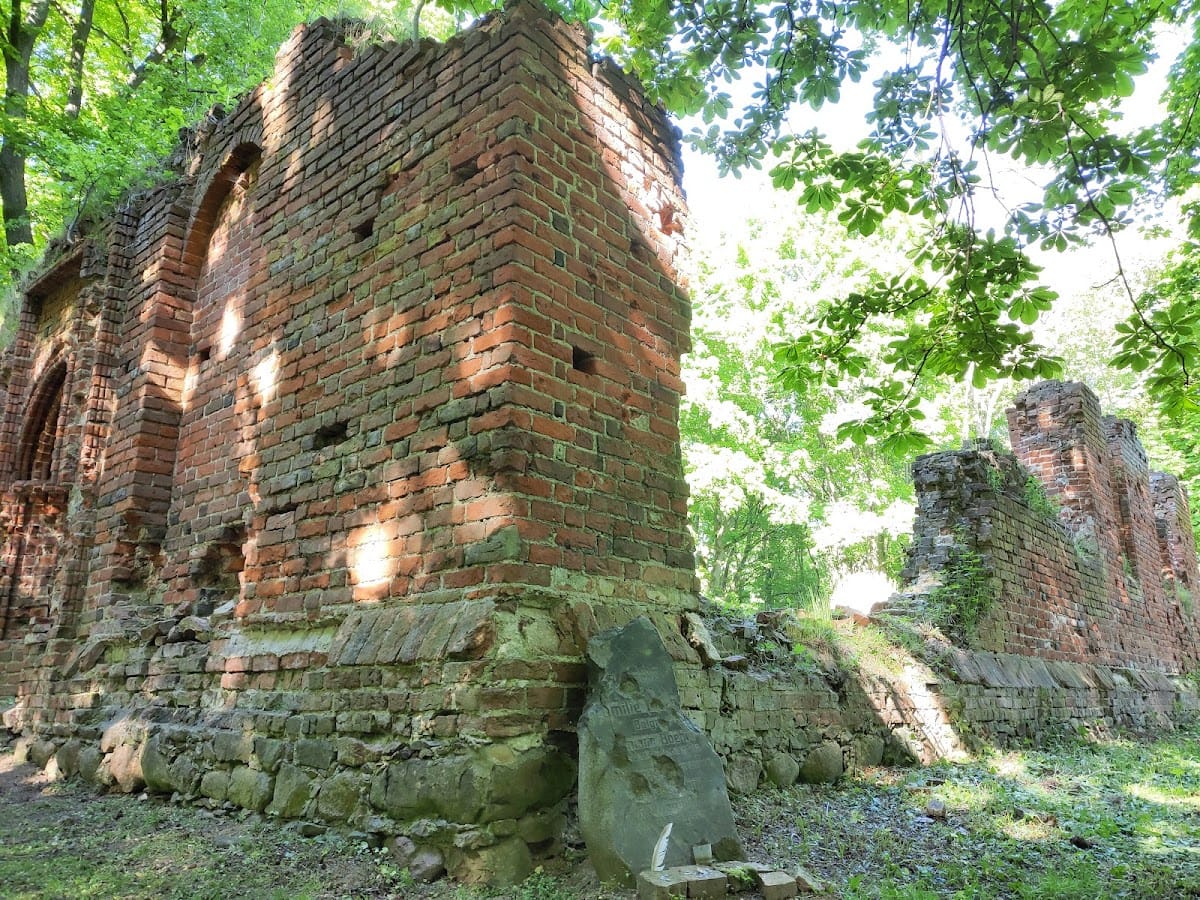
Balga’s castle complex was originally composed of a citadel with an irregular hexagonal shape, accompanied by an extensive outer bailey (a fortified courtyard area). Early construction combined sturdy fieldstone foundations with brick walls arranged in Wendish bond—a bricklaying pattern interlocking stretchers and headers for strength. Decorative accents made use of richly shaped stones together with glazed bricks in red, yellow, and green, which adorned the windows, doorways, and the ribs of vaults, giving parts of the structure an ornate appearance. The inner courtyard was encircled by a cloister gallery, a covered walkway that provided both protection and connection among buildings.
Conrad Steinbrecht’s reconstruction, based on his detailed study, suggests the main building had distinct sections dedicated to specific functions. The southern wing contained a chapel, remnants of its sculptural decoration having been identified. Toward the southeast lay the refectory, or remter, which was the dining hall for the knights. The northeast section housed the chapter house where meetings were held. On the ground floor near the northeastern gate stood the pantry and kitchen, which connected to a brewery, indicating the castle’s self-sufficiency.
Historical documents mention several towers, including a Dansker tower situated on the western side overlooking the lagoon. A Dansker was a type of latrine tower built over water to dispose of waste. However, the exact placement and form of the main tower are not conclusively established. By the late 1600s, the main building had already fallen into significant ruin. When the 1700s came to a close, only foundational remnants of the central structures remained, along with parts of the outer bailey. This surviving portion included a watchtower and a deteriorated wing.
Within the village adjacent to the castle stands the ruined church of St. Nicholas, dating from the early 14th century. Notable for its distinctive portal, the church provides a glimpse into the medieval ecclesiastical presence in the area. The castle tower itself was re-roofed in 1836 and underwent restoration in 1929 prior to damages sustained in wartime.
Further archaeological finds include remains of staircases and the uncovered inner courtyard of the outer bailey, helping to clarify the layout and use of space within the fortress. After 1945, submerged military equipment from wartime was still visible in the waters of the neighboring lagoon, reflecting the site’s continued connection to conflict well beyond its medieval origins.
Nearby sites