Roman Sites in Portugal: Explore Ancient Towns, Villa Halls and Fish-Salting Workshops
Roman sites in Portugal include excavated towns, residences with mosaic floors and standing upper walls, and industrial complexes built around rows of fish-processing tanks. Beneath later urban buildings, the collection also includes the vaulted foundations of Coimbra’s Roman forum and part of Lisbon’s theatre.
These examples extend from the Alentejo to the Algarve and the Sado estuary. They cover the layout of public squares and bathing complexes, the decoration of private houses, and the production and storage spaces that supplied towns and trade.
Primary Function: All
Type: All
Popularity: All
Rating: All
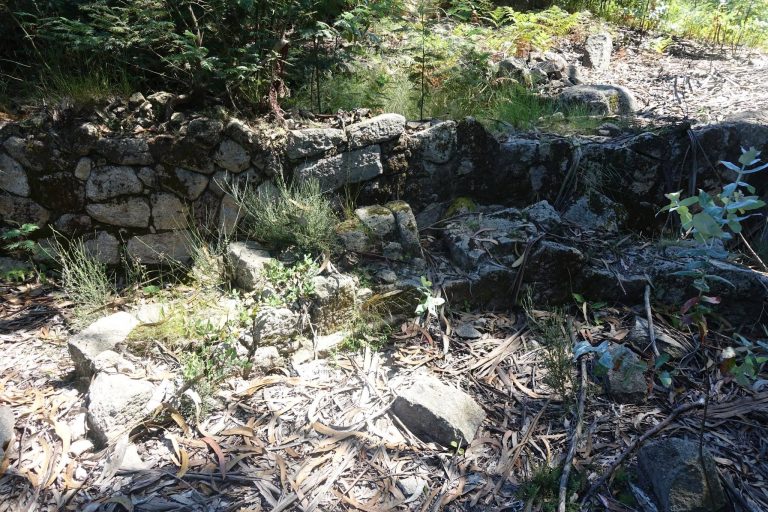
Citânia de Sabroso is an Iron Age hillfort in northern Portugal, known for its granite defenses, circular houses, prehistoric rock art, and long…
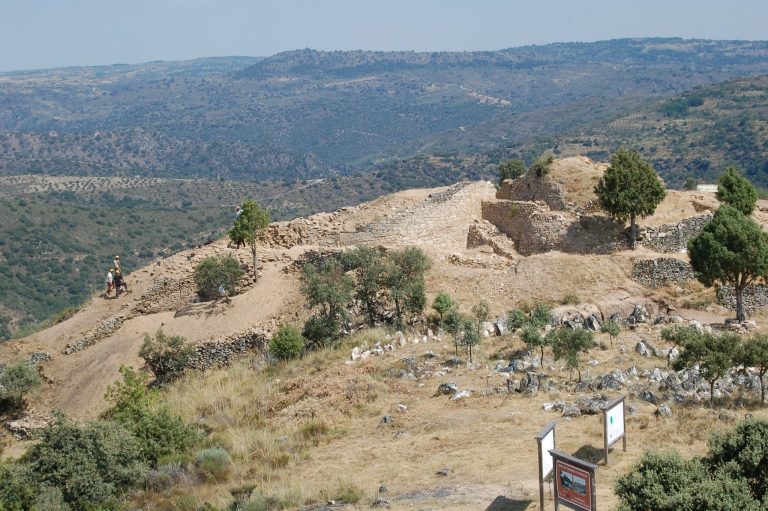
Castelo dos Mouros de Vilarinho dos Galegos is a long-occupied fortified settlement on the Douro, with Iron Age and Roman domestic remains, defensive…
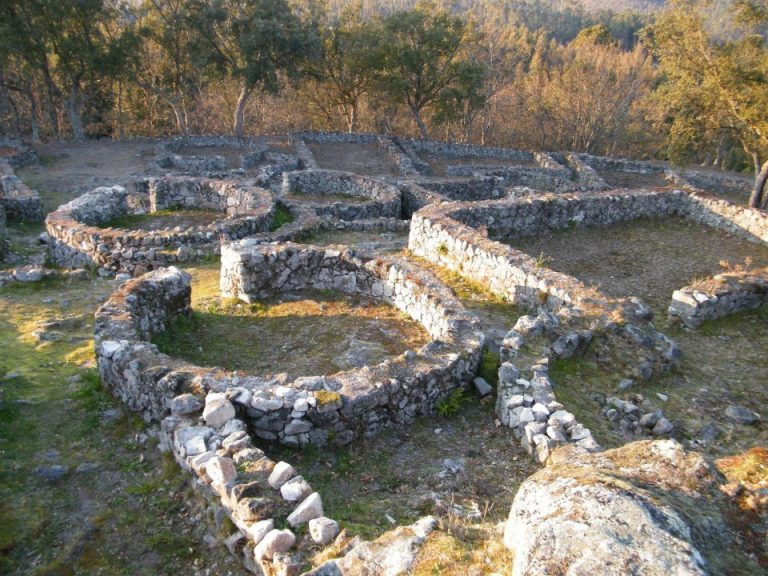
Castro de Romariz was a fortified hill settlement in northern Portugal, occupied from the Iron Age into the early Roman period. Its remains preserve…
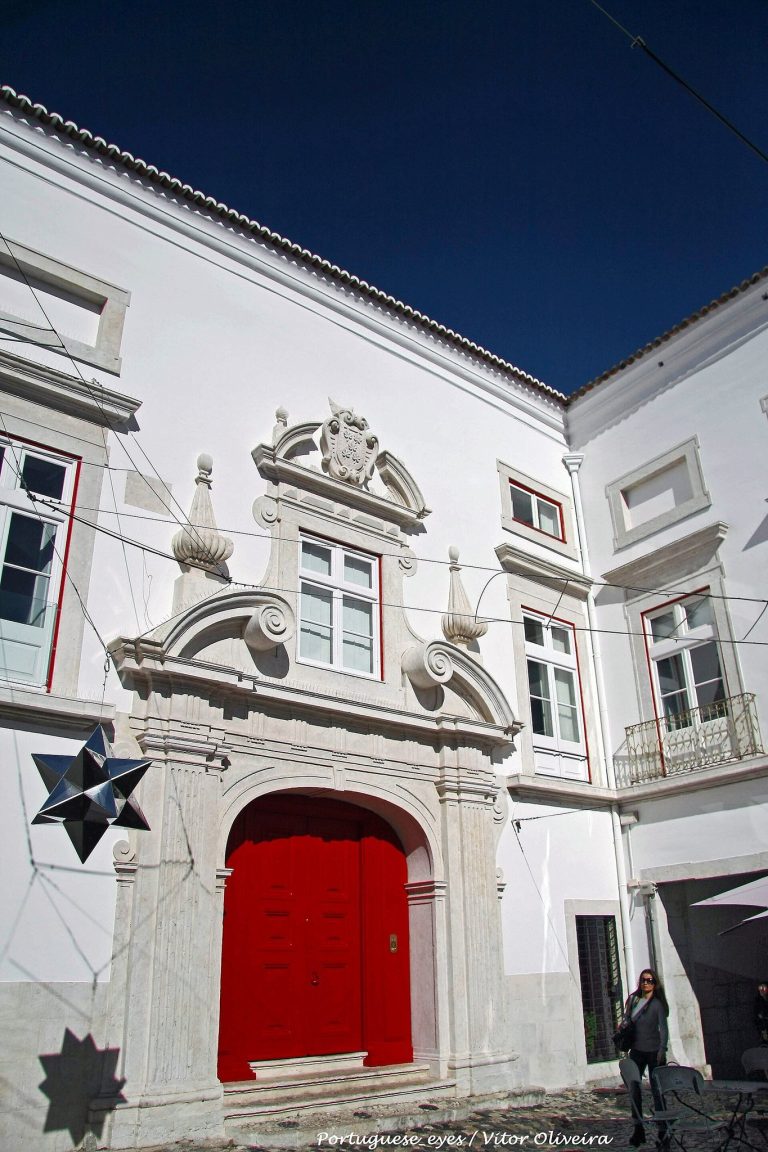
Palácio Belmonte is one of Lisbon’s oldest palaces, built over Roman and Moorish remains and associated with Pedro Álvares Cabral, Vasco da Gama, Gil…
Eburobrittium was a Roman city established probably under Caesar Augustus and occupied until the fifth century. Its forum and later medieval…
For details on how to use the maps, which sites are included, how popularity and ratings are determined, and how sites are classified, see the help page.
On this page6 sections
Town plans at Ammaia and Miróbriga
Ammaia, below Marvão, had a regular street plan within a walled enclosure. The southern gate was flanked by circular towers, whose bases survive beside a granite-paved public space. The arch joining them was removed in the eighteenth century. Farther inside the town, a raised temple podium and the remains of surrounding porticoes identify the forum district.
At Miróbriga, near Santiago do Cacém, streets followed the contours of the hill rather than a regular grid. The forum occupied the summit, with shops below and two bathing complexes farther down the slope. Their heated rooms preserve supports and passages for hot air beneath the floors. A small arched bridge carries a paved route near the baths.
The towns therefore offer different arrangements of streets and public buildings. Miróbriga’s standing forum temple includes twentieth-century reconstruction using pieces from elsewhere on the site, so its present appearance is less secure evidence than the excavated plan and surviving bath installations.
Mosaic rooms at Milreu and upper walls at São Cucufate
The Roman villa at Milreu, near Estoi, arranged residential rooms around a colonnaded courtyard. A formal dining room had an apse and low supports for reclining couches. Marine mosaics decorated corridors, bathing spaces and the adjoining sanctuary, including fish, dolphins and other sea creatures.
The sanctuary preserves thick brick walls, an apsidal inner chamber and remains of a richly decorated podium. Water installations connected it with the wider estate. Its original dedication is uncertain, and later Christian use introduced burials and changes within the earlier religious building.
At São Cucufate, near Vidigueira, the later Roman residence rose above vaulted lower spaces and opened towards the surrounding estate. A long central block and projecting wings formed an imposing two-storey composition. Stairs linked a front gallery with the gardens, while service and productive activities occupied lower areas.
Parts of the Roman building were later used by a monastery, including a church within the former residence. Conservation has repaired walls and vaults, but the surviving elevations still give more evidence of upper-storey construction than the low room walls of many excavated villas.
Tróia’s fish-salting workshops and baths
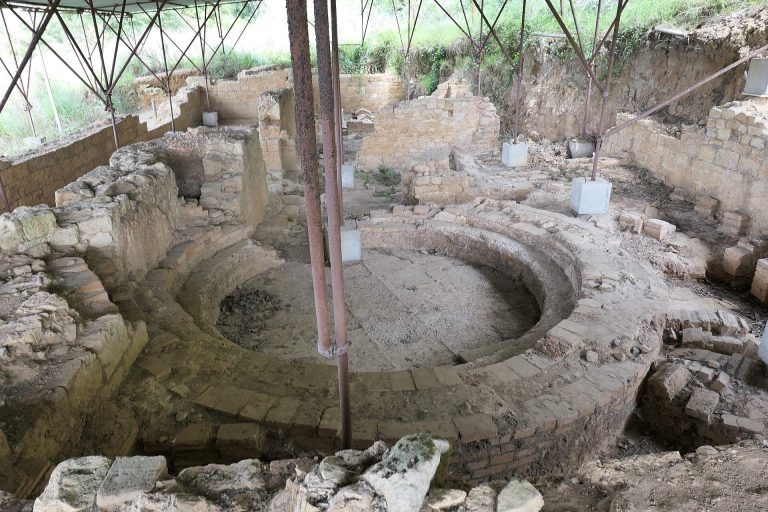
The Roman ruins of Tróia occupy a peninsula between the Sado estuary and the Atlantic. Their principal industrial remains are workshops with processing tanks arranged around central courtyards. Different workshop sizes and tank arrangements supported the preparation of salted fish and fish sauces for export.
Amphorae from pottery centres across the estuary carried the products. Baths, houses and burial areas accompanied the workshops, making this a settlement as well as a manufacturing site. The bathing complex preserves rooms at different temperatures, a hypocaust beneath raised floors and mosaic remains in one pool. A nearby mausoleum combined niches for cremation urns with floor burials, recording different practices within the working community.
Coimbra’s vaulted forum foundations
The Machado de Castro National Museum incorporates the Roman cryptoporticus of Aeminium, the ancient town beneath Coimbra. This extensive structure of galleries and communicating spaces supported the forum above, creating a platform for public buildings on the uneven ground.
The galleries survive beneath the former bishop’s palace and the modern museum complex. Their roofed passages preserve Roman construction below later floors, while the palace and museum architecture belong to subsequent uses of the site.
Lisbon’s excavated theatre
The Roman Theatre of Lisbon stood on the southern slope of the hill occupied by São Jorge Castle. Excavated areas include part of the seating, the orchestra and the wall separating the stage from the audience area. Columns, capitals, inscriptions and sculptural fragments record the building’s architectural decoration.
The theatre was rediscovered during rebuilding after the earthquake of 1755, with further excavation exposing structures among later urban properties. It survives as part of an archaeological and museum complex, rather than a complete standing auditorium. The remains retain the relationship between the hillside seating and the performance space below it.
Explore the collection
Explore sites on the map or in the grid. Map icons reflect each site’s primary function, helping you identify different kinds of places at a glance. Narrow the results by primary function, site type or era, with additional filters for popularity and rating. Select a map marker to view the site’s details and open its article, or open the article from its grid entry.