National Museum Machado de Castro: Coimbra’s Museum of Art and Archaeology

Site at a Glance
- Rating
- 4.7
- Popularity
- Medium
- Country
- Portugal
- Primary era
- Early Modern
- External website
- Open
- Eras represented
- Classical, Medieval, Early Modern, Modern
- Civilizations
- Chinese, Portuguese, Roman
- Site type
- Museum
On this page16 sections
History
The National Museum Machado de Castro is an art museum in Coimbra, Portugal, established in 1911 and opened to the public on 11 October 1913. It was named for Joaquim Machado de Castro, a major Portuguese sculptor of the eighteenth and early nineteenth centuries who was active particularly in Coimbra and Lisbon. The museum was created to make collections illustrating the development of national artistic work available for public study, while also presenting modern artefacts intended to educate public taste and working people.
Foundation and early development
António Augusto Gonçalves became the museum’s first director and led it from 1913 to 1928. The institution soon incorporated an older Coimbra collection. The Museu da Sé, founded in 1884 and described as Portugal’s first museum of sacred art, became a section of the Machado de Castro Museum after the Separation of Church and State brought its contents into national ownership in 1911. This enlarged the museum’s religious holdings and strengthened its connection with the city’s ecclesiastical history.
Most of the collection came from Coimbra and its surrounding region. Important groups were transferred from convents, monasteries, and churches dissolved or politically extinguished in 1834. Further material came from university colleges and bishoprics, while occasional acquisitions and donations continued to expand the holdings. The collection now includes several thousand archaeological, sculptural, goldsmiths’, jewellery, painting, drawing, ceramic, textile, and furniture objects. Because the holdings are extensive, many objects remain in storage rather than being displayed.
A regional museum of art
Under the second director, Virgílio Correia, the museum developed a regional-museum concept. Most of its collections originated in the Coimbra region, yet the institution retained a primarily artistic character. A commission appointed in 1935 prepared a comprehensive plan for building works that continued for approximately two decades. Luís Reis Santos, director from 1951 to 1967, maintained the emphasis on the art collections.
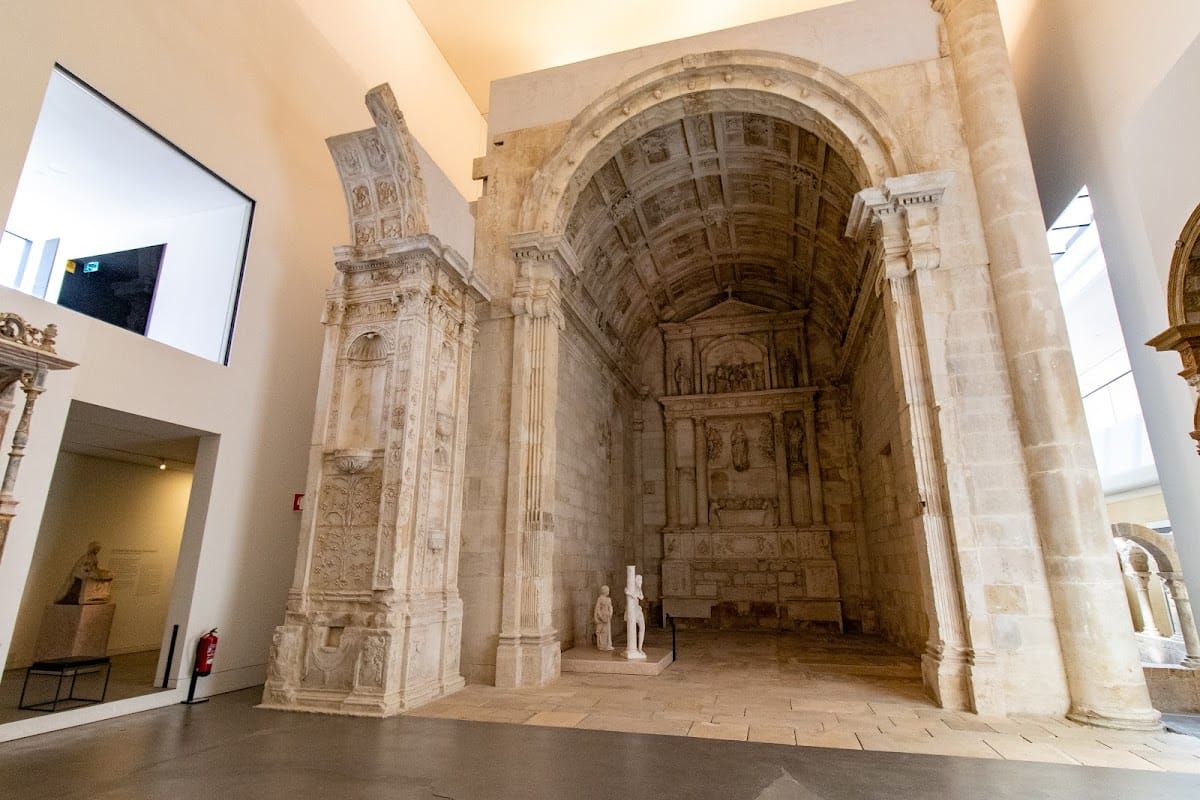
The museum’s religious holdings reflect Coimbra’s development as a major centre of sculpture. Its sculpture collection ranges from the eleventh to the eighteenth century and includes works by or attributed to Mestre Pero, Gil Eanes, João Afonso, Diogo Pires-o-Velho, Diogo Pires-o-Moço, João de Ruão, Nicolau de Chanterene, the Master of the Royal Tombs, Hodart, Olivier de Gand, Manuel da Rocha, Frei Cipriano da Cruz, and Claude Laprade. Some attributions connected with Nicolau de Chanterene and the conventional art-historical figure known as the Master of the Royal Tombs remain uncertain.
The archaeological collection began to take shape in 1873. It consists mainly of material from important Roman-period sites in the upper city of Coimbra, including the city wall and necropolis, the forum area, a residential quarter at the top of the hill, another quarter west of the forum, and excavations of the cryptoporticus. Stone, bronze, iron, and ceramic objects preserve evidence of the Roman city and its later archaeological interpretation.
National recognition and renewal
In 1965, the Portuguese State placed the museum within the national-museum system in recognition of its exceptional quality. Its combined identity as a regional museum of sacred art and an institution partly housed in a historic building was regarded as unusual. The former Bishop’s Palace had already been a National Monument since 1910.
The museum closed in 2006 for extensive renovation, including the construction of a new building, and reopened at the end of 2012. The intervention received the Piranesi/Prix de Rome Prize in 2014 for its architectural quality and its relationship between new design and archaeological heritage. Since 2013, the museum has formed part of the UNESCO World Heritage area of the University of Coimbra, Alta and Sofia, which was inscribed under criteria (ii), (iv), and (vi).
Remains
The museum occupies three interconnected units that bring together remains from Roman, medieval, and later Coimbra with purpose-built exhibition spaces. These are the Roman cryptoporticus, the former Bishop’s Palace, and a new structure designed by Gonçalo Byrne. Together they accommodate archaeological remains and extensive collections of sculpture, painting, goldsmiths’ work, textiles, furniture, ceramics, and other decorative arts.
The interconnected buildings
Roman cryptoporticus
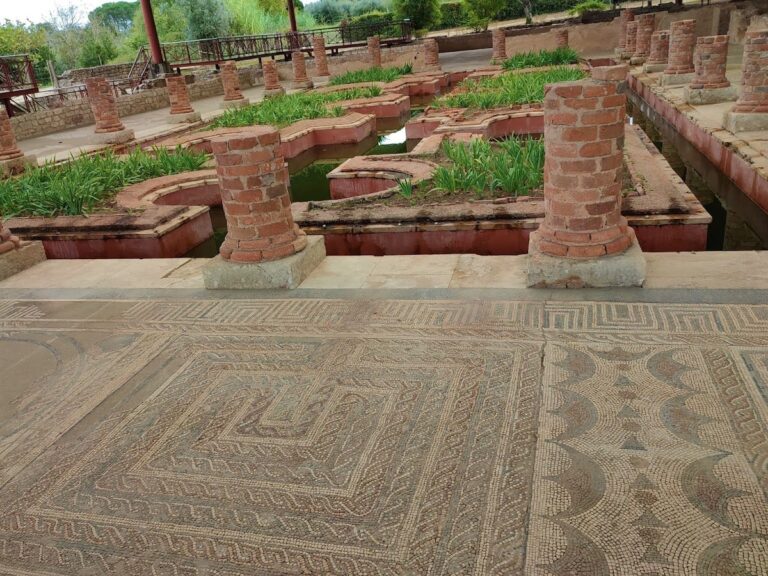
The Roman cryptoporticus dates from the middle of the first century and was built under Roman administration to support the forum of Aeminium, the Roman city corresponding to Coimbra. A cryptoporticus is a partly underground system of vaulted galleries used to support or level a major architectural complex. The surviving structure contains an extensive network of galleries and communicating spaces, which is incorporated into the museum’s route and forms one of its principal architectural and archaeological features.
Former Bishop’s Palace
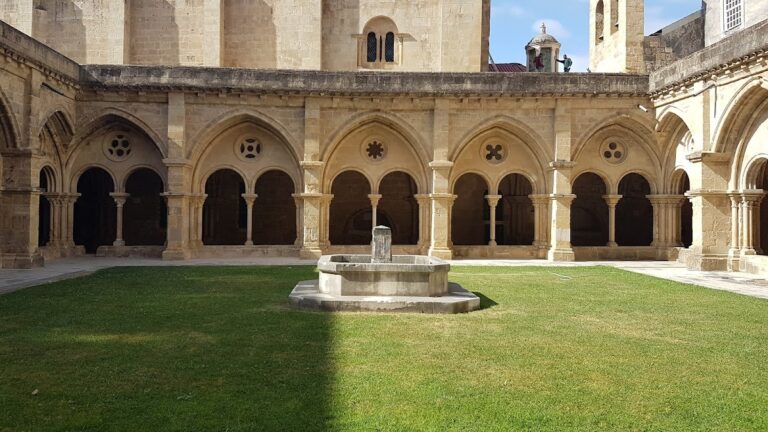
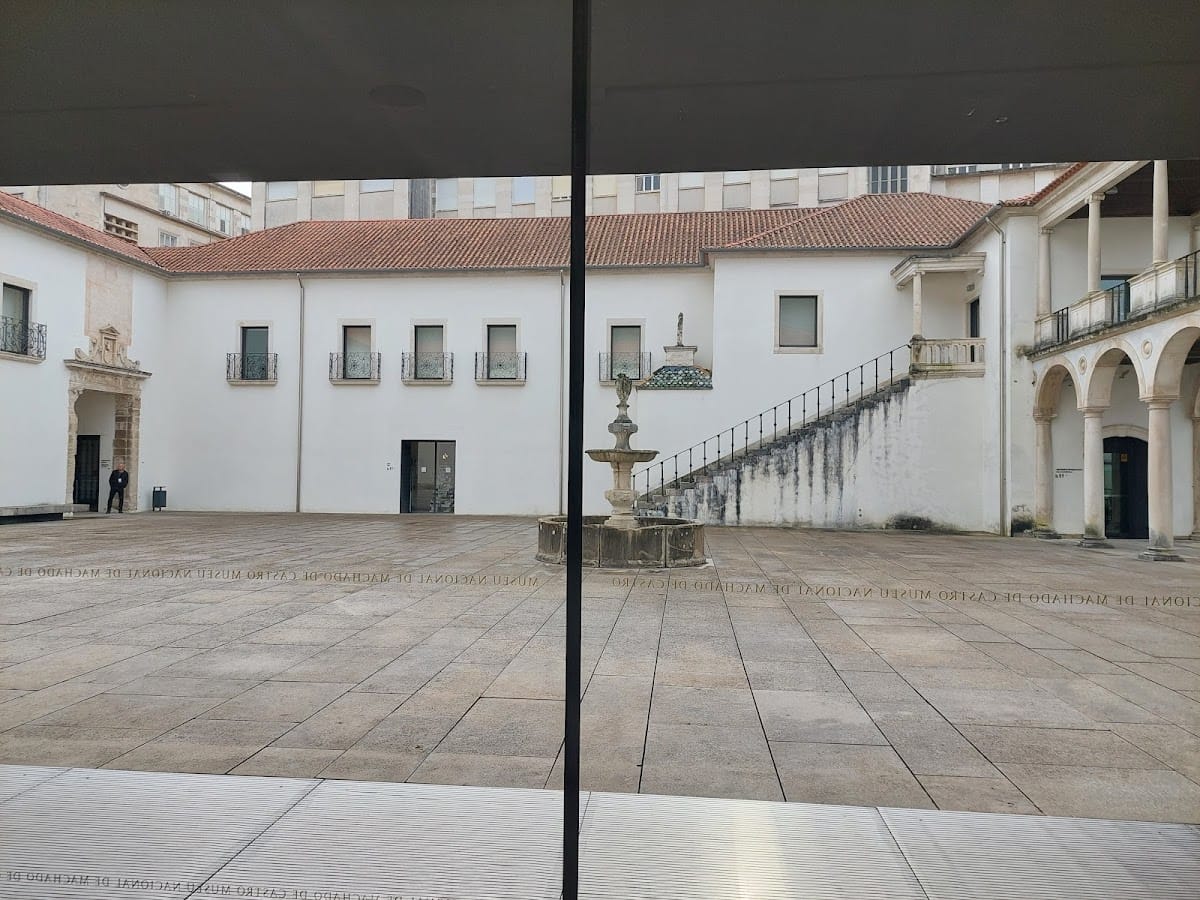
The former Bishop’s Palace was built from the Middle Ages onwards approximately over the site of the Roman forum. Its earliest buildings may date from the eleventh or twelfth century. A surviving entrance to the former enclosure has a horseshoe arch crowned with battlements. The palace underwent successive adaptations over the centuries, with surviving records of these changes beginning in the sixteenth century. After renovation, it was connected to the new museum spaces and came to accommodate a substantial part of the collection, multimedia rooms, and temporary-exhibition rooms.
Gonçalo Byrne’s building
Gonçalo Byrne’s purpose-built structure is physically articulated with both the cryptoporticus and the former Bishop’s Palace. It houses a large part of the collections, including sculpture, painting, and goldsmiths’ work. The building also contains new entrance areas and a cafeteria-restaurant with an outdoor terrace, completing the museum’s modern architectural component while maintaining direct connections with the older structures.
Sculpture and archaeological objects
Roman portraits
Among the archaeological and sculptural objects are three Roman portraits. A portrait of Agrippina the Elder dates from the first century and measures 54 by 34 by 34 centimetres. A portrait of Trajan, from the first or second century, measures 70 by 32 by 34 centimetres. An unidentified female portrait from the first century measures 32 by 32 by 22 centimetres.
Medieval and Renaissance sculpture
The sculpture collection includes an unidentified fourteenth-century Black Christ carved in wood, measuring 284.5 by 140 by 61 centimetres, and an unidentified Christ in the Tomb from the fourteenth or fifteenth century, carved in stone and measuring 64 by 151 by 65 centimetres. Mestre Pero’s fourteenth-century Medieval Knight measures 72 by 65 by 19.5 centimetres. Other works include Gil Eanes’s Saint Michael, made approximately in 1430–1440, and João Afonso’s Saint Michael, dating from approximately 1440–1450.
Works from the sixteenth century include Diogo Pires-o-Moço’s Heraldic Angel, made around 1518, the Master of the Royal Tombs’ Virgin of the Annunciation, dated 1525–1530, and João de Ruão’s Deposition of Christ in the Tomb, dated 1535–1540 and measuring 222 by 225 centimetres. João de Ruão is also represented by the Martyrdom of Saint Bartholomew, Saint Agnes, which measures 110 by 46 by 25 centimetres, and Saint John the Baptist. The collection extends into later periods through Frei Cipriano da Cruz’s Pietà, dated 1685–1690.
Coimbra sculpture of the fourteenth to sixteenth centuries was often made from Ança stone, a pale limestone traditionally quarried in the Coimbra region. The holdings also include Flemish sculpture imported into Portugal and later Portuguese works in wood, terracotta, and stone, including pieces associated with the school of Machado de Castro. Other notable sculptures are the polychromed-wood Antwerp Nativity Altarpiece, made around 1530, Olivier de Gand’s Saint Jerome and Pope Saint Gregory, and Hodart’s terracotta Last Supper, made approximately in 1530–1534. Manuel da Rocha’s Altarpiece of Our Lady of the Conception is also part of the collection.
Paintings and religious art
Paintings
The predominantly Portuguese painting collection spans the fifteenth to the twentieth century and includes an important group of sixteenth-century Flemish works. Among the earlier paintings are the unidentified fifteenth-century Lady of the Rose, measuring 209 by 128 centimetres, the Saint Clare Polyptych, made around 1486 and measuring 297 by 342 centimetres, and the Sardoal Masters’ Assumption of the Virgin from the early sixteenth century, measuring 168 by 135 centimetres.
Quentin Metsys’s Flemish Triptych of the Passion of Christ dates from approximately 1514–1517. Cristóvão de Figueiredo’s Emperor Heraclius with the Holy Cross, dated 1522–1530, belonged to the polyptych from the Monastery of Santa Cruz in Coimbra. The collection also includes Garcia Fernandes’s Triptych of the Apparition of Christ to the Virgin, dated 1531, Bernardo Manuel’s Lamentation of Christ from 1570–1580, Josefa de Óbidos’s The Virgin Breastfeeding Saint Bernard from 1670, and André Gonçalves’s eighteenth-century Adoration of the Magi.
Goldsmiths’ work and jewellery
The sacred goldsmiths’ and jewellery collection covers the twelfth to the eighteenth century. Its objects entered religious houses through novice dowries, offerings, royal donations, and legacies. Notable pieces include the twelfth-century chalice of D. Gueda Mendes, a fourteenth-century reliquary from the treasure of Queen Saint Elisabeth, and the Manueline monstrance of Coimbra Cathedral, dated 1527 and measuring 75.5 by 35 centimetres. Manueline is a Portuguese late-Gothic style associated especially with the reign of King Manuel I and known for elaborate architectural and maritime ornament. The eighteenth-century Monstrance of the Sacrament measures 162 by 96 by 99 centimetres.
Textiles, furniture, and ceramics
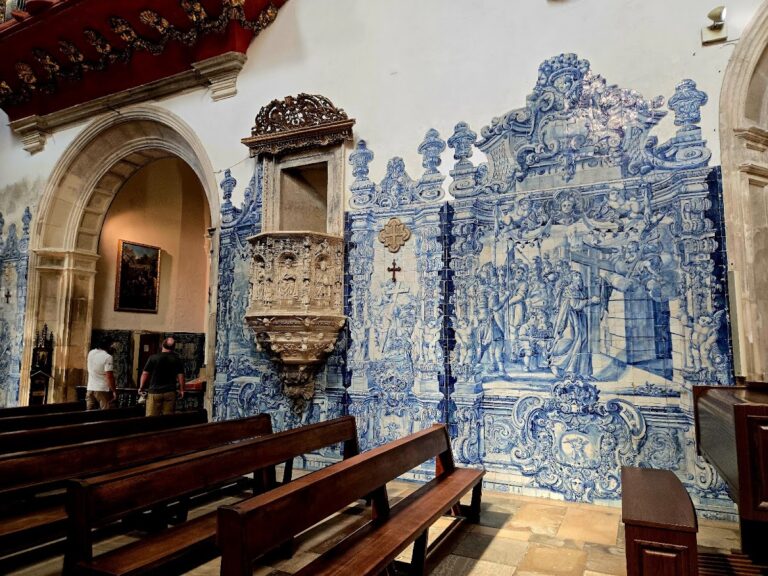
The decorative-arts holdings include a sixteenth-century Flemish tapestry, Venus and Mars Surprised by Vulcan, measuring 360 by 405 centimetres, and a sixteenth-century Kashan carpet from historical Persia made of natural silk. Other objects include a textile altar frontal made of ceramic tiles around 1670, a seventeenth-century Indo-Portuguese cabinet, and an eighteenth-century Chinese folding screen.
Textiles range from sixteenth- to nineteenth-century liturgical vestments and rare fragments from the fourteenth and fifteenth centuries to oriental and Arraiolos carpets, the Flemish tapestry, and various coverlets. Furniture represents the Manueline, Renaissance, Philippine, Baroque, Rococo, and Neoclassical periods. Ceramics include domestic, wall-covering, and floor-covering products dating from the fifteenth to the twentieth century.