Christian Sites: Explore Cathedrals, Monasteries, Chapels and Baptisteries
Explore more than 5,000 Christian sites, including basilicas, baptisteries, cathedrals, chapels, fortified churches and monasteries. The examples range from Italy and western Europe to Ireland, Romania and Armenia. Stone arcades, stained-glass interiors, vaulted communal rooms and defensive enclosures preserve the spaces used for worship, baptism, teaching, burial and monastic life.
Primary Function: All
Type: All
Civilization: All
Country: All
Popularity: All
Rating: All
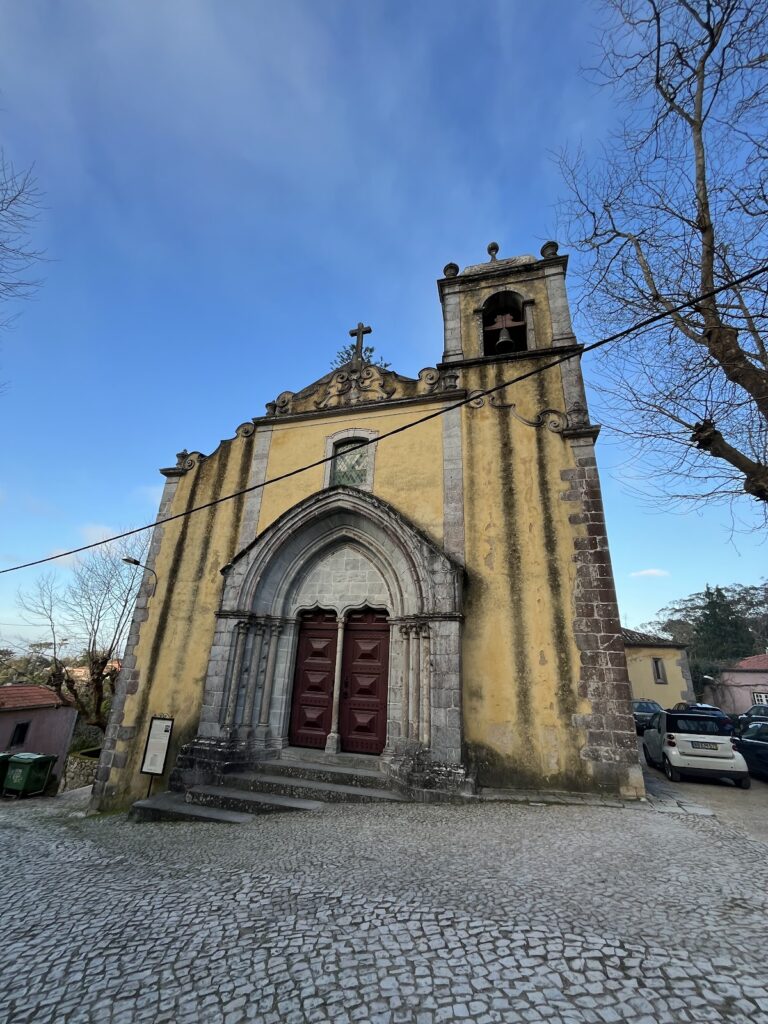
Igreja de Santa Maria in Sintra developed from a twelfth-century parish church into a major surviving Gothic building, with later Manueline and…
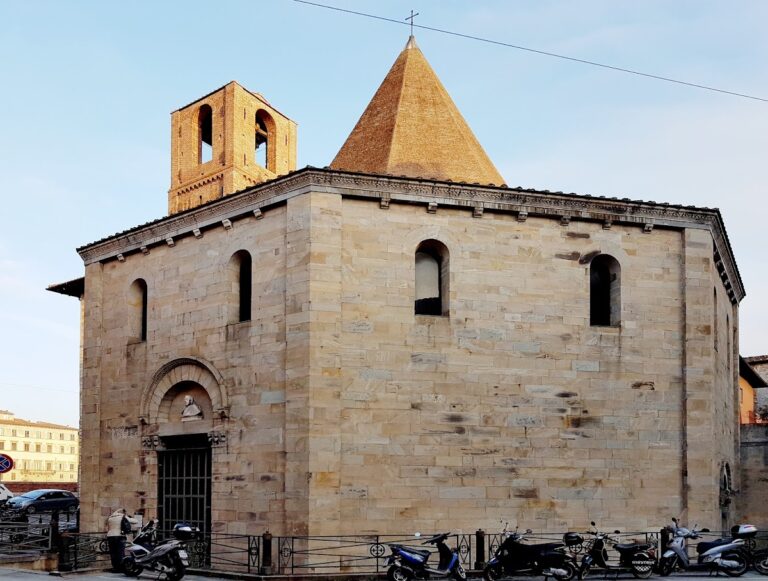
Santo Sepolcro is a Romanesque church in Pisa associated with the Hospitallers of Saint John of Jerusalem. Its centralized octagonal design,…
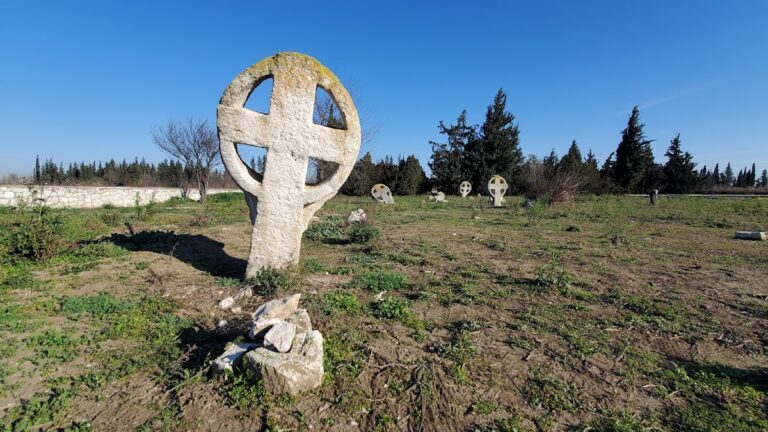
Sts. Peter and Paul Church in Chalkidonas is an active Orthodox cemetery church beside a medieval Bogomil cemetery with carved stone crosses, stelae,…
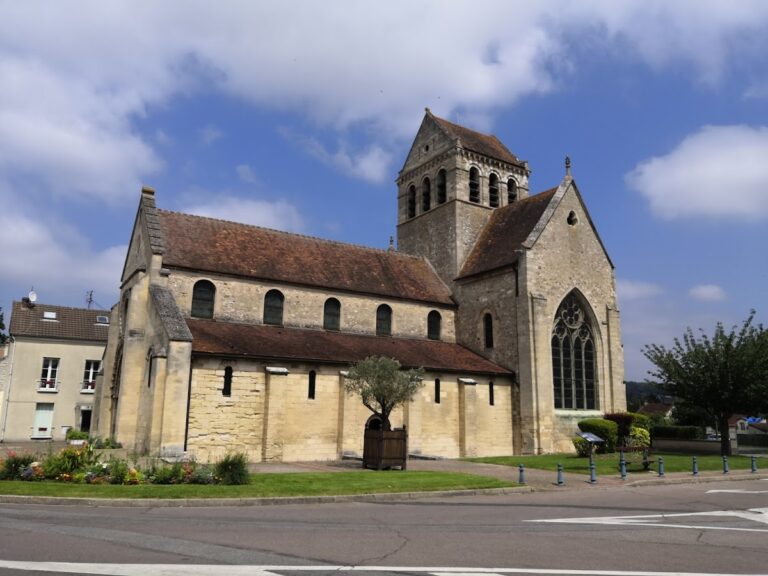
Église Sainte-Anne de Gassicourt in Mantes-la-Jolie developed from an eleventh-century monastic foundation into a Norman Romanesque church with major…
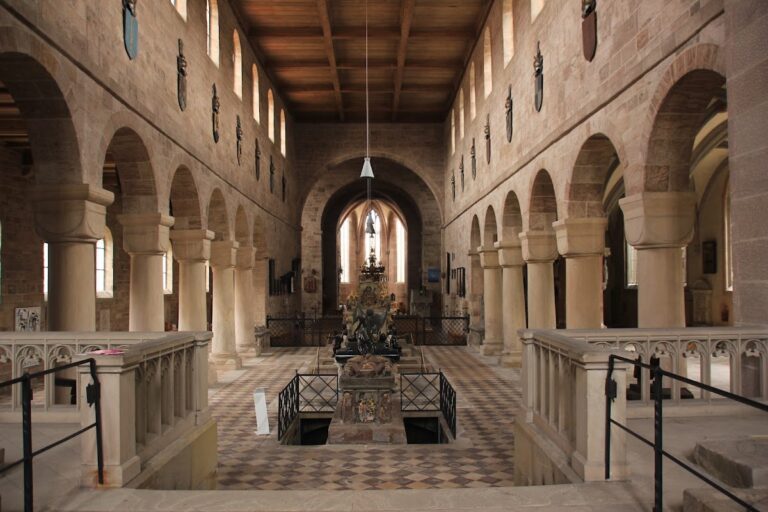
Heilsbronn Abbey was a Cistercian monastery founded in 1132 that became a major Franconian landholder, a Hohenzollern burial site, and later an…
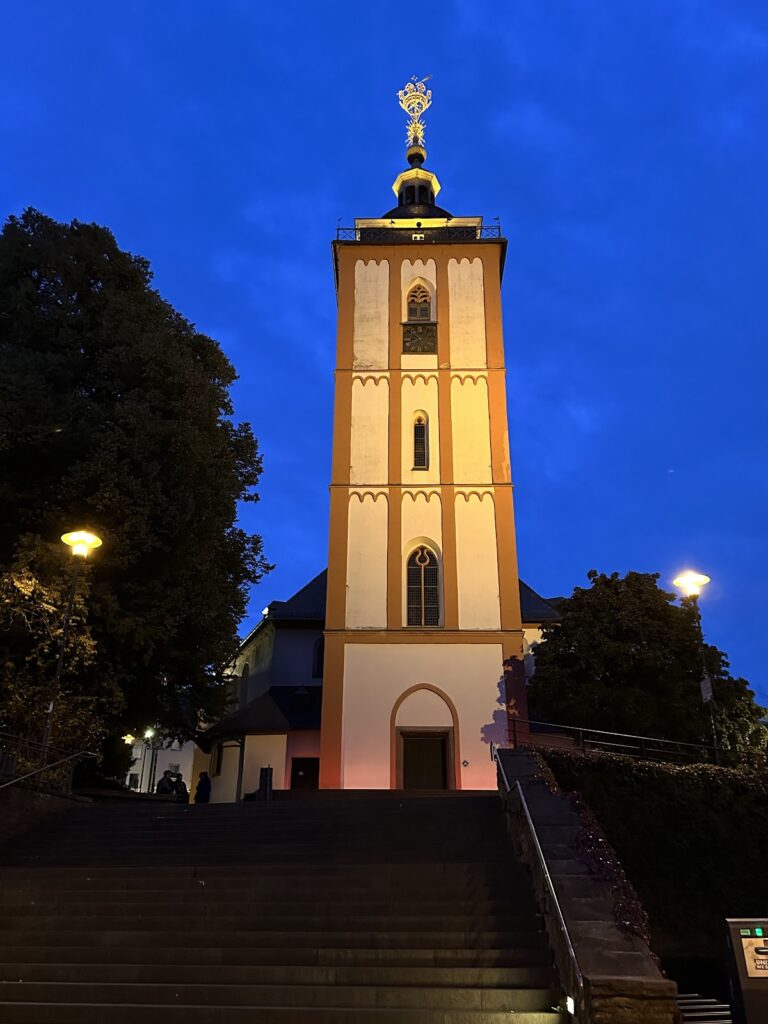
Nikolaikirche in Siegen began as a thirteenth-century chapel and baptismal church, later becoming the town’s principal evangelical-Reformed parish…
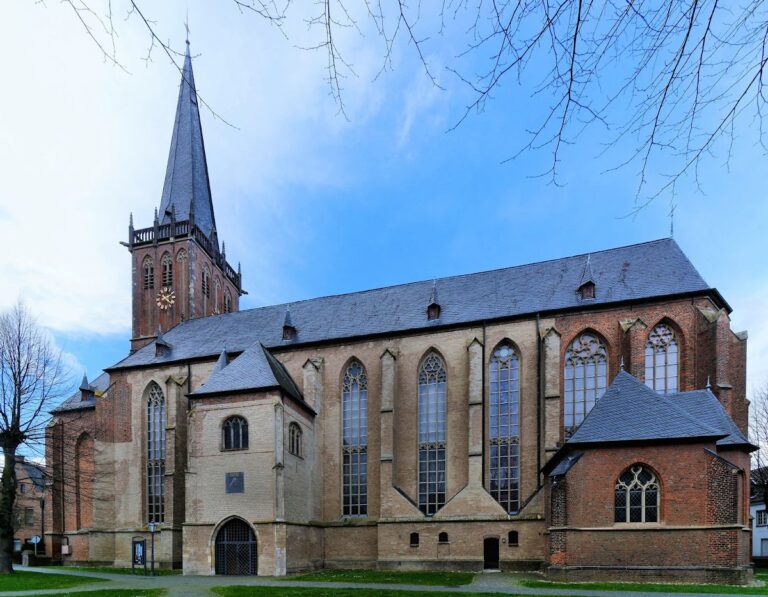
St. Nicholas Church in Kalkar is a Roman Catholic Gothic hall church rebuilt between 1409 and 1450. It preserves nine carved and painted retables,…
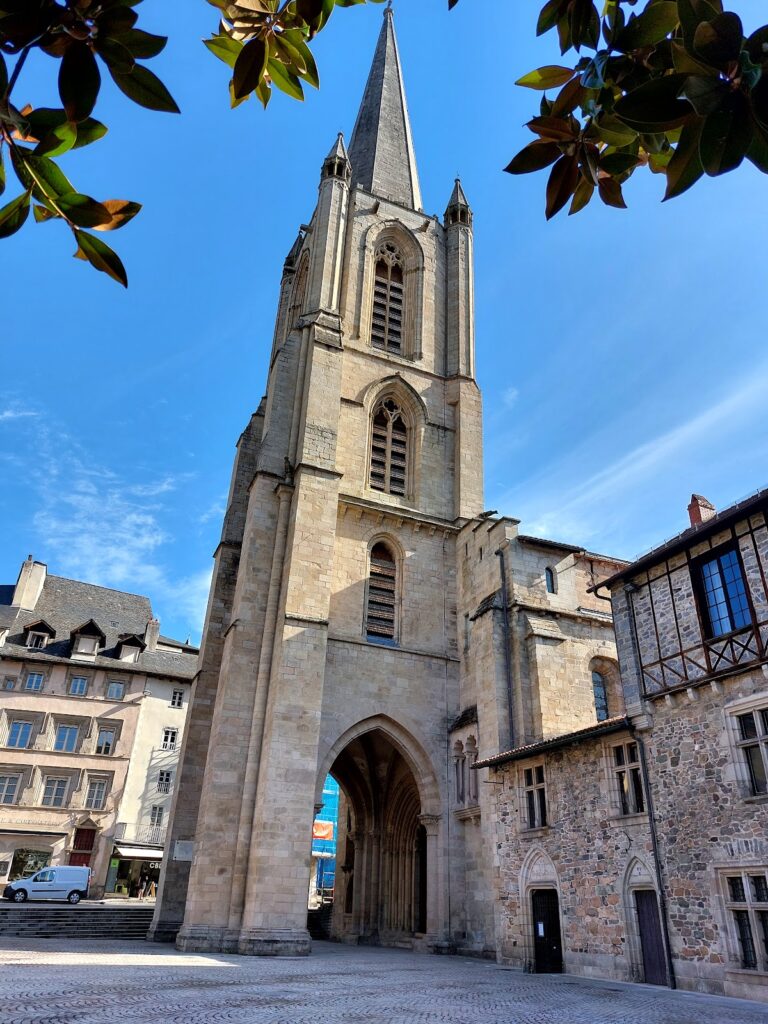
Tulle Cathedral grew from a seventh-century monastery, became the seat of the Diocese of Tulle in 1317, and preserves Romanesque and Gothic…

The Archaeological Park of San Leucio in Canosa di Puglia preserves a Christian basilica built over a Hellenistic-Italic temple dedicated to Minerva,…
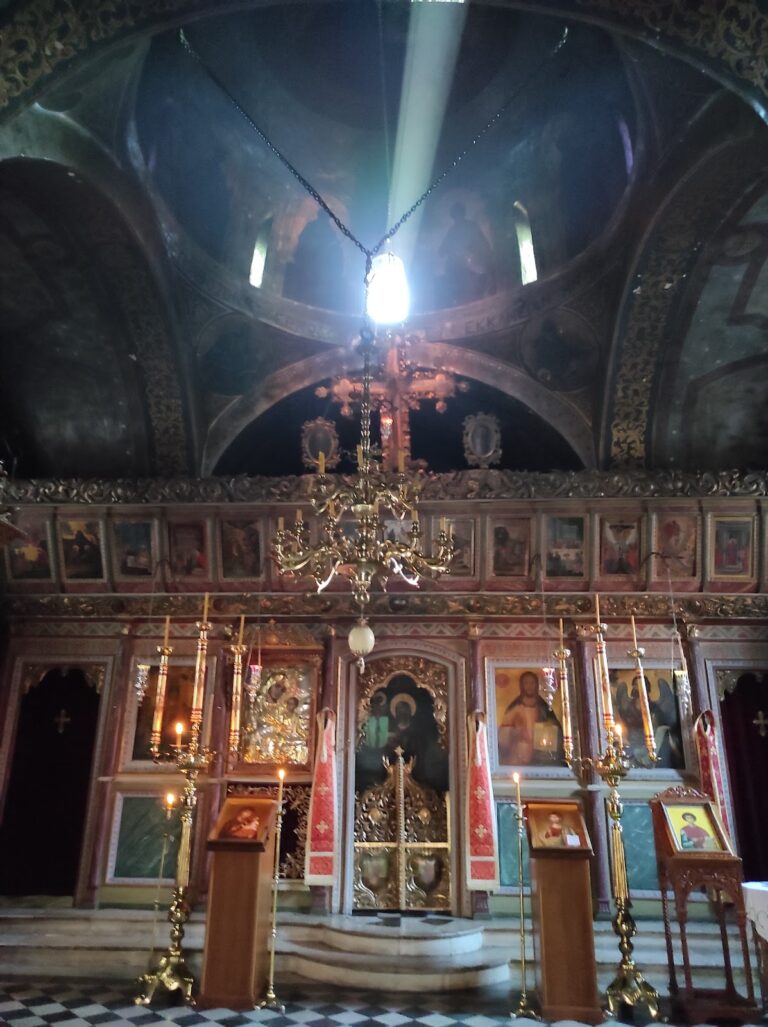
Omblou Monastery, founded in 1189 on Mount Oblos near Patras, became an Orthodox religious center associated with the Metropolis of Patras and a base…
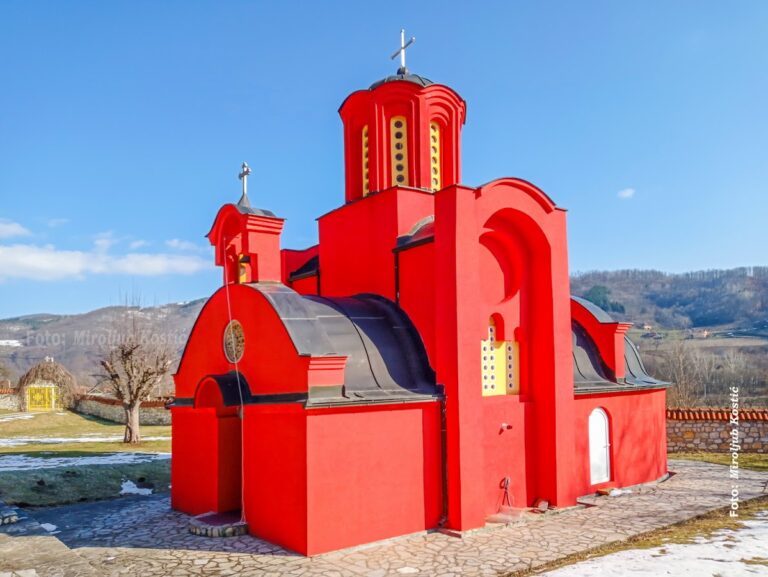
Pleš Monastery preserves a medieval tradition associated with the Nemanjić dynasty and a fifteenth-century re-establishment near the fortress of…
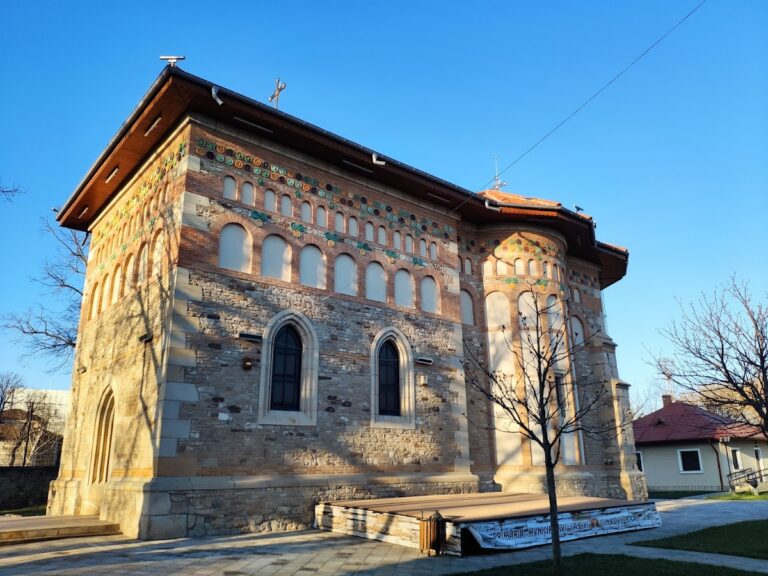
Founded by Stephen III of Moldavia in 1490, this Romanian Orthodox church served the princely court at Vaslui and preserves evidence of medieval…
For details on how to use the maps, which sites are included, how popularity and ratings are determined, and how sites are classified, see the help page.
On this page6 sections
Basilicas and baptismal buildings
The Basilica of Sant’Ambrogio preserves a Romanesque church built on an early Christian foundation. An arcaded courtyard precedes its broad façade, while ribbed vaults cover the principal nave and galleries rise above the side aisles. The brickwork, carved capitals and repeated arches define both the enclosed church and the open space before it.
The Baptistery of San Giovanni alle Fonti, beneath Milan Cathedral, preserves the excavated outline of a separate building used for baptism. Its octagonal walls surround a central baptismal basin, with alternating rectangular and curved recesses around the perimeter. These remains belong to the late Roman episcopal complex, centuries before the present Gothic cathedral was built above it.
Gothic cathedrals and royal chapels
At Cologne Cathedral in Germany, the medieval choir and its surrounding chapels preserve the eastern part of a much longer building project. Tall windows rise above the arcades, while an ambulatory connects the chapels around the sanctuary. The nave and famous western towers were completed in the nineteenth century, so their date differs from that of the medieval choir.
Sainte-Chapelle in Paris was built as a royal chapel to house Passion relics. Its lower chapel supports a much taller upper space, where stained-glass windows occupy almost the whole area between the slender structural supports. The two-storey arrangement remains the building’s central feature. The present spire and much of the restored decorative finish belong to nineteenth-century work.
Monastic churches, halls and teaching rooms
At Glendalough in Ireland, stone churches, a double-arched gateway and a round tower preserve the layout of a monastic settlement. The tower has a raised entrance and openings at successive levels; its conical cap was rebuilt using original stones. The ruined cathedral combines an earlier nave with a later choir and sacristy, allowing different phases of the settlement’s church building to be traced.
Sanahin Monastery in Armenia brings domed churches, entrance halls, a library and teaching spaces into a closely grouped stone complex. The principal churches stand only a short distance apart, with later buildings occupying the intervening spaces. Vaults, arches and carved doorways distinguish rooms used for worship, assembly and study. The buildings developed chiefly between the tenth and thirteenth centuries, with later repairs to domes and roofs.
Fortified churches and refuge enclosures
The Fortified Church of Prejmer in Romania stands inside a high circular wall. Multiple levels of rooms line the enclosure, providing storage and refuge for the surrounding community. A long defended entrance passage controlled access to the interior.
The church itself has an early Gothic cross-shaped plan and retains a late medieval painted altarpiece. Church and enclosure served connected but distinct purposes: worship occupied the central building, while the perimeter accommodated supplies and people during attacks. Restoration has maintained the unusually complete arrangement of the complex.
Royal monasteries and religious residences
The Royal Monastery of San Lorenzo de El Escorial in Spain extends across a large grid of courts and corridors. A central basilica stands between monastic and royal areas, with a library, school and burial spaces forming part of the wider foundation. Grey granite façades, regular windows and corner towers give the exterior a restrained appearance.
El Escorial was built for Philip II in the sixteenth century. Its scale and carefully divided plan preserve a religious institution designed together with the residence and burial place of a royal dynasty.
Explore the collection
Explore sites on the map or in the grid. Map icons indicate each site’s primary function, helping you identify different kinds of places at a glance. Narrow the results by country, site type, civilization or era, with additional filters for popularity and rating. Select a map marker to view the site’s details and open its article, or open the article from its grid entry.